
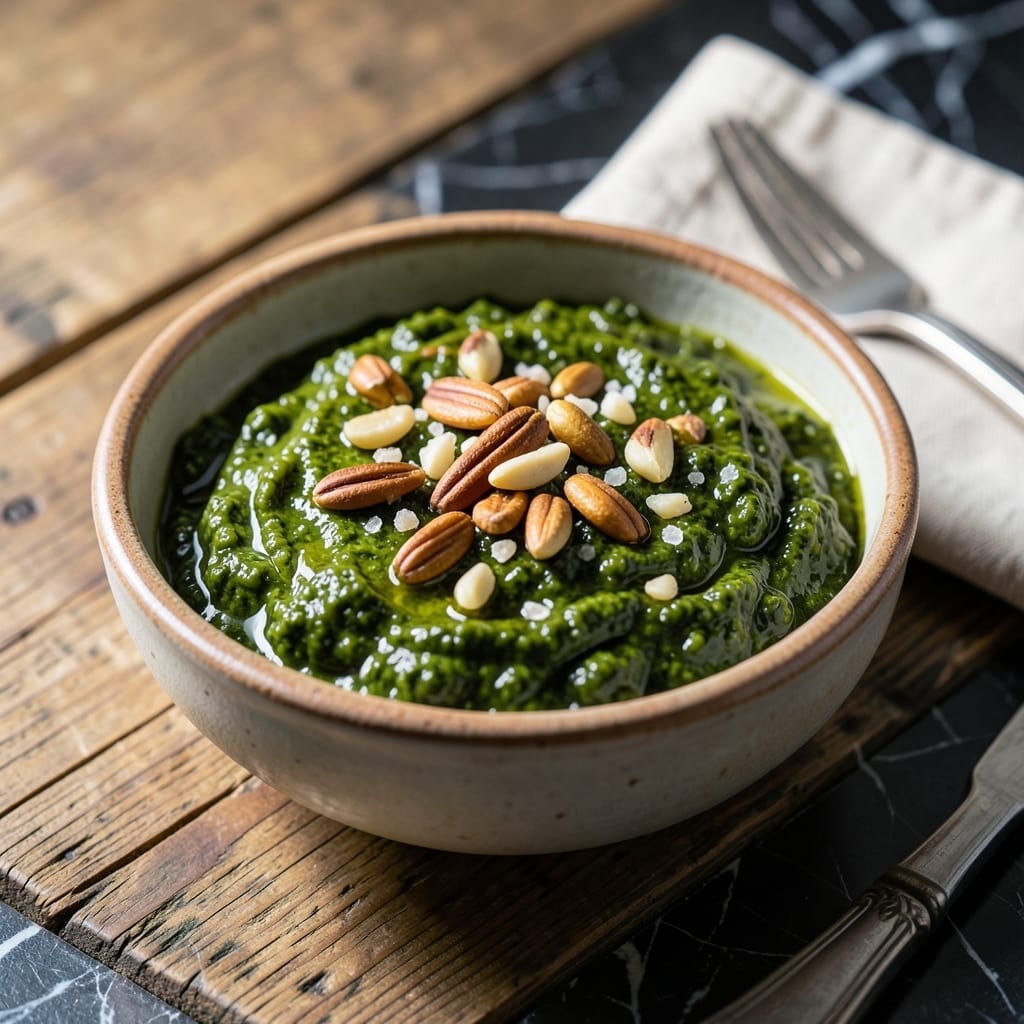
This dairy-free pesto delivers the same vibrant basil flavor as traditional versions without cheese. I developed this recipe to prove that fresh ingredients and simple techniques can create rich, complex sauces.
The secret lies in using toasted nuts and a touch of lemon to build depth. Pine nuts work beautifully, but walnuts or almonds add their own unique character. The garlic and salt enhance the basil without overpowering it.
You’ll end up with a bright green sauce that’s perfect for pasta, sandwiches, or as a dip. Its clean, herbaceous taste lets the basil shine while still feeling indulgent.
Make a big batch and store it in the fridge for up to a week. The flavors only improve as it sits.
Ingredients for Pesto Recipe No Cheese
Bright green basil shines in this dairy-free sauce with toasted nuts and zesty lemon.
| Ingredient | Amount | Notes |
|---|---|---|
| Fresh Basil Leaves 🌿 | 2 cups | Packed, stems removed |
| Pine Nuts 🥜 | ½ cup | Toasted for nuttiness |
| Garlic Cloves 🧄 | 3 cloves | Peeled, rough chopped |
| Extra-Virgin Olive Oil 🫒 | ¾ cup | High quality, fruity |
| Lemon Juice 🍋 | 1 tbsp | Freshly squeezed |
| Sea Salt 🧂 | ½ tsp | Fine grain preferred |
| Black Pepper 🌶️ | ¼ tsp | Freshly ground |
| Nutritional Yeast 🧀 | 2 tbsp | For umami depth |
The basil is everything here. Farmers market basil has the most vibrant flavor, but grocery store works if it’s fresh and bright green. Pine nuts are traditional but Trader Joe’s or Costco have the best prices. The nutritional yeast adds that cheesy depth without dairy—look for Bragg or Bob’s Red Mill brands in the natural foods section.
No pine nuts? Walnuts or almonds work beautifully (toast them first for best flavor). Out of nutritional yeast? Skip it—the sauce will still be delicious, just less umami-rich. The olive oil should be something you’d happily drizzle on bread; avoid anything labeled ‘light’ or ‘blend.’ Fresh lemon juice is key—bottled lacks the brightness.
Pesto oxidizes quickly. Press plastic wrap directly on the surface before sealing—stays bright green for 1 week in the fridge. Freeze in ice cube trays for 6 months. Always bring to room temperature before serving to restore that fresh, vibrant flavor.
Why You’ll Love This Recipe
- 5-Minute Blend: I toss everything in the food processor and it’s done before the pasta finishes boiling.
- Bright and Zesty: The lemon juice cuts through the richness of the pine nuts and olive oil for a fresh pop.
- Pasta to Salad: I drizzle it on everything—pasta, grains, roasted veggies, even soup swirls.
- Keeps for Days: Honestly, it stays vibrant in the fridge for a week, so I always double the batch.
Step-by-Step Instructions for Pesto Without Cheese
This method ensures vibrant flavor and silky texture using only plant-based ingredients.
Step 1: Toast the Pine Nuts
Heat a dry skillet over medium-low heat. Add the 0.5 cup pine nuts and spread them in an even layer. Toast for 3-5 minutes, stirring frequently, until they turn light golden brown and release a fragrant aroma.
Watch them closely—pine nuts burn easily. Once toasted, immediately transfer to a small bowl to cool. This step enhances their natural nuttiness and adds depth to the final pesto.
Step 2: Pulse Garlic and Basil
In a food processor, combine the 3 cloves garlic cloves and pulse until finely minced. Add the 2 cups fresh basil leaves and pulse in short bursts until the basil is coarsely chopped.
Be careful not to over-process. You want visible flecks of basil for texture and visual appeal. Scrape down the sides of the processor bowl as needed to ensure even chopping.
Step 3: Emulsify with Olive Oil
With the processor running, slowly drizzle in the 0.75 cup extra-virgin olive oil through the feed tube. This gradual addition creates a stable emulsion, giving the pesto its signature creamy consistency.
Stop to scrape the bowl as necessary. The mixture should look thick but still pourable. If it seems too thick, add 1 teaspoon of water, but this is rarely needed with the specified oil amount.
Step 4: Season and Balance Flavors
Add the 0.5 tsp sea salt, 0.25 tsp black pepper, 1 tbsp lemon juice, and 2 tbsp nutritional yeast to the processor. Pulse briefly to incorporate these final ingredients.
Taste and adjust seasoning if needed. The lemon juice brightens the flavors, while the nutritional yeast provides the umami depth that replaces traditional cheese. The pesto should taste balanced—not too salty, with a pleasant tang.
Step 5: Finish and Store
Transfer the pesto to a clean jar or airtight container. For best results, press plastic wrap directly onto the surface to prevent oxidation, which can turn the pesto brown.
This dairy-free version stays vibrant green for 3-4 days in the refrigerator. You can also freeze it in ice cube trays for up to 3 months. Stir well before each use, as the oil may separate slightly over time.
Pro Tips For Making Pesto Recipe No Cheese
- Toast the Pine Nuts: Lightly toasting pine nuts in a dry pan for 2-3 minutes until golden brings out their natural oils and adds depth—skip this and your pesto will taste flat.
- Blanch the Basil: I learned this the hard way—blanching basil leaves in boiling water for 10 seconds then shocking in ice water keeps them bright green and prevents bitter, oxidized pesto.
- Skip the Food Processor: A mortar and pestle or even a fork with a bowl gives you better texture control; food processors can overwork the basil and turn it muddy.
- Add Oil Slowly: Drizzle the olive oil in gradually while blending—about 1 tablespoon at a time—to emulsify properly, or you’ll end up with a greasy, separated mess.
Common Mistakes When Making pesto recipe no cheese
Over-Processing the Basil
Pulsing the basil too long turns it into a sad, muddy paste instead of a vibrant sauce. I pulse in 2-second bursts until I see flecks of green, not a smooth puree. This preserves texture and that beautiful bright green color. 🌿
Skipping the Toasting Step
Untasted nuts taste flat and can make your pesto bland. Toast pine nuts in a dry skillet over medium-low heat for 3-5 minutes until golden. This simple step unlocks their natural oils and adds crucial depth.
Using Dull Olive Oil
That old bottle at the back of your pantry won’t cut it. For pesto, use a high-quality extra-virgin olive oil with fruity notes. I recommend California Olive Ranch or Colavita for reliable flavor. The oil is the backbone of this sauce.
Ignoring the Emulsion
Dumping all the oil in at once breaks the emulsion, leaving you with a greasy mess. Drizzle the 0.75 cup olive oil slowly while the processor runs. This creates a creamy, cohesive sauce that clings beautifully to pasta.
Forgetting to Season
Basil needs salt to shine. I start with 0.5 tsp sea salt and adjust to taste. Don’t skip the lemon juice either—it brightens all the flavors and balances the richness of the nuts and oil. 💡
Storing Improperly
Pesto oxidizes quickly, turning brown and bitter. Press plastic wrap directly on the surface before sealing in an airtight container. This keeps it vibrant green for up to 1 week in the fridge.
Nutrition Facts
Frequently Asked Questions
Can I use other nuts besides pine nuts?
Walnuts, almonds, or cashews work beautifully. Toast them first for 3-5 minutes to enhance their flavor. Each nut brings its own unique taste to the sauce.
How do I keep my pesto from turning brown?
Press plastic wrap directly on the surface before sealing in an airtight container. This prevents oxidation, keeping it vibrant green for up to 1 week in the fridge.
What can I use instead of nutritional yeast?
You can skip it entirely, or try 1 tablespoon of white miso paste for umami. The sauce will still taste great, just with less cheesy depth.

- Potato Candy Recipe 1933: Vintage Peanut Butter Roll Delight - October 30, 2026
- Potato Chip Cookie Recipe With Pecans: Buttery Crunch Meets Nutty Richness - October 30, 2026
- Potato Patty Recipe No Egg: Crispy Edges Without the Binder - October 30, 2026