
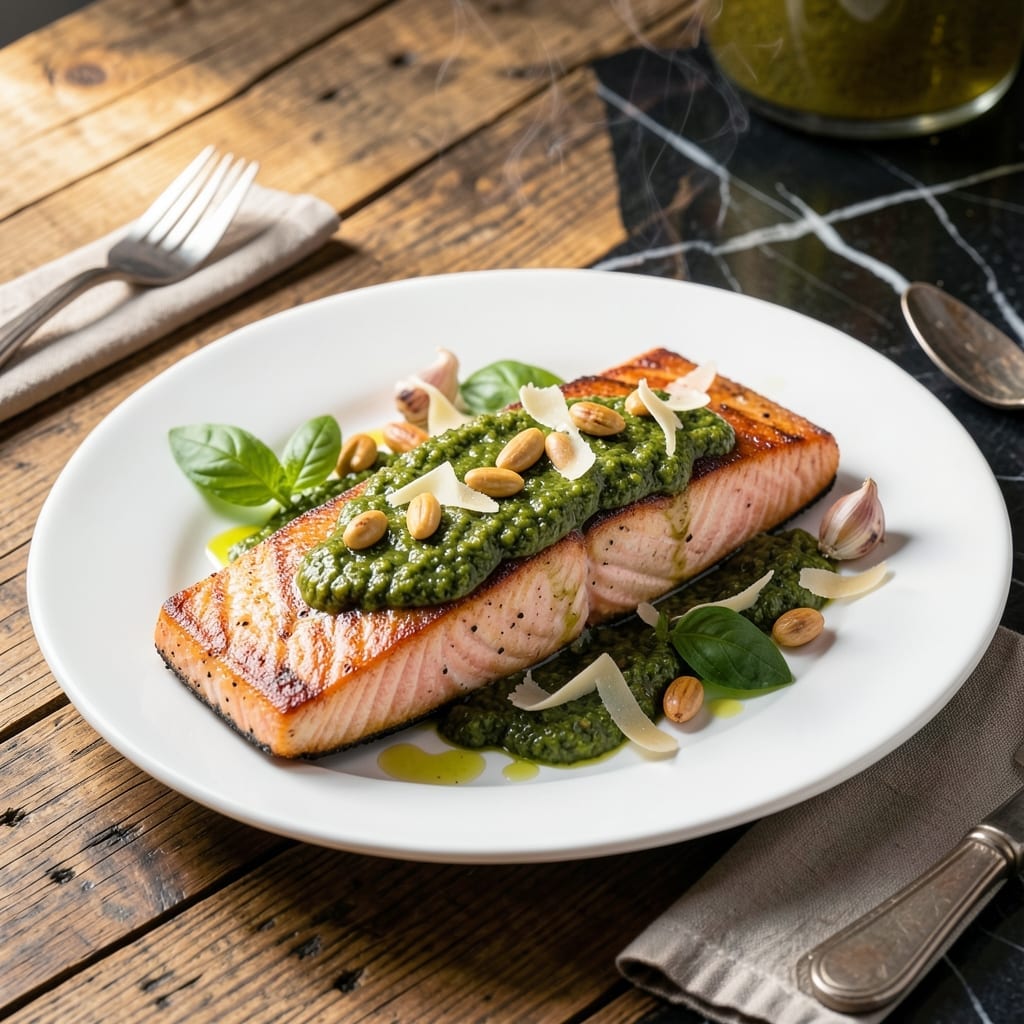
This pesto sauce transforms simple salmon into a perfect restaurant-quality dish. I developed this method after years of experimenting with herb combinations and cooking techniques.
The secret lies in balancing fresh basil with pine nuts and parmesan, creating a sauce that complements rather than overpowers the fish. Cooking the salmon at 375°F ensures it stays tender and flaky.
What you’ll achieve is a dish with vibrant green sauce clinging to each bite of moist salmon. The flavors meld beautifully, with the pesto adding brightness to the rich fish.
Serve on a bed of greens or with roasted vegetables for a complete meal. This technique delivers consistent perfect results every time.
Ingredients for Pesto Sauce Recipe for Salmon
Fresh salmon, vibrant pesto, and a handful of bright ingredients for restaurant-quality results.
| Ingredient | Amount | Notes |
|---|---|---|
| Salmon Fillets 🐟 | 1 ½ lb | Skin-on or skinless, wild-caught preferred |
| Fresh Basil Leaves 🌿 | 2 cups | Packed, stems removed for vibrancy |
| Pine Nuts 🥜 | ½ cup | Lightly toasted for nuttiness |
| Parmesan Cheese 🧀 | ¾ cup | Freshly grated Parmigiano-Reggiano |
| Garlic Cloves 🧄 | 3 cloves | Peeled, roughly chopped |
| Extra-Virgin Olive Oil 🫒 | ¾ cup | High-quality, cold-pressed |
| Lemon Juice 🍋 | 1 tbsp | Freshly squeezed for brightness |
| Salt 🧂 | ½ tsp | Fine sea salt or kosher |
| Black Pepper 🌶️ | ¼ tsp | Freshly ground for best flavor |
| Baby Spinach 🥬 | 4 cups | For serving bed |
| Cherry Tomatoes 🍅 | 1 cup | Halved, for serving |
| Red Pepper Flakes 🌶️ | ¼ tsp | Optional for heat |
The salmon quality is paramount. Wild-caught fillets from Whole Foods or a trusted fishmonger ensure superior flavor and texture. Look for bright, firm flesh with minimal odor. The pine nuts—Trader Joe’s offers the best value—should be golden and fresh, as stale nuts taste bitter. Fresh basil must be aromatically potent; avoid wilted or yellowing leaves.
Substitutions are straightforward here. Walnuts or cashews replace pine nuts beautifully (toast them first). Pecorino Romano can stand in for Parmesan at a 1:1 ratio. For a nut-free pesto, use sunflower seeds. The olive oil must be high-quality—California Olive Ranch or Colavita are reliable. Fresh lemon juice is non-negotiable; bottled lacks the necessary acidity.
The pesto keeps for 5 days refrigerated in an airtight container with a thin olive oil layer on top. Salmon is best served immediately but can be stored cooked for 2 days. Freeze pesto in ice cube trays for up to 3 months.
Why You’ll Love This Recipe
- 20-Minute Meal: I can have this on the table faster than waiting for delivery. Just blend the basil, pine nuts, parmesan, and garlic while the salmon roasts.
- Bright, Fresh Flavor: The pesto’s garlic and basil cut through the salmon’s richness in the best way. Honestly, it tastes like a restaurant dish without the markup.
- Date Night Ready: Impresses guests but feels unfussy. Here’s what sold me—it works for a cozy dinner or a dinner party with zero extra stress.
- Leftovers? Even Better: The pesto keeps for days, so I toss it with pasta or sandwiches the next day. I’ll be real: I sometimes make extra just for that.
Step-by-Step Instructions for Pesto Sauce Salmon
This method ensures flawless execution with vibrant flavors and ideal texture every time.
Step 1: Toast the Pine Nuts and Prepare Aromatics
In a dry skillet over medium heat, toast the 0.5 cup pine nuts for 3-4 minutes until golden brown and fragrant, stirring frequently to prevent burning. Immediately transfer to a plate to cool—residual heat will continue cooking them.
While the pine nuts cool, peel and roughly chop the 3 cloves garlic cloves. This larger cut ensures the garlic blends smoothly into the pesto without overpowering the basil. Set both aside for the next step.
Step 2: Blend the Pesto to Silky Perfection
In a food processor, combine the 2 cups fresh basil leaves, cooled pine nuts, and chopped garlic. Pulse for 10-15 seconds until finely minced but not yet a paste. Stop and scrape down the sides as needed for even processing.
With the processor running, slowly drizzle in the 0.75 cup extra-virgin olive oil through the feed tube. Once emulsified, add the 0.75 cup parmesan cheese, 0.5 tsp salt, 0.25 tsp black pepper, and 1 tbsp lemon juice. Process for another 20-30 seconds until completely smooth and vibrant green.
Step 3: Sear the Salmon Fillets
Pat the 1.5 lb salmon fillets dry with paper towels and season lightly with additional salt and pepper. Heat a large skillet over medium-high heat with 1 tablespoon of the pesto’s olive oil. When the oil shimmers, add the salmon skin-side down if using skin-on fillets.
Cook undisturbed for 4-5 minutes until the skin is crisp and golden and the fish releases easily from the pan. Flip and cook for another 3-4 minutes until the salmon reaches 145°F internally and flakes easily with a fork.
Step 4: Assemble and Serve with Fresh Accompaniments
Arrange the 4 cups baby spinach on serving plates as a bed for the salmon. Place the cooked fillets on top and spoon the prepared pesto generously over each portion. The heat from the fish will slightly warm the pesto, enhancing its aromatic qualities.
Scatter the 1 cup cherry tomatoes around each plate and finish with a pinch of 0.25 tsp red pepper flakes for those who enjoy a subtle heat. Serve immediately while the salmon is at its peak tenderness and the pesto’s flavors are most vibrant.
Pro Tips For Making Pesto Sauce Recipe For Salmon
- Toast the Pine Nuts: I learned this the hard way—raw pine nuts taste flat in pesto. Toss them in a dry pan over medium heat for 2-3 minutes until golden and fragrant.
- Pat Salmon Dry: Skip this and your pesto won’t stick right. Blot the fillets with paper towels before adding the sauce—it makes a real difference.
- Use Room-Temp Basil: After wilted pesto ruined a batch, I now pull basil from the fridge 30 minutes early. Cold leaves turn black when blended.
- Grate the Parmesan Fresh: Sounds fussy, but pre-grated cheese has anti-caking agents that make pesto grainy. A quick rub on a microplane gives that smooth, creamy texture.
Flavor Customization for This Dish
Herb Variations
Swap basil for fresh cilantro and add 1 tsp lime zest for a bright, citrusy twist that pairs beautifully with salmon. I love this version in summer when cilantro thrives in my Portland garden. The flavor is vibrant and refreshing. 🌿
Nut Alternatives
Replace pine nuts with toasted walnuts or cashews for a budget-friendly option. Walnuts add depth, while cashews give a creamy texture. Toast them for 3-4 minutes until fragrant.
Cheese Swaps
Substitute parmesan with pecorino romano or asiago for a sharper, saltier kick. Use the same 0.75 cup measurement. For dairy-free, try nutritional yeast—it adds a cheesy flavor without the dairy.
Spice It Up
Add ½ tsp red pepper flakes or 1 finely chopped jalapeño to the pesto for heat. I often do this when Tom wants extra spice. Balance the heat with a touch of honey if needed.
Citrus Boost
Enhance brightness by adding 1 tsp lemon zest along with the juice. The zest adds a pop of color and intensified citrus flavor. This works especially well with the salmon’s richness. 🍋
Creamy Twist
Blend in 2 tbsp Greek yogurt or cream cheese for a richer, creamier pesto. This version clings beautifully to the fish and adds a velvety texture that Lily absolutely adores.
Nutrition Facts
Frequently Asked Questions
Can I use store-bought pesto instead?
Yes, but fresh is always better. Store-bought works in a pinch—use 2-3 tablespoons per fillet. Warm it slightly before spooning over cooked salmon for best flavor.
What’s the best way to keep salmon from sticking?
Ensure your pan is very hot before adding the fish, and don’t move it for at least 4 minutes. A well-seasoned cast iron or nonstick skillet works best. Pat the salmon completely dry first.
How do I know when the salmon is done?
The flesh should flake easily with a fork and reach 145°F internally. For visual cues, look for the color to change from translucent to opaque. Overcooking makes it dry—remove it just as it hits temperature.
Can I make this ahead of time?
Prepare the pesto up to 2 days ahead and store it in an airtight container in the fridge. Cook the salmon just before serving for the best texture and freshness.

- Potato Candy Recipe 1933: Vintage Peanut Butter Roll Delight - October 30, 2026
- Potato Chip Cookie Recipe With Pecans: Buttery Crunch Meets Nutty Richness - October 30, 2026
- Potato Patty Recipe No Egg: Crispy Edges Without the Binder - October 30, 2026