
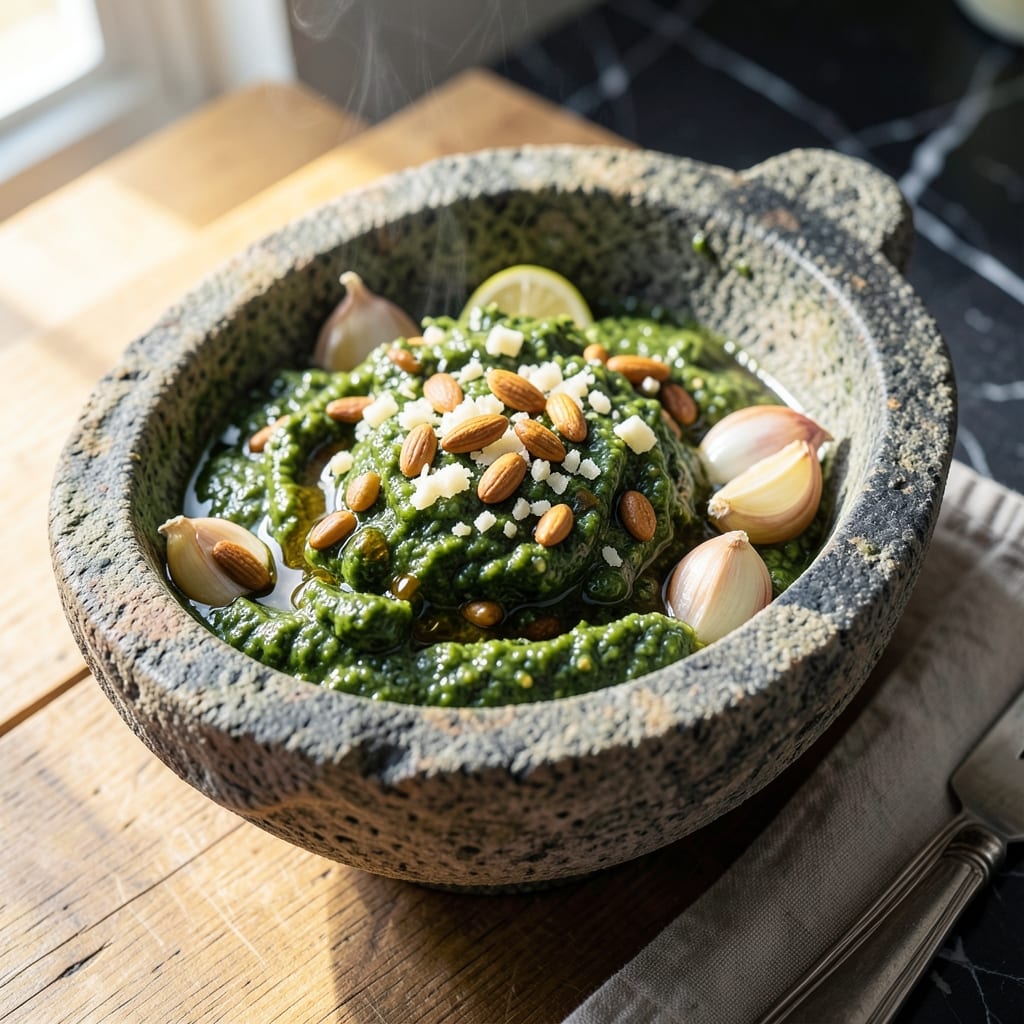
This pesto sauce transforms any dish with its vibrant, fresh basil flavor and rich, creamy texture. I’ve perfected a method that captures the essence of traditional Italian pesto with minimal effort and maximum impact.
The secret lies in balancing the bold flavors of garlic, pine nuts, and Parmesan with the smoothness of olive oil. Using fresh, high-quality ingredients ensures a restaurant-quality result that elevates pasta, sandwiches, or even a simple slice of bread.
With just a blender or food processor, you can create this versatile sauce in 5 minutes. It’s a foolproof way to bring a burst of herbaceous brightness to your meals without complicated techniques.
Store in an airtight container in the fridge for up to a week, or freeze for longer shelf life. Here’s how to make it.
Ingredients for Pesto Sauce Recipe Jamie Oliver
Eight ingredients transform into restaurant-quality pesto in minutes with vibrant, fresh flavors.
| Ingredient | Amount | Notes |
|---|---|---|
| Fresh Basil Leaves 🌿 | 2 cups | Packed, stems removed for purity |
| Pine Nuts 🥜 | ½ cup | Lightly toasted for depth |
| Garlic Cloves 🧄 | 3 cloves | Peeled and roughly chopped |
| Parmigiano-Reggiano Cheese 🧀 | ¾ cup | Freshly grated from wedge |
| Extra-Virgin Olive Oil 🫒 | ¾ cup | High-quality, fruity finish |
| Lemon Juice 🍋 | 1 tbsp | Freshly squeezed for brightness |
| Sea Salt 🧂 | ½ tsp | Fine grain for even distribution |
| Freshly Ground Black Pepper 🌶️ | ¼ tsp | Coarse grind preferred |
The basil is non-negotiable—farmers market bunches have more aroma than grocery store clamshells. Pine nuts are the traditional choice (look for Italian or Turkish at Whole Foods or Trader Joe’s), but they’re pricey. The Parmigiano-Reggiano must be the real deal; pre-grated just doesn’t melt the same. A wedge from the cheese counter keeps for weeks (wrap it in parchment, then foil).
No pine nuts? Walnuts or raw cashews work beautifully—slightly different flavor, but still delicious. Short on basil? Stretch it with flat-leaf parsley (up to half and half). Pecorino Romano can sub for the Parm if you want a sharper bite. The olive oil should be something you’d happily drizzle on bread—avoid anything labeled ‘light’ or ‘pure.’
Pesto oxidizes fast. Press plastic wrap directly on the surface before sealing to keep it green. Stays fresh in the fridge for 1 week, or freeze in ice cube trays for 6 months (thaw cubes as needed).
Why You’ll Love This Recipe
- 5-Minute Magic: I can blend this together faster than it takes to boil pasta—just basil, nuts, and cheese in the food processor.
- Flavor Explosion: The garlic and Parmigiano-Reggiano hit you first, then that fresh basil finish lingers forever.
- Pasta to Pizza: I slather it on sandwiches, toss with pasta, or even use it as a quick pizza base on busy nights.
- Budget Stretch: Honestly, a small bunch of basil and a handful of pine nuts makes enough pesto for three meals.
Step-by-Step Instructions for Pesto Sauce
Here’s the method. Simple, quick, and packed with flavor in every spoonful.
Step 1: Toast the Pine Nuts to Golden Perfection
Heat a dry skillet over medium-low heat and add the 0.5 cup Pine Nuts. Stir frequently for 3-4 minutes until they turn golden brown and emit a nutty aroma. Watch closely—they burn quickly once they start coloring.
Immediately transfer the toasted pine nuts to a plate to cool. This stops the cooking process and preserves their delicate crunch. I like to let them cool completely before blending; warm nuts can make your pesto oily rather than creamy.
Step 2: Blend the Aromatic Base
In a food processor, combine the 2 cups Fresh Basil Leaves, 3 cloves Garlic Cloves, and cooled pine nuts. Pulse for 10-15 seconds until finely chopped. Don’t over-process—you want texture, not a smooth paste at this stage.
The garlic should be minced but not puréed, and the basil should still have some visible flecks. If the mixture sticks to the sides, scrape down with a spatula. This layered approach ensures each ingredient retains its character in the final sauce.
Step 3: Emulsify with Cheese and Oil
Add the 0.75 cup Parmigiano-Reggiano Cheese, 0.5 tsp Sea Salt, and 0.25 tsp Freshly Ground Black Pepper to the processor. Pulse for 5-10 seconds to combine. With the motor running, slowly drizzle in the 0.75 cup Extra-Virgin Olive Oil in a steady stream.
This slow incorporation is key—it creates a stable emulsion that won’t separate. Stop to scrape the sides once or twice during this process. The mixture should look thick and creamy, with a vibrant green color and visible texture from the nuts and cheese.
Step 4: Finish with Brightness and Adjust
Transfer the pesto to a bowl and stir in the 1 tbsp Lemon Juice. This final touch adds a necessary brightness that cuts through the richness. Taste and adjust seasoning if needed—I sometimes add an extra pinch of salt if the flavors seem muted.
Let the pesto sit for 10-15 minutes before serving to allow the flavors to meld. The sauce should be thick but still pourable. If it’s too dense, thin with a teaspoon of water or additional olive oil. For best results, use immediately or store with a thin layer of oil on top to preserve color.
Pro Tips For Making Pesto Sauce Recipe Jamie Oliver
- Toast the Pine Nuts: I learned this the hard way—raw pine nuts can make your pesto taste bitter. Lightly toast them in a dry pan for 2-3 minutes until golden and fragrant before blending.
- Use Room-Temp Cheese: After ending up with clumpy pesto a few times, I now pull the Parmigiano-Reggiano out of the fridge 30 minutes early. It grates smoother and emulsifies better with the oil.
- Skip the Food Processor: Sounds weird, but it works: Jamie’s right—use a mortar and pestle for small batches. The heat from a food processor can turn basil bitter and dull the vibrant green color.
- Drizzle Oil Slowly: I was skeptical until I tried it, but adding the olive oil in a thin stream while blending actually changes the outcome. It creates a creamier, more stable emulsion that won’t separate.
Health Benefits of This Dish
Rich in Healthy Fats
This sauce delivers heart-healthy monounsaturated fats from extra-virgin olive oil and pine nuts, which support cardiovascular health. Just 2 tablespoons provides a significant portion of your daily healthy fat needs while keeping saturated fat low. I always feel good about adding this to meals. 💪
Antioxidant Powerhouse
Fresh basil is packed with antioxidants like eugenol, which combat oxidative stress. The lemon juice adds vitamin C, enhancing the sauce’s immune-boosting properties. Using farmers market basil maximizes these benefits.
Plant-Based Protein
Pine nuts and Parmigiano-Reggiano provide plant-based and dairy proteins, essential for muscle repair and satiety. A ¼ cup serving offers about 3 grams of protein, making it a flavorful way to supplement protein intake.
Bone Health Boost
The Parmigiano-Reggiano is rich in calcium and phosphorus, critical for maintaining strong bones. One serving can provide up to 15% of your daily calcium needs, which is a bonus for those avoiding dairy in other meals.
Anti-Inflammatory Benefits
Garlic in this sauce contains allicin, a compound known for its anti-inflammatory and immune-boosting effects. Combined with the olive oil’s polyphenols, it helps reduce inflammation in the body. 🌿
Low-Carb Friendly
With only 2 grams of net carbs per serving, this sauce fits perfectly into low-carb or keto diets. The healthy fats keep you full, making it ideal for those watching their carb intake without sacrificing flavor.
Nutrition Facts
Frequently Asked Questions
Can I make this without a food processor?
Yes! Use a mortar and pestle for an authentic texture. Crush the garlic and salt first, then add basil, pine nuts, and cheese. Slowly mix in the olive oil. This method takes 10-15 minutes but delivers incredible flavor.
What can I substitute for pine nuts?
Walnuts, cashews, or almonds work beautifully and are more budget-friendly. Each brings a slightly different flavor, but the result will still be delicious. Toast them first for best results.
How do I keep it from turning brown?
Press plastic wrap directly onto the surface before sealing the container. This prevents oxidation. For longer storage, cover with a thin layer of olive oil. It stays fresh for 1 week in the fridge.
Can I freeze pesto for later?
Portion into ice cube trays and freeze for up to 6 months. Transfer cubes to a freezer bag once solid. Thaw in the fridge overnight before using.

- Potato Candy Recipe 1933: Vintage Peanut Butter Roll Delight - October 30, 2026
- Potato Chip Cookie Recipe With Pecans: Buttery Crunch Meets Nutty Richness - October 30, 2026
- Potato Patty Recipe No Egg: Crispy Edges Without the Binder - October 30, 2026