
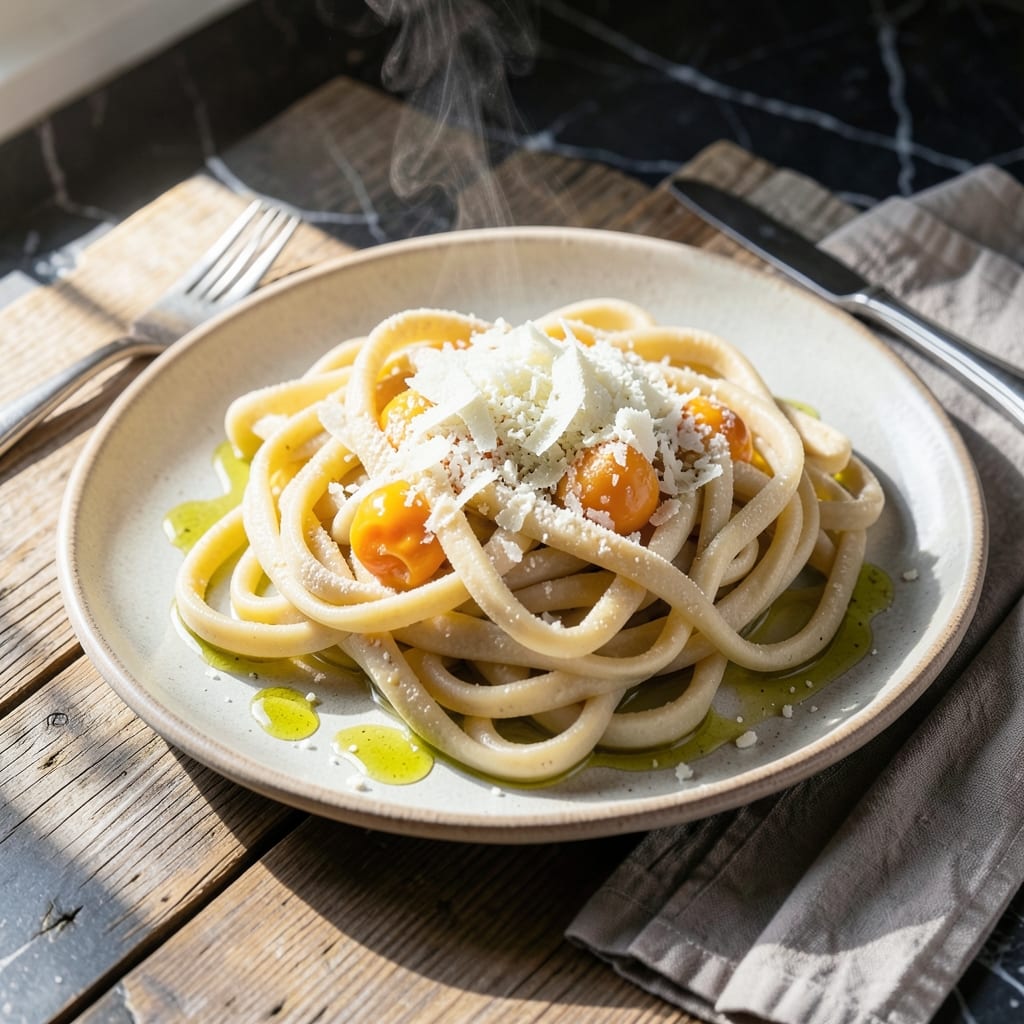
There’s something deeply satisfying about making pasta from scratch, especially when it’s as rustic and flavorful as pici. This traditional Tuscan pasta relies on a simple dough enriched with eggs, rolled by hand into thick, irregular strands that hold sauce beautifully.
The process is both meditative and rewarding. With just flour, eggs, and a touch of olive oil, you create a dough that’s easy to work with and forgiving for beginners. The hand-rolling technique gives pici its signature texture—tender yet slightly chewy, with a hearty bite.
What makes this recipe special is its simplicity and authenticity. Unlike machine-extruded pasta, pici absorbs sauces in a way that feels perfect every time. The egg enriches the dough, adding richness without overpowering the rustic charm.
Serve with a rich ragù, garlic and olive oil, or your favorite Tuscan-inspired sauce. This is pasta-making at its most pure.
Ingredients for Pici Recipe with Egg
Simple ingredients create authentic hand-rolled Tuscan pasta with rich egg-enriched flavor.
| Ingredient | Amount | Notes |
|---|---|---|
| All-Purpose Flour 🌾 | 3 ½ cups | Plus extra for dusting work surface |
| Large Eggs 🥚 | 4 whole | Room temperature preferred for even mixing |
| Extra-Virgin Olive Oil 🫒 | 2 tbsp | High-quality for authentic Tuscan flavor |
| Fine Sea Salt 🧂 | 1 tsp | Diamond Crystal brand recommended for consistency |
| Semolina Flour 🌾 | ½ cup | For texture and traditional authenticity |
| Lukewarm Water 💧 | ¼ cup | Adjust as needed for dough consistency |
The flour is the foundation here. King Arthur all-purpose is my go-to—consistent protein content means predictable dough. Semolina adds that signature texture you’ll find in traditional pici (worth hunting down at Italian markets or the international aisle). Don’t skip the fine sea salt—Diamond Crystal dissolves beautifully and seasons evenly without clumping.
Out of eggs? Not happening—this dough needs them for richness and structure. But if you’re short on all-purpose flour, bread flour works too (just reduce water slightly). No semolina? Replace with all-purpose flour—you’ll lose some texture but it’ll still taste great. Olive oil is non-negotiable—use the good stuff, not that dusty bottle in the back of your cabinet.
Dough keeps wrapped in plastic for 24 hours in the fridge (let it come to room temp before rolling). Fresh pici cooks immediately or rests 30 minutes at room temperature. Freeze uncooked strands on a tray first, then transfer to a bag—they’ll keep for 1 month.
Why You’ll Love This Recipe
- Three-Ingredient Base: No fancy shopping—just flour, eggs, and olive oil I always have on hand.
- Rich Egg Flavor: The yolks give the pici a silky depth that plain water pasta just can’t touch.
- Weeknight Friendly: I roll and cut while dinner simmers, and it’s ready before the sauce is.
- Stretches Far: A double batch costs pennies, feeds four, and leftovers reheat beautifully for lunch.
Step-by-Step Instructions for Pici with Egg
This method delivers that signature rustic texture that makes Tuscan pici so special.
Step 1: Form the Dough Base
On a clean work surface, mound the 3.5 cups All-Purpose Flour and make a well in the center. Add the 4 whole Large Eggs, 2 tbsp Extra-Virgin Olive Oil, and 1 tsp Fine Sea Salt into the well. I like to crack the eggs directly into the well to avoid any shell fragments.
Using a fork, gradually incorporate the flour from the inner rim of the well into the wet ingredients. Work in concentric circles, pulling in more flour as the mixture thickens. The dough will start shaggy—that’s normal at this stage.
Step 2: Knead to Smooth Consistency
Once the dough comes together, sprinkle the 0.5 cup Semolina Flour over your work surface. Turn the dough out onto the semolina and begin kneading. The semolina prevents sticking while adding that authentic gritty texture pici is known for.
Knead for 8-10 minutes until the dough is smooth and elastic. If it feels too dry, add the 0.25 cup Lukewarm Water a tablespoon at a time until it reaches the right consistency. You want it firm but pliable—like Play-Doh but slightly tackier.
Step 3: Rest the Dough for Workability
Shape the dough into a ball, wrap it in plastic wrap, and let it rest at room temperature for 30 minutes. This relaxation period allows the gluten to settle, making the dough much easier to roll out later.
I’ve found that skipping this step results in dough that springs back stubbornly when you try to roll it. The rested dough should feel noticeably more supple when you return to it.
Step 4: Roll and Cut the Pici Strands
Divide the dough into 4 equal portions to work with one at a time (keep the rest covered). On a floured surface, roll each portion into a ½-inch thick rope. The thickness is crucial—too thin and they’ll be delicate, too thick and they won’t cook evenly.
Using a sharp knife or bench scraper, cut the rope into ¼-inch wide pieces. Roll each piece between your palms to create long, thin strands—traditional pici are about 1/8-inch thick and 8-10 inches long. Dust with more all-purpose flour as needed to prevent sticking.
Here’s the thing—don’t stress about perfect uniformity. The beauty of pici lies in its handmade imperfections.
Step 5: Cook Immediately or Dry Slightly
Bring a large pot of salted water to a rolling boil. Add the pici and cook for 3-4 minutes until they float to the surface and are al dente. Fresh pasta cooks quickly, so test one strand early.
If you’re not cooking them immediately, spread the strands on a floured baking sheet and let them dry for 15-20 minutes. This prevents them from sticking together. Toss with your favorite sauce and serve right away—the texture is best when fresh.
Pro Tips For Making Pici Recipe With Egg
- Knead Until Smooth: Work the dough for at least 8-10 minutes until it’s silky—this develops the gluten so your pici holds its shape when rolled.
- Use Room-Temp Eggs: I learned this the hard way: cold eggs make the dough fight back. Pull them out 30 minutes before mixing for easier blending.
- Skip Extra Flour: Resist the urge to dust heavily while rolling—too much bench flour makes pici tough. A light sprinkle of semolina is all you need.
- Roll Unevenly Thick: Sounds weird, but it works: leave some parts slightly thicker for chewy texture. Uniform strands look pretty but taste flat.
Pro Cooking Tips for Great pici recipe with egg
Dough Consistency Secrets
Your dough should feel firm but not dry. If it cracks when rolling, add lukewarm water 1 tbsp at a time. I’ve learned that King Arthur flour absorbs moisture predictably, so adjustments are minimal. The egg enrichment means you’ll need slightly less water than traditional pasta dough. 💡
Rolling Technique Mastery
Work with ¼ of the dough at a time, keeping the rest covered. Roll each portion into a ½-inch rope first—this makes cutting and shaping the strands much easier. Use your palms to roll the strands, not your fingertips, for even thickness.
Preventing Stickiness
Dust your work surface and hands generously with all-purpose flour or semolina. If strands stick while rolling, dip them in flour before continuing. I keep a small bowl of flour nearby for quick access during the process.
Even Cooking Tips
For uniform cooking, aim for 1/8-inch thickness in your strands. Test one strand after 3 minutes in boiling water—it should float when done. Fresh pici cooks faster than dried, so stay attentive.
Resting Importance
Never skip the 30-minute rest after kneading. This relaxes the gluten, preventing the dough from springing back. I’ve ruined batches by rushing this step—patience truly makes perfect pici.
Sauce Pairing Prep
Toss hot pici immediately with your sauce. The rough texture grabs thick ragùs beautifully. I love it with a simple garlic-olive oil combination to let the pasta shine. 🌟
Nutrition Facts
Frequently Asked Questions
Can I use fewer eggs for a lighter dough?
For authentic texture, stick with 4 eggs. Reducing them makes the dough less rich and harder to roll. If absolutely necessary, use 3 eggs but add 1-2 tbsp water to compensate.
Why does my dough keep springing back?
This means the gluten needs more rest. Wrap it in plastic and let it sit for the full 30 minutes. If it still resists, knead for 2 more minutes before resting again.
How do I store fresh pici before cooking?
Spread strands on a floured tray and refrigerate uncovered for 1-2 hours. For longer storage, freeze on the tray first, then transfer to a bag—they’ll keep for 1 month.
What sauce pairs best with pici?
Thick, hearty sauces cling perfectly to the strands. Try a wild boar ragù for tradition, or a simple garlic-olive oil with chili flakes for a quick, flavorful option.

- Potato Candy Recipe 1933: Vintage Peanut Butter Roll Delight - October 30, 2026
- Potato Chip Cookie Recipe With Pecans: Buttery Crunch Meets Nutty Richness - October 30, 2026
- Potato Patty Recipe No Egg: Crispy Edges Without the Binder - October 30, 2026