
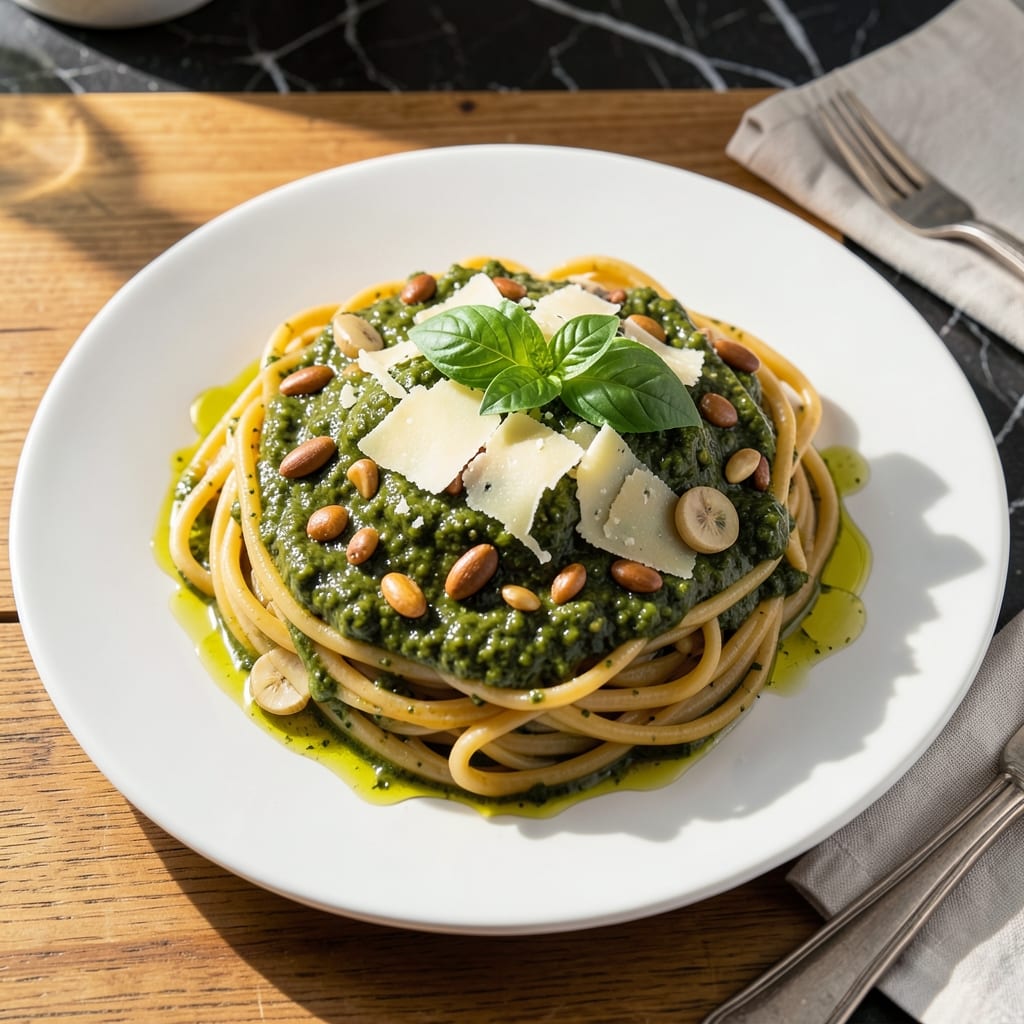
This fresh basil pesto transforms any pasta dish with its vibrant, aromatic flavor. The emulsion of basil, garlic, and pine nuts creates a smooth, rich sauce that clings beautifully to noodles.
I developed this recipe to capture the essence of traditional Italian pesto without complicated techniques. The key is using fresh, high-quality ingredients and processing them just until combined—not over-blended.
Once prepared, this sauce delivers a bright, herbaceous punch that elevates simple pasta to restaurant-quality. It also works beautifully as a spread for sandwiches or a dip for bread.
Store in an airtight container in the refrigerator for up to five days, or freeze for longer preservation. Here’s how to make it perfectly every time.
Ingredients for Pesto Sauce Recipe for Pasta
Eight premium ingredients transform into a vibrant, restaurant-quality sauce instantly.
| Ingredient | Amount | Notes |
|---|---|---|
| Fresh Basil Leaves 🌿 | 2 cups | Packed, stems removed |
| Pine Nuts 🥜 | ½ cup | Lightly toasted for depth |
| Garlic Cloves 🧄 | 3 cloves | Peeled, rough chopped |
| Parmigiano-Reggiano Cheese 🧀 | ¾ cup | Freshly grated from wedge |
| Extra-Virgin Olive Oil 🫒 | ¾ cup | High-quality, fruity variety |
| Lemon Juice 🍋 | 1 tbsp | Freshly squeezed preferred |
| Diamond Crystal Kosher Salt 🧂 | ½ tsp | Adjust to taste |
| Freshly Ground Black Pepper 🌶️ | ¼ tsp | To taste |
The basil must be pristine—farmers market finds outperform grocery store clamshells every time. Look for bright, unblemished leaves with no wilting. Parmigiano-Reggiano is non-negotiable; pre-grated versions contain anti-caking agents that prevent proper melting. Whole Foods and specialty Italian markets stock authentic wedges. Pine nuts, while pricey, deliver the signature buttery crunch (splurge at Trader Joe’s for better rates).
No pine nuts? Toasted walnuts or raw cashews substitute beautifully with minimal flavor change. Short on basil? Augment with fresh spinach (up to 25%) without sacrificing color. Pecorino Romano adds a sharper edge if preferred, and half the amount of dried basil works in emergencies. The olive oil should be robust—anything labeled ‘light’ lacks the fruity notes essential for proper emulsion.
Pesto oxidizes quickly. Float a thin olive oil layer on top before sealing to preserve that vibrant green. Refrigerates well for 5 days or freeze in ice cube trays for 6 months. Portion into small containers for easy single-serving use.
Why You’ll Love This Recipe
- I’ll be real: this keeps for a week in the fridge, and it’s saved me on more than one “what’s for dinner” panic night.
- One-Bowl Wonder: I just toss everything in the food processor—basil, pine nuts, garlic, Parmesan—then drizzle in the oil. No chopping board, no fuss.
- Flavor Bomb: That first bite with fresh basil and nutty Parmigiano-Reggiano? Ridiculously good. The pine nuts add this little crunch that’s pure satisfaction.
- Endless Uses: Honestly, I slather it on sandwiches, mix it into scrambled eggs, or just eat it with a spoon. Not even kidding.
Step-by-Step Instructions for Pesto Sauce for Pasta
This classic method ensures a vibrant, emulsified sauce with balanced texture and flavor.
Step 1: Toast the Pine Nuts for Depth
Heat a dry skillet over medium-low heat. Add the 0.5 cup Pine Nuts and toast for 3-5 minutes, stirring frequently, until they turn light golden brown and release a nutty aroma.
Watch them closely—they burn easily. Once toasted, immediately transfer to a plate to cool. This prevents over-browning from residual heat. The toasting step intensifies their flavor and adds a subtle crunch to the finished pesto.
Step 2: Blend Basil, Garlic, and Pine Nuts
In a food processor, combine the 2 cups Fresh Basil Leaves, 3 cloves Garlic Cloves, and cooled Pine Nuts. Pulse in 1-second bursts for 10-12 seconds total until finely chopped but not puréed.
The mixture should resemble coarse sand with visible flecks of green. Avoid over-processing at this stage, as it can make the final sauce bitter. The garlic and pine nuts create the base texture before the oil emulsifies everything together.
Step 3: Emulsify with Cheese and Olive Oil
Add the 0.75 cup Parmigiano-Reggiano Cheese and pulse for 5-8 seconds to incorporate. With the processor running, slowly drizzle in the 0.75 cup Extra-Virgin Olive Oil through the feed tube.
This gradual addition is critical for creating a stable emulsion. The mixture will transform from a chunky paste to a smooth, glossy sauce. Stop once or twice to scrape down the sides of the bowl for even blending.
Step 4: Finish with Acid and Seasoning
Add the 1 tbsp Lemon Juice, 0.5 tsp Diamond Crystal Kosher Salt, and 0.25 tsp Freshly Ground Black Pepper. Pulse for 3-5 seconds just until combined.
Taste and adjust the seasoning if needed, remembering that the cheese already contributes saltiness. The lemon juice brightens the flavors and balances the richness of the olive oil and cheese. The finished pesto should be thick but pourable, with a vibrant green color.
Pro Tips For Making Pesto Sauce Recipe For Pasta
- Blanch the Basil: Drop basil leaves in boiling water for 10 seconds then shock in ice water—I learned this the hard way after too many batches turned bitter from raw leaves.
- Toast the Pine Nuts: Dry-toast pine nuts in a pan over medium-low for 2-3 minutes until golden; it coaxes out their buttery depth and prevents that raw, waxy texture.
- Skip the Food Processor: Use a mortar and pestle or pulse very briefly in a blender—over-processing heats the oil and turns pesto into sad, dark paste.
- Use Starchy Pasta Water: Thin the pesto with 2-3 tablespoons of hot pasta water instead of oil; the starch helps it cling to noodles like glue.
Troubleshooting This Recipe
Too Thick or Paste-like
If your pesto turns out too thick, add 1-2 tbsp warm pasta water to loosen it. This helps create a silky texture that clings perfectly to noodles. I find this trick especially useful when using the sauce for cold pasta salads. 💡
Separated or Oily
Emulsion breaking happens when the sauce sits too long. Simply give it a good stir before using. For prevention, always drizzle the olive oil slowly while processing. If separation persists, add 1 tsp more cheese and blend again.
Bitter Taste
Over-processed basil can turn bitter. Pulse in short bursts and check frequently. If bitterness develops, add ½ tsp honey or 1 tsp more lemon juice to balance. Fresh basil is key—I always use farmers market leaves.
Discolored or Brown
Oxidation turns pesto brown. Press plastic wrap directly on the surface before refrigerating. For longer storage, float a thin layer of olive oil on top. This creates a barrier against air exposure.
Too Salty
If your pesto tastes too salty, balance with 1-2 tbsp more olive oil or a squeeze of lemon juice. The Parmigiano-Reggiano can vary in saltiness, so taste before adding extra salt. I always start with less and adjust.
Chunky Texture
For a smoother sauce, ensure all ingredients are at room temperature before blending. If chunks remain, process in longer bursts until smooth. The pine nuts should be finely ground before adding oil.
Nutrition Facts
Frequently Asked Questions
Can I use a different nut instead of pine nuts?
Walnuts or cashews work well as substitutes. Toast them first for best flavor. The texture may vary slightly, but the taste remains delicious.
How long can I store homemade pesto?
In the fridge, it stays fresh for 5 days in an airtight container. For longer storage, freeze in ice cube trays for up to 6 months. Always cover with oil to prevent browning.
Why does my pesto turn brown?
Oxidation causes the color change. To prevent this, press plastic wrap directly on the surface or add a thin olive oil layer before sealing. This keeps it vibrant green.
Can I make pesto without cheese?
Yes! For a vegan version, omit the cheese or use nutritional yeast. The flavor will be milder, but still fresh and herby. Adjust salt to taste.

- Potato Candy Recipe 1933: Vintage Peanut Butter Roll Delight - October 30, 2026
- Potato Chip Cookie Recipe With Pecans: Buttery Crunch Meets Nutty Richness - October 30, 2026
- Potato Patty Recipe No Egg: Crispy Edges Without the Binder - October 30, 2026