
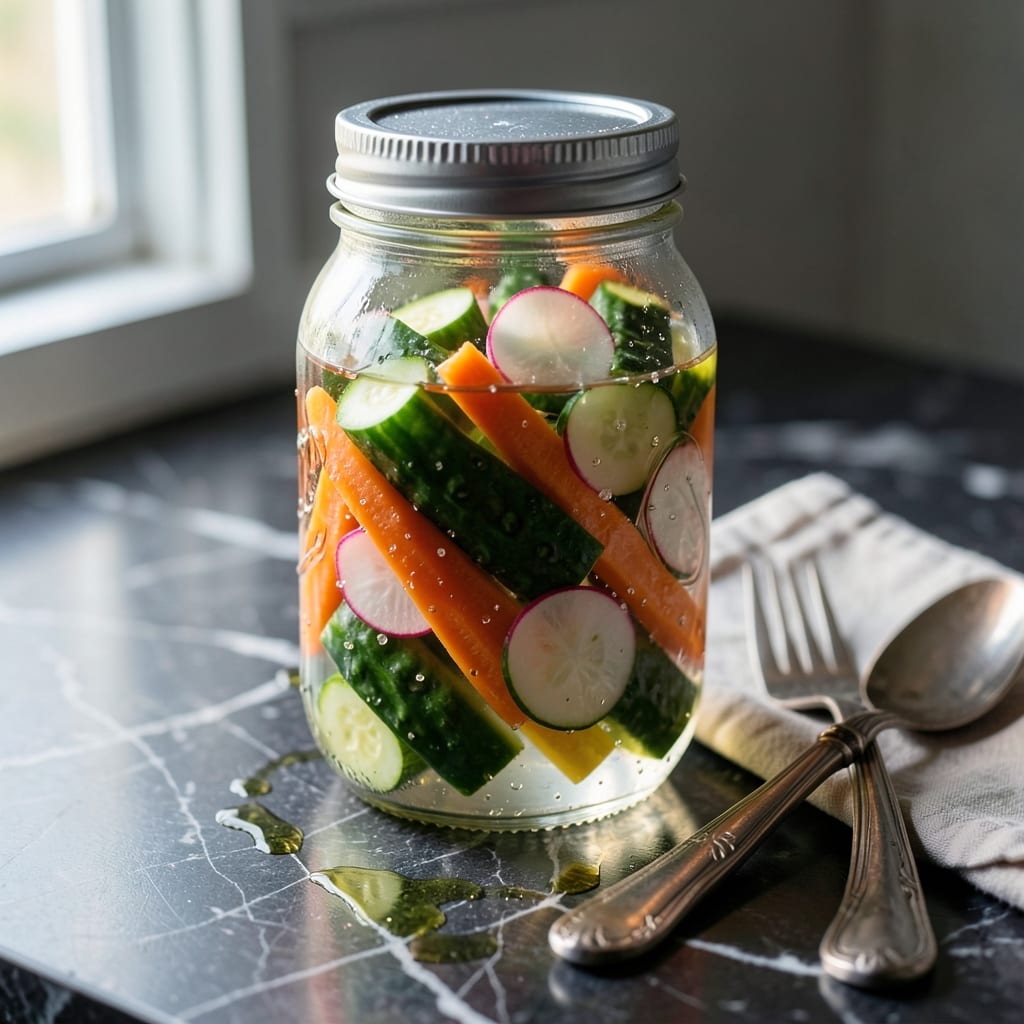
I’ve been making fridge pickles for years, and this method delivers crispy, tangy results without the hassle of canning. No special equipment is needed—just a jar, fresh vegetables, and a simple brine.
The secret is using cold water for the brine and slicing vegetables thinly for even flavor absorption. Within 24 hours, your pickles will be ready, but they’ll keep improving for weeks in the fridge.
This technique works for cucumbers, carrots, radishes, or even green beans. The vinegar-based brine ensures safety while preserving that signature crunch and bright flavor.
Perfect for snacking, sandwiches, or charcuterie boards. Here’s how to make them at home.
Ingredients for Pickle Recipe Fridge
Fresh vegetables and a simple vinegar brine transform into crisp, tangy pickles overnight.
| Ingredient | Amount | Notes |
|---|---|---|
| Kirby Cucumbers 🥒 | 2 lb | Small, firm, unblemished |
| Carrots 🥕 | 3 whole | Peeled, sliced into sticks |
| Radishes 🌱 | 8 whole | Trimmed, halved or quartered |
| White Vinegar 💧 | 2 cups | 5% acidity for best results |
| Water 💧 | 2 cups | Ice cold for crispness |
| Pickling Salt 🧂 | 1 tbsp | Non-iodized for clear brine |
| Granulated Sugar 🍚 | 1 tbsp | Balances acidity and sweetness |
| Garlic Cloves 🧄 | 6 cloves | Lightly crushed for flavor infusion |
| Fresh Dill Sprigs 🌿 | 4 whole | Or 1 tbsp dill seeds |
| Mustard Seeds 🌿 | 1 tsp | Yellow or brown variety |
| Black Peppercorns 🌶️ | 1 tsp | Whole for even distribution |
| Red Pepper Flakes 🌶️ | ½ tsp | Optional for heat |
| Bay Leaves 🍃 | 2 whole | Dried, for aromatic depth |
The vegetables are key here. Kirby cucumbers (those small, bumpy ones) stay crunchier than slicing varieties, and farmers markets often have the best selection. Carrots and radishes should be fresh—limp ones won’t crisp up. For the brine, 5% acidity white vinegar is standard, but apple cider vinegar works too (just expect a slightly different flavor). Pickling salt is non-negotiable—iodized salt clouds the brine.
No Kirby cucumbers? Persian cucumbers work in a pinch (peel them first—the skin can be tough). Out of fresh dill? Dill seeds at half the amount give similar flavor. The sugar can be swapped for maple syrup or agave for a vegan touch. If you’re missing mustard seeds, celery seeds add a nice depth. The red pepper flakes are entirely optional—skip if you prefer mild pickles.
These keep beautifully in the fridge for 4-6 weeks. The flavor deepens over time, so taste after 24 hours and again at 1 week. Store in clean, airtight jars. Always use a fresh brine for each new batch—reusing old brine risks spoilage.
Why You’ll Love This Recipe
- No Fuss Prep: I just slice the Kirby cucumbers, carrots, and radishes, then pour the vinegar-water mix over them. No cooking, no fancy steps.
- Tangy Crunch: The vinegar gives these pickles that bright, zesty kick, and the veggies stay crisp for days.
- Meal Prep Hero: I make a big batch on Sunday and toss them into sandwiches, salads, or snack plates all week.
- Pennywise Pickles: Kirby cucumbers and radishes are cheap in season, and a little vinegar stretches a long way.
Step-by-Step Instructions for Pickle Recipe Fridge
This refrigerator method delivers crisp, tangy pickles with minimal effort and no special equipment.
Step 1: Prepare the Vegetables for Even Brining
Wash the 2 lb Kirby Cucumbers thoroughly and trim off the blossom end (the tiny stem opposite the main stem). This prevents enzymes from softening your pickles. Slice them into spears or leave whole if small. Peel and slice the 3 whole Carrots into sticks, and trim then halve or quarter the 8 whole Radishes.
Uniform sizing ensures even brining. Pack all vegetables tightly into clean quart jars, alternating layers for visual appeal. This step creates the foundation for consistent flavor penetration throughout every piece.
Step 2: Create the Flavor-Infused Brine
In a saucepan, combine the 2 cups White Vinegar, 2 cups Water, 1 tbsp Pickling Salt, and 1 tbsp Granulated Sugar. Heat over medium-high heat until the salt and sugar fully dissolve, stirring occasionally. Remove from heat immediately once dissolved to prevent evaporation.
The brine should be clear with no visible crystals. This precise ratio of vinegar to water creates the ideal acidity level for both preservation and flavor development while maintaining the vegetables’ crisp texture.
Step 3: Add Aromatics and Spices to the Jars
Divide the 6 cloves Garlic Cloves (lightly crushed to release oils), 4 whole Fresh Dill Sprigs, 1 tsp Mustard Seeds, 1 tsp Black Peppercorns, 0.5 tsp Red Pepper Flakes, and 2 whole Bay Leaves evenly between your prepared jars. The garlic should be lightly crushed, not minced, to prevent overpowering the brine.
This spice distribution ensures each bite contains balanced flavors. The combination of dill, mustard, and peppercorns creates a classic pickle profile while the red pepper flakes add a subtle warmth that develops over time.
Step 4: Pour Brine and Seal for Refrigeration
Carefully ladle the hot brine into each jar, completely submerging all vegetables. Tap the jars gently on the counter to remove air bubbles, which could lead to soft spots. Ensure all produce stays below the brine surface to prevent spoilage.
Seal the jars tightly while the brine is still warm. As the jars cool to room temperature, the heat helps create a slight vacuum that will keep your pickles crisp. Let them cool completely before refrigerating.
Step 5: Refrigerate and Wait for Optimal Flavor
Refrigerate the sealed jars for at least 48 hours before tasting. The vegetables will transform from raw to pickled as they absorb the brine. The cucumbers will change from bright green to a more muted tone, signaling the pickling process is working.
For best results, wait 5-7 days before consumption. The flavors will continue to develop and intensify over time, with the cucumbers achieving peak crunch and the carrots and radishes developing a perfect tangy bite. These will keep for up to 1 month in the refrigerator.
Pro Tips For Making Pickle Recipe Fridge
- Slice Evenly: Cut the Kirby cucumbers, carrots, and radishes into uniform sticks or coins—about ¼-inch thick—so they pickle at the same rate and stay crisp.
- Salt First: Toss the veggies with 1 tablespoon of salt and let them sit for 30 minutes before rinsing; this draws out excess water and keeps them crunchy.
- Use Hot Brine: Pour the vinegar and water mixture over the veggies while it’s still hot—it jumpstarts the pickling process and softens them just enough.
- Pack Tightly: Press the veggies into the jar as tightly as possible to eliminate air gaps; this prevents floating and ensures every piece gets fully submerged in the brine.
Essential Equipment for Perfect Results
Jar Selection
I always use wide-mouth quart-sized mason jars for fridge pickles. The wide opening makes packing vegetables and adding brine much easier. Ball or Kerr brands are reliable and seal tightly. For smaller batches, pint-sized jars work perfectly. 💡
Brine Prep Tools
A 2-quart saucepan is ideal for making the brine—large enough to hold all liquid but small enough to heat quickly. I prefer stainless steel for even heat distribution. A ladle helps pour hot brine safely into jars without spills.
Vegetable Prep
Use a sharp chef’s knife for clean vegetable cuts—I love my Wüsthof 8-inch. A mandoline slicer creates perfectly even cucumber spears. For radishes and carrots, a peeler and cutting board are essential for consistent thickness.
Safety Essentials
Always have tongs handy for handling hot jars and oven mitts for protection. I keep a clean kitchen towel nearby to wipe jar rims before sealing. These simple tools prevent burns and ensure a proper seal.
Cooling Setup
A wire cooling rack lets jars cool evenly without sitting in brine puddles. I place mine on the counter with 2 inches of space between jars. This setup prevents temperature shock that could crack glass. 💫
Storage Solutions
Once cooled, store jars in the fridge’s main body, not the door, for consistent temperature. I use plastic lids instead of metal for long-term storage to prevent rust. Always label with the date using masking tape and a marker.
Nutrition Facts
Frequently Asked Questions
How long do fridge pickles last?
They stay fresh and crisp for 4-6 weeks in the fridge. The flavor peaks around 2 weeks but remains delicious throughout. Always check for off smells or slimy texture before eating.
Why did my pickles turn soft?
Soft pickles often result from using table salt instead of pickling salt or not trimming the cucumber blossom ends. Ensure vegetables stay fully submerged in brine and use ice cold water for crispness.
Can I reuse the brine for a new batch?
No, always make fresh brine for each new batch. Reusing old brine risks spoilage and uneven flavor. The vinegar loses acidity over time, which affects both safety and taste.

- Pina Colada Dip Recipe Red Lobster: Tropical Creaminess With Toasted Coconut - October 12, 2026
- Pickled Sweet Cherry Peppers Recipe Canning: Tangy Heat for Pantry Staples - October 12, 2026
- Peppercorn Sauce Recipe Vegan: Rich Umami Depth Without Cream - October 12, 2026