
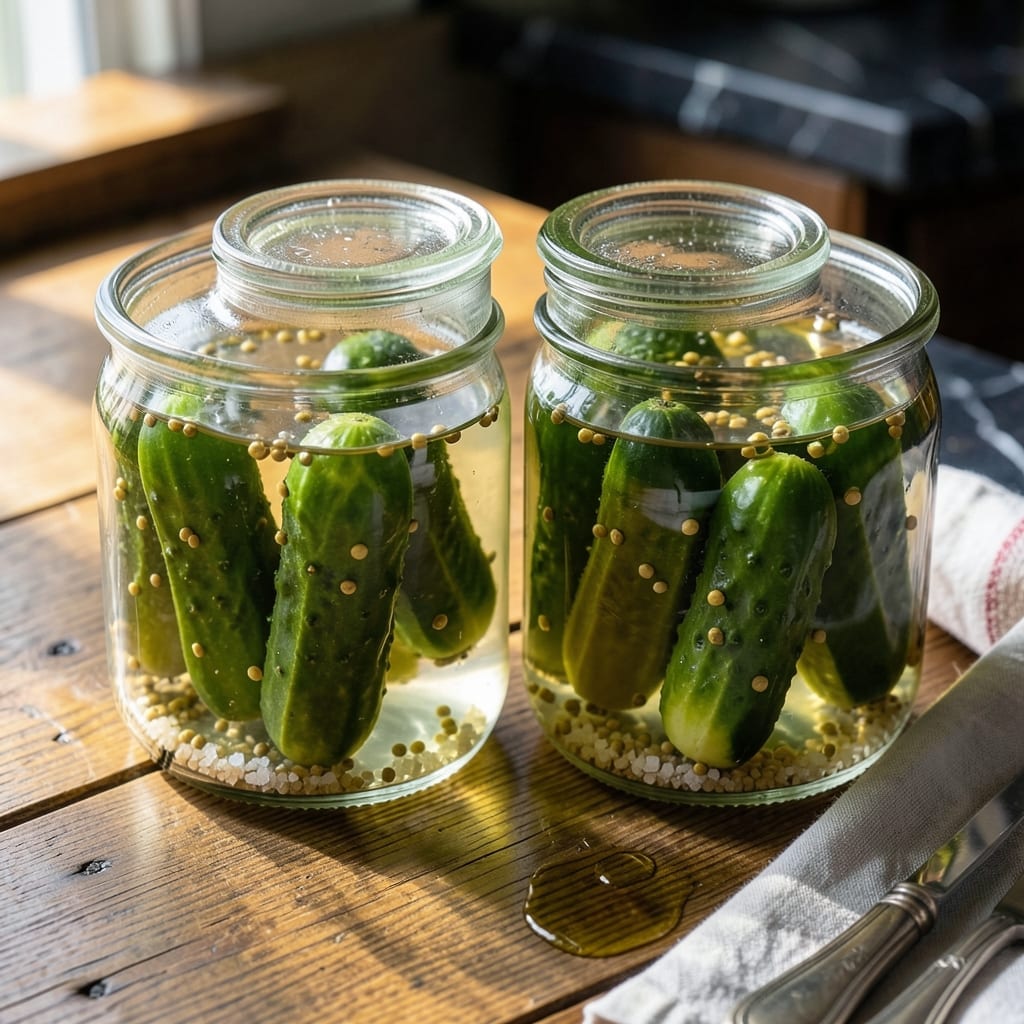
This pickle recipe delivers bold, tangy flavor without relying on traditional dill. The mustard seeds provide a warm, earthy depth that perfectly complements the crisp vegetables.
I developed this method to create pickles with a distinct character, using a simple brine of vinegar, water, salt, and sugar. The process is straightforward, with no special equipment required.
The result is a crunchy, tangy pickle that stands out on its own or enhances sandwiches and charcuterie boards. The mustard seeds add just the right amount of spice and complexity.
These pickles are ready to enjoy after a short fermentation period, making them a quick and satisfying homemade option.
Ingredients for Pickle Recipe Without Dill
Fresh vegetables meet a simple yet flavorful brine for tangy, crunchy homemade pickles.
| Ingredient | Amount | Notes |
|---|---|---|
| Cucumber 🥒 | 2 lb | Kirby or Persian variety preferred |
| White Vinegar 🍶 | 2 cups | 5% acidity for best preservation |
| Water 💧 | 2 cups | Filtered for clearest brine |
| Pickling Salt 🧂 | 2 tbsp | Non-iodized for purity |
| Granulated Sugar 🍚 | 2 tbsp | Balances vinegar sharpness |
| Yellow Mustard Seeds 🌿 | 2 tbsp | Whole seeds for texture |
| Garlic Cloves 🧄 | 6 cloves | Peeled, smashed lightly |
| Red Onion 🧅 | 1 whole | Thinly sliced for color |
| Black Peppercorns 🌶️ | 1 tsp | Whole for subtle heat |
| Bay Leaves 🍃 | 2 pieces | Dried, whole leaves |
| Red Pepper Flakes 🔥 | ½ tsp | Optional for heat |
| Fresh Thyme Sprigs 🌿 | 4 pieces | Optional aromatic addition |
The cucumbers are everything here. Kirby or Persian cucumbers stay crispest—avoid waxy supermarket varieties. I source mine from farmers markets in peak season (July-Sept). The mustard seeds should be yellow variety, found in the spice aisle at Whole Foods or bulk bins. For vinegar, any 5% acidity white vinegar works, but Heinz is my go-to for consistency.
No pickling salt? Kosher salt at 1:1 ratio works, but avoid iodized table salt (can cloud brine). Swap mustard seeds for celery seeds if preferred. Short on time? Pre-sliced onion from the salad bar saves minutes. The sugar can be reduced to 1 tbsp for less sweetness, or use coconut sugar for depth. Want more spice? Double the red pepper flakes.
Pickles taste best after 24-48 hours in the fridge. They’ll keep for 1 month refrigerated in clean jars. For longer storage, process jars in a water bath for 10 minutes—this extends shelf life to 6 months unopened.
Why You’ll Love This Recipe
- Under 15 Minutes: I can have a jar of crisp pickles ready before the kettle boils—just slice, brine, and wait.
- Tangy Sweet Balance: The sugar and vinegar dance together so well I sneak bites straight from the jar.
- Fridge Staple: I keep these on hand for sandwiches, salads, or that late-night snack attack.
- Pantry Hero: Five ingredients I always have, and they turn into something way more exciting than store-bought.
Step-by-Step Instructions for Pickle Recipe Without Dill
These straightforward methods ensure crisp, tangy pickles with mustard seed complexity.
Step 1: Prepare the Cucumbers and Aromatics
Wash the 2 lb Cucumber thoroughly and trim off the blossom end (about 1/16 inch). This removes enzymes that could soften the pickles. Leave the cucumbers whole or spear them lengthwise for elegant presentation.
Thinly slice the 1 whole Red Onion into half-moons for color and texture contrast. Peel and lightly smash the 6 cloves Garlic Cloves to release their aromatic oils without overpowering the brine.
Step 2: Sterilize Jars and Pack Ingredients
Sterilize 4 pint-sized jars and their lids by boiling for 10 minutes or running through a dishwasher cycle. This prevents contamination that could spoil your batch. Keep jars hot until filling to maintain proper temperature for preservation.
Divide the yellow mustard seeds, black peppercorns, bay leaves, red pepper flakes, and fresh thyme sprigs evenly among the jars. Pack the cucumbers and red onion slices tightly into the jars, leaving ½ inch headspace at the top.
Step 3: Create the Brine Solution
In a saucepan, combine the 2 cups Water, 2 cups White Vinegar, 2 tbsp Pickling Salt, and 2 tbsp Granulated Sugar. Bring to a boil over high heat, stirring until the salt and sugar dissolve completely. This ensures an even distribution of flavor and proper preservation.
The brine should be clear with no visible crystals. Once boiling, immediately remove from heat to prevent evaporation that could alter the acidity balance crucial for safe pickling.
Step 4: Fill Jars and Process
Ladle the hot brine into the jars, covering the cucumbers completely while maintaining that ½ inch headspace. Use a bubble remover or clean chopstick to eliminate air pockets trapped between the cucumbers.
Wipe the jar rims with a clean, damp cloth to ensure a proper seal. Apply lids and rings, then process in a boiling water bath for 10 minutes. This creates the vacuum seal necessary for long-term storage.
Remove jars and let cool undisturbed for 24 hours. You’ll hear the satisfying “ping” of seals forming as they cool. Store in a cool, dark place for at least 48 hours before tasting to allow flavors to develop fully.
Pro Tips For Making Pickle Recipe Without Dill
- Slice Uniformly: Cut cucumbers into consistent ¼-inch thick slices or spears so they pickle at the same rate—no one wants half-crunchy, half-soggy pickles.
- Boil the Brine: Bring vinegar, water, salt, and sugar to a full boil to dissolve the granules completely and sanitize the liquid before pouring over cucumbers.
- Use Ice Cold Cukes: I learned this the hard way—start with cucumbers straight from the fridge or an ice bath to keep them crisp instead of turning mushy in the hot brine.
- Pack Tightly: Jam cucumbers into jars as snugly as possible without crushing them, then fill gaps with smaller pieces so every bite gets properly pickled.
Essential Equipment for This Dish
Basic Jars and Lids
You’ll need 4 pint-sized mason jars with new, two-piece lids (flat disc + screw band). I use Ball Mason Jars—they’re durable, widely available at Walmart or Target, and the measurements are reliable for this recipe. Avoid chipped or cracked jars.
Sterilization Tools
A large stockpot with a rack is essential for the water bath. The rack prevents jars from touching the bottom and potentially cracking. I use a 12-quart pot that fits all four jars with 2 inches of water above them. A canning rack from OXO works perfectly. 🔥
Brine Preparation
A medium saucepan (at least 3-quart capacity) is needed for the brine. I prefer stainless steel for even heating and easy cleaning. Avoid aluminum, which can react with vinegar. A wooden spoon helps stir without scratching the pan.
Packing Accessories
A bubble remover tool helps eliminate air pockets in jars, but a clean chopstick works in a pinch. I also use a canning funnel to prevent brine spills when filling jars. These are inexpensive and available at kitchen supply stores.
Optional Extras
Jar lifters make handling hot jars safer, though tongs can work carefully. Magnetic lid wand is handy for placing lids without burning fingers. I keep a clean kitchen towel nearby to wipe jar rims before sealing. Honestly, these small tools make the process much smoother.
Nutrition Facts
Frequently Asked Questions
Can I use regular table salt instead of pickling salt?
Pickling salt is best, but kosher salt works in a 1:1 ratio. Avoid iodized salt as it can make the brine cloudy and affect flavor.
How long do these pickles stay crisp?
They’ll keep their crunch for 1 month refrigerated. For longer storage, process jars in a 10-minute water bath to extend shelf life to 6 months.
What if my brine looks cloudy?
Cloudiness can come from hard water or certain salts. Use filtered water and pickling salt for the clearest results. It won’t affect safety, just appearance.
Can I substitute apple cider vinegar?
Yes, but stick to 5% acidity. Apple cider vinegar adds a slightly fruitier note, but the flavor difference is subtle.

- BBQ Sausage Recipe Oven: Smoky Depth Without the Grill - September 28, 2026
- BBQ Chicken Bowl Recipe Rice: Smoky Sweetness Over Fluffy Grains - September 28, 2026
- Beef Cutlet Recipe Ideas: Crispy Breaded Patties With Bold Seasonings - September 28, 2026