
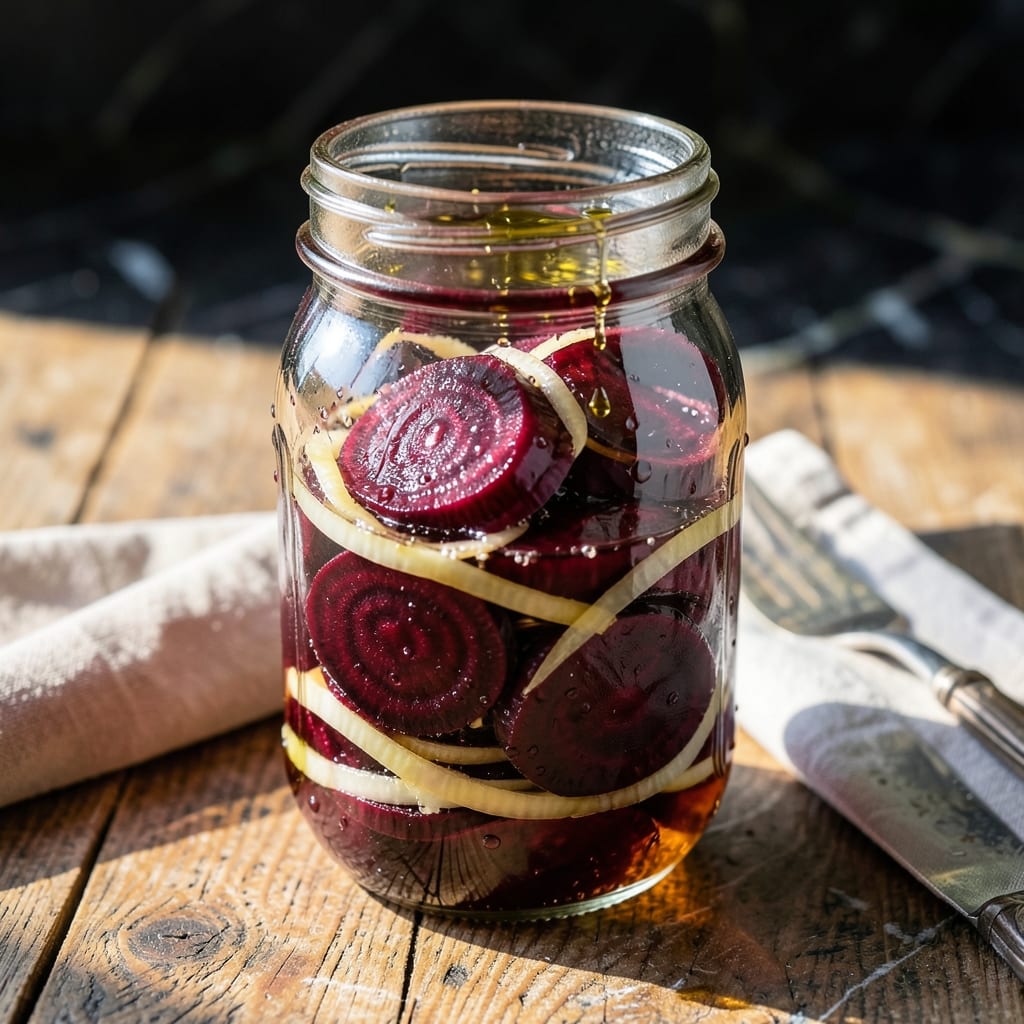
Preserving summer’s bounty never tasted better than with these tangy, sweet pickled beets. My grandmother’s method ensures vibrant color and crisp texture, perfect for year-round enjoyment.
This proven canning technique uses simple ingredients and precise timing to create shelf-stable jars. The balance of vinegar, sugar, and spices delivers that classic pickled beet flavor we all love.
With proper processing, these will keep for 12-18 months in your pantry. The beets stay firm yet tender, soaking up the briny sweetness without turning mushy.
Ideal for salads, sandwiches, or straight from the jar. Here’s how to can them safely at home.
Ingredients for Pickled Beets Recipe for Canning
Simple pantry staples plus fresh beets create these vibrant, shelf-stable jars.
| Ingredient | Amount | Notes |
|---|---|---|
| Fresh Beets 🟣 | 2 ½ lb | Small to medium, unpeeled |
| White Vinegar 💧 | 2 cups | 5% acidity required |
| Granulated Sugar 🍚 | 1 ½ cups | Adjust for sweetness preference |
| Water 💧 | 1 cup | Filtered preferred |
| Yellow Onions 🧅 | 1 whole | Medium, thinly sliced |
| Canning Salt 🧂 | 1 tbsp | Pickling salt, no additives |
| Whole Black Peppercorns 🌶️ | 1 tsp | Lightly crushed |
| Mustard Seeds 🌿 | 1 tsp | Yellow or brown |
| Whole Cloves 🌿 | ½ tsp | Optional for depth |
| Bay Leaves 🍃 | 2 pieces | Dried, whole |
| Apple Cider Vinegar 🍎 | ½ cup | For complexity |
The beets are the star—choose small to medium for the best texture. Farmers markets often have the freshest, but grocery store beets work fine too. Look for firm, smooth skins without soft spots. For vinegar, stick with 5% acidity (check the label) to ensure safe canning. I always grab Ball or Kerr jars—they’re reliable and widely available at Walmart or Target.
No white vinegar? Apple cider vinegar at 5% acidity can replace up to half the amount. Out of canning salt? Kosher salt without additives works in a pinch. The spices are flexible—swap mustard seeds for celery seeds if you prefer. For a sweeter pickle, increase sugar by a quarter cup. The onions can be red if that’s what you’ve got (they’ll turn pink in the brine).
These keep for 12-18 months in a cool, dark pantry. Once opened, refrigerate and use within 1 month. The beets may soften slightly over time, but they’ll stay crisp-tender for months. Always label jars with the date—trust me on this.
Why You’ll Love This Recipe
- Minimal Chopping Required: I just quarter the beets and slice the onions—no fancy knife skills needed.
- Sweet-Tangy Balance: The sugar and vinegar blend creates this ridicously good zing that makes the beets irresistible.
- Pantry Staple: Honestly, I toss these on salads, burgers, or even straight from the jar for a quick snack.
- Budget-Friendly Batch: A big bag of beets and a few pantry basics yield enough jars to last me months.
Step-by-Step Instructions for Pickled Beets for Canning
This method ensures crisp, flavorful beets with that perfect tangy-sweet balance every time.
Step 1: Prepare and Cook the Beets
Scrub the 2.5 lb Fresh Beets thoroughly under cold water to remove any dirt, but don’t peel them—this prevents color loss and helps them hold shape. Place them in a large pot and cover completely with water. Bring to a boil, then reduce to a simmer and cook for 30-45 minutes until tender when pierced with a knife.
Drain the beets and let them cool slightly. Once cool enough to handle, slip off the skins using your fingers or a paring knife. Trim off the stems and roots, then slice into ¼-inch thick rounds or leave whole if using small beets. Uniform thickness ensures even pickling and consistent texture in every jar.
Step 2: Create the Pickling Brine
In a medium saucepan, combine the 2 cups White Vinegar, 1.5 cups Granulated Sugar, 1 cup Water, 0.5 cup Apple Cider Vinegar, and 1 tbsp Canning Salt. Stir well to dissolve the sugar and salt, then bring to a boil over medium-high heat.
Once boiling, reduce the heat to medium-low and simmer for 5 minutes. This ensures the sugar and salt are fully incorporated and the brine reaches the proper concentration. The combination of vinegars creates a balanced tang with depth—white vinegar for brightness and apple cider vinegar for complexity.
Step 3: Layer and Season the Jars
Divide the sliced Yellow Onions evenly among clean, hot canning jars. Add 1 tsp Whole Black Peppercorns, 1 tsp Mustard Seeds, 0.5 tsp Whole Cloves, and 2 pieces Bay Leaves to each jar. These spices infuse the beets with warm, aromatic notes that complement the vinegar’s acidity.
Pack the beets into the jars, leaving ½-inch headspace at the top. Arrange them neatly but don’t overpack—you want the brine to circulate freely. The onions and spices should be evenly distributed among the beets for consistent flavor in every bite.
Step 4: Fill with Brine and Process for Shelf Stability
Ladle the hot brine over the beets in each jar, ensuring they are completely submerged and the ½-inch headspace remains. Use a bubble remover or clean chopstick to remove any air pockets trapped between the beets. This step is crucial for preventing spoilage during storage.
Wipe the rims of the jars with a clean, damp cloth to ensure a proper seal. Apply the lids and rings, then process the jars in a water bath canner for 30 minutes (adjust for altitude if necessary). The processing time ensures the jars are shelf-stable and the beets develop their full flavor over time.
After processing, let the jars cool undisturbed for 12-24 hours. You’ll hear the satisfying pop of the lids sealing as they cool—a sign that your pickled beets are ready for long-term storage. Check the seals before storing in a cool, dark place.
Pro Tips For Making Pickled Beets Recipe For Canning
- Roast Beets First: I learned this the hard way—boiling beets for pickling makes them waterlogged. Roast them at 400°F until tender (about 45-60 minutes) for deeper flavor and better texture in the jar.
- Slice Onions Thin: Sounds obvious, but paper-thin onion slices actually change the outcome by absorbing the brine faster and softening evenly. Use a sharp knife or mandoline.
- Skip Raw Pack: Resist the urge to raw-pack beets—they won’t soften enough in the brine. Par-cook them (roast or steam) until just fork-tender before jarred to guarantee perfect texture.
- Use Pickling Salt: After three batches with cloudy brine, I finally switched to pickling salt—no anti-caking agents means crystal-clear liquid and better preservation.
Pro Cooking Tips for Perfect Results
Brine Perfection
I always bring the brine to a full boil to ensure sugar and salt dissolve completely. This prevents any grainy texture or uneven flavor distribution. Use a heavy-bottomed saucepan to avoid scorching the sugar.
Jar Preparation
Sterilize jars by boiling for 10 minutes before filling. Keep them hot until ready to pack—this helps prevent thermal shock that could crack the glass. I keep mine warm in a 200°F oven while prepping.
Use wide-mouth jars for easier packing of beet slices. The ½-inch headspace is non-negotiable for proper sealing and safety. 💡
Spice Distribution
For even flavor, divide spices equally among jars. I use a measuring spoon for precision with peppercorns and mustard seeds. Lightly crushing the spices releases more aromatic oils into the brine.
Processing Altitude
Adjust water bath time for your elevation: add 5 minutes per 1,000 feet above sea level. My Colorado friends need 35-40 minutes for their altitude. Always use a canner with rack to prevent jar contact with direct heat.
Sealing Verification
After 12-24 hours, check seals by pressing the center of each lid. A sealed jar won’t pop back. If any didn’t seal, refrigerate and use within 1 month. Store sealed jars in a cool, dark pantry for best longevity. 🔥
Nutrition Facts
Frequently Asked Questions
How long do I process pint jars in a water bath?
Process pint jars in boiling water for 30 minutes. Add 5 minutes for every 1,000 feet above sea level to ensure safety.
Do I need to peel beets before pickling?
No, cook them whole with skins on to preserve color and texture. The skins slip off easily after cooking and cooling.
Can I reuse the pickling brine?
No, the brine is only safe for single use. Reusing it risks contamination and spoilage. Always make fresh brine for each batch.
Why did my beets turn dull in color?
Overcooking or using hard water can dull the vibrant hue. Use filtered water and cook until just tender to maintain bright color.

- Potato Candy Recipe 1933: Vintage Peanut Butter Roll Delight - October 30, 2026
- Potato Chip Cookie Recipe With Pecans: Buttery Crunch Meets Nutty Richness - October 30, 2026
- Potato Patty Recipe No Egg: Crispy Edges Without the Binder - October 30, 2026