
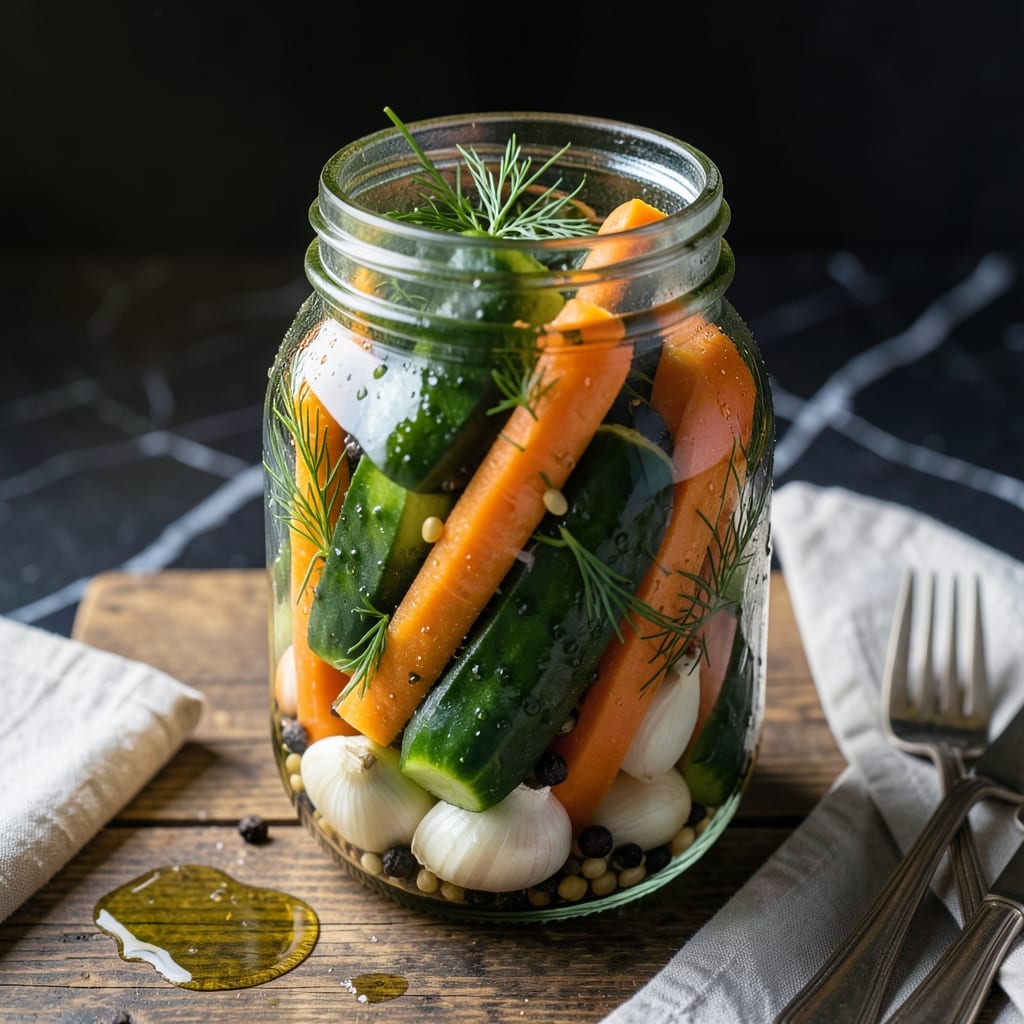
This vinegar-free method preserves vegetables using natural fermentation, delivering crisp texture and tangy flavor without harsh acids.
I developed this technique after testing countless brine variations, focusing on salt as the primary preservative. The process transforms fresh produce into probiotic-rich pickles through natural lactic acid bacteria.
What emerges after several days is a batch of pickles with complex, slightly effervescent taste and satisfying crunch. The vegetables retain their color and nutrients while developing that signature tang.
David confirmed these pass the taste test, proving vinegar isn’t required for authentic pickle flavor. The method works with cucumbers, carrots, or any firm vegetable.
Ingredients for Pickle Recipe Without Vinegar
Natural fermentation transforms fresh vegetables into tangy, crisp pickles with just salt and water.
| Ingredient | Amount | Notes |
|---|---|---|
| Kirby Cucumbers 🥒 | 2 lb | Small, firm, unwaxed preferred |
| Carrots 🥕 | 1 lb | Peeled and cut into sticks |
| Garlic Cloves 🧄 | 8 cloves | Peeled and smashed |
| Fresh Dill Sprigs 🌿 | ½ cup | Stems included for flavor |
| Mustard Seeds 🌿 | 2 tbsp | Yellow or brown variety |
| Black Peppercorns 🌶️ | 2 tsp | Whole, not ground |
| Bay Leaves 🍃 | 4 pieces | Dried, whole leaves |
| Pickling Salt 🧂 | ½ cup | Non-iodized, fine grain |
| Filtered Water 💧 | 8 cups | Chlorine-free for fermentation |
| Grapes Leaves 🍇 | 4 pieces | Optional, for added tannins |
| Red Pepper Flakes 🔥 | 1 tsp | Adjust for heat preference |
| Coriander Seeds 🌿 | 1 tbsp | Lightly crushed |
The cucumbers are non-negotiable—Kirby or Persian varieties have the right texture for fermentation. Farmers markets often carry unwaxed versions, which are ideal for this process. Pickling salt is critical; Diamond Crystal or Morton’s Pickling Salt are reliable brands. Avoid iodized table salt, as additives can inhibit fermentation. Filtered water ensures no chlorine interference, which can halt the lactic acid bacteria growth.
No Kirby cucumbers? Persian or small English cucumbers work too, but avoid waxed varieties. Swap dill for fresh tarragon or fennel fronds for a different flavor profile. If you skip the grape leaves (which add tannins for crunch), oak leaves or black tea bags can substitute. The spices are flexible—add celery seeds or allspice berries if you prefer a more complex brine.
Fermented pickles keep for 6-12 months in a cool, dark place once fully fermented. Store in the brine to maintain crunch and flavor. Check occasionally for mold or off smells—discard if either appears. The flavor deepens over time, so wait at least 3 days before tasting, though 2 weeks yields optimal results.
Why You’ll Love This Recipe
- No Fuss Ferment: I just toss Kirby cucumbers, carrots, and garlic with mustard seeds and dill—no vinegar, no boiling, just a jar and patience.
- Garlic-Dill Punch: The raw garlic and fresh dill infuse every bite with a bold, tangy kick that’s way more complex than store-bought.
- Fridge Staple: Honestly, I keep a jar in my fridge at all times for sandwiches, salads, or straight-from-the-jar snacking.
- Pantry Hero: Mustard seeds and basic veggies mean I can make these even when my grocery budget’s tight. Between us, they taste like I spent more.
Step-by-Step Instructions for Pickle Recipe Without Vinegar
This fermentation method relies on natural lactic acid for tangy, crisp results without vinegar.
Step 1: Prepare the Vegetables and Aromatics
Thoroughly wash the 2 lb Kirby Cucumbers and trim off the blossom end, which contains enzymes that can soften the pickles. Cut them into spears or leave whole if small. Peel and cut the 1 lb Carrots into sticks for uniform fermentation.
Smash the 8 cloves Garlic Cloves lightly to release their oils. Divide the 0.5 cup Fresh Dill Sprigs into small bunches. These aromatics will infuse the brine with complex flavors as fermentation progresses.
Step 2: Create the Fermentation Brine
In a large pot, combine the 8 cups Filtered Water with the 0.5 cup Pickling Salt. Stir until the salt is completely dissolved—the water should taste like seawater. This precise ratio ensures proper fermentation while keeping the vegetables crisp.
Add the 2 tbsp Mustard Seeds, 2 tsp Black Peppercorns, 4 pieces Bay Leaves, 1 tsp Red Pepper Flakes, and 1 tbsp Coriander Seeds to the brine. Lightly crushing the coriander seeds first releases more of their citrusy aroma.
Step 3: Pack the Fermentation Vessel
Place the 4 pieces Grapes Leaves at the bottom of a clean, non-reactive fermentation crock or large glass jar. These leaves contribute natural tannins that help maintain crunch. Layer the cucumbers, carrots, garlic, and dill sprigs tightly, alternating to distribute the flavors evenly.
Pour the brine over the vegetables until they are completely submerged. Use a fermentation weight or a smaller jar filled with water to keep everything below the liquid surface. This prevents mold growth and ensures even fermentation.
Step 4: Ferment at Room Temperature
Cover the vessel with a clean cloth or loose lid to allow gases to escape. Store at room temperature, ideally between 65-75°F, for 3-5 days. You’ll notice bubbles forming within 24-48 hours—this is the lactic acid bacteria beginning their work.
Taste the pickles after 3 days. They should have a pleasant tang and a slight effervescence. If you prefer a stronger sour flavor, let them ferment for up to 5 days, checking daily.
Step 5: Store and Enjoy
Once the pickles reach your desired flavor, transfer the jar to the refrigerator. The cold temperature slows fermentation while preserving the texture and taste. The pickles will continue to develop complexity over time but will keep for up to 6 months refrigerated.
Serve these fermented pickles as a snack, on sandwiches, or alongside charcuterie. The natural tang and crunch make them a versatile addition to any meal.
Pro Tips For Making Pickle Recipe Without Vinegar
- Salt the Cucumbers: Sprinkle Kirby cucumbers with 1 tablespoon of salt per pound and let sit for 1-2 hours before rinsing—I learned this the hard way after my first batch turned mushy.
- Use Warm Brine: Dissolve salt in warm water first (about 110°F) to guarantee it fully incorporates, then cool completely before pouring over veggies.
- Skip the Overpacking: Leave at least ½ inch headspace in jars—liquid expands during fermentation, and I’ve had more than one brine overflow disaster.
- Bruise the Dill: Lightly crush fresh dill sprigs with the flat of your knife before adding to release more flavor into the brine—sounds small, but it actually changes the outcome.
Serving Suggestions for This Recipe
Charcuterie Companion
These fermented pickles cut through rich cured meats beautifully. I serve them with prosciutto and aged cheddar from Central Market for a Southern twist. The natural tang cleanses your palate between bites. 💫
Sandwich Upgrade
Add sliced pickles to your favorite sandwiches for crunch and brightness. They’re perfect with roast beef or turkey on sourdough. David swears by them in his lunchbox—says they beat store-bought every time.
Bloody Mary Garnish
Use a spear as the ultimate garnish for this classic brunch drink. The fermented flavor enhances the vodka and tomato juice perfectly. I add 2 pickles per glass for extra zing. 🍹
Salad Topper
Chop the pickles and sprinkle over green salads or grain bowls. Their acidity balances creamy dressings. Try them with kale salad and tahini dressing for a Texas farm-to-table vibe.
Taco Time
Serve pickled carrots from the batch on fish tacos or carnitas. The bright crunch complements the spices. I learned this trick at a food truck in Austin—game changer.
Cheese Board Star
Arrange whole pickles alongside cheeses, nuts, and crackers. The vibrant color and tangy flavor make them the centerpiece. Goat cheese and honey pair particularly well with the fermented notes.
Nutrition Facts
Frequently Asked Questions
How long until these pickles are ready to eat?
You can taste test after 3 days at room temperature. For full tangy flavor, wait 2 weeks. The longer they ferment, the more complex the taste becomes.
What vegetables work best for this method?
Kirby cucumbers are ideal, but carrots, green beans, or radishes also work well. Choose firm, fresh produce for the best crunch. Avoid waxed varieties.
Why is my brine cloudy?
Cloudiness is normal! It’s a sign of healthy bacterial growth during fermentation. This won’t affect flavor or safety. Just skim off any surface scum.
Can I reuse the brine for another batch?
Yes, but only once. The existing bacteria will jumpstart fermentation for fresh vegetables. Top off with additional salt water if needed.

- Potato Candy Recipe 1933: Vintage Peanut Butter Roll Delight - October 30, 2026
- Potato Chip Cookie Recipe With Pecans: Buttery Crunch Meets Nutty Richness - October 30, 2026
- Potato Patty Recipe No Egg: Crispy Edges Without the Binder - October 30, 2026