
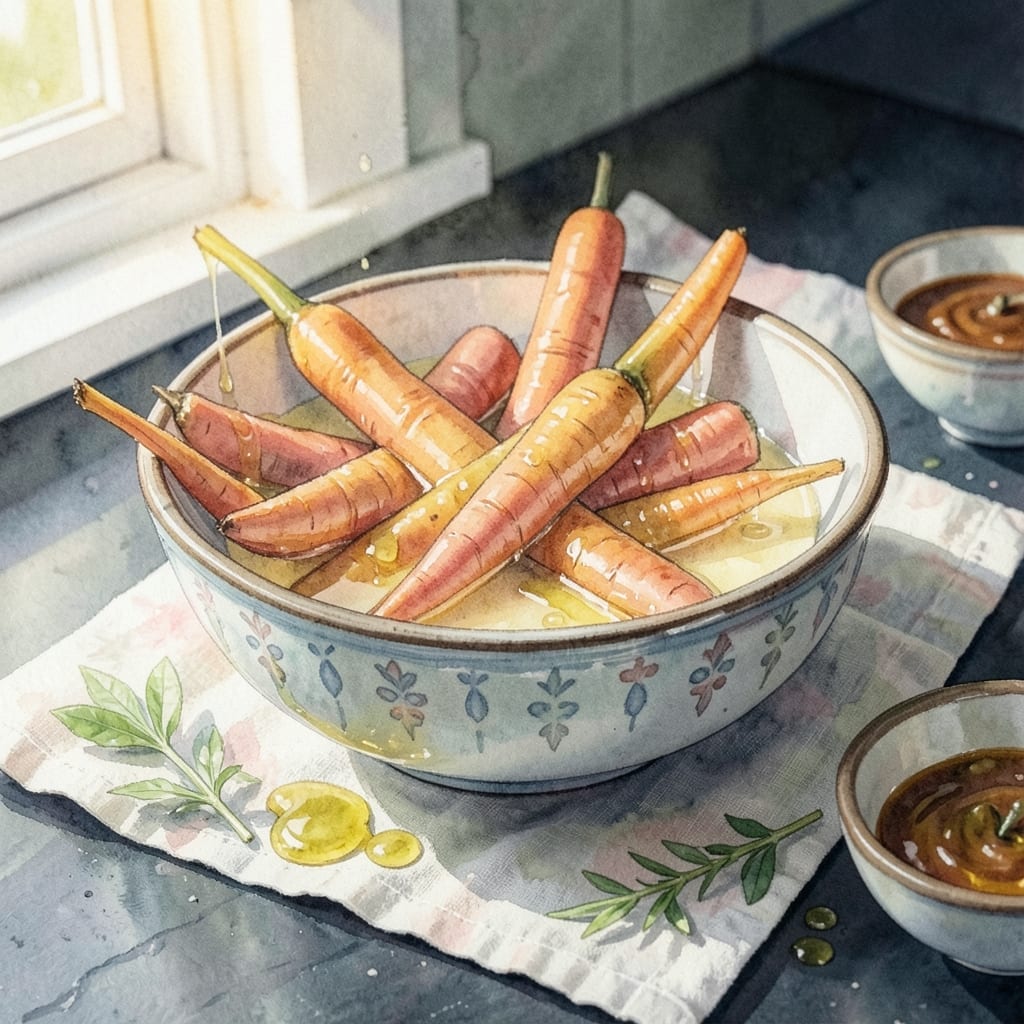
I’ve refined this pickling technique over years of preserving seasonal produce, and these carrots deliver the ideal balance of tang and sweetness every time.
The apple cider vinegar base creates a bright, complex brine that enhances the carrots’ natural sweetness without overpowering it. A touch of sugar and spices builds depth while keeping the crunch intact.
This method requires just 15 minutes of active prep before the carrots transform in the fridge. The result is a vibrant, shelf-stable condiment that elevates sandwiches, tacos, or charcuterie boards.
Store in clean jars for up to a month, though they rarely last that long. The flavor improves with each passing day.
Ingredients for Pickled Carrots Recipe Apple Cider Vinegar
Bright vinegar, warming spices, and crisp carrots create this vibrant pickled condiment with minimal effort.
| Ingredient | Amount | Notes |
|---|---|---|
| Carrots 🥕 | 1 ½ lb | Peeled, cut into sticks |
| Apple Cider Vinegar 🍏 | 2 cups | Raw, unfiltered preferred |
| Water 💧 | 1 cup | Filtered or distilled |
| Granulated Sugar 🍚 | ¼ cup | Organic or raw for depth |
| Kosher Salt 🧂 | 1 tbsp | Diamond Crystal preferred |
| Yellow Mustard Seeds 🌿 | 1 tbsp | Whole, not ground |
| Black Peppercorns 🌶️ | 1 tsp | Whole, lightly crushed |
| Coriander Seeds 🌿 | 1 tsp | Whole, toasted optional |
| Red Pepper Flakes 🔥 | ½ tsp | Adjust for heat preference |
| Dried Bay Leaves 🍃 | 2 pieces | Whole, for infusion |
| Garlic Cloves 🧄 | 4 cloves | Peeled, smashed |
| Fresh Dill 🌿 | 2 tbsp | Chopped, stems removed |
The apple cider vinegar is non-negotiable here—Bragg or Heinz deliver the right balance of acidity and fruitiness. Carrots should be fresh and firm; organic often has superior texture. Whole spices (mustard seeds, coriander, peppercorns) are critical for the brine’s complexity. Most natural food stores carry these in bulk, but Whole Foods or Sprouts have reliable pre-packaged options. Avoid pre-ground spices—they muddy the brine.
No apple cider vinegar? White wine vinegar plus a splash of apple juice gets close but lacks depth. Dried dill at half the amount works if fresh isn’t available. For heat, swap red pepper flakes with fresh jalapeño slices. The sugar can be reduced to 2 tbsp for a sharper pickle, but don’t omit it entirely—it balances the vinegar’s bite. Rainbow carrots add visual flair if you’re pickling for a crowd.
These keep in the fridge for up to 1 month in a clean, airtight jar. The flavor peaks around 1 week and softens slightly over time. For longer storage, process in a water bath for shelf stability. Always use a non-reactive container—glass or food-grade plastic only.
Why You’ll Love This Recipe
- No Fuss Prep: I just slice, boil, and pour—no fancy techniques or hard-to-find tools.
- Tangy Sweet Bite: The apple cider vinegar gives it that bright, balanced zing with just the right hint of sweetness.
- Fridge Staple: Honestly, these last for weeks and go with everything from tacos to sandwiches.
Step-by-Step Instructions for Pickled Carrots
This method ensures crisp texture and balanced flavor in every bite of your pickled creation.
Step 1: Prepare the Carrots and Aromatics
Peel the 1.5 lb Carrots and cut them into uniform sticks, about ¼-inch thick and 3-4 inches long. Consistent sizing ensures even pickling and a professional presentation. Pack them tightly into clean, sterilized jars.
Divide the 4 cloves Garlic Cloves (peeled and smashed), 2 pieces Dried Bay Leaves, 1 tbsp Yellow Mustard Seeds, 1 tsp Black Peppercorns, and 1 tsp Coriander Seeds evenly among the jars. These whole spices will infuse the brine with complex, aromatic depth during the pickling process.
Step 2: Create the Pickling Brine
In a medium saucepan, combine the 2 cups Apple Cider Vinegar, 1 cup Water, 0.25 cup Granulated Sugar, and 1 tbsp Kosher Salt. The apple cider vinegar provides a fruity tang that pairs beautifully with the carrots’ natural sweetness.
Bring the mixture to a boil over medium-high heat, stirring until the sugar and salt dissolve completely. This ensures your brine is properly balanced and will penetrate the carrots evenly. Once boiling, remove from heat immediately to prevent evaporation, which could alter the brine concentration.
Step 3: Add Final Flavorings and Pour the Brine
Stir the 0.5 tsp Red Pepper Flakes and 2 tbsp Fresh Dill into the hot brine. The red pepper flakes add a subtle heat that complements the sweetness, while the fresh dill contributes a bright, herbal note essential to this pickle’s character.
Carefully ladle the hot brine over the carrots and aromatics in the jars, ensuring all vegetables are completely submerged. Use a clean spoon to press down gently if needed. Leave ½-inch headspace at the top of each jar to allow for expansion during the pickling process.
Step 4: Seal and Cool Before Refrigerating
Seal the jars tightly with their lids. Let them cool to room temperature on the counter, which takes about 30-45 minutes. This cooling period allows the heat to begin the pickling process while preventing thermal shock to the glass jars.
Once cooled, refrigerate the pickled carrots for at least 24 hours before tasting. For optimal flavor development, wait 48-72 hours. The carrots should retain a slight crunch while absorbing the tangy, spiced vinegar notes. These will keep in the refrigerator for up to 3 weeks.
Pro Tips For Making Pickled Carrots Recipe Apple Cider Vinegar
- Slice Evenly: Cut carrots into uniform sticks or coins—about ¼-inch thick—so they pickle at the same rate. I learned this the hard way after pulling out half-soft, half-crunchy batches.
- Boil the Brine: Heat the vinegar, water, sugar, and salt just until the sugar dissolves, then cool completely before pouring over carrots. Hot brine turns them mushy, and nobody wants sad, limp pickles.
- Use Fresh Carrots: Older carrots get woody and bitter, no matter how long they soak. Grab the firmest, brightest ones you can find—they’ll stay crisp and absorb the apple cider tang beautifully.
- Add a Pinch of Spice: Sounds weird, but it works: toss in a few peppercorns or a bay leaf while brining. It doesn’t change the effort, but it adds depth that plain vinegar can’t.
Troubleshooting This Recipe
Brine Imbalance
If your brine tastes too harsh, you likely need more sugar to balance the acidity. Add 1-2 tbsp of granulated sugar to each jar and stir gently. The carrots will absorb this sweetness within 12 hours in the fridge. 💡
Mushy Carrots
Soft carrots usually mean they were overcooked or not fresh. Next time, use the crispest carrots possible and ensure they’re fully submerged in brine. If they’re already mushy, they’re best used in soups or purees rather than as pickles.
Cloudy Brine
Cloudiness often comes from using tap water with high mineral content. Switch to filtered or distilled water for future batches. If your current batch is cloudy but smells fine, it’s still safe to eat. The flavor remains unaffected.
Weak Flavor
If your pickles lack punch, the brine may not have been hot enough when poured. Always bring it to a full boil and ensure the sugar and salt dissolve completely. For a quick fix, add ½ tsp Kosher Salt per jar.
Uneven Pickling
Carrots cut inconsistently will pickle at different rates. Slice them into uniform ¼-inch thick sticks for even flavor and texture. Pack jars tightly but leave ½-inch headspace to avoid overflow as they absorb the brine.
Spoilage Signs
If you see mold, smell off odors, or notice slimy texture, discard the batch. Properly sterilized jars and fresh ingredients prevent this. Always use clean utensils when removing carrots to avoid contamination. ❄️
Nutrition Facts
Frequently Asked Questions
How long do these need to sit before eating?
Wait at least 24 hours for basic flavor, but 48-72 hours yields the best taste. The carrots will be tangy with a slight crunch.
Can I use a different vinegar in a pinch?
White wine vinegar plus a splash of apple juice works as a substitute. However, the flavor won’t be as rich as with apple cider vinegar.
How do I keep the carrots crisp?
Use fresh, firm carrots and ensure they’re fully submerged in brine. Avoid overpacking jars and leave ½-inch headspace.
Do I need to sterilize the jars?
For fridge storage, clean jars are sufficient. For shelf-stable pickles, sterilize jars in boiling water for 10 minutes first.

- BBQ Sausage Recipe Oven: Smoky Depth Without the Grill - September 28, 2026
- BBQ Chicken Bowl Recipe Rice: Smoky Sweetness Over Fluffy Grains - September 28, 2026
- Beef Cutlet Recipe Ideas: Crispy Breaded Patties With Bold Seasonings - September 28, 2026