
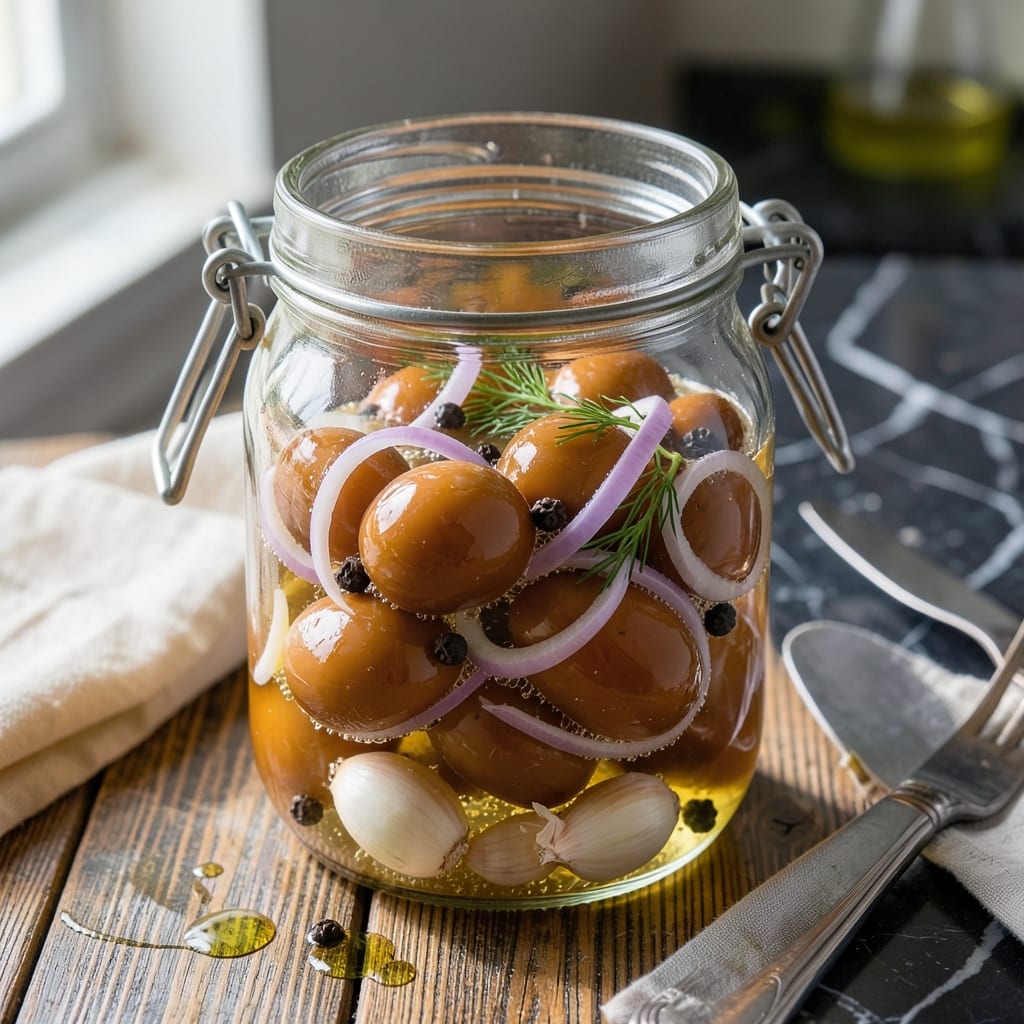
These pickled eggs deliver the perfect balance of sweet and tangy flavors that make brunch unforgettable. The sugar in the brine creates a subtle sweetness that complements the vinegar’s sharpness.
I’ve refined this method over years of family gatherings, ensuring the eggs stay firm yet absorb the brine’s rich flavor. A simple combination of vinegar, water, sugar, and spices does all the work.
You’ll end up with glossy, jewel-toned eggs that add a pop of color and flavor to any spread. They’re ready in just 24 hours and keep well for weeks.
Serve them alongside charcuterie, in salads, or straight from the jar. This recipe is a game-changer for meal prep.
Ingredients for Pickled Egg Recipe with Sugar
Twelve simple ingredients transform into glossy, jewel-toned pickled eggs for your brunch spread.
| Ingredient | Amount | Notes |
|---|---|---|
| Large Eggs 🥚 | 12 whole | Hard-boiled and peeled |
| White Vinegar 💧 | 2 cups | 5% acidity standard |
| Water 💧 | 2 cups | Filtered preferred for clarity |
| Granulated Sugar 🍚 | ½ cup | Adjust to taste preference |
| Yellow Onion 🧅 | 1 whole | Thinly sliced for infusion |
| Garlic Cloves 🧄 | 4 cloves | Lightly crushed for flavor |
| Mustard Seeds 🌿 | 2 tsp | Yellow or brown variety |
| Black Peppercorns 🌶️ | 1 tbsp | Whole for brine infusion |
| Bay Leaves 🍃 | 2 whole | Dried, for aromatic depth |
| Red Pepper Flakes 🔥 | 1 tsp | Optional for heat variation |
| Kosher Salt 🧂 | 1 tbsp | Diamond Crystal preferred |
| Dried Dill 🌿 | 1 tsp | Or substitute fresh dill |
The vinegar quality is paramount. Heinz white vinegar (5% acidity) delivers consistent results—avoid apple cider vinegar as it muddies the brine color. Filtered water prevents cloudiness in the final product. For the eggs, use fresh large eggs (older eggs peel more easily but may not absorb brine as well). Most grocery chains carry Diamond Crystal kosher salt—avoid iodized table salt as it can impart a metallic taste.
No mustard seeds? Celery seeds at half the amount provide similar complexity. Fresh dill can replace dried at a 3:1 ratio. For spice variations, try adding coriander seeds or allspice berries. The sugar amount can be adjusted—reduce to 1/3 cup for less sweetness or increase to 3/4 cup for a candy-like finish. Pickling spices blends from the bulk section work well for convenience.
Fully submerged eggs keep for 3-4 weeks in the refrigerator. Store in a sterilized glass jar with a tight lid. The brine flavor intensifies over time—wait at least 24 hours before tasting. Discard if any cloudiness or off odors develop (worth the extra minute to check).
Why You’ll Love This Recipe
- No-Fuss Method: I boil the eggs, mix vinegar, water, and sugar in a pot, and let them sit—honestly, it’s harder to mess up than to get right.
- Sweet-Tangy Crunch: The sugar balances the vinegar’s bite, and the onion adds just enough sharpness to keep me reaching for another.
- Fridge Staple: Between us, these last weeks in the fridge, so I always have a protein-packed snack ready when hunger hits.
- Budget Keeper: A dozen eggs and pantry basics make gallons of these—I spend pennies and get flavor that beats store-bought.
Step-by-Step Instructions for Pickled Eggs With Sugar
This method ensures perfectly balanced sweet and tangy eggs with ideal texture and flavor penetration.
Step 1: Hard-Boil and Peel the Eggs
Place the 12 whole Large Eggs in a large pot and cover with cold water by 1 inch. Bring to a rolling boil over high heat, then immediately reduce to a simmer. Cook for 9-10 minutes until the yolks are fully set.
Drain the hot water and transfer the eggs to an ice bath for 5 minutes to stop the cooking process. This ensures the yolks remain bright yellow and prevents that unappetizing green ring around the yolk. Peel the eggs carefully while they’re still slightly warm—this makes removal easier and prevents tearing the whites.
Step 2: Prepare the Pickling Brine
In a medium saucepan, combine the 2 cups White Vinegar, 2 cups Water, and 0.5 cup Granulated Sugar. Add the 1 tbsp Kosher Salt, 2 tsp Mustard Seeds, 1 tbsp Black Peppercorns, 2 whole Bay Leaves, and 1 tsp Dried Dill.
Bring the mixture to a boil over medium-high heat, stirring just until the sugar and salt dissolve completely. The liquid should appear clear with the spices suspended. Remove from heat immediately once boiling to prevent over-reducing the brine.
Step 3: Infuse the Brine with Aromatics
Add the 1 whole Yellow Onion, thinly sliced, and the 4 cloves Garlic Cloves, lightly crushed, to the hot brine. The residual heat will soften the onion slightly and extract the maximum flavor from the garlic without making it bitter.
Stir in the 1 tsp Red Pepper Flakes for a subtle heat that complements the sweetness. Let the brine steep for 10 minutes to allow the flavors to meld. The liquid should take on a pale golden hue from the onion and a fragrant aroma from the spices.
Step 4: Combine Eggs and Brine for Pickling
Arrange the peeled eggs in a clean quart-sized jar or divide them between two pint jars. Pour the warm brine over the eggs, ensuring they are completely submerged. Use a spoon to remove any air bubbles and press down gently if needed.
The brine should cover the eggs by at least ½ inch. Let the mixture cool to room temperature, then seal the jar(s) with a lid. The eggs will begin absorbing flavor immediately, but for best results, refrigerate for at least 24 hours before eating.
Step 5: Store and Wait for Optimal Flavor
Store the jar in the refrigerator for up to 1 month. The flavor will deepen over time, with the sweetness of the sugar balancing the vinegar’s tang. I recommend waiting at least 3 days before tasting—the eggs need time to fully absorb the brine’s complex flavors.
Serve chilled, sliced or whole, as a snack, in salads, or as part of a charcuterie board. The onions and garlic from the brine make excellent garnishes, adding texture and an extra layer of flavor.
Pro Tips For Making Pickled Egg Recipe With Sugar
- Boil Eggs Gently: Use a rolling boil for 9 minutes exactly, then shock in ice water—I learned this the hard way after ending up with greenish yolks from overcooking.
- Slice Onions Thin: Cut the yellow onion into paper-thin half-moons so the vinegar can penetrate evenly and infuse more flavor.
- Dissolve Sugar First: Heat the vinegar, water, and sugar together just until the sugar disappears, or you’ll end up with grainy brine clinging to the eggs.
- Wait 24 Hours: Resist the urge to taste immediately; the eggs need a full day in the fridge for the sweet-sour balance to develop.
Regional Styles of This Recipe
Southern Sweet Style
In the American South, pickled eggs often lean sweeter, with some recipes using up to 1 cup sugar per 4 cups vinegar. I love adding 1 cinnamon stick and 5 whole cloves to the brine for warmth. These pair beautifully with fried chicken or cornbread. 💛
Pennsylvania Dutch Tradition
This region favors a milder profile with apple cider vinegar instead of white. The sugar amount stays similar, but they add celery seeds and turmeric for earthy depth. These eggs often appear at church potlucks and holiday tables.
Texas Bold Flavor
Everything’s bigger in Texas, including the spice. I add 1 chopped jalapeño and 1 tsp cumin seeds to the standard brine. The sugar still balances the heat, creating a perfect sweet-spicy contrast that’s ideal for tailgating. 🔥
Midwestern Classic
The Midwest keeps it simple but flavorful. I’ve seen recipes with beet juice added to the brine for vibrant pink eggs. The sugar content remains moderate, but they often include pickling spice blends for complexity. These are a staple at summer picnics.
Appalachian Mountain Style
In the mountains, they often use wild honey instead of granulated sugar, adding a floral note. I like to include ramps (wild leeks) when in season. The brine takes on a beautiful amber color, and the eggs develop a unique terroir-driven flavor.
Nutrition Facts
Frequently Asked Questions
Can I use brown sugar instead of granulated?
Yes, brown sugar works well and adds a molasses note. Use the same ½ cup amount. The brine will be slightly darker, but the flavor remains balanced.
How do I prevent the eggs from turning rubbery?
Don’t overcook them during the hard-boiling step. Stick to 9-10 minutes in boiling water, then cool immediately in an ice bath. This keeps them firm yet tender.
What’s the minimum time needed before eating?
For best flavor, wait at least 24 hours. The eggs absorb the brine gradually, so 3 days yields the most satisfying sweet-tangy taste.
Can I reuse the pickling brine?
It’s not recommended. The brine loses acidity after one use and may not preserve new eggs safely. Always make fresh brine for each batch.

- Pina Colada Dip Recipe Red Lobster: Tropical Creaminess With Toasted Coconut - October 12, 2026
- Pickled Sweet Cherry Peppers Recipe Canning: Tangy Heat for Pantry Staples - October 12, 2026
- Peppercorn Sauce Recipe Vegan: Rich Umami Depth Without Cream - October 12, 2026