
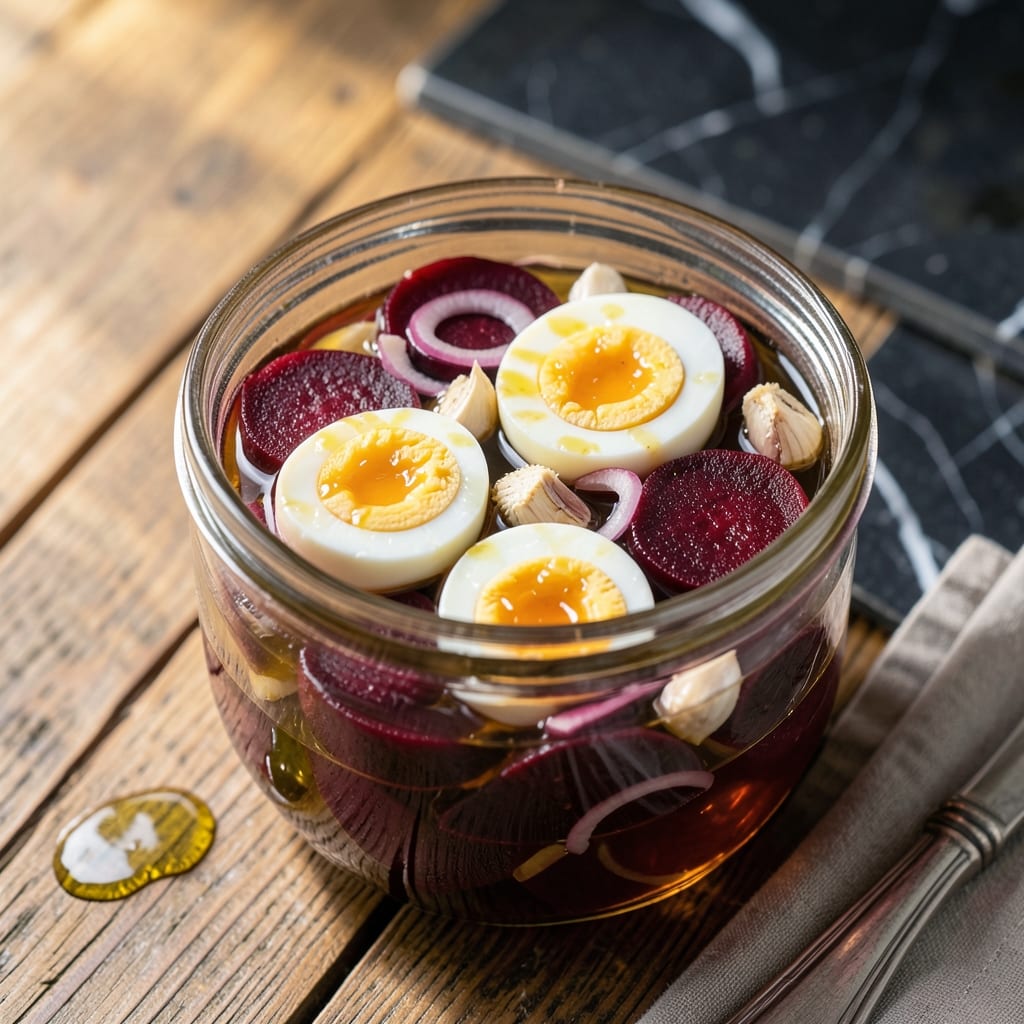
This no-sugar pickling method transforms hard-boiled eggs and beets into a tangy, protein-packed snack without sacrificing flavor. Vinegar, spices, and natural sweetness from beets create a bold taste that’s both satisfying and healthy.
The process is straightforward: boil, peel, and immerse in a spiced vinegar brine. Within 24 hours, the eggs absorb the deep red hue and zesty flavor, while the beets soften just enough to complement the texture.
Unlike traditional recipes, this version skips sugar entirely, relying on the earthy sweetness of beets and the sharpness of vinegar. The result is a clean, vibrant bite with no artificial aftertaste.
Perfect for meal prep, these keep in the fridge for up to 2 weeks. A simple, nutritious addition to any breakfast or brunch spread.
Ingredients for Pickled Eggs and Beets Recipe No Sugar
Simple, vibrant ingredients create this tangy, protein-packed dish with bold natural flavors.
| Ingredient | Amount | Notes |
|---|---|---|
| Large Eggs 🥚 | 8 whole | Hard-boiled and peeled |
| Medium Beets 🟣 | 2 whole | Peeled and sliced |
| White Vinegar 💧 | 2 cups | 5% acidity preferred |
| Apple Cider Vinegar 🍏 | 1 cup | For depth of flavor |
| Red Onion 🧅 | ½ whole | Thinly sliced for brine |
| Garlic Cloves 🧄 | 4 cloves | Smashed but intact |
| Black Peppercorns 🌶️ | 1 tbsp | Whole for infusion |
| Mustard Seeds 🌿 | 1 tsp | Yellow or brown variety |
| Bay Leaves 🍃 | 2 whole | Dried, whole leaves |
| Dill Seeds 🌿 | 1 tsp | Optional for extra flavor |
| Water 💧 | 1 cup | Filtered or distilled |
| Kosher Salt 🧂 | 1 tbsp | Diamond Crystal preferred |
The eggs and beets are the foundation here. Fresh, high-quality eggs yield the best texture after pickling. For beets, medium-sized, firm roots with smooth skin ensure even cooking and slicing. Most grocery stores carry both, but farmers markets often have superior beets. The vinegar ratio is key—white vinegar for sharpness, apple cider for depth, creating a balanced brine without added sugar.
No apple cider vinegar? Substitute with additional white vinegar plus a splash of lemon juice for brightness. Red onion can be replaced with white or yellow onion if needed. For spices, whole mustard seeds and peppercorns are essential for proper infusion—pre-ground versions won’t deliver the same depth. Bay leaves should be whole to avoid bitterness during the pickling process.
Store the pickled eggs and beets in airtight containers, submerged in brine. They’ll keep in the fridge for up to 2 weeks, with flavors intensifying over time. The beets will continue to soften slightly, while the eggs develop a deeper color and tang. Ideal for meal prep or adding to salads and charcuterie boards.
Why You’ll Love This Recipe
- One Pot Wonder: I just dump everything—eggs, beets, vinegars, and onion—into a pot and let it do its thing. No fancy steps.
- Tangy Goodness: The mix of white and apple cider vinegar gives it that sharp, zippy kick without any sugar to muddle the flavor.
- Meal Prep Magic: I make a big batch Sunday and snack on these all week. They keep forever in the fridge.
- Budget Keeper: Beets and eggs are cheap, and a little vinegar goes a long way. I save a fortune compared to store-bought.
Step-by-Step Instructions for Pickled Eggs and Beets
This method ensures perfectly tangy, vibrant results with every batch.
Step 1: Prepare the Vegetables and Eggs
Begin by peeling and slicing the 2 whole Medium Beets into ¼-inch thick rounds. Thinly slice the 0.5 whole Red Onion into half-moons, separating the layers. Smash the 4 cloves Garlic Cloves just enough to crack the skin and release the aroma, but leave them whole for infusion.
Place the 8 whole Large Eggs in a pot, cover with cold water by 1 inch, and bring to a boil. Once boiling, remove from heat, cover, and let sit for 12 minutes. Transfer the eggs to an ice bath to cool completely before peeling.
Step 2: Combine the Brine Ingredients
In a medium saucepan, combine the 2 cups White Vinegar, 1 cup Apple Cider Vinegar, 1 cup Water, 1 tbsp Kosher Salt, 1 tbsp Black Peppercorns, 1 tsp Mustard Seeds, 2 whole Bay Leaves, and 1 tsp Dill Seeds. Bring to a gentle simmer over medium heat.
Stir until the Kosher Salt fully dissolves, which should take 2-3 minutes. The brine should be steaming but not at a rolling boil—this preserves the delicate flavors of the spices. Remove from heat once the salt is completely incorporated.
Step 3: Layer and Submerge
In a clean, 1-quart glass jar or similar container, layer the sliced Medium Beets, Red Onion, and peeled Large Eggs. Distribute the smashed Garlic Cloves, Black Peppercorns, Mustard Seeds, and Bay Leaves evenly between the layers.
Carefully pour the hot brine over the layered ingredients, ensuring everything is fully submerged. Use a spoon to press down gently on the solids to eliminate air pockets. If needed, add a small weight or a zip-top bag filled with water to keep the contents below the brine surface.
Step 4: Cool and Refrigerate
Let the jar sit at room temperature until the brine cools to room temperature, which typically takes 30-45 minutes. This gradual cooling prevents thermal shock to the glass and allows the flavors to begin infusing immediately.
Once cooled, seal the jar tightly and refrigerate for at least 24 hours before serving. For optimal flavor development, wait 48 hours. The White Vinegar and Apple Cider Vinegar will mellow over time, creating a balanced, tangy profile that complements the earthy beets and rich eggs.
Step 5: Store and Enjoy
Store the pickled eggs and beets in the refrigerator for up to 1 month. The flavors will continue to deepen with time, and the beets will gradually impart a subtle pink hue to the eggs and brine.
Serve chilled as a snack, salad topping, or alongside charcuterie. The Dill Seeds and Bay Leaves will add complexity to every bite, while the Apple Cider Vinegar provides a fruity depth that balances the sharpness of the White Vinegar.
Pro Tips For Making Pickled Eggs And Beets Recipe No Sugar
- Boil Eggs Gently: I learned this the hard way—simmer eggs in just enough water to cover them for 9-10 minutes, no rolling boil, or you’ll get rubbery whites and that unappetizing green ring around the yolks.
- Roast Beets First: Skip boiling beets; roast them at 400°F for 45-60 minutes instead. The flavor deepens, and they peel easier under running water—no knife required.
- Slice Onions Thin: Red onions add bite, but thick slices overpower. Shave them paper-thin so they mellow nicely in the vinegar without turning the whole jar into onion soup.
- Warm the Vinegar: Sounds weird, but it works: heat your vinegar mix just until steaming before pouring over eggs and beets—it jumpstarts the pickling and gives a more even flavor in half the time.
Serving Suggestions for This Recipe
Breakfast Plating
Arrange 2 pickled eggs and 4 beet slices on a small plate with a sprinkle of fresh dill. The deep red beets and white eggs create a beautiful contrast that’s perfect for brunch spreads. I love adding a drizzle of olive oil for extra richness. ✨
Salad Topper
Chop the eggs and beets into bite-sized pieces and scatter over mixed greens. The tangy flavor pairs wonderfully with goat cheese and toasted walnuts. A light lemon vinaigrette enhances the vinegar notes without overpowering them.
Charcuterie Addition
Slice eggs into halves and arrange alongside beets on a charcuterie board. The acidity cuts through rich cheeses like aged cheddar or blue cheese. Add water crackers for a simple, satisfying snack combination.
Deviled Eggs Twist
Halve the pickled eggs and mix yolks with 1 tbsp Greek yogurt and ½ tsp Dijon mustard. Pipe back into whites and garnish with chopped pickled beets. This adds a vibrant color and tangy kick to classic deviled eggs.
Serve immediately for best texture, as the filling absorbs moisture over time. 💡
Garnish for Soups
Float thin beet slices and egg quarters in cold borscht or creamy potato soup. The pickled elements add brightness and visual appeal. I prefer adding them just before serving to maintain their crisp texture.
Nutrition Facts
Frequently Asked Questions
Can I use pre-cooked beets for pickling?
Yes, pre-cooked beets work well and save time. Just slice them and layer with eggs in the brine. They’ll absorb flavors quickly, often ready in 24 hours.
How do I know when the eggs are done pickling?
The eggs are ready when they’ve turned a deep pink from the beets and absorbed a tangy flavor. Taste after 24 hours—they’ll develop more intensity over 48 hours.
What if my brine isn’t covering all the ingredients?
Use a clean weight or a zip-top bag filled with water to keep everything submerged. This prevents spoilage and ensures even flavor distribution.
Can I reuse the pickling brine?
It’s best to discard the brine after use, as it loses acidity and may harbor bacteria. For safety, always make fresh brine for each batch.

- Pina Colada Dip Recipe Red Lobster: Tropical Creaminess With Toasted Coconut - October 12, 2026
- Pickled Sweet Cherry Peppers Recipe Canning: Tangy Heat for Pantry Staples - October 12, 2026
- Peppercorn Sauce Recipe Vegan: Rich Umami Depth Without Cream - October 12, 2026