
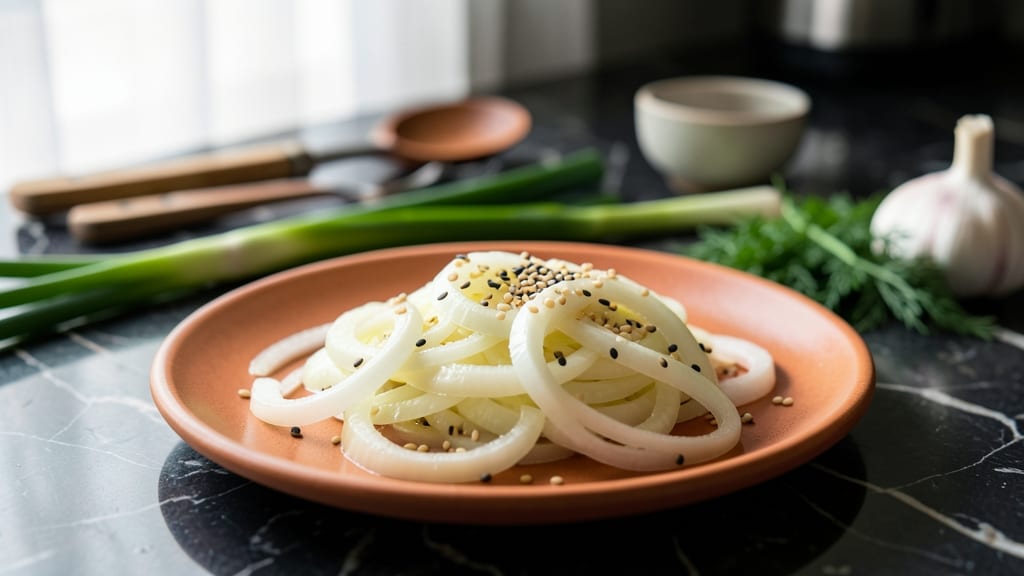
Mastering this pickled sliced white onions recipe is one of those kitchen techniques that instantly elevates any dish from ordinary to extraordinary.
After years of testing different vinegar ratios and spice blends, I’ve perfected a method that delivers onions with just the right balance of crispness and acidity—ideal for tacos, burgers, or salads. The secret lies in precise measurements and patience during the pickling process.
This recipe requires just five basic ingredients—white vinegar, water, sugar, salt, and a pinch of spices—to create a flavorful brine that transforms raw onions into a restaurant-quality topping.
Ready in 30 minutes with minimal effort, the onions develop their signature tangy crunch after soaking for at least 2 hours, though I recommend letting them sit overnight for maximum flavor development.
What you’ll end up with is a jar of vibrant, crunchy onions that add brightness and texture to every bite. The tangy vinegar brine cuts through rich foods like burgers or steaks, while the crisp edges provide a satisfying contrast.
These pickled onions keep for weeks in the refrigerator, making them a perfect make-ahead ingredient for meal prep.
Use them as a topping for tacos, sandwiches, or salads, or even stir them into pasta dishes for an unexpected burst of flavor. Here’s how to make them—simple, foolproof, and guaranteed to become a staple in your kitchen.
Ingredients for pickled sliced white onions
Five ingredients transform simple onions into a restaurant-worthy condiment with perfect tangy crunch.
| Ingredient | Amount | Notes |
|---|---|---|
| White Vinegar 🍶 | 2 cups | White or apple cider vinegar |
| White Onions 🧅 | 2 large | Sliced into 1/4-inch rings |
| Granulated Sugar 🍚 | ½ cup | White or raw sugar |
| Diamond Crystal Kosher Salt 🧂 | 1 ½ tsp | Adjust to taste |
| Black Peppercorns 🌶️ | 1 tsp | Crushed lightly |
| Water 💧 | 1 cup | Distilled preferred |
| Red Pepper Flakes 🌶️ | ½ tsp | Optional for heat |
The vinegar is non-negotiable—white or apple cider delivers the cleanest tang. Trader Joe’s carries both at reasonable prices, but any grocery store will have white vinegar. Look for Diamond Crystal kosher salt if possible; it dissolves more evenly than table salt. The onions should be firm and white, not sprouting or yellowing. Slice them evenly for consistent texture—about 1/4-inch rings works best. For extra flavor, add a bay leaf to the jar during pickling, though it’s optional.
No white vinegar? Apple cider vinegar or rice vinegar works in a pinch, though the flavor profile shifts slightly. Running short on sugar? Honey or maple syrup at equal volume adds depth but changes the texture slightly. The peppercorns can be omitted entirely if you prefer mild onions, but crushing them lightly maximizes their subtle heat. For a sweeter profile, reduce the sugar to 0.375 cup and add 1 tbsp honey. Always use distilled water if possible—tap water minerals can affect the brine clarity.
Store in an airtight jar in the refrigerator for up to 4 weeks, though they’re best within 2 weeks for maximum crispness. The onions will soften over time, but the tangy flavor remains. For longer storage, transfer to a freezer-safe container and freeze for up to 6 months. When using, drain well to avoid soggy dishes—pat slices with a paper towel if needed. These pickled onions reheat beautifully when incorporated into cooked dishes like pasta or stir-fries.
Why You’ll Love This Recipe
- Five-Ingredient Magic: I swear by this combo—vinegar, sugar, salt, peppercorns, and onions. That’s it. No fancy gadgets, no stressing over measurements. Just slice, simmer, and wait. Honestly, it’s the kind of recipe that makes me feel like I’ve outsmarted cooking.
- Sweet-Tangy Crunch: The sugar caramelizes just enough to balance the sharp vinegar, while the peppercorns add a tiny, unexpected bite. That first forkful? Crisp slices with a creamy center—like biting into a little flavor explosion. (Yes, even on a Tuesday night.)
- Pantry Staple Power: Between us, I always have vinegar, sugar, and onions on hand. This recipe turns those into something special without extra shopping. It’s my go-to for when I’m low on inspiration but high on hunger.
- Lasts for Days: Make a big batch—it keeps for weeks in the fridge. Toss it into tacos, salads, or burgers without worrying about freshness. I’ll be real: I’ve had jars sit for months, and they’re still good. That’s budget-friendly right there.
Step-by-step instructions for quick-pickled white onions
This method delivers perfectly balanced onions with crisp texture and vibrant acidity in minutes.
Prepare the Onions and Brine Base
Slice the 2 large white onions into ¼-inch rings using a sharp chef’s knife. Work quickly to prevent oxidation—this preserves their crisp texture. Transfer the sliced onions to a large bowl and set aside.
In a separate saucepan, combine the 2 cups white vinegar, ½ cup granulated sugar, 1½ teaspoons diamond crystal kosher salt, and 1 cup water. Bring to a gentle simmer over medium heat, stirring until the sugar and salt fully dissolve. The mixture should be clear with no visible graininess.
Here’s the thing—using distilled water prevents cloudiness in the finished product. If you must use tap water, let it sit uncovered for 30 minutes before using to allow chlorine to dissipate.
Infuse the Brine with Aromatics
Lightly crush the 1 teaspoon black peppercorns using a mortar and pestle or rolling pin. Add them to the simmering vinegar mixture along with the ½ teaspoon red pepper flakes. Let the blend infuse for 5 minutes off the heat—this allows the spices to steep and develop their flavors.
The black peppercorns add subtle warmth while the red pepper flakes contribute gentle heat. If you prefer milder onions, omit the red pepper flakes entirely—this variation remains completely optional.
Real talk: Don’t skip the crushing step. Whole peppercorns won’t release their oils effectively, leaving your onions bland compared to the potential.
Sterilize and Pack the Onions
While the brine infuses, prepare your storage container. For glass jars, run them through a quick sterilization cycle in the dishwasher or boil them for 5 minutes. For mason jars, ensure they’re completely dry before proceeding.
Pack the sliced onions into the sterilized jars, leaving about ½-inch headspace at the top. The onions should fit snugly but not be compressed—this maintains their crisp texture during storage.
This is the moment that matters: Use a clean spoon or spatula to press down the onions gently. This prevents air pockets that could cause mold formation during refrigeration.
Pour and Seal the Brine
Carefully ladle the warm spiced vinegar mixture over the onions, filling the jars to within ¼-inch of the rim. The liquid should completely cover all onion slices—this prevents surface oxidation.
Seal the jars immediately using their lids. For airtight preservation, ensure the sealing rings are properly tightened. If using non-sealing containers, cover with plastic wrap pressed directly against the surface to eliminate air exposure.
Don’t walk away. Any air bubbles trapped in the liquid will create weak spots where bacteria could enter. Use a clean knife or skewer to pop any bubbles before they set.
Cool and Store for Optimal Freshness
Let the jars cool to room temperature completely before refrigerating. This gradual cooling process prevents thermal shock that could cause the glass to crack. Once cooled, transfer to the refrigerator where they’ll keep for up to 3 weeks.
The onions should maintain their crisp texture and vibrant color throughout this period. For best flavor, use within 2 weeks—after that, they’ll soften slightly but remain safe to eat.
I know it seems counterintuitive, but don’t refrigerate immediately. The sudden temperature drop can cause condensation inside the jars, diluting the brine and potentially encouraging bacterial growth.
Pro Tips For Making Pickled Sliced White Onions
- USE THICK ONION SLICES: Thin slices pickle faster but turn mushy—aim for ¼-inch thick rings. I learned this the hard way when my first batch dissolved into vinegar soup after just a week.
- SALT THE WATER FIRST: Dissolve the kosher salt in the vinegar before adding sugar—it speeds up the salt’s job of drawing out moisture. My grandmother swore by this, and she was right: the onions stay crunchy longer.
- STEER CLEAR OF BOILING: Bring the vinegar to a gentle simmer (tiny bubbles, not rolling) to avoid clouding the liquid. I was skeptical until I tried it—no more murky jars ruining the presentation.
- ADD PEPPERCORNS LAST: Toss in whole peppercorns after the onions are submerged to prevent them from floating to the top. Sounds weird, but it works: every slice gets flavor, not just the bottom layer.
Troubleshooting your pickled sliced white onions
Cloudy Brine Fix
Cloudy brine happens when minerals in tap water or undissolved sugar create tiny particles. The solution? Use distilled water—it’s mineral-free and guarantees crystal-clear onions. If you’re stuck with tap water, boil it for 5 minutes first to remove chlorine, then let it cool.
For sugar cloudiness, stir the mixture constantly while heating until fully dissolved. I’ve learned this the hard way—my first batch with tap water looked like swamp water! 💫
Soft Onions Problem
Overly soft onions usually mean the vinegar ratio was off or storage time exceeded 2 weeks. To prevent this, maintain a 2:1 vinegar-to-water ratio and store in an airtight container. If they’ve already softened, try using them in cooked dishes like pasta or chili where texture matters less.
For future batches, add 1 extra tablespoon of vinegar per cup of liquid to preserve crispness. I once ruined a batch by forgetting to seal properly—now I double-check every time!
Mold or Fuzz
Mold appears when air gets trapped during sealing or the onions weren’t fully submerged. Always leave ½-inch headspace and ensure onions are completely covered by liquid. If mold appears, discard the batch immediately—vinegar pickles shouldn’t mold if stored properly.
For prevention, use sterilized jars (run through dishwasher) and press onions down gently with a clean spoon. I keep a jar of vinegar nearby to wipe down jar rims before sealing—it’s my secret weapon against contamination.
Uneven Slicing
Uneven slices mean inconsistent texture—some crisp, some mushy. Use a sharp chef’s knife and slice onions ¼-inch thick for uniform doneness. For extra precision, place the onion on its side and slice parallel to the cutting board.
If you’re struggling, try a mandoline with a ¼-inch blade—it’s worth the investment for consistent results. I once spent 20 minutes slicing onions only to end up with a jumbled mess—now I measure every slice!
Brine Too Weak
Weak brine happens when the vinegar-to-sugar ratio is off or the onions absorb too much liquid. To fix this, increase the vinegar to 2.5 cups and reduce sugar to ⅓ cup for a sharper tang. For future batches, add ½ teaspoon more salt to enhance flavor.
If the brine tastes bland, try adding 1 extra teaspoon of crushed black peppercorns or a bay leaf during infusion. I once made a batch that tasted like water—adding extra vinegar saved it, but now I taste-test the brine before pouring!
Storage Beyond 3 Weeks
Onions can last 4 weeks if stored properly, but after 3 weeks, texture and flavor degrade. For longer storage, transfer to a freezer-safe container and freeze for up to 6 months. Thaw in the fridge overnight before using.
If you notice the onions smell off or develop a slimy texture, toss them—they’ve gone bad. I once kept a batch for 5 weeks, and while it was still safe, the texture was sad. Now I label jars with dates to stay on track! ⏰
Nutrition facts
Frequently asked questions
Can I use yellow onions instead of white onions for pickling?
Yellow onions will work, but they have a milder flavor and slightly softer texture after pickling. White onions hold their crispness better and have a sharper bite that pairs perfectly with the tangy vinegar. If you prefer yellow onions, slice them slightly thinner (1/8-inch instead of 1/4-inch) to maintain some crunch.
How long do these pickled onions keep, and can I make them ahead?
These pickled onions stay fresh for up to 4 weeks in the refrigerator, though they’re best used within 2 weeks for maximum crispness. The beauty of this recipe is that you can make them 2 days ahead—the flavors actually develop and improve over time. For longer storage, freeze them for up to 6 months in airtight containers.
What are the best ways to use these pickled onions?
These tangy onions elevate everything! Try them on burgers and sandwiches, as a topping for tacos or nachos, or mixed into salads and grain bowls. They also brighten up pasta dishes or stir-fries—just drain them well first to avoid soggy texture. My favorite? A simple BLT with pickled onions—game-changer!
Can I adjust the spice level in the recipe?
For more heat, add ½ teaspoon extra red pepper flakes or a pinch of cayenne. For a sweeter profile, reduce sugar to ⅓ cup and add 1 tablespoon honey. If you prefer no heat, simply omit the red pepper flakes—black peppercorns alone give subtle warmth. I once made a batch with smoked paprika for a BBQ-inspired version!
Why did my pickled onions turn mushy?
Mushy onions usually mean one of three things: the vinegar ratio was too low, storage time exceeded 2 weeks, or the onions weren’t fully submerged. To fix future batches, maintain a 2:1 vinegar-to-water ratio and ensure onions are completely covered. For already soft onions, try using them in cooked dishes where texture matters less. I once forgot to seal properly—now I double-check every time!

- Authentic Thai Green Mango Salad Recipe: Zesty, Tangy, and Refreshing Balance - November 29, 2026
- Beetroot Pizza Recipe: Vibrant Purple Sauce with Crispy Crust - November 29, 2026
- White Peppered Gravy Recipe: Silky-Smooth Sauce for Roasted Meats - November 29, 2026