
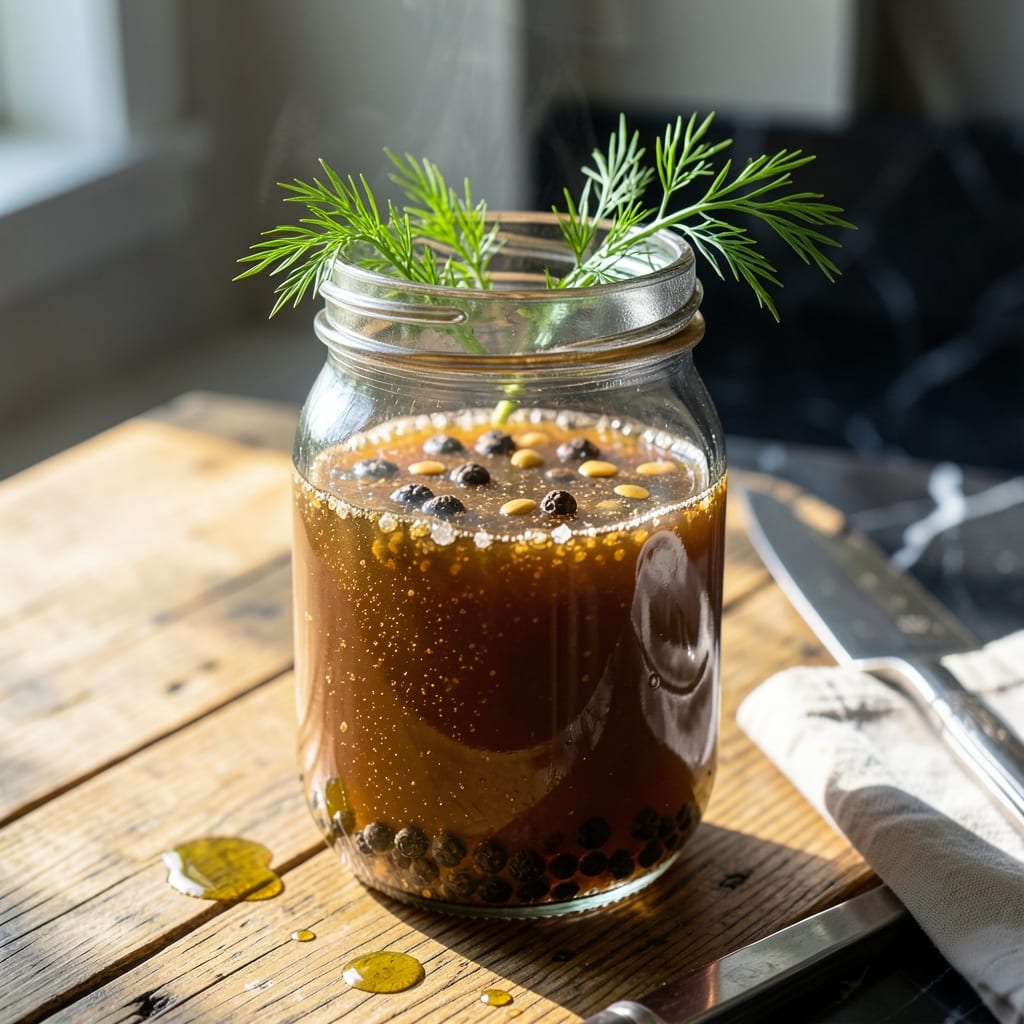
This pickle brine recipe transforms ordinary vegetables into tangy, crisp delights with a perfect balance of acidity and seasoning. Apple cider vinegar forms the base, delivering a mellow sharpness that enhances rather than overpowers.
The simplicity of this method makes it accessible for beginners while still yielding professional results. With just a few pantry staples and 10 minutes of prep time, you can create a versatile brine that preserves and pickles equally well.
What you get is a crystal-clear liquid that keeps cucumbers crunchy and packed with flavor. The brine develops depth as it sits, making it ideal for quick pickles or long-term preservation in your refrigerator.
Use it for cucumbers, carrots, onions, or any vegetable that needs a tangy kick. This foundation recipe adapts easily to your preferred spice combinations.
Ingredients for Pickle Brine Recipe Apple Cider Vinegar
Crystal-clear tangy base for crunchy pickles and more. Simple, versatile, and ready fast.
| Ingredient | Amount | Notes |
|---|---|---|
| Apple Cider Vinegar 🍏 | 2 cups | Raw, unfiltered preferred |
| Water 💧 | 2 cups | Filtered for best results |
| Pickling Salt 🧂 | 2 tbsp | Non-iodized for clarity |
| Granulated Sugar 🍚 | 1 tbsp | Organic or raw cane |
| Mustard Seeds 🌿 | 1 tbsp | Yellow or brown variety |
| Black Peppercorns 🌶️ | 1 tsp | Whole, not pre-ground |
| Dill Seeds 🌿 | 1 tsp | Optional for classic flavor |
| Red Pepper Flakes 🔥 | ½ tsp | Adjust for heat preference |
| Garlic Cloves 🧄 | 4 cloves | Lightly crushed, peeled |
| Fresh Dill Sprigs 🌿 | 2 whole | Optional for extra aroma |
Apple cider vinegar is non-negotiable here—Bragg is my go-to for consistent quality and that perfect mellow sharpness. Pickling salt (like Diamond Crystal or Morton’s) keeps the brine cloud-free. Most grocery stores carry it in the canning section. I grab mine at Whole Foods or Target—both have solid selections. Filtered water might seem extra, but tap water minerals can make your brine murky over time.
No pickling salt? Kosher salt at half the amount works in a pinch (just know your brine might cloud a bit). Swap mustard seeds for celery seeds if that’s your vibe. Want it sweeter? Maple syrup or agave can replace the sugar. The dill seeds and sprigs are optional but highly recommended—they add that classic pickle flavor. If you’re out of fresh garlic, garlic powder at a quarter teaspoon does the trick.
Keeps indefinitely in the fridge (seriously, I’ve used brine that’s 6 months old with no issues). Store in a clean glass jar with a tight lid. The flavor gets deeper after 24 hours—perfect for quick pickles or long-term veggie storage. Shake before using if any spices settle.
Why You’ll Love This Recipe
- 5-Minute Mix: I just dump everything in a pot, heat, and cool—no fancy steps, no fuss.
- Tangy & Sweet: The apple cider vinegar gives that bright zing, while the sugar and mustard seeds add depth I crave.
- Endless Uses: Honestly, I use this brine for pickles, marinades, even salad dressing when I’m in a pinch.
- Pantry Savior: Between us, it’s cheaper than store-bought and lasts for weeks in the fridge.
Step-by-Step Instructions for Apple Cider Vinegar Pickle Brine
Here’s the method. Straightforward, tested, works every time.
Step 1: Combine Vinegar, Water, and Salt
In a medium saucepan, pour in the 2 cups Apple Cider Vinegar and 2 cups Water. The raw, unfiltered vinegar gives the brine that signature tangy depth and cloudy appearance that screams homemade. Add the 2 tbsp Pickling Salt—this non-iodized variety keeps your brine crystal clear.
Set the pan over medium-high heat and bring to a gentle boil, stirring until the salt fully dissolves. This takes about 2-3 minutes. You want to see small bubbles breaking the surface and steam rising, but not a rolling boil that could evaporate too much liquid.
Step 2: Add Sugar and Whole Spices
Once the salt dissolves, add the 1 tbsp Granulated Sugar. Stir until it completely disappears into the brine. The sugar balances the sharpness of the vinegar, creating that perfect sweet-tangy flavor profile that makes pickles irresistible.
Now add the 1 tbsp Mustard Seeds, 1 tsp Black Peppercorns, 1 tsp Dill Seeds, and 0.5 tsp Red Pepper Flakes. These whole spices infuse the brine with complex, layered flavors that develop as the mixture heats. The mustard seeds add earthiness, while the peppercorns and red pepper flakes provide subtle heat.
Step 3: Incorporate Aromatics and Simmer
Add the 4 cloves Garlic Cloves (lightly crushed and peeled) and 2 whole Fresh Dill Sprigs. The garlic releases its pungent, savory notes into the brine, while the dill sprigs contribute that classic pickle flavor we all crave.
Reduce the heat to medium-low and let the mixture simmer for 5 minutes. You’ll notice the liquid turning a beautiful golden color and the kitchen filling with that unmistakable pickle aroma. This simmering time allows all the flavors to meld together into a cohesive, well-balanced brine.
Step 4: Cool Completely Before Using
Remove the saucepan from the heat and let the brine cool to room temperature. This typically takes 30-45 minutes at room temperature. I like to give it an occasional stir to help distribute the heat evenly and speed up the cooling process.
You’ll know it’s ready when the pan feels cool to the touch and there’s no steam rising. Using hot brine on your vegetables would cook them slightly and make them soft instead of crisp. The cooled brine should be fragrant with visible spices suspended throughout—a sign that all those flavors have properly infused.
Pro Tips For Making Pickle Brine Recipe Apple Cider Vinegar
- Boil the Brine: Bring the apple cider vinegar, water, salt, and sugar to a full rolling boil for at least 2 minutes—this ensures the salt and sugar fully dissolve and the brine is properly sanitized.
- Use Pickling Salt: Skip iodized salt; the additives can make your brine cloudy. Pickling salt keeps the liquid crystal clear and the flavor clean.
- Cool Before Using: I learned this the hard way—pouring hot brine over cucumbers turns them mushy. Let it cool to room temperature first, about 30-45 minutes.
- Toast the Seeds: Lightly toasting the mustard seeds in a dry pan for 1-2 minutes before adding them to the brine actually changes the outcome, giving your pickles a deeper, nuttier flavor.
Troubleshooting This Recipe
Cloudy Brine Issues
If your brine looks murky, it’s likely from using iodized salt or unfiltered tap water. Switch to pickling salt and filtered water for crystal-clear results. I learned this the hard way with my first batch. 💡
Weak Flavor Problems
Taste your brine before using—if it seems bland, add 1 tsp more salt or 1 tbsp more sugar. Let it sit for 24 hours to allow flavors to develop fully before adjusting further.
Spice Sediment
Finding spices settled at the bottom? Stir the brine before each use. If you prefer a uniform look, strain it through cheesecloth after cooling. I often leave the spices in for continuous flavor infusion.
Too Harsh Vinegar
If the vinegar taste overpowers, add 1 extra tbsp of sugar to balance. Bragg apple cider vinegar is naturally milder than white vinegar, so it rarely needs adjustment. Taste as you go.
Short Shelf Life
For maximum preservation, ensure vegetables are fully submerged. If mold appears, discard the batch. Properly stored in a clean jar, this brine keeps for 6 months in the fridge. 🌟
Vegetable Softness
Soft pickles usually mean hot brine was used. Always cool completely before pouring over veggies. For extra crunch, soak cucumbers in ice water for 1-2 hours before brining.
Nutrition Facts
Frequently Asked Questions
Can I use white vinegar instead?
Yes, but it will be sharper. Apple cider vinegar’s milder taste works better for this recipe. If using white vinegar, add 1 extra tbsp of sugar to balance the acidity.
How long will the brine last?
Stored in a clean glass jar in the fridge, it keeps for up to 6 months. The flavor deepens over time, making it perfect for quick pickles or long-term storage.
Why did my pickles turn out soft?
Soft pickles usually mean hot brine was used. Always cool completely before pouring. For extra crunch, soak veggies in ice water for 1-2 hours first.
Can I adjust the sweetness?
Taste before using—add 1 tbsp more sugar if too tart. For a different flavor, swap in maple syrup or agave instead.

- Pina Colada Dip Recipe Red Lobster: Tropical Creaminess With Toasted Coconut - October 12, 2026
- Pickled Sweet Cherry Peppers Recipe Canning: Tangy Heat for Pantry Staples - October 12, 2026
- Peppercorn Sauce Recipe Vegan: Rich Umami Depth Without Cream - October 12, 2026