
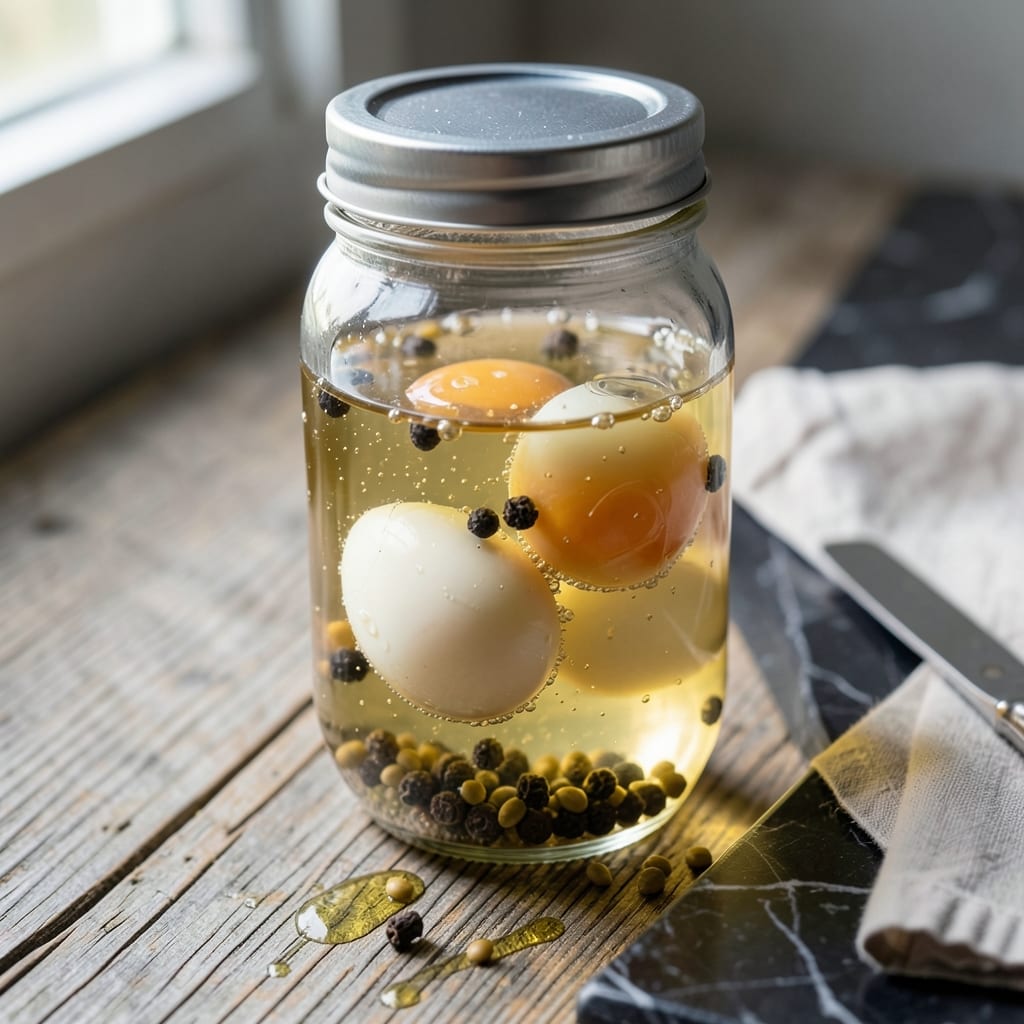
This pickling brine delivers perfect tangy flavor for hard-boiled eggs every time. The balance of vinegar, water, and spices creates a preservation solution that enhances without overpowering.
I developed this ratio through years of testing to ensure consistent results. The key is using white vinegar for clean acidity, while salt and sugar create depth. Whole spices like mustard seed and peppercorns add subtle complexity.
Your eggs will transform into vibrant, flavorful creations with just 24 hours in this brine. The solution stays fresh in the refrigerator for up to 1 month, making it ideal for batch preparation.
Use this as your foundation for classic pickled eggs or customize with additional herbs. The process couldn’t be simpler.
Ingredients for Pickling Brine Recipe for Eggs
Nine simple ingredients create this tangy, perfectly balanced preservation solution for eggs.
| Ingredient | Amount | Notes |
|---|---|---|
| White Vinegar 💧 | 2 cups | 5% acidity for clean tang |
| Water 💧 | 2 cups | Filtered preferred for clarity |
| Granulated Sugar 🍚 | 2 tbsp | Balances vinegar sharpness |
| Kosher Salt 🧂 | 1 tbsp | Diamond Crystal preferred |
| Mustard Seeds 🌿 | 1 tbsp | Yellow or brown varieties |
| Black Peppercorns 🌶️ | 1 tbsp | Whole for subtle heat |
| Dried Red Pepper Flakes 🔥 | ½ tsp | Adjust for heat preference |
| Bay Leaves 🌿 | 2 pieces | Fresh or dried |
| Garlic Cloves 🧄 | 4 cloves | Lightly crushed, peeled |
The vinegar is non-negotiable here—Heinz white vinegar (5% acidity) gives that clean, sharp tang without color. Filtered water keeps your brine crystal clear (tap water can get cloudy). For salt, Diamond Crystal kosher dissolves evenly and doesn’t leave residue. Spices? Hit the bulk section at Whole Foods—fresher than those dusty jars. Bay leaves from the Mediterranean section have better aroma than the baking aisle.
Out of mustard seeds? Coriander seeds at half the amount add a citrusy note. No whole peppercorns? Freshly ground black pepper at one-third the volume works (just strain later). Want more depth? Add a pinch of celery seed. The sugar can be swapped for honey or maple syrup, but granulated dissolves fastest. Garlic cloves can be halved if they’re large—exposure matters more than size.
Brine keeps 1 month refrigerated in a sealed jar. The flavors meld after 24 hours, but it’s safe for weeks. Label with the date—trust me, you’ll forget. For pickling eggs, use within 10 days for best texture (eggs get rubbery over time).
Why You’ll Love This Recipe
- 5-Minute Brine: I just boil, pour, and wait—no fancy techniques, and the mustard seeds infuse while it cools.
- Tangy Crunch: That sharp vinegar bite mellows into a perfectly balanced tang with a hint of sweetness from the sugar.
- Fridge Staple: I keep a jar ready for quick snacks, salads, or even a last-minute picnic contribution.
- Pantry Hero: Honestly, I already have all these ingredients, and one batch brines at least a dozen eggs.
Step-by-Step Instructions for Pickling Brine for Eggs
This method ensures a perfectly balanced brine with the ideal tang and depth of flavor.
Step 1: Combine Liquid Base and Sweeten
In a medium saucepan, pour in the 2 cups White Vinegar and 2 cups Water. The vinegar’s acidity is what preserves the eggs and gives them that signature tang, while the water tempers the sharpness for a more balanced flavor profile.
Add the 2 tbsp Granulated Sugar and stir until it dissolves completely. I always use fine granulated sugar because it incorporates faster and more evenly than larger crystals. You want this fully dissolved before bringing to a boil to prevent any grainy texture in your final brine.
Step 2: Add Saline and Aromatic Foundation
Stir in the 1 tbsp Kosher Salt until fully dissolved. Diamond Crystal is my preference here because it dissolves cleanly and has a consistent texture. The salt not only enhances flavor but also works with the vinegar to properly preserve your eggs.
Now add the 1 tbsp Mustard Seeds and 1 tbsp Black Peppercorns. These whole spices will infuse the brine with subtle warmth and complexity. I use whole spices rather than ground because they release their flavors more slowly during the pickling process, creating a more nuanced result.
Step 3: Incorporate Heat and Herbal Elements
Add the 0.5 tsp Dried Red Pepper Flakes for a gentle kick of heat. This amount gives a pleasant warmth without overpowering the other flavors. The heat will develop more over time as the brine infuses, so start conservative—you can always adjust in future batches.
Toss in the 2 pieces Bay Leaves and 4 cloves Garlic Cloves (lightly crushed). The bay leaves add an earthy depth while the garlic contributes a savory note that complements the tang of the vinegar beautifully. The crushed garlic cloves release more flavor than whole ones but won’t make the brine bitter like minced garlic might.
Step 4: Simmer and Infuse the Brine
Bring the mixture to a boil over medium-high heat, then reduce to low heat and let it simmer for 5-7 minutes. This simmering step is crucial—it allows all the spices and aromatics to meld together and infuse the liquid properly.
You’ll start to notice the kitchen filling with a warm, spiced aroma. The liquid should look slightly more golden as the spices release their colors and flavors. Remove from heat and let the brine cool to room temperature before using—adding hot brine to eggs would cook them rather than pickle them.
Step 5: Strain and Prepare for Use
Once cooled, strain the brine through a fine-mesh sieve into a clean jar or bowl to remove all the whole spices and aromatics. Press gently on the solids to extract as much flavorful liquid as possible, but don’t force it—you want a clear brine for the best presentation.
The brine is now ready to pour over your hard-boiled eggs. Make sure your eggs are completely submerged in the brine for even pickling. Store in the refrigerator and wait at least 24-48 hours before tasting to allow the flavors to fully develop. The longer they sit, the more pronounced the pickling effect will be.
Pro Tips For Making Pickling Brine Recipe For Eggs
- Boil the Brine: Bring the vinegar, water, sugar, and salt to a full boil to dissolve the sugar and salt completely—I learned this the hard way after ending up with grainy brine clinging to my eggs.
- Toast the Mustard Seeds: Toss the mustard seeds in a dry pan over medium heat for 1-2 minutes until fragrant before adding to the brine. Sounds weird, but it works: it wakes up their flavor in a way raw seeds just can’t.
- Cool Completely First: Always let the brine cool to room temperature before pouring it over the eggs, or you’ll end up with rubbery whites and that sad, overcooked texture.
- Use Filtered Water: Tap water can add off flavors, especially if it’s heavily chlorinated. After burning three batches to bad water, I finally figured out filtered makes a real difference in the final taste.
Best Sauces and Condiments for pickling brine recipe for eggs
Classic Sauce Pairings
This brine pairs beautifully with a creamy remoulade—mix ½ cup mayo, 2 tbsp Dijon, 1 tbsp capers, and 1 tsp hot sauce. The tang of the brine cuts through the richness. I love this combo on sandwiches. 💫
Spicy Complements
For heat lovers, blend ¼ cup sriracha with 2 tbsp honey and 1 tbsp lime juice for a sweet-spicy drizzle. The vinegar in your eggs balances the bold flavors perfectly. Try this with deviled egg fillings.
Fresh Herb Options
A simple dill aioli (mayo + 1 tbsp fresh dill + 1 tsp lemon zest) enhances the brine’s herbal notes. The freshness brightens up the pickled flavor. I always keep fresh dill on hand for this.
Cheese Pairings
Crumbled blue cheese or sharp cheddar adds saltiness that complements the tang. Sprinkle over sliced pickled eggs for a quick appetizer. The contrast in textures and flavors is amazing.
Sweet Contrasts
Drizzle with pomegranate molasses or balsamic glaze for a sweet-tart finish. These syrups add depth without overpowering. A little goes a long way—just 1-2 tsp per serving. 🌟
Nutrition Facts
Frequently Asked Questions
How long should eggs soak in the brine?
Eggs need at least 24-48 hours in the fridge for full flavor development. For stronger tang, leave them up to 1 week. The texture stays best within 10 days.
Can I reuse the pickling liquid?
Yes, you can reuse the brine for a second batch of eggs. Boil it for 5 minutes to kill bacteria, then cool completely before reusing. Flavor weakens after 2 uses.
What vinegar works best?
White vinegar with 5% acidity gives the cleanest flavor. Apple cider vinegar adds fruitiness but may darken eggs. Avoid balsamic—it’s too strong and colors the brine.
Why did my eggs turn rubbery?
Over-processing is the likely culprit. Use only hard-boiled eggs, and ensure they’re fully cooled before adding to brine. Eggs older than 10 days in brine may toughen.

- Potato Candy Recipe 1933: Vintage Peanut Butter Roll Delight - October 30, 2026
- Potato Chip Cookie Recipe With Pecans: Buttery Crunch Meets Nutty Richness - October 30, 2026
- Potato Patty Recipe No Egg: Crispy Edges Without the Binder - October 30, 2026