
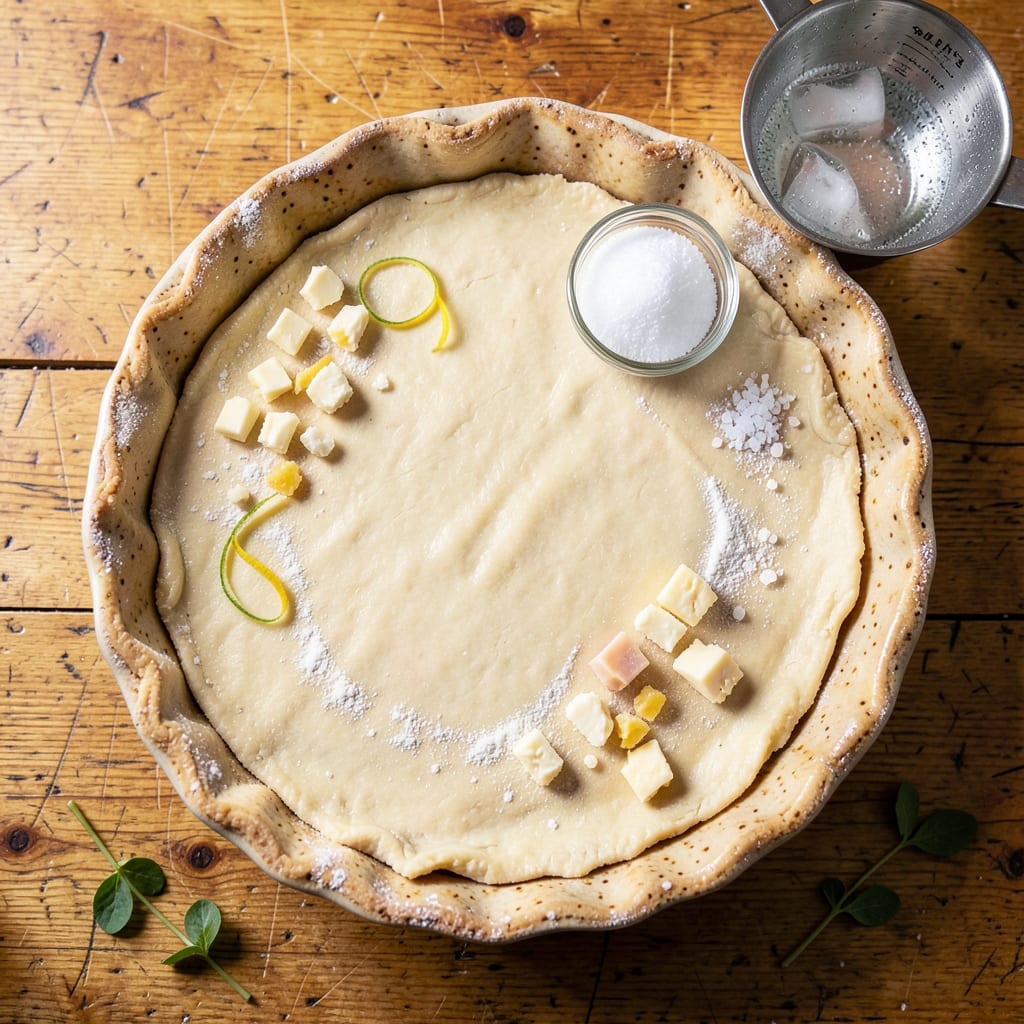
This pie crust recipe delivers flaky, tender results every time with a simple lard and butter blend. The combination creates layers that shatter at the touch while maintaining structural integrity for any filling.
I developed this method through years of testing, focusing on the perfect ratio of fat to flour and precise chilling times. The cold ingredients are key—they prevent the fat from melting prematurely, which would ruin the flaky texture.
What you get is a crust that bakes to a golden brown with a crisp snap and buttery flavor that complements both sweet and savory pies. The lard adds lightness, while the butter provides richness.
This recipe works for single or double crusts and holds up beautifully to baking. Here’s how to make it.
Ingredients for Pie Crust Recipe Sally’s Baking Addiction
Flaky layers start with cold fat and flour. Simple ingredients, perfect results every time.
| Ingredient | Amount | Notes |
|---|---|---|
| All-Purpose Flour 🌾 | 2 ½ cups | Spoon and level method |
| Lard 🧈 | ½ cup | Chilled and cubed |
| Unsalted Butter 🧈 | ½ cup | Chilled and cubed |
| Salt 🧂 | 1 tsp | Fine table salt |
| Granulated Sugar 🍚 | 1 tbsp | Optional for sweet crusts |
| Ice Water 💧 | ½ cup | Plus 1-2 tbsp as needed |
The fat ratio is everything here. Leaf lard (from Trader Joe’s or a butcher) gives the best texture, but regular lard works too. Use high-quality European-style butter—its higher fat content means more flakes. Always keep both fats ice-cold until ready to use. The flour? All-purpose is ideal (King Arthur or Gold Medal), no need for anything fancy.
No lard? Shortening (like Crisco) gets you close, but the flavor won’t be as rich. Out of butter? Coconut oil (solid, chilled) works in a pinch—just expect a slight coconut taste. For a single crust, halve all ingredients. The sugar is optional—skip it for savory pies, add it for fruit fillings.
The dough keeps 2-3 days wrapped tightly in the fridge, or freeze for 3 months. Let chilled dough sit at room temp for 10-15 minutes before rolling for easier handling. Always use cold ingredients for best flakiness.
Why You’ll Love This Recipe
- No Fuss Mixing: I just pulse the flour, lard, butter, salt, and sugar in the food processor—no pastry cutter, no sore arms.
- Flaky Heaven: That combo of lard and butter gives me layers so tender they practically shatter on the tongue.
- Holiday to Tuesday: It’s my go-to for Thanksgiving pies and also for a spontaneous chicken pot pie on a random Wednesday.
- Freezer Bestie: I always make a double batch and stash the extra dough—ready for any pie emergency for up to three months.
Step-by-Step Instructions for Foolproof Lard and Butter Pie Crust
Here is the method. Tested, reliable, and designed for perfect flakiness every time.
Step 1: Combine Dry Ingredients
In a large bowl, whisk together the 2.5 cups All-Purpose Flour, 1 tsp Salt, and 1 tbsp Granulated Sugar until evenly distributed. The sugar adds a subtle sweetness, especially nice for fruit pies, but can be omitted for savory applications.
This step ensures even dispersion of salt and sugar, which prevents concentrated pockets of flavor in the finished crust. The bowl should be large enough to accommodate the fat and liquid additions without spilling.
Step 2: Cut in the Cold Fats
Add the 0.5 cup Lard and 0.5 cup Unsalted Butter, both chilled and cubed, to the flour mixture. Using a pastry cutter or your fingertips, work the fats into the flour until the mixture resembles coarse crumbs with some pea-sized pieces remaining.
Here’s the thing—those visible fat pieces are what create the flaky layers in your crust. Don’t overwork the dough; the lard and butter should stay cold throughout this process. If the mixture starts feeling warm, chill the bowl for 5 minutes before continuing.
Step 3: Add Ice Water Gradually
Sprinkle 0.5 cup Ice Water over the flour-fat mixture, 1 tablespoon at a time, tossing gently with a fork after each addition. The dough should hold together when pressed but not be sticky. You may not need all the water, or you might need up to 1-2 additional tablespoons.
Watch for the moment when the dough just begins to clump—this is the perfect consistency. Over-adding water leads to tough crust, while too little results in a dry, crumbly mess. The dough should look shaggy but hold together when pressed between your fingers.
Step 4: Shape and Chill the Dough
Turn the dough out onto a lightly floured surface and divide it into two equal portions. Shape each into a disk about 1 inch thick without kneading—just press the edges together if they crack.
Wrap each disk tightly in plastic wrap and refrigerate for at least 1 hour or up to 2 days. This chilling step relaxes the gluten and firms up the fat, making the dough easier to roll out and preventing shrinking during baking. Real talk: don’t skip this step—it makes all the difference.
Pro Tips For Making Pie Crust Recipe Sally’S Baking Addiction
- Chill Your Fat: Keep your lard and butter ice-cold until the last second—Sally’s recipe works best when the fat stays firm, which creates those flaky layers. I learned this the hard way after ending up with a tough crust from melted butter.
- Use a Pastry Blender: Skip the forks or your fingers and use a pastry blender to cut the lard and butter into the flour. It makes a real difference in getting those pea-sized crumbs without overworking the dough.
- Skip the Overmixing: Resist the urge to knead the dough—just bring it together gently. After my first few pies turned out chewy, I finally figured out that less handling means a tender crust.
- Rest the Dough: Give it a solid 30 minutes in the fridge before rolling. Sounds weird, but it works: the gluten relaxes, and the crust rolls out smoother—no shrinking in the pan.
Regional Styles of This Recipe
Southern US Style
In the South, lard is king for pie crusts. The 100% lard crust creates an ultra-flaky, tender texture that’s hard to beat. I remember my grandmother swearing by her lard crust for pecan pies. It fries up crispier than butter-based versions, perfect for that golden-brown finish. 💛
French Pâte Brisée
French bakers rely on all-butter pâte brisée for a rich, flavorful base. Use 1 cup cold butter cut into the flour until pea-sized crumbs form. The higher butter ratio gives a slightly sturdier crust that holds up to wet fillings like custards.
Northern European Shortcrust
This version uses half butter and half lard, similar to Sally’s recipe. In Scandinavia, they often add 1 egg yolk for extra tenderness. The result is a sturdy yet flaky crust that works beautifully for meat pies and tarts.
Midwestern Church Social
Midwestern bakers often use shortening for its consistency and shelf stability. A classic church cookbook recipe calls for ¾ cup Crisco and 2 tbsp butter for flavor. This crust stays crisp even after sitting out for hours at potlucks.
British Hot Water Crust
For meat pies that need to hold their shape, British cooks use a hot water crust. Melt ½ cup lard and ½ cup water together, then mix with flour. The dough is more forgiving and can be pressed directly into the pan without rolling.
Nutrition Facts
Frequently Asked Questions
Can I use all butter instead of lard?
Yes, but expect a slightly different texture. Replace lard with 1 cup cold butter for a richer flavor, though the crust may be less flaky. Keep all ingredients ice-cold for best results.
Why does my crust shrink when baking?
This usually happens if the dough wasn’t chilled long enough or was overworked. Rest it for at least 1 hour before rolling and avoid stretching it to fit the pan.
How do I prevent a soggy bottom crust?
Blind-bake the crust for 10-12 minutes before adding wet fillings. Sprinkling 1 tbsp breadcrumbs in the pan also helps absorb excess moisture.
Can I make this dough in a food processor?
Pulse the flour, salt, and cold fats until pea-sized crumbs form, then add ice water 1 tbsp at a time. Stop before it forms a ball.

- Potato Candy Recipe 1933: Vintage Peanut Butter Roll Delight - October 30, 2026
- Potato Chip Cookie Recipe With Pecans: Buttery Crunch Meets Nutty Richness - October 30, 2026
- Potato Patty Recipe No Egg: Crispy Edges Without the Binder - October 30, 2026