
This pie crust delivers on the promise of flaky perfection every time. The secret lies in a simple combination of egg and vinegar, which creates layers that shatter at the touch.
I developed this method after years of hit-or-miss results with traditional recipes. The vinegar tenderizes the gluten while the egg adds structure, resulting in a crust that holds its shape yet melts in your mouth.
The dough comes together quickly with basic pantry staples. After a short rest in the refrigerator, it rolls out smoothly and bakes to a golden finish with that coveted flaky texture.
Use this for fruit pies, quiches, or savory tarts. The tang from the vinegar adds a subtle depth that complements any filling.
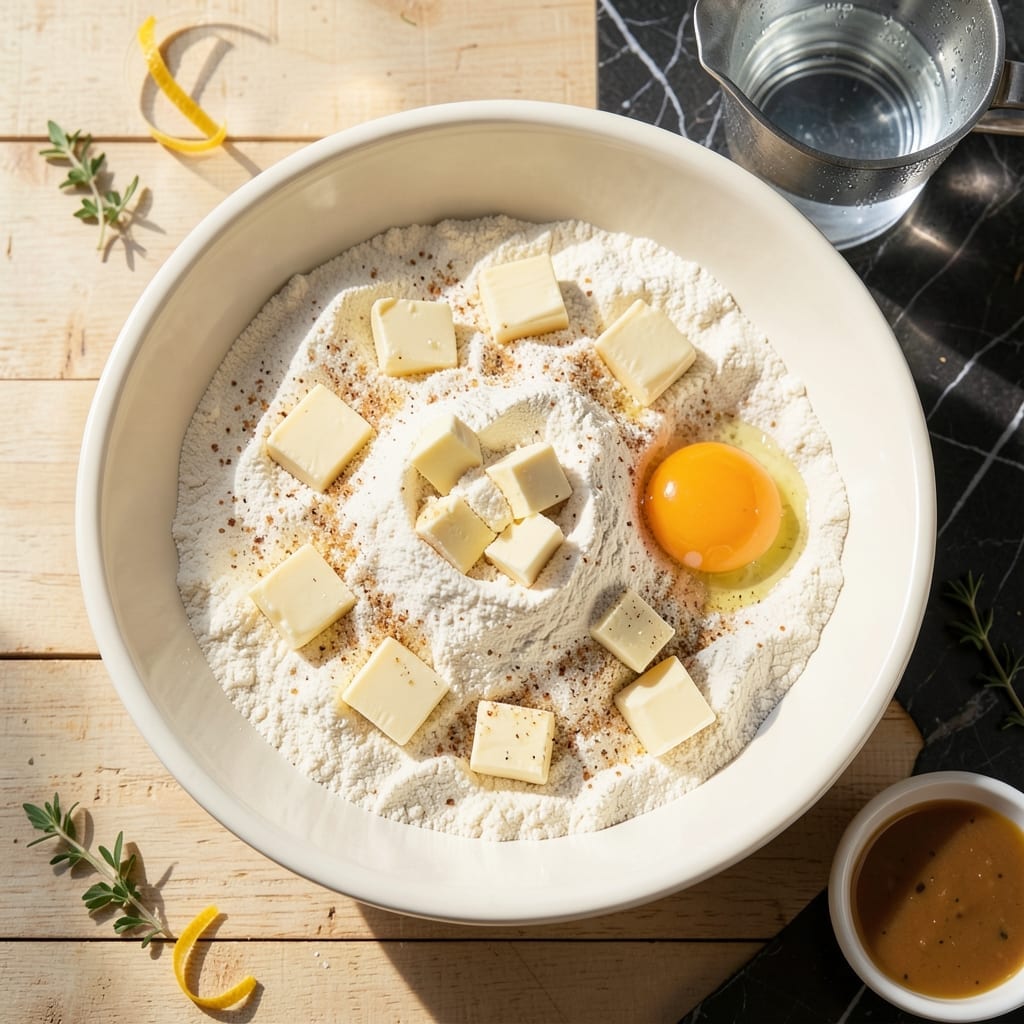
Ingredients for Pie Crust Recipe Egg Vinegar
Basic pantry staples create this buttery, flaky foundation for any pie.
| Ingredient | Amount | Notes |
|---|---|---|
| All-Purpose Flour 🌾 | 2 ½ cups | Spoon and level for accuracy |
| Unsalted Butter 🧈 | 1 cup | Very cold, cubed |
| Large Egg 🥚 | 1 whole | Lightly beaten for binding |
| White Vinegar 💧 | 1 tbsp | Adds subtle tang to crust |
| Ice Water 🧊 | ¼ cup | Plus more as needed |
| Granulated Sugar 🍚 | 1 tsp | Optional, for sweet crusts |
| Salt 🧂 | ¾ tsp | Fine sea salt preferred |
| Vanilla Extract 🌿 | ½ tsp | Optional, for sweet pies |
The butter is everything here—use high-quality unsalted like Plugrá or Kerrygold and keep it ice cold. I grab mine from Trader Joe’s (best value) or Whole Foods (organic options). The flour? Standard all-purpose is perfect (King Arthur if you want to splurge). The vinegar might seem odd, but distilled white is what you want—no fancy stuff needed (apple cider works in a pinch).
No egg? 2 tbsp cold water plus 1 tbsp oil mimics the binding. Swap the vinegar for lemon juice if that’s what you have. Short on butter? Shortening works at a 1:1 ratio but loses some flavor. For gluten-free, 1:1 GF flour blend (Bob’s Red Mill is solid) but add 1 extra tbsp of ice water. The sugar and vanilla are skippable for savory crusts.
Dough keeps wrapped tightly in the fridge for 3 days or frozen for 3 months. Let it sit at room temp 10 minutes before rolling (don’t skip this part). Baked crusts stay crisp stored at room temp in an airtight container for 2 days.
Why You’ll Love This Recipe
- No-Fuss Mixing: I dump everything in one bowl—flour, cold butter, egg, vinegar—and the dough comes together in minutes.
- Buttery, Flaky Layers: The egg and vinegar give it this tender crumb, while the butter makes every bite rich and crisp.
- Endless Possibilities: Sweet pies, savory quiches, even hand pies—this crust handles it all without a single tweak.
- Budget-Friendly Staple: Flour, butter, and a few pantry basics. Honestly, it costs pennies and outshines store-bought every time.
Step-by-Step Instructions for Pie Crust With Egg and Vinegar
This method delivers flaky layers with that subtle tang you’re after.
Step 1: Mix Dry Ingredients for Even Distribution
In a large bowl, whisk together the 2.5 cups All-Purpose Flour, 0.75 tsp Salt, and 1 tsp Granulated Sugar. I always whisk for at least 30 seconds to ensure the salt and sugar are evenly distributed throughout the flour.
This prevents pockets of overly salty or sweet spots in your crust. The sugar is optional, but I like how it balances the vinegar’s tang, especially for sweet pies. If you’re making a savory crust, you can skip it entirely.
Step 2: Cut in the Cold Butter for Flaky Texture
Add the 1 cup Unsalted Butter (very cold and cubed) to the flour mixture. Using a pastry cutter or your fingers, work the butter into the flour until the mixture resembles coarse crumbs with pea-sized butter pieces visible. This should take about 3-4 minutes of steady pressure.
Here’s the thing—the key to flakiness is keeping the butter cold. If it starts to melt or soften, pop the bowl in the fridge for 10 minutes to firm up again. You want those little butter chunks to stay intact so they create steam pockets during baking, which gives you those beautiful layers.
Step 3: Add Wet Ingredients to Bind the Dough
In a small bowl, lightly beat the 1 whole Large Egg, then add the 1 tbsp White Vinegar and 0.5 tsp Vanilla Extract. The vinegar might seem odd, but it tenderizes the gluten just enough to prevent a tough crust. Pour this mixture into the flour-butter combination.
Using a fork, gently stir the wet ingredients into the dry until the dough just starts to come together. Then, add the 0.25 cup Ice Water, 1 tablespoon at a time, mixing until the dough clumps together when pressed. You may not need all the water, so add it slowly. The dough should be slightly shaggy, not sticky.
Step 4: Chill the Dough for Easy Rolling
Turn the dough out onto a lightly floured surface and gently shape it into a disk. Wrap it tightly in plastic wrap and refrigerate for at least 1 hour, or up to 2 days. Chilling relaxes the gluten and firms up the butter, making it much easier to roll out later.
If you’re in a hurry, you can freeze the dough for 20-25 minutes, but I don’t recommend skipping this step. Rushing it often leads to a tough, shrunken crust. When ready to use, let the dough sit at room temperature for 10 minutes to soften slightly before rolling.
Step 5: Roll and Shape for Baking
On a floured surface, roll the dough into a 12-inch circle, about ⅛-inch thick. Work from the center outward, rotating the dough occasionally to prevent sticking. If it cracks, don’t panic—just press the edges back together with your fingers.
Transfer the rolled dough to your pie dish, gently pressing it into the bottom and sides. Trim any excess dough hanging over the edge, leaving a ½-inch overhang for crimping. For a pre-baked crust, prick the bottom all over with a fork and bake at 375°F for 15-20 minutes until light golden brown.
Pro Tips For Making Pie Crust Recipe Egg Vinegar
- Chill the Dough: After mixing, wrap the dough and refrigerate for at least 1 hour—I learned this the hard way when my crust shrank in the pan because the butter softened too fast.
- Use Cold Butter: Cut the unsalted butter into small cubes and freeze for 10 minutes before mixing. Sounds weird, but it works: flaky layers only happen with firm fat.
- Skip Warm Water: Ice water only—no exceptions. Even slightly warm water starts melting the butter, and suddenly your crust is tough instead of tender.
- Vinegar First: Whisk the egg and white vinegar together before adding to the flour. My grandmother swore by this, and she was right: it distributes evenly and strengthens the dough.
Best Sauces and Condiments for This pie crust recipe egg vinegar
Sweet Pairings
For fruit pies, a warm vanilla custard sauce drizzled over each slice adds luxury. I whisk 1 cup whole milk with 2 egg yolks and 2 tbsp sugar until thickened. The tang in this crust balances the sweetness beautifully. ✨
Tart Accompaniments
A scoop of lemon curd on the side adds bright contrast to rich fillings. My shortcut: mix ½ cup store-bought curd with 1 tsp zest for extra pop. The vinegar notes in the crust make the citrus sing.
Ice Cream Magic
Nothing beats à la mode with vanilla bean ice cream. I love Jeni’s Splendid or Ben & Jerry’s for quality. The cold cream against warm crust creates that perfect textural contrast we all crave.
Savory Sauces
For quiches, a creamy herb sauce elevates every bite. Blend ½ cup sour cream with 1 tbsp fresh dill and 1 tsp lemon juice. Drizzle lightly over each serving for freshness.
Spiced Syrups
A cinnamon-infused honey drizzle works wonders with apple or pear pies. Warm ¼ cup honey with 1 cinnamon stick for 5 minutes. The warmth brings out the crust’s flaky layers. 💛
Whipped Toppings
Fresh whipped cream with a hint of orange zest adds elegance. I use 1 cup heavy cream with 1 tbsp powdered sugar. The citrus pairs surprisingly well with the vinegar’s subtle tang.
Nutrition Facts
Frequently Asked Questions
Why does the recipe include vinegar?
The vinegar tenderizes the gluten in the flour, preventing a tough crust. It also adds a subtle tang that balances sweet fillings beautifully.
Can I use apple cider vinegar instead?
Yes, but use the same 1 tablespoon measurement. The flavor difference is minimal in the final crust.
How thin should I roll the dough?
Aim for ⅛-inch thickness when rolling. Any thinner risks tearing; thicker may not bake through evenly.
What if my dough cracks while rolling?
Press the edges back together with your fingers. A little crack won’t affect the final result once baked.

- Potato Candy Recipe 1933: Vintage Peanut Butter Roll Delight - October 30, 2026
- Potato Chip Cookie Recipe With Pecans: Buttery Crunch Meets Nutty Richness - October 30, 2026
- Potato Patty Recipe No Egg: Crispy Edges Without the Binder - October 30, 2026