
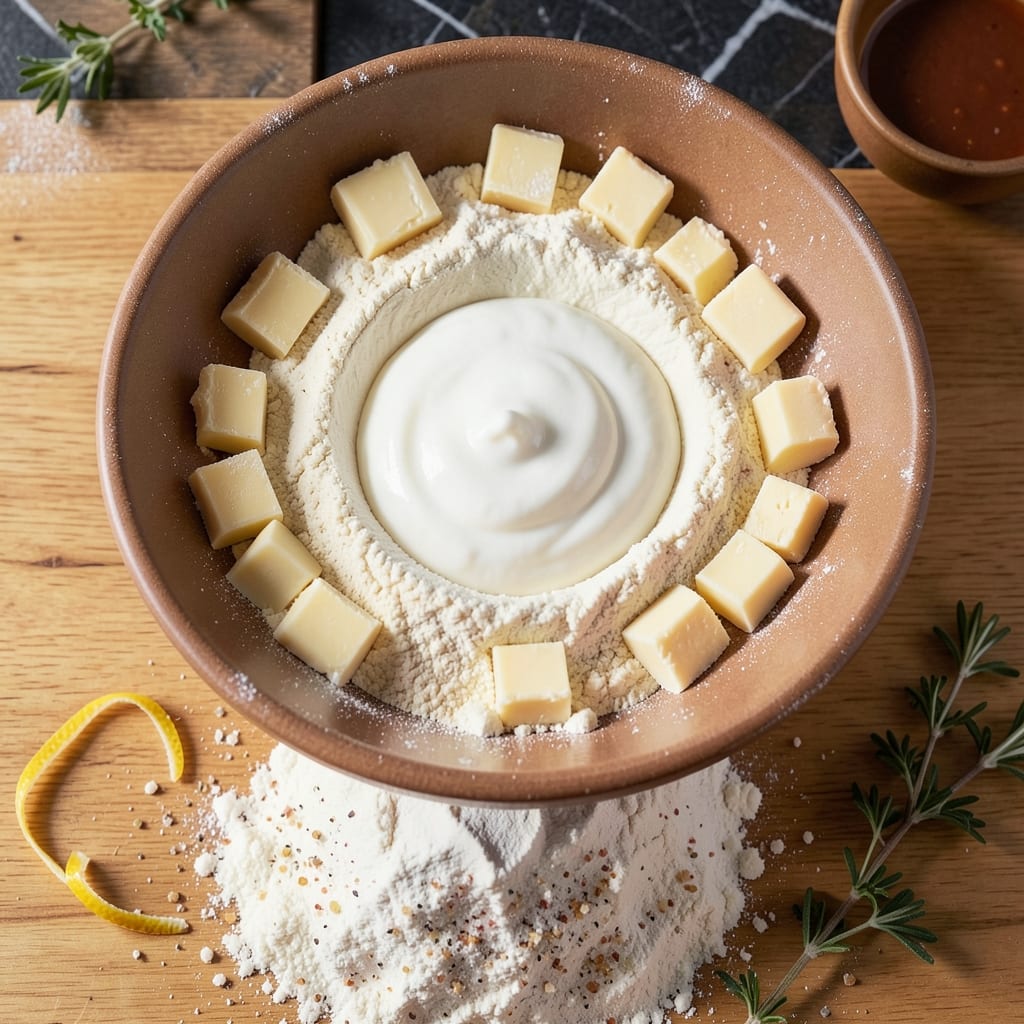
This sour cream pie crust delivers the flaky layers everyone wants with a subtle tang that sets it apart. Standing at my grandmother’s counter in Sicily taught me the value of unexpected ingredients.
Sour cream replaces some of the water in traditional crusts, adding richness while keeping the texture light. The result is a pastry that bakes up golden and tender, with just enough depth to complement any filling.
Chilling the dough for 30 minutes is non-negotiable—it prevents shrinking and ensures those coveted flaky layers. The method is simple but precise.
Use this for fruit pies, quiches, or pot pies. The subtle tang pairs especially well with sweet or savory fillings.
Ingredients for Pie Crust Recipe Using Sour Cream
Pantry staples plus one secret ingredient make this crust extraordinary. Nothing complicated here.
| Ingredient | Amount | Notes |
|---|---|---|
| All-Purpose Flour 🌾 | 2 ½ cups | Spooned and leveled, unbleached preferred |
| Full-Fat Sour Cream 🥛 | ½ cup | Cold, well-chilled for flakiness |
| Unsalted Butter 🧈 | ¾ cup | Cut into 1/2-inch cubes, cold |
| Granulated Sugar 🍚 | 1 tbsp | Fine white sugar for balance |
| Salt 🧂 | ½ tsp | Fine sea salt or table salt |
| Ice Water 💧 | 2 tbsp | As needed for dough consistency |
| White Vinegar 🍋 | 1 tsp | Helps tenderize the gluten |
| Vanilla Extract 🌿 | ½ tsp | Optional, for sweet pies |
The sour cream is non-negotiable here—full-fat only (light versions add too much liquid). I grab Daisy or Breakstone’s from any grocery store, but honestly most brands work if they’re thick and cold. The butter needs to be ice-cold—leave it in the fridge until you’re ready. For flour, King Arthur or Gold Medal are my go-tos, but any all-purpose works. Just don’t pack it into the measuring cup. Spoon and level for accuracy.
No sour cream? Full-fat Greek yogurt gets you close, but the texture won’t be identical. Out of all-purpose flour? Pastry flour at a 1:1 ratio actually works better for tender crusts. The vinegar can be apple cider or lemon juice in a pinch. For a richer flavor, swap half the butter for leaf lard (if you’re not strictly vegetarian). The sugar can be omitted for savory pies.
The dough keeps in the fridge for 2-3 days or freezes beautifully for up to 3 months. Wrap it tightly in plastic (press it right against the dough) then foil. Thaw overnight in the fridge before rolling. Baked crusts? Cool completely, then store at room temp for 2 days.
Why You’ll Love This Recipe
- No Fuss Mixing: I just stir flour, cold butter, sour cream, and a pinch of salt—no food processor, no stress.
- Rich and Tender: The sour cream makes it flaky yet soft, with a subtle tang that pairs perfectly with sweet or savory fillings.
- Holiday or Tuesday: I’ve used this for Thanksgiving pies and last-minute quiches—it never lets me down.
- Budget Friendly: All-purpose flour and sour cream keep it cheap, and I always have these staples on hand.
Step-by-Step Instructions for Pie Crust Using Sour Cream
Here’s the method. Straightforward, tested, works every time.
Step 1: Combine Dry Ingredients and Cold Butter
In a large bowl, whisk together the 2.5 cups All-Purpose Flour, 1 tbsp Granulated Sugar, and 0.5 tsp Salt until evenly distributed. This ensures the dry ingredients are thoroughly mixed before adding the fat.
Add the 0.75 cup Unsalted Butter (cut into 1/2-inch cubes and kept cold). Use a pastry cutter or your fingertips to work the butter into the flour mixture until the largest pieces are the size of peas. You should see visible butter chunks throughout—this creates the flaky layers.
Here’s the thing—don’t overwork the butter. The moment it starts melting from your hands, stop. Cold butter is essential for flakiness.
Step 2: Cut in the Sour Cream and Vinegar
Make a well in the center of the flour mixture. Add the 0.5 cup Full-Fat Sour Cream (cold) and 1 tsp White Vinegar to the well. The vinegar tenderizes the gluten, while the sour cream adds tang and extra flakiness.
Using a fork, cut the sour cream and vinegar into the flour mixture until it starts to come together in shaggy clumps. The dough will look rough at this stage—that’s perfect. Avoid the urge to press it into a smooth ball yet.
Step 3: Add Ice Water and Form the Dough
Sprinkle the 2 tbsp Ice Water over the mixture, one tablespoon at a time. Use your hands to gently gather the dough, pressing just enough so it holds together when squeezed. If it’s too dry, add water by the teaspoon, but don’t exceed the 2 tbsp—too much water makes the crust tough.
Optional for sweet pies: add the 0.5 tsp Vanilla Extract with the water. The dough should feel cold and slightly crumbly but hold its shape when pressed. Divide it into two equal portions, flatten into discs, and wrap each tightly in plastic.
Step 4: Chill and Rest the Dough
Refrigerate the wrapped dough discs for at least 1 hour, or up to 2 days. Chilling relaxes the gluten and firms the butter, which prevents shrinking during baking and ensures distinct flaky layers.
If you’re in a hurry, you can freeze the dough for 20 minutes, but I don’t recommend rolling it out straight from the freezer. Let it sit at room temperature for 5-10 minutes until just pliable enough to roll without cracking.
Step 5: Roll and Blind Bake (If Needed)
On a lightly floured surface, roll one disc to a 12-inch circle about 1/8-inch thick. Transfer to a pie dish, press gently into the bottom and sides, then trim the edges, leaving a 1/2-inch overhang.
For a pre-baked crust, prick the bottom with a fork, line with parchment, fill with pie weights or dried beans, and bake at 375°F for 15 minutes. Remove the weights and bake for another 5-8 minutes until the edges are light golden brown.
Pro Tips For Making Pie Crust Recipe Using Sour Cream
- Chill the Dough: After mixing, wrap the dough and refrigerate for at least 30 minutes—this prevents the butter from melting too soon and keeps the crust flaky.
- Use Cold Sour Cream: Take the sour cream straight from the fridge; if it’s room temperature, the dough will be sticky and harder to handle.
- Skip Overworking: Mix just until the dough comes together—overworking it develops gluten, and you’ll end up with a tough crust instead of a tender one.
- Freeze the Butter: Grate frozen butter into the flour for even distribution, and it’ll stay cold longer, giving you those perfect flaky layers.
Serving Suggestions for Leftovers
Sweet Pairings
This crust shines with fruit pies. Try apple cinnamon or peach filling—the tang cuts through sweetness beautifully. I love it with blueberry lemon too. The sour cream adds depth that elevates simple fruit flavors. 💫
Savory Options
For quiches, the tang pairs perfectly with sharp cheddar and caramelized onions. Chicken pot pie filling also works wonderfully—the richness complements the crust’s subtle acidity. Add fresh herbs like thyme for extra brightness.
Topping Ideas
Brush the baked crust with melted butter and sprinkle with coarse sugar for sweet pies. For savory versions, try a light egg wash and everything bagel seasoning. These small touches make a big visual and flavor impact.
Serving Temperature
Serve fruit pies slightly warm with vanilla ice cream. For quiches, let them cool to room temperature for 10-15 minutes before slicing—this helps the filling set properly. The crust stays crisp longer when not piping hot.
Beverage Pairings
With sweet pies, cold milk or vanilla chai tea are classic choices. For savory quiches, a crisp Sauvignon Blanc or sparkling water with lemon cleanses the palate. I always have both options ready for Sunday family dinners. 🍽️
Garnish Techniques
Use a fine-mesh sieve to dust powdered sugar over fruit pies. For apple, arrange thin slices decoratively on top before baking. A drizzle of caramel adds professional flair to peach or pear pies.
Nutrition Facts
Frequently Asked Questions
Why does this crust need to chill for so long?
Chilling for 1 hour firms the butter and relaxes the gluten. This prevents shrinking and creates distinct flaky layers. Skipping this step risks a tough, dense crust.
Can I substitute Greek yogurt for sour cream?
Yes, full-fat Greek yogurt works in a pinch. The texture will be slightly different but still flaky. Avoid low-fat versions—they add too much liquid and won’t yield the same richness.
How do I prevent the edges from burning?
Cover the crust edges with foil or a pie shield during baking. For pre-baked crusts, remove weights after 15 minutes at 375°F and watch closely. A light egg wash can also help protect the edges.

- Pina Colada Dip Recipe Red Lobster: Tropical Creaminess With Toasted Coconut - October 12, 2026
- Pickled Sweet Cherry Peppers Recipe Canning: Tangy Heat for Pantry Staples - October 12, 2026
- Peppercorn Sauce Recipe Vegan: Rich Umami Depth Without Cream - October 12, 2026