
This single pie crust delivers the flaky layers you expect from scratch-made pastry, without the intimidation factor. The secret lies in cold ingredients and minimal handling.
I’ve refined this method to ensure consistent results every time, with just the right balance of tenderness and structure. The dough comes together quickly with basic pantry staples.
After a brief rest in the refrigerator, it rolls out smoothly and bakes to golden perfection. Perfect for fruit pies, custards, or any filling you love.
No special equipment required—just a bowl, a fork, and a little patience. Here’s how to make it.
Ingredients for Pie Crust Recipe for One Pie
Basic pantry staples create that perfect flaky texture everyone loves in a crust.
| Ingredient | Amount | Notes |
|---|---|---|
| All-Purpose Flour 🌾 | 1 ¼ cups | Spoon and level for accuracy |
| Unsalted Butter 🧈 | ½ cup | Cold, cubed into 1/2-inch pieces |
| Ice Water 💧 | ¼ cup | Plus 1 tbsp as needed |
| Granulated Sugar 🍚 | 1 tsp | Balances salt and enhances browning |
| Salt 🧂 | ½ tsp | Fine sea salt preferred |
| Vodka 🍸 | 2 tbsp | Optional, for extra flakiness |
| Apple Cider Vinegar 🍏 | 1 tsp | Tenderizes the dough |
The butter is non-negotiable here. European-style with 82% fat (like Plugrá or Kerrygold) gives you the best layers, but any good unsalted butter works. Keep it ice cold—freeze the cubes for 10 minutes before starting if your kitchen is warm. The flour should be all-purpose, nothing fancy. King Arthur if you want to splurge, but store brand is fine too.
No vodka? Skip it—the crust will still be great. White vinegar works as a swap for the apple cider vinegar. If you’re out of ice water, just use cold tap water (but ice is better for keeping everything cold). The sugar is optional but adds a subtle sweetness that works well with fruit fillings. Don’t overthink the brand—any granulated sugar does the trick.
Dough can rest in the fridge for up to 2 days or freeze for 3 months. Wrap it tightly in plastic (don’t skip the wrap—it dries out fast). Let it warm slightly before rolling to prevent cracking. Baked crusts keep 1 day at room temp, but they’re best fresh.
Why You’ll Love This Recipe
- 5-Minute Mix: I can have this crust ready before the oven even preheats—just cut cold butter into flour, add ice water, and go.
- Buttery Perfection: The unsalted butter and a pinch of sugar give it that flaky, golden edge with just the right hint of sweetness.
- Single-Serve Magic: It’s the ideal amount for one perfect pie—no leftover dough to waste or freeze.
- Pantry Staples: I love that I always have these basics on hand: flour, butter, sugar, salt. No special trips to the store.
Step-by-Step Instructions for Pie Crust for One Pie
Here’s the method that guarantees those flaky layers we all love.
Step 1: Combine Dry Ingredients
In a large bowl, whisk together the 1.25 cups All-Purpose Flour, 1 tsp Granulated Sugar, and 0.5 tsp Salt. I like to do this first to ensure even distribution of the sugar and salt throughout the dough.
The sugar does more than sweeten—it helps with browning, giving your crust that beautiful golden color. Make sure there are no lumps in the flour mixture. This step takes less than 1 minute but makes a big difference in texture.
Step 2: Cut in Cold Butter
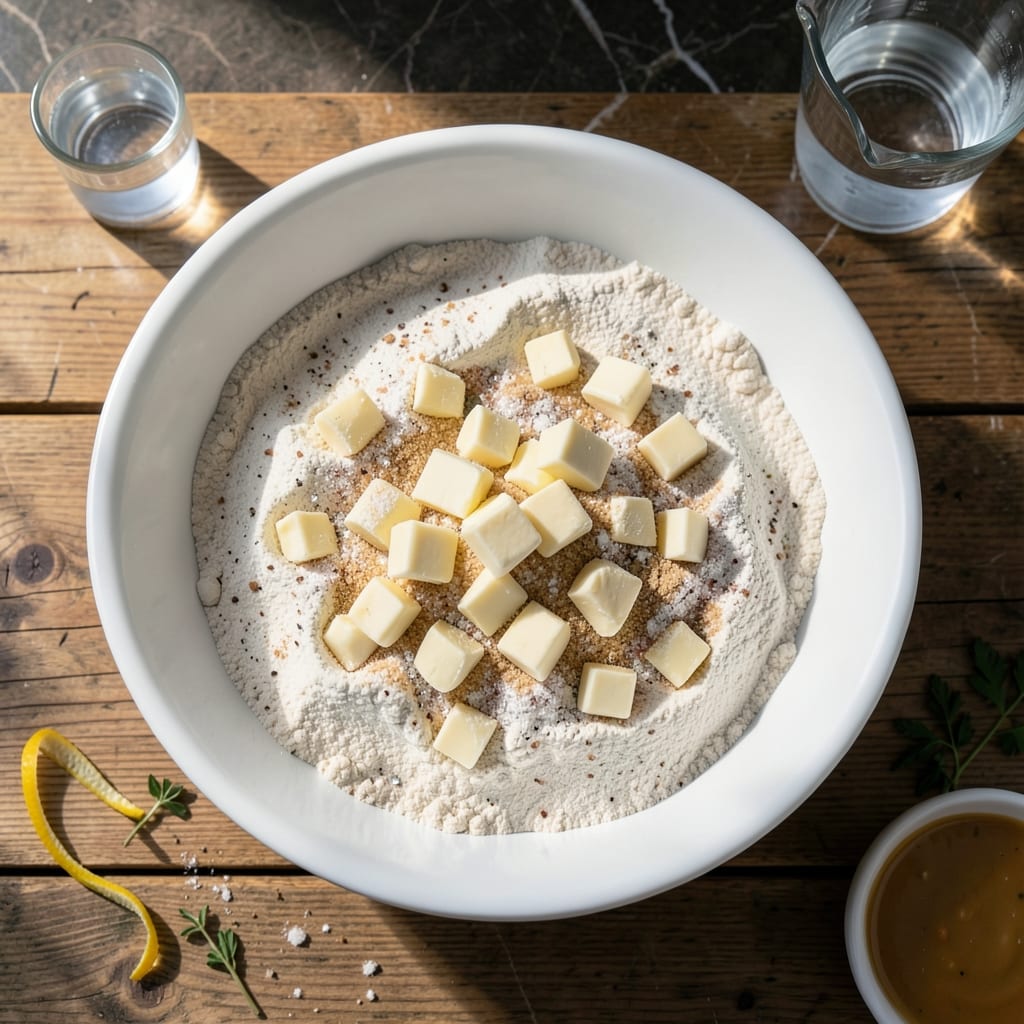
Add the 0.5 cup Unsalted Butter (cold, cubed into 1/2-inch pieces) to the flour mixture. Using a pastry cutter or your fingertips, work the butter into the flour until the mixture resembles coarse crumbs with some pea-sized butter pieces remaining.
Here’s the thing—those visible butter pieces are what create the flaky layers. Don’t overwork it; the butter should stay cold. If your kitchen is warm, chill the bowl and mixture for 5 minutes before proceeding. The whole process should take about 3-4 minutes.
Step 3: Add Liquids for Perfect Dough
In a small bowl, combine the 0.25 cup Ice Water, 2 tbsp Vodka, and 1 tsp Apple Cider Vinegar. The vodka evaporates during baking, creating extra flakiness, while the vinegar tenderizes the dough.
Drizzle this liquid mixture over the flour-butter mixture, about 1 tablespoon at a time, tossing with a fork until the dough just starts to come together. You might not need all the liquid—stop when the dough holds together when pressed.
Real talk: if it looks shaggy, that’s perfect. Overmixing develops gluten, which makes the crust tough. I usually use about 3-4 tablespoons of the liquid total.
Step 4: Form and Chill the Dough
Turn the dough out onto a lightly floured surface and gently knead it just until it comes together into a smooth ball—about 30 seconds. The less you handle it, the better.
Shape the dough into a disk about 1 inch thick, wrap it tightly in plastic wrap, and refrigerate for at least 1 hour or up to 2 days. Chilling relaxes the gluten and firms up the butter, making it easier to roll out and preventing shrinkage during baking.
Pro Tips For Making Pie Crust Recipe For One Pie
- Chill Your Butter: Cut the butter into small cubes and refrigerate for 20 minutes before mixing—I learned this the hard way after ending up with a tough, chewy crust.
- Use Ice-Cold Water: Fill a glass with water and ice cubes, then measure from that. Sounds weird, but it works: the colder the water, the flakier the crust.
- Don’t Overwork Dough: Mix just until the dough comes together, even if it looks shaggy. After burning three batches, I finally figured out that overmixing makes the crust dense.
- Rest the Dough: Give it a solid 30 minutes in the fridge before rolling—this isn’t the prettiest step, but it prevents shrinking during baking.
Health Benefits of This Dish
Low in Sugar
This crust contains just 1 tsp granulated sugar, making it a great option for those watching their sugar intake. The sugar enhances browning without adding significant sweetness, so it won’t overpower savory fillings like quiche or pot pie. 💪
Heart-Healthy Fats
While butter is the star here, using unsalted butter lets you control sodium intake. The 0.5 cup of butter provides healthy fats that your body needs for energy and cell function. Plus, it’s free of trans fats.
Minimal Ingredients
With just 6-7 basic ingredients, this recipe avoids processed additives and preservatives found in store-bought crusts. You know exactly what’s going into your food—no mystery ingredients here.
Gluten Considerations
The 1.25 cups all-purpose flour provides structure, but if you need a gluten-free version, you can swap in a 1:1 gluten-free flour blend. The texture will differ slightly, but it’s still delicious and better for sensitive digestive systems.
Portion Control
Since this makes just one crust, it’s perfect for smaller households or when you only need a single pie. No leftover dough to tempt you into extra calories. I love that it’s just enough for one perfect, flaky crust. ✨
Balanced Macros
Each serving (about ¼ of the crust) provides a moderate amount of carbohydrates and fats with minimal protein. It’s a great base for adding nutrient-dense fillings like fresh fruit or lean proteins.
Nutrition Facts
Frequently Asked Questions
Can I use shortening instead of butter?
Yes, but the flavor and texture will differ. Shortening creates a flakier crust but lacks butter’s rich taste. Use the same amount and keep it cold for best results.
Why does the dough need to chill?
Chilling firms the butter and relaxes the gluten. This prevents shrinkage during baking and ensures flaky layers. Skip this step and risk a tough crust.
How thin should I roll the dough?
Aim for 1/8 inch thickness for a standard pie. Use a ruler or the edge of a quarter as a guide. Too thin and it may tear; too thick and it won’t bake evenly.
Can I make this ahead?
The dough keeps in the fridge for 2 days or freezes for 3 months. Wrap tightly to prevent drying. Thaw overnight in the fridge before rolling.

- Pina Colada Dip Recipe Red Lobster: Tropical Creaminess With Toasted Coconut - October 12, 2026
- Pickled Sweet Cherry Peppers Recipe Canning: Tangy Heat for Pantry Staples - October 12, 2026
- Peppercorn Sauce Recipe Vegan: Rich Umami Depth Without Cream - October 12, 2026