
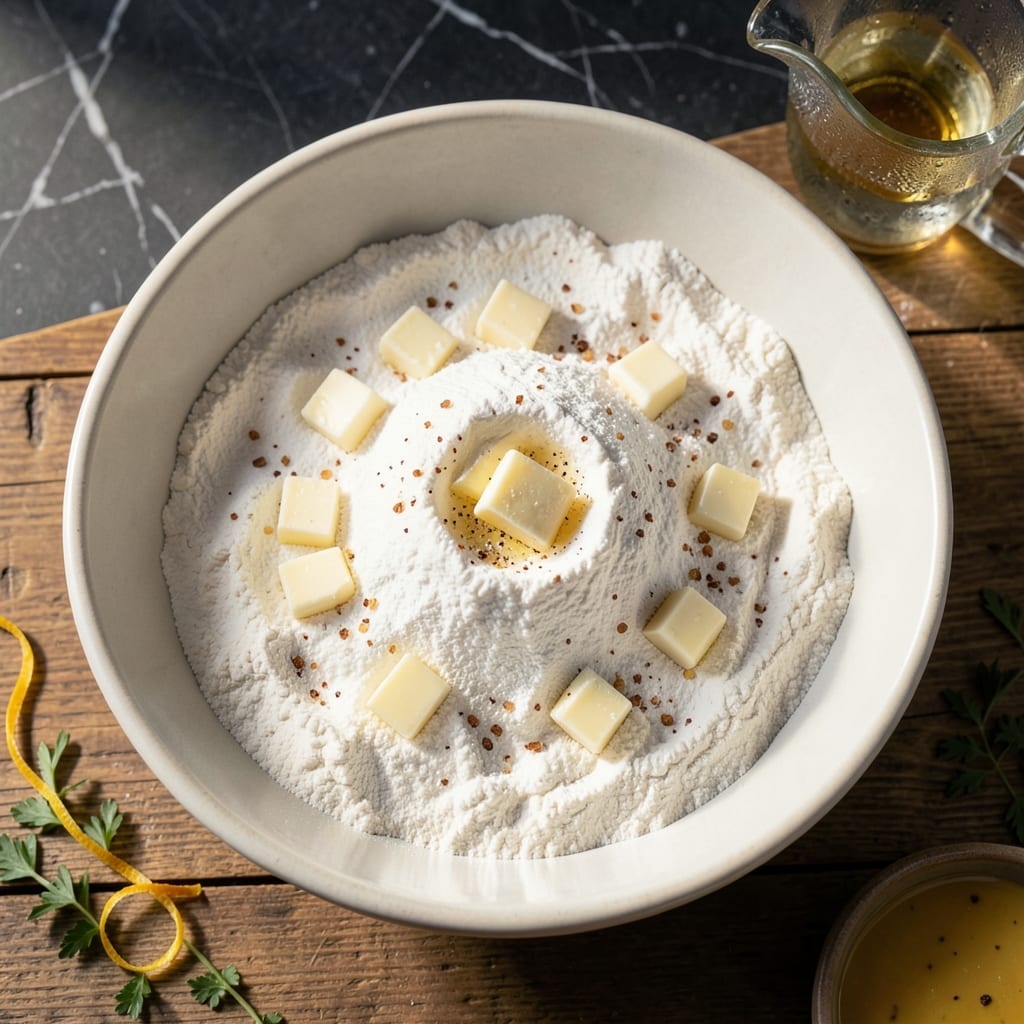
A perfect savory pie begins with the crust, and this recipe delivers the flaky, buttery foundation every hearty filling deserves. I developed this method after years of testing ratios and techniques to achieve consistent results.
The key is using cold butter and minimal handling to create those desirable flaky layers. A brief rest in the refrigerator allows the gluten to relax, preventing tough crusts. The result is a golden, tender pastry that holds up to any filling.
This dough comes together in 10 minutes with basic pantry staples. It bakes to a perfect golden brown with just the right amount of crispness to complement rich, savory fillings without overpowering them.
Whether you’re making pot pie, quiche, or hand pies, this crust provides the ideal canvas for your creation. The technique is simple but precise, ensuring professional results every time.
Ingredients for Pie Crust Recipe for Savory Pies
Nine pantry staples create the flaky, golden foundation for your savory masterpiece.
| Ingredient | Amount | Notes |
|---|---|---|
| All-Purpose Flour 🌾 | 2 ½ cups | Sifted for even texture |
| Unsalted Butter 🧈 | 1 cup | Cold, cubed for flakiness |
| Ice Water ❄️ | ½ cup | Plus extra as needed |
| Fine Sea Salt 🧂 | 1 tsp | Diamond Crystal preferred |
| Granulated Sugar 🍚 | 1 tsp | Balances savory flavors |
| Apple Cider Vinegar 🍏 | 1 tbsp | Enhances tender texture |
| Large Egg Yolk 🥚 | 1 whole | Optional for richness |
| Baking Powder 🧂 | ¼ tsp | For subtle lift |
| Shortening 🧈 | ¼ cup | Optional for extra flake |
The butter is non-negotiable here. Plugra or European-style (higher fat content) yields superior flakiness, but standard unsalted works—just ensure it’s ice-cold. King Arthur Flour is my go-to for consistency, though any all-purpose will do. The vinegar might seem odd, but that touch of acid tenderizes the gluten (worth the extra minute). For the salt, Diamond Crystal dissolves more evenly than table salt.
No egg yolk? Skip it—the crust will still hold. Out of apple cider vinegar? White vinegar or lemon juice at the same amount. Butter substitutes like margarine work in a pinch, but the texture won’t be as delicate. Shortening can replace up to half the butter for extra flake (classic Crisco is reliable). For a richer flavor, swap 2 tablespoons of water for cold vodka—it evaporates quicker, creating steam pockets.
The dough keeps 3 days wrapped tightly in the fridge, or freeze for 3 months in a sealed bag. Let it sit at room temperature for 10 minutes before rolling—cold dough cracks. Baked crusts freeze beautifully too, ready for fillings whenever inspiration strikes.
Why You’ll Love This Recipe
- No-Fuss Dough: I can make this in my sleep—just flour, butter, and ice water, no fancy techniques.
- Buttery Perfection: That flaky, golden crust with a hint of salt? Pure comfort in every bite.
- Endless Fillings: Honestly, it works with anything—chicken pot pie, quiche, even a quick veggie tart.
- Pantry Staples: I always have these ingredients on hand, so it’s my last-minute dinner savior.
Step-by-Step Instructions for Pie Crust for Savory Pies
Master the technique for a flaky, tender crust that perfectly complements rich, hearty fillings.
Step 1: Combine Dry Ingredients for Optimal Structure
In a large mixing bowl, whisk together the 2.5 cups all-purpose flour, 1 tsp fine sea salt, 1 tsp granulated sugar, and 0.25 tsp baking powder until evenly distributed. This ensures the leavening agents and seasonings are uniformly incorporated throughout the dough.
Sifted flour creates a lighter texture, while the sugar balances the savory notes of your filling. The baking powder adds subtle lift without compromising the crust’s integrity, making it ideal for hearty pies.
Step 2: Cut in Cold Fats for Maximum Flakiness
Add the 1 cup unsalted butter (cubed and cold) and 0.25 cup shortening to the dry ingredients. Using a pastry cutter or your fingertips, work the fats into the flour until the mixture resembles coarse crumbs with pea-sized pieces of butter and shortening visible.
Cold fats are critical—if they melt before baking, the crust will lose its flaky layers. The combination of butter (for flavor) and shortening (for extra flake) ensures a superior texture that holds up to wet savory fillings.
Step 3: Incorporate Liquid Ingredients for Tenderness
In a small bowl, whisk together the 0.5 cup ice water, 1 tbsp apple cider vinegar, and 1 whole large egg yolk until smooth. The vinegar tenderizes the gluten, while the egg yolk adds richness and structure.
Gradually drizzle the liquid mixture into the flour-fat mixture, stirring gently with a fork until the dough just begins to come together. You may not need all the liquid—add only what’s necessary to form a shaggy, slightly crumbly dough. Overworking it will develop gluten and toughen the crust.
Step 4: Chill and Rest for Easy Handling
Turn the dough out onto a lightly floured surface and gently shape it into a disk. Wrap it tightly in plastic wrap and refrigerate for at least 1 hour (or up to 2 days). This resting period allows the gluten to relax and the fats to re-solidify.
Chilled dough is far easier to roll out and transfer to your pie dish without tearing. The cold also prevents the fats from melting prematurely during rolling, preserving those essential flaky layers.
Step 5: Roll and Fit the Crust for Baking
On a lightly floured surface, roll the chilled dough into a 12-inch circle, about ⅛-inch thick. Transfer it to a 9-inch pie dish, gently pressing it into the bottom and up the sides without stretching. Trim the edges, leaving a ½-inch overhang for crimping.
For a single-crust pie, dock the bottom with a fork to prevent air pockets. For a double-crust pie, repeat the process with the remaining dough. Chill the fitted crust for 20 minutes before filling to maintain its shape during baking.
Pro Tips For Making Pie Crust Recipe For Savory Pies
- Chill the Butter: Cut your butter into small cubes and freeze for 10 minutes before mixing—I learned this the hard way after ending up with a tough crust from warm butter.
- Use Ice-Cold Water: Measure your water first, then add ice cubes to keep it frigid while mixing; warm water makes the dough sticky and hard to handle.
- Don’t Overwork Dough: Mix just until the dough comes together, even if it looks shaggy. Overmixing develops gluten, and your crust will turn chewy instead of flaky.
- Rest Before Rolling: Give the dough a solid 30 minutes in the fridge before rolling—this relaxes the gluten and prevents shrinking when baked.
Creative Variations of These Flavors
Herb-Infused Crust
Add 2 tbsp finely chopped fresh rosemary and 1 tbsp fresh thyme leaves to the dry ingredients. This works beautifully with chicken pot pie or beef stew fillings. The herbs add an aromatic depth that complements savory fillings without overpowering them. 🌿
Cheese Lovers Version
Incorporate 1 cup finely grated sharp cheddar or Parmigiano-Reggiano into the flour mixture before adding fats. The cheese adds richness and a subtle crispness to the crust. I love this with quiche or spinach-artichoke fillings.
Whole Wheat Option
Replace 1 cup all-purpose flour with whole wheat flour for a nuttier flavor and extra fiber. The dough may need an extra 1-2 tbsp ice water as whole wheat absorbs more liquid. This pairs well with hearty vegetable or lentil fillings.
Cornmeal Crust
Swap ½ cup all-purpose flour for fine cornmeal to add a delightful crunch and golden color. This variation holds up exceptionally well to wet fillings like creamy chicken or seafood pies.
Spiced Crust
Add 1 tsp smoked paprika and ½ tsp black pepper to the dry ingredients for a subtle kick. This works wonders with Mexican-inspired fillings like chicken tinga or chorizo and potato. The spices add warmth without heat.
I developed this during my time in Charleston, where bold flavors are king. 🔥
Nutrition Facts
Frequently Asked Questions
Can I use this crust for sweet pies too?
Yes, but reduce the salt to ½ tsp and increase sugar to 1 tbsp for better balance. The basic technique works for both, though savory crusts often skip sugar entirely.
Why does the dough need to rest?
Resting for 1 hour lets gluten relax, preventing shrinkage during baking. It also rechills the butter, ensuring flaky layers. Skipping this step risks a tough crust.
How do I prevent a soggy bottom?
Blind-bake the crust for 10 minutes before adding wet fillings. Brush the base with beaten egg white to create a moisture barrier.
Can I make this ahead?
The dough keeps refrigerated for 3 days or frozen for 3 months. Thaw overnight in the fridge before rolling.

- Potato Candy Recipe 1933: Vintage Peanut Butter Roll Delight - October 30, 2026
- Potato Chip Cookie Recipe With Pecans: Buttery Crunch Meets Nutty Richness - October 30, 2026
- Potato Patty Recipe No Egg: Crispy Edges Without the Binder - October 30, 2026