
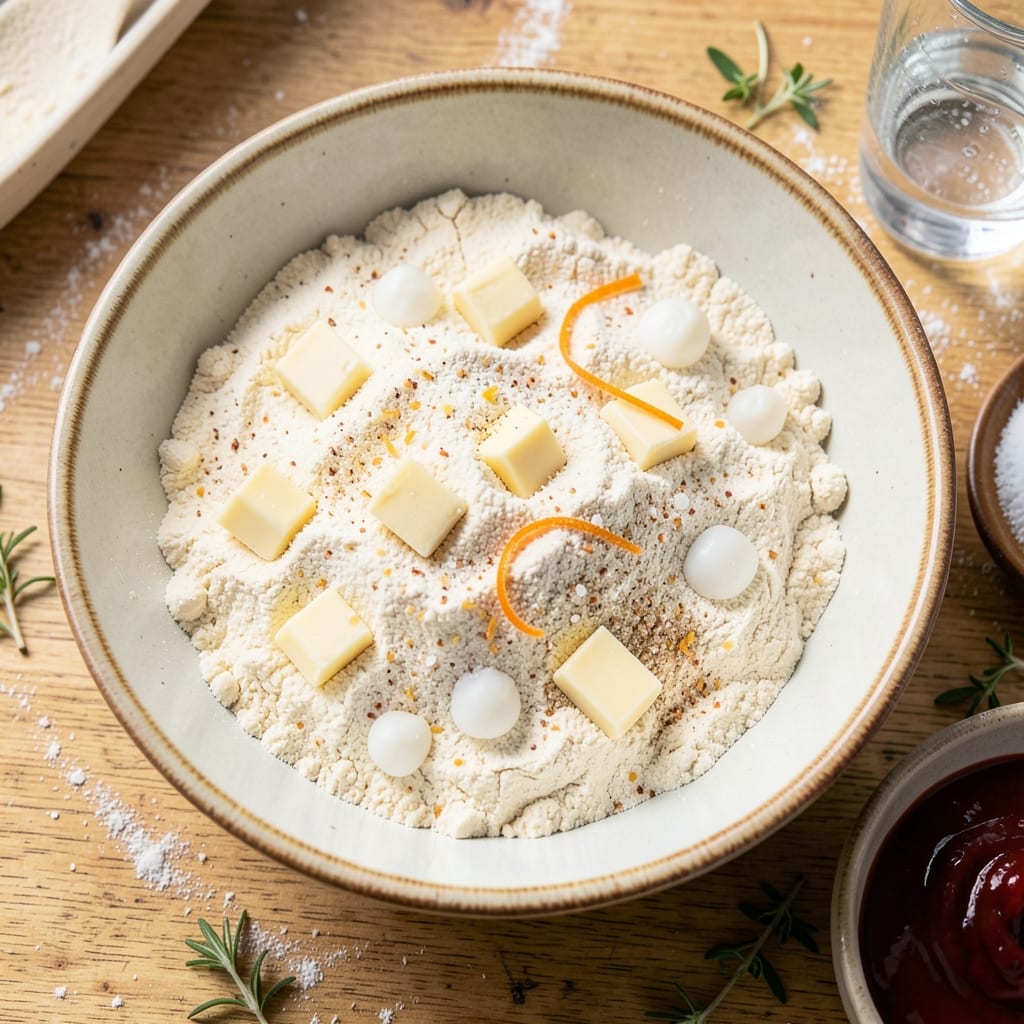
This hybrid pie dough delivers the best of both worlds—flaky layers from shortening and rich flavor from butter. The technique ensures a crust that’s tender yet sturdy enough for any filling.
I developed this recipe after years of testing, and the combination of butter and shortening creates a texture that’s impossible to achieve with either alone. The dough comes together quickly with simple ingredients you likely already have on hand.
You’ll end up with a perfectly golden crust that holds its shape while baking but melts in your mouth. It’s the foundation for any pie, from fruit-filled to custard-based.
Chill the dough before rolling for best results. This is the only pie crust recipe you’ll ever need.
Ingredients for Pie Dough Recipe with Butter and Shortening
Simple pantry staples make this foolproof hybrid crust with flaky, flavorful results.
| Ingredient | Amount | Notes |
|---|---|---|
| All-Purpose Flour 🌾 | 2 ½ cups | Spoon and level for accuracy |
| Unsalted Butter 🧈 | ½ cup | Cold, cubed into small pieces |
| Vegetable Shortening 🫒 | ½ cup | Cold, solid state required |
| Ice Water 💧 | ¼ cup | Plus more as needed |
| Granulated Sugar 🍚 | 1 tsp | Optional, for sweet crusts |
| Table Salt 🧂 | ½ tsp | Fine grain for even distribution |
| Apple Cider Vinegar 🍏 | 1 tbsp | Boosts flakiness and tenderness |
The butter and shortening combo is non-negotiable here. Use cold, high-quality unsalted butter—Land O’Lakes or Plugrá are reliable. For shortening, Crisco (the all-vegetable kind) is the gold standard. The flour should be all-purpose—King Arthur or Gold Medal work perfectly. Don’t swap in bread flour; it’ll make the crust tough. Ice water is key for that tender texture (warm water = tough dough).
No shortening? Lard works in a pinch but changes the flavor slightly. Out of apple cider vinegar? White vinegar or lemon juice at the same amount gets you close. For a sweeter crust, increase sugar to 1 tbsp. The vinegar helps inhibit gluten formation, so don’t skip it (you won’t taste it, promise). Need more dough? Double the recipe—it freezes beautifully.
Dough keeps 3 days wrapped tightly in the fridge, or freeze for 2 months. Let it thaw overnight in the fridge before rolling. For best results, chill at least 1 hour before using—this relaxes the gluten and prevents shrinking. Always work with cold dough, cold butter, cold everything.
Why You’ll Love This Recipe
- No-Fuss Mixing: I toss the flour, cold butter, and shortening in the bowl and it comes together in minutes—no fancy techniques, just my hands and a little patience.
- Buttery Layers: That combo of butter and shortening gives me the flakiest crust with a rich, melt-in-your-mouth taste I can’t get from just one fat.
- Endless Uses: Sweet or savory, this dough works for fruit pies, pot pies, or even hand pies. I’ll be real: it’s my secret for last-minute desserts.
- Budget Stretch: A bag of flour, a stick of butter, and a scoop of shortening make enough dough for two pies. Honestly, it’s my wallet’s best friend.
Step-by-Step Instructions for Pie Dough With Butter and Shortening
This foolproof method guarantees a flaky, tender crust that holds its shape beautifully every time.
Step 1: Combine Dry Ingredients for Even Distribution
In a large bowl, whisk together the 2.5 cups All-Purpose Flour, 1 tsp Granulated Sugar, and 0.5 tsp Table Salt until fully incorporated. I like to do this first because it ensures the salt and sugar are evenly distributed throughout the flour, which is key for consistent flavor in every bite.
Whisking also aerates the flour, making it lighter and easier to incorporate the fats later. Don’t skip this step—it prevents clumps and ensures your dough comes together smoothly.
Step 2: Cut in the Fats for Maximum Flakiness
Add the 0.5 cup Unsalted Butter (cold and cubed) and 0.5 cup Vegetable Shortening (cold and solid) to the flour mixture. Using a pastry cutter or your fingers, work the fats into the flour until the mixture resembles coarse crumbs with pea-sized pieces of fat visible.
Here’s the thing—the butter and shortening create different textures. The butter adds flavor and flakiness, while the shortening contributes tenderness and stability. You want to see those visible fat chunks because they’ll create the flaky layers as they melt during baking.
Work quickly to keep the fats cold—if they start to soften, pop the bowl in the fridge for 5 minutes to firm up again.
Step 3: Add the Liquid Ingredients Gradually
Create a well in the center of the flour-fat mixture. Pour in the 0.25 cup Ice Water and 1 tbsp Apple Cider Vinegar. The vinegar might seem unusual, but it inhibits gluten development, making your crust more tender. Plus, it helps with the flakiness you’re after.
Using a fork, gently toss the flour mixture with the liquid until it just starts to come together. You’ll notice the dough beginning to form clumps—that’s your signal. Don’t overmix; you want to stop while there’s still some dry flour visible.
Step 4: Knead and Shape the Dough
Turn the dough out onto a lightly floured surface and gather it into a rough ball. Knead it gently just 4-5 times to bring it together—overworking the dough will make it tough. You’re not aiming for a smooth surface; a few cracks are fine.
Divide the dough into 2 equal portions and shape each into a 1-inch thick disc. Wrap each disc tightly in plastic wrap and refrigerate for at least 1 hour or up to 2 days. This chilling step is critical—it relaxes the gluten, making the dough easier to roll out, and rechills the fats so they don’t melt prematurely during baking.
When you’re ready to use it, let the dough sit at room temperature for 10-15 minutes to soften slightly before rolling. This makes it more pliable and less likely to crack.
Pro Tips For Making Pie Dough Recipe With Butter And Shortening
- Chill Your Ingredients: Keep your butter, shortening, and even the flour in the fridge until you start—cold fat means flakier layers, and I learned this the hard way after ending up with a tough crust.
- Cut Fat Quickly: Use a pastry cutter or two forks to work the butter and shortening into the flour in 5-10 rapid strokes; over-handling melts the fat and ruins the texture.
- Skip Warm Water: Ice water only—even slightly warm water softens the dough and makes it sticky, and after ruining two batches, I now keep a bowl of ice cubes in my water at all times.
- Rest Before Rolling: Wrap the dough and refrigerate for at least 30 minutes before rolling—it relaxes the gluten and prevents shrinking, even if you’re impatient like me.
Storing and Reheating This pie dough recipe with butter and shortening
Refrigerator Storage
Wrap your dough discs tightly in plastic wrap or place in airtight containers before storing. At 40°F or below, this dough keeps beautifully for up to 3 days. I always label mine with the date to keep track. ❄️
Freezer Storage
For longer storage, freeze the wrapped dough for up to 2 months without quality loss. Use heavy-duty freezer bags for best protection. Squeeze out excess air to prevent freezer burn, and flatten the dough for efficient stacking.
Thawing Method
Transfer frozen dough to the fridge and let it thaw overnight—about 12-14 hours. Never thaw at room temperature, as this can cause the fats to warm unevenly. Once thawed, use within 3 days for best results.
Pre-Rolling Prep
Before rolling, let chilled dough sit at room temperature for 10-15 minutes. This softens it just enough to prevent cracking. If it’s been refrigerated longer than 48 hours, you might need to knead it briefly to restore pliability. 💡
Re-Using Scraps
Gather dough scraps, press them together gently, and rechill for 20 minutes before re-rolling. Avoid overworking the scraps, as this can make them tough. I typically get one additional small crust from my scraps.
Nutrition Facts
Frequently Asked Questions
Why use both butter and shortening?
Butter adds rich flavor and flakiness, while shortening creates tenderness and stability. Together, they make a crust that’s crisp, flaky, and sturdy enough to hold any filling without getting soggy.
Can I use all butter instead?
You can, but the texture will be different. All-butter crusts are more flavorful but less stable and may shrink more. For best results, stick with the 1:1 ratio of butter to shortening.
How do I prevent a tough crust?
Handle the dough as little as possible and keep everything cold. Overworking develops gluten, which makes crusts tough. Chill the dough for at least 1 hour before rolling.
Can I make this dough ahead?
The dough keeps in the fridge for up to 3 days or in the freezer for 2 months. Let it thaw overnight in the fridge before using.

- Potato Candy Recipe 1933: Vintage Peanut Butter Roll Delight - October 30, 2026
- Potato Chip Cookie Recipe With Pecans: Buttery Crunch Meets Nutty Richness - October 30, 2026
- Potato Patty Recipe No Egg: Crispy Edges Without the Binder - October 30, 2026