
I learned early in my grandmother’s Sicilian kitchen that great pie crust doesn’t demand excessive butter—just smart technique. This recipe proves you can achieve flaky layers with a lighter touch while keeping every bite tender and rich.
The secret lies in cold ingredients and minimal handling. Using a fraction of the usual butter, combined with precise cutting and chilling, creates that coveted texture without compromise.
What emerges is a crust that holds its shape, browns beautifully, and delivers that satisfying crunch with every forkful. It’s proof that indulgence doesn’t have to be heavy to be perfect.
Ideal for fruit pies, quiches, or any dish where the crust should shine as much as the filling.
Ingredients for Pie Crust Recipe Less Butter
Light on butter but rich in technique, these humble ingredients create a crust that shines.
| Ingredient | Amount | Notes |
|---|---|---|
| All-Purpose Flour 🌾 | 2 ½ cups | Sifted for lightness |
| Unsalted Butter 🧈 | ½ cup | Very cold, cubed |
| Ice Water 💧 | ⅓ cup | Plus 1 tbsp as needed |
| Salt 🧂 | ½ tsp | Fine sea salt preferred |
| Granulated Sugar 🍚 | 1 tsp | Optional for sweet crusts |
| Shortening 🧈 | ¼ cup | Cold, for extra flakiness |
| Apple Cider Vinegar 🍏 | 1 tsp | Enhances tenderness |
| Lemon Juice 🍋 | 1 tsp | Freshly squeezed, optional |
The butter is the star here, but less is more. Use high-quality unsalted—European-style if you can find it—for cleaner flavor. Land O’Lakes or Kerrygold work well. Keep it ice-cold and cube it yourself (don’t use pre-cubed). Shortening adds flakiness without extra fat. Crisco is the classic choice, but any vegetable shortening works. Sift the flour for airiness—King Arthur is my go-to brand.
No shortening? All butter works at a 1:1 ratio (just don’t overwork it). Out of apple cider vinegar? White vinegar or lemon juice will do. For a sweeter crust, increase sugar to 1 tbsp. The ice water must be truly icy—fill a glass with water and ice cubes, then measure from that (don’t use warm tap water).
This dough keeps 2-3 days wrapped tightly in the fridge. For longer storage, freeze for up to 3 months. Let it thaw overnight in the fridge before rolling. Always rest the dough 30 minutes before using for best texture.
Why You’ll Love This Recipe
- Five Ingredient Magic: I love that this comes together with just flour, a little butter, ice water, salt, and sugar—no fancy shopping required.
- Still Flaky Perfection: The reduced butter still gives that golden, layered texture without feeling heavy.
- Weeknight Baking: Honestly, I can roll this out between dinner and dessert with zero stress.
- Budget Friendly: A stick of butter and pantry staples make this crust as kind to my wallet as it is to my taste buds.
Step-by-Step Instructions for Pie Crust Less Butter
Here’s the method. Straightforward, tested, works every time.
Step 1: Combine Dry Ingredients and Cold Fats
In a large bowl, whisk together the 2.5 cups all-purpose flour, 0.5 tsp salt, and 1 tsp granulated sugar until evenly distributed. This ensures every bite has balanced flavor.
Add the 0.5 cup unsalted butter (cubed and very cold) and 0.25 cup shortening (also cold). Using a pastry cutter or your fingers, work the fats into the flour until the mixture resembles coarse crumbs with pea-sized butter pieces visible. The shortening adds flakiness while the reduced butter keeps it lighter.
Step 2: Add Liquids and Form the Dough
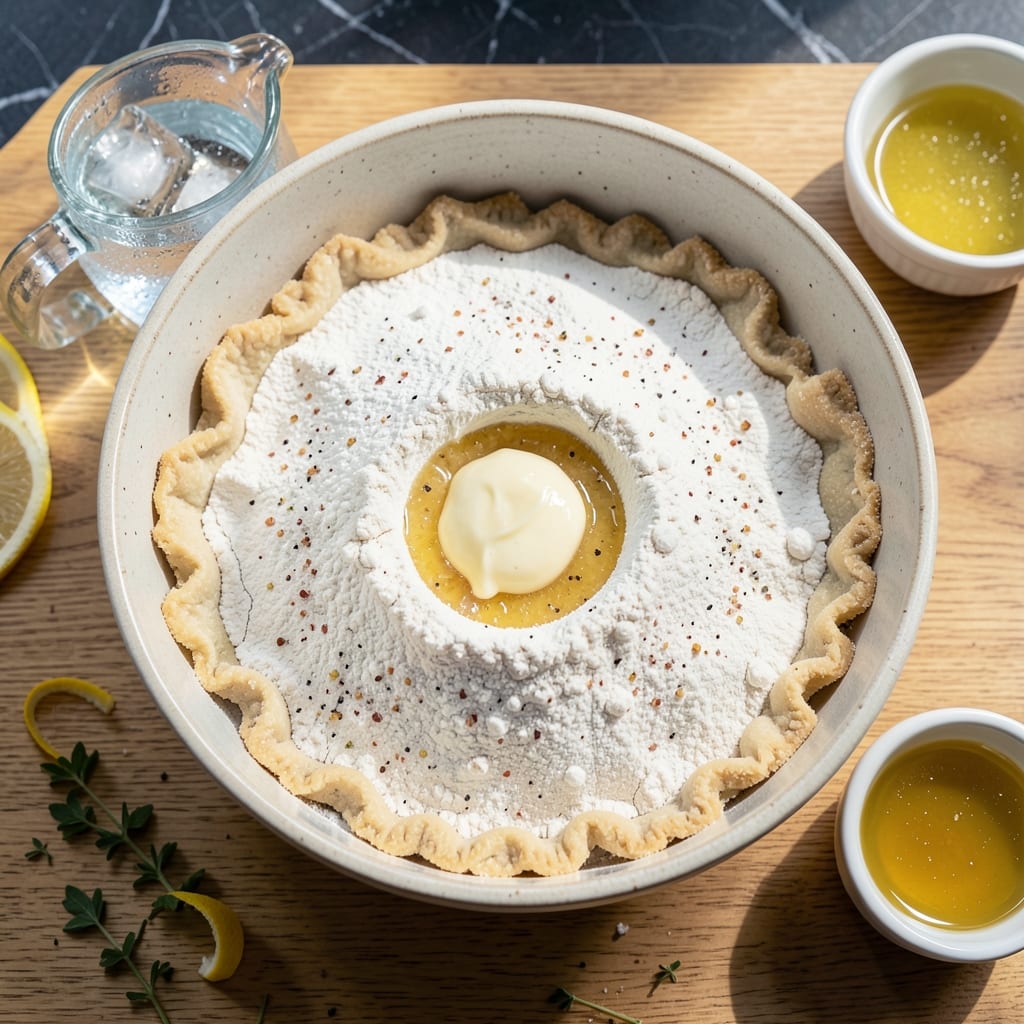
Create a well in the center of the mixture. Pour in the 0.33 cup ice water, 1 tsp apple cider vinegar, and 1 tsp lemon juice. The vinegar and lemon juice tenderize the gluten for a more delicate crust.
Using a fork, gently stir the mixture until it just begins to come together. The dough will look shaggy—that’s perfect. Don’t overmix; you want to see streaks of flour and fat. This prevents tough crusts by limiting gluten development.
Step 3: Chill the Dough for Flakiness
Turn the dough onto a lightly floured surface and divide it into two equal portions. Gently shape each into a disk about 1 inch thick. Wrap each disk tightly in plastic wrap.
Refrigerate for at least 1 hour (or up to 2 days). Chilling relaxes the gluten and solidifies the fats, which creates those desirable flaky layers when baked. This step is non-negotiable for achieving the promised texture.
Step 4: Roll and Fit the Crust
On a floured surface, roll one disk into a 12-inch circle about ⅛ inch thick. Roll from the center outward, turning the dough occasionally to prevent sticking. The reduced butter makes the dough slightly more delicate, so handle it gently.
Transfer the rolled dough to a 9-inch pie dish, pressing it lightly into the bottom and sides. Trim the edges, leaving a ½-inch overhang, then crimp or flute the edges as desired. Chill the lined pie dish for 30 minutes before filling to prevent shrinking during baking.
Pro Tips For Making Pie Crust Recipe Less Butter
- Use Cold Butter: Keep your butter ice cold until the moment you cut it into the flour—this ensures flaky layers even with less fat. I learned this the hard way after ending up with a dense, tough crust.
- Chill the Dough: Let the dough rest in the fridge for at least 30 minutes before rolling. Sounds tedious, but it prevents shrinking and makes it easier to handle.
- Skip Overworking: Mix just until the dough comes together—overworking develops gluten, and your crust will turn out chewy instead of tender.
- Add a Tablespoon of Vodka: Swap one tablespoon of ice water for vodka in the liquid. It evaporates during baking, creating a flakier texture without adding flavor.
Make-Ahead Tips for This Recipe
Prep Ahead Dough
This dough keeps beautifully in the fridge for 2-3 days wrapped tightly in plastic wrap. I often make a double batch on Sunday for easy pie assemblies during the week. Just
Freezer-Friendly
For longer storage, freeze the dough disks for up to 3 months. I use quart-sized freezer bags and squeeze out all air before sealing. When ready to use, thaw overnight in the fridge—never at room temperature, as this can cause uneven warming.
Pre-Roll and Freeze
You can even roll out the dough and freeze it in the pie dish. Line your 9-inch pie plate with the rolled dough, wrap it in plastic wrap and foil, and freeze for up to 1 month. This saves time on busy baking days.
Blind Bake in Advance
For custard pies or quiches, blind bake your crust up to 2 days ahead. After cooling completely, store at room temperature in an airtight container. This works perfectly for creamy fillings that need a pre-baked shell.
Chilled Rolling Trick
If your kitchen is warm, roll the dough between two sheets of parchment paper and refrigerate for 10 minutes between each rolling pass. This prevents the butter from melting and maintains those flaky layers. My Nonna taught me this trick in Sicily. ❄️
Nutrition Facts
Frequently Asked Questions
Why use shortening if reducing butter?
Shortening has a higher melting point than butter, helping maintain flakiness with less fat. It also has no water content, which prevents gluten formation for a more tender crust.
Can I skip the vinegar and lemon juice?
You can, but they tenderize the gluten for a more delicate texture. Without them, the crust may be slightly tougher, especially with reduced butter.
How do I prevent the crust from shrinking?
Chill the dough for 30 minutes before rolling and again after lining the pie dish. This relaxes the gluten and prevents shrinking during baking.
What if my dough cracks while rolling?
Press the edges together gently with your fingers. If it’s too dry, add 1 tsp ice water at a time until it holds. Avoid overworking the dough.

- Pina Colada Dip Recipe Red Lobster: Tropical Creaminess With Toasted Coconut - October 12, 2026
- Pickled Sweet Cherry Peppers Recipe Canning: Tangy Heat for Pantry Staples - October 12, 2026
- Peppercorn Sauce Recipe Vegan: Rich Umami Depth Without Cream - October 12, 2026