
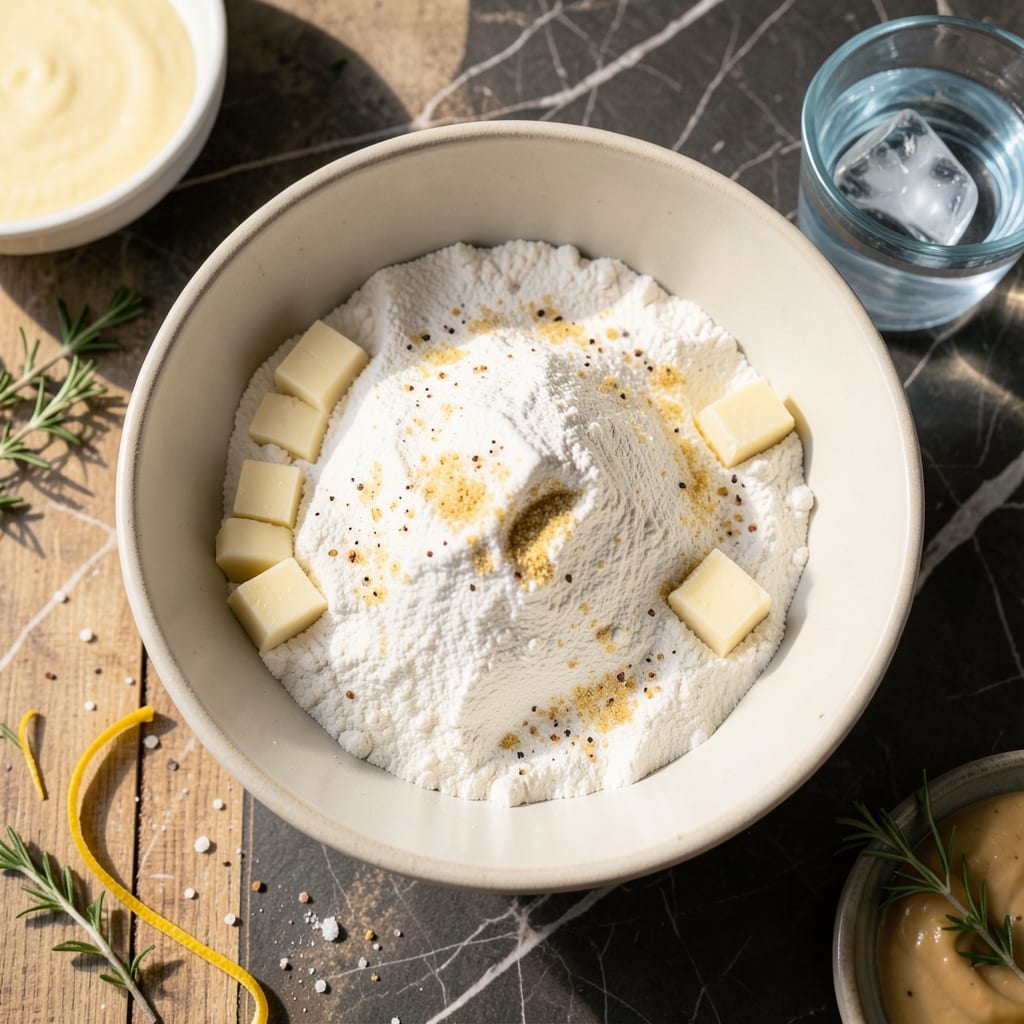
This pie crust delivers on its promise of flaky layers and a perfectly crisp finish every time. I’ve tested countless methods, and using shortening creates the most reliable texture for both sweet and savory pies.
The secret lies in keeping the shortening cold and working it into the flour until just pea-sized crumbs form. This ensures the dough stays tender and develops those coveted layers as it bakes.
After a short rest in the fridge, the dough rolls out smoothly and bakes into a golden, sturdy crust that holds its shape. It’s the foundation for any pie, from fruit-filled to creamy custards.
Perfect for beginners and seasoned bakers alike, this method guarantees consistent results with minimal effort. The crust stays crisp even after filling.
Ingredients for Pie Crust Recipe Shortening
Six simple ingredients create that perfect flaky, crisp foundation for any pie.
| Ingredient | Amount | Notes |
|---|---|---|
| All-Purpose Flour 🌾 | 2 ½ cups | Spoon and level for accuracy |
| Vegetable Shortening 🧈 | ¾ cup | Cold, cut into small pieces |
| Salt 🧂 | 1 tsp | Fine table salt preferred |
| Ice Water 💧 | ⅓ cup | Plus 1 tbsp as needed |
| Granulated Sugar 🍚 | 1 tbsp | Optional for sweet pies |
| Unsalted Butter 🧈 | ¼ cup | Cold, cubed for flakiness |
The shortening is non-negotiable for reliability here. Crisco is the gold standard—consistent texture, no weird aftertaste. Keep it ice-cold (I stash mine in the freezer while prepping). For the flour, King Arthur or Gold Medal all-purpose give the best structure. Don’t overthink the brand, but do measure properly—spoon and level, don’t scoop from the bag.
No shortening? Cold lard works (if you’re not vegetarian) but that’s a different vibe. For a butter-only version, use 1 cup total and freeze it first. The sugar is optional—skip for savory pies like quiche. Ice water is key for tenderness—don’t use warm tap water. If your dough feels dry, add that extra 1 tbsp cautiously.
Dough keeps 2-3 days wrapped tightly in the fridge, or freeze for 3 months. Pre-shaped discs thaw faster than balls. Always let chilled dough sit at room temp for 10 minutes before rolling to prevent cracking.
Why You’ll Love This Recipe
- No-Fuss Mixing: I just cut the cold shortening into the flour with a pastry cutter, add ice water, and it’s ready—no chilling required.
- Buttery Crisp Layers: The shortening makes the crust flaky with that melt-in-your-mouth texture, and a pinch of sugar adds just the right sweetness.
- Endless Pie Possibilities: I’ve used this crust for apple, pecan, even pot pie—it holds up to any filling without getting soggy.
- Pantry Staples Only: All-purpose flour, shortening, salt, water—things I always have on hand, so I can bake a pie on a whim.
Step-by-Step Instructions for Pie Crust with Shortening
Here’s the method for achieving flaky layers and a crisp finish with every batch.
Step 1: Combine Dry Ingredients
In a large bowl, whisk together the 2.5 cups All-Purpose Flour, 1 tsp Salt, and 1 tbsp Granulated Sugar until fully incorporated. The sugar is optional but recommended for sweet pies—it adds a subtle caramel note to the crust.
I use fine table salt here because it distributes evenly and dissolves completely during mixing. This ensures every bite has the right balance of seasoning without any grainy texture.
Step 2: Cut in the Fats
Add the 0.75 cup Vegetable Shortening (cold and cut into small pieces) and 0.25 cup Unsalted Butter (cold and cubed) to the flour mixture. Using a pastry cutter or your fingertips, work the fats into the flour until the mixture resembles coarse crumbs with pea-sized pieces of fat visible.
Here’s the thing—the key to flaky layers is keeping the fats cold and avoiding overworking. Those visible fat pieces create steam pockets during baking, which separate the dough into distinct, crisp layers. If the mixture starts to warm, chill it for 10 minutes before proceeding.
Step 3: Add Ice Water Gradually
Create a well in the center of the mixture and add 0.33 cup Ice Water (plus 1 tbsp as needed). Using a fork, gently toss the flour mixture with the water until the dough just begins to come together. It should look shaggy and slightly dry—this prevents toughness.
Don’t pour all the water in at once. Start with ⅓ cup and add more by the tablespoon only if the dough seems too dry to hold together when pressed. The ice water keeps everything cold and limits gluten development, which is essential for tenderness.
Step 4: Shape and Chill the Dough
Turn the dough out onto a lightly floured surface and gently press it into a cohesive mass. Divide it into two equal portions, flatten each into a 1-inch thick disc, and wrap them tightly in plastic wrap. Refrigerate for at least 1 hour (or up to 2 days).
This resting period allows the gluten to relax and the fats to firm up again. When you roll out chilled dough, it holds its shape better and resists shrinking during baking. If you’re in a hurry, you can freeze the dough for 20 minutes, but don’t skip the chilling step entirely.
Step 5: Roll and Blind Bake (If Needed)
On a floured surface, roll one disc of dough into a 12-inch circle about ⅛-inch thick. Transfer it to a pie dish, press it gently into the bottom and sides, and trim the edges, leaving a ½-inch overhang. Crimp the edges as desired.
For a pre-baked crust, chill the lined pie dish for 30 minutes, then prick the bottom with a fork. Line with parchment paper, fill with pie weights or dried beans, and bake at 375°F for 15 minutes. Remove the weights and bake for another 5-10 minutes until the edges are light golden brown.
Pro Tips For Making Pie Crust Recipe Shortening
- Chill Your Shortening: I learned this the hard way—warm shortening makes a tough crust. Pop it in the freezer for 10 minutes before mixing, and your pastry will be flakier.
- Use Ice-Cold Water: Sounds obvious, but I’ve ruined crusts with lukewarm water. Keep a bowl of ice water nearby and measure from that to avoid activating the gluten.
- Don’t Overwork It: After burning three batches, I finally figured out that pie dough only needs to just come together—no smooth ball required. Stop mixing as soon as it holds when pressed.
- Add Vinegar: My grandmother swore by this, and she was right: a teaspoon of white vinegar tenderizes the crust. It doesn’t change the taste but makes a real difference in texture.
Flavor Customization for These Flavors
Sweet Crust Upgrade
For fruit pies like apple or cherry, add 1 tbsp sugar to the flour mixture. I also love swapping 1 tsp vanilla extract for 1 tbsp ice water—it adds a subtle warmth that pairs beautifully with cinnamon-spiced fillings. The crust takes on a lightly caramelized edge. 💛
Savory Herb Infusion
For quiches or pot pies, omit the sugar and mix in 1 tsp dried herbs like thyme or rosemary. I use Penzeys for consistent flavor. You can also add ½ tsp black pepper or ¼ tsp garlic powder for extra depth without overpowering the filling.
Buttery Richness Boost
Replace ¼ cup shortening with an extra ¼ cup cold butter for a richer flavor. The trade-off is slightly less flakiness, but the taste is incredible for chocolate or caramel pies. I use Plugrá European-style butter when I want that extra indulgence.
Spiced Holiday Version
For pumpkin or pecan pie, add ½ tsp cinnamon and ¼ tsp nutmeg to the dry ingredients. The spices infuse the crust with warm autumn notes. I also brush the baked crust with 1 egg white before blind baking for extra sheen and crunch.
Citrus Zest Twist
For lemon meringue or key lime pie, mix in 1 tbsp lemon or lime zest with the flour. The citrus oils brighten the crust and complement the tangy filling. I use a microplane to zest the peel finely so it distributes evenly.
Cheese Crust Variation
For a cheddar crust perfect with apple pie, add ½ cup shredded sharp cheddar to the flour before cutting in the fats. Use Cabot or Tillamook for best melt. The cheese creates a crisp, savory layer that contrasts wonderfully with sweet fillings.
Nutrition Facts
Frequently Asked Questions
Can I use butter instead of shortening?
Yes, but there’s a trade-off. Butter adds rich flavor but may reduce flakiness since it has water content. For best results, use 1 cup cold butter and freeze it first. Shortening still gives the most reliable texture.
Why chill the dough before rolling?
Chilling relaxes the gluten and firms up the fats, preventing shrinking and tough crusts. Skip this step and your crust might crack or lose shape. 1 hour in the fridge is ideal.
How do I prevent a soggy bottom?
Blind bake the crust first for 15 minutes at 375°F with pie weights. For fruit pies, brush the crust with 1 egg white before adding the filling to create a moisture barrier.
Can I make this dough ahead?
Wrapped tightly, it keeps in the fridge for 2-3 days or the freezer for 3 months. Thaw overnight in the fridge before rolling.

- Peach Syrup Recipe for Ice Cream: Sweet and Silky Drizzle for Scoops - October 6, 2026
- Pav Bhaji Recipe Food Lab: Mumbai Street Food Magic at Home - October 6, 2026
- Peach Jelly Recipe Without Pectin: Naturally Set Sweet Spread - October 6, 2026