
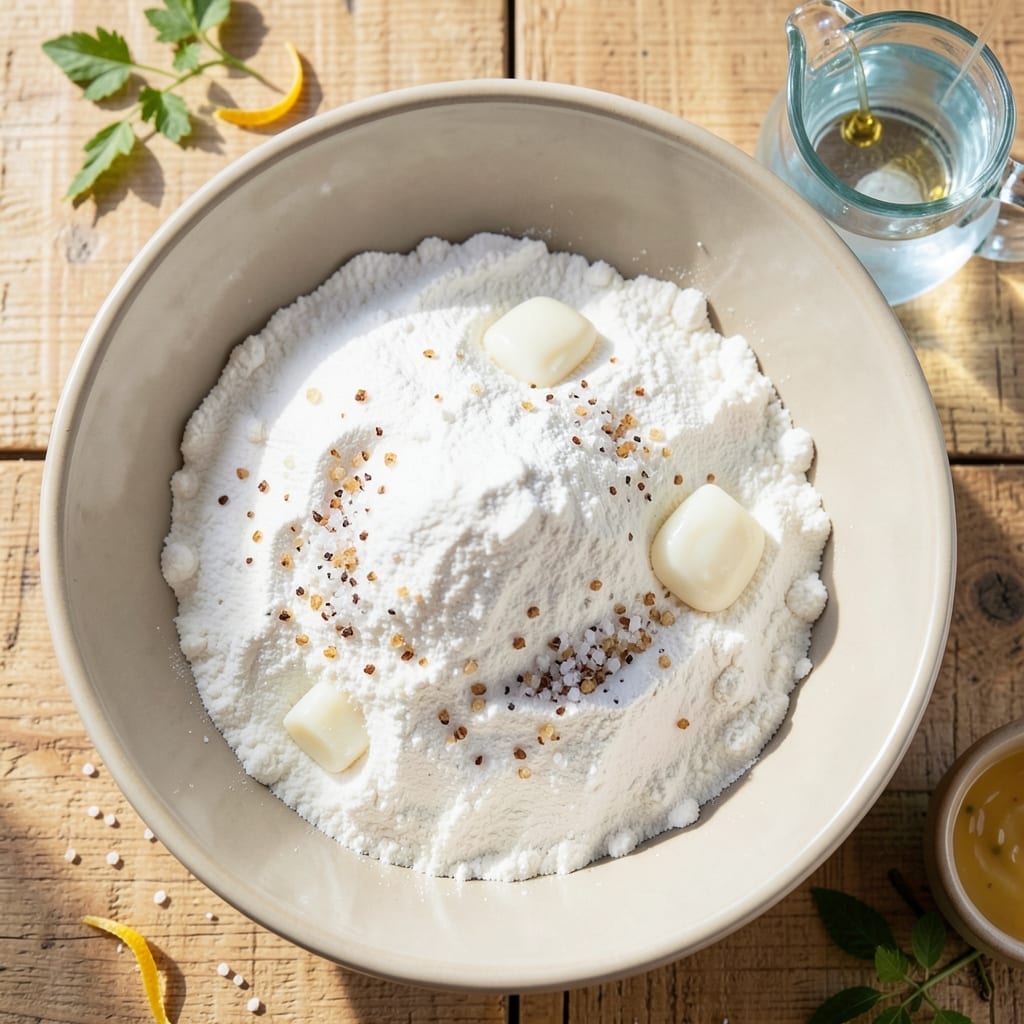
I’ve perfected a flaky pie crust that delivers the same tender layers as butter-based versions, using coconut oil instead. This method solves the vegan baking challenge without compromising texture or flavor.
The secret lies in using chilled coconut oil and minimal handling to prevent gluten development. The result is a crust that bakes up golden and holds its shape beautifully, with delicate layers that shatter at the touch.
This technique requires no special equipment—just a bowl, a pastry cutter, and about 15 minutes of active prep. The dough rests briefly before rolling, ensuring easy handling and consistent results.
Whether you’re making a sweet fruit pie or a savory quiche, this crust provides the perfect foundation. The coconut oil adds a subtle richness that complements any filling.
Ingredients for Pie Crust Recipe Using Coconut Oil
Six simple ingredients create this flaky, buttery-free pie crust with perfect layers.
| Ingredient | Amount | Notes |
|---|---|---|
| All-Purpose Flour 🌾 | 2 ½ cups | Spoon and level for accuracy |
| Coconut Oil 🥥 | ¾ cup | Refined, solid, chilled |
| Sea Salt 🧂 | ½ tsp | Fine grain preferred |
| Ice Water 💧 | ⅓ cup | Plus 1 tbsp as needed |
| Granulated Sugar 🍚 | 1 tbsp | Optional for sweet crusts |
| Apple Cider Vinegar 🍏 | 1 tsp | Enhances flakiness |
The coconut oil must be refined and chilled—unrefined adds coconut flavor, and soft oil ruins texture. Trader Joe’s and Whole Foods carry quality refined coconut oil. For flour, King Arthur all-purpose is my go-to for consistent protein content. The vinegar isn’t optional; it tenderizes the gluten. Use cold tap water with ice cubes for the ice water.
No coconut oil? Vegan butter like Earth Balance works in a pinch but has more water, so reduce liquid slightly. For gluten-free, 1:1 baking blend plus xanthan gum mimics all-purpose. Skip the sugar for savory pies, or swap for maple syrup in sweet crusts (reduce liquid by 1 tsp). The salt can be table salt at half the amount.
Dough keeps 3 days wrapped in the fridge, or 1 month frozen. Roll chilled dough between parchment to prevent sticking. Pre-bake for 10-12 minutes at 375°F for filled pies. Always chill dough 30 minutes before rolling for easiest handling.
Why You’ll Love This Recipe
- No Fuss Mixing: I just stir flour, coconut oil, and ice water—no cutting cold butter or waiting for it to chill.
- Subtle Sweetness: The coconut oil adds a hint of natural sweetness that pairs perfectly with the sugar.
- Freezer Friendly: I always double the batch and freeze one for last-minute pies or tarts.
- Pocketbook Pleaser: Coconut oil costs less than butter, and a little goes a long way in this crust.
Step-by-Step Instructions for Pie Crust Using Coconut Oil
Master the technique for creating a flaky, buttery texture without any dairy in this foolproof method.
Step 1: Combine Dry Ingredients
In a large mixing bowl, whisk together the 2.5 cups All-Purpose Flour, 0.5 tsp Sea Salt, and 1 tbsp Granulated Sugar until evenly distributed. This ensures the salt and sugar are uniformly incorporated, preventing any concentrated pockets of flavor.
The fine grain sea salt dissolves better than coarse varieties, creating a consistent seasoning throughout the crust. Spoon and level the flour for accuracy—this prevents dense or tough results from compacted measurements.
Step 2: Cut in Chilled Coconut Oil
Add the 0.75 cup Coconut Oil (refined, solid, and chilled) to the dry ingredients. Using a pastry cutter or your fingertips, work the oil into the flour mixture until it resembles coarse crumbs with pea-sized pieces of oil visible.
Chilled coconut oil is critical—it should remain solid and cold throughout this process. If it begins to soften or melt, return the mixture to the refrigerator for 10-15 minutes to re-chill. These visible fat pieces create the flaky layers when baked.
Step 3: Incorporate Liquid Ingredients
Create a well in the center of the mixture and add the 0.33 cup Ice Water and 1 tsp Apple Cider Vinegar. Using a fork, gently mix from the center outward until the dough just begins to come together.
The vinegar tenderizes the gluten, ensuring a flaky rather than tough crust. Start with the measured ice water, adding only the additional 1 tbsp if needed to bring the dough together. Overworking or excess liquid develops gluten, resulting in a dense texture.
Step 4: Chill and Rest the Dough
Turn the dough onto a lightly floured surface and gently shape it into a disk. Wrap it tightly in plastic wrap and refrigerate for at least 1 hour or up to 2 days. This resting period allows the gluten to relax and the coconut oil to solidify.
A properly chilled dough is easier to roll out and less likely to shrink during baking. The disk shape also makes it simpler to roll into a uniform circle for your pie dish. Don’t skip this step—it’s essential for flakiness.
Step 5: Roll and Fit the Crust
On a lightly floured surface, roll the chilled dough into a 12-inch circle, about ⅛-inch thick. Transfer it to a 9-inch pie dish, pressing gently into the bottom and sides without stretching. Trim the edges, leaving a ½-inch overhang for crimping.
Use a sharp knife or kitchen shears for clean edges, then crimp the dough using your fingers or a fork. Chill the fitted crust for 30 minutes before baking to prevent shrinking. This final rest ensures the coconut oil remains solid for maximum flakiness.
Pro Tips For Making Pie Crust Recipe Using Coconut Oil
- Chill the Oil: Solid coconut oil is non-negotiable—measure it out first, then pop it in the freezer for 10 minutes so it stays firm while you work it into the flour.
- Use Ice Water: I learned this the hard way—warm water makes the dough sticky and tough, so fill a glass with ice cubes and water, then measure from that.
- Don’t Overwork It: After adding the water, stop mixing as soon as the dough comes together—overworking it develops gluten and makes the crust chewy instead of flaky.
- Add Sugar Last: Sounds weird, but it works: mix the sugar with the ice water before adding it to the flour and oil so it dissolves evenly without clumping.
Flavor Customization for This Dish
Herb-Infused Savory
Add 1 tbsp fresh rosemary or thyme leaves to the dry ingredients for a fragrant, savory twist. I love this with quiches or pot pies. The herbs pair beautifully with the subtle coconut notes. This works especially well for chicken pot pie or vegetable tarts.
Sweet Cinnamon Version
Increase the sugar to 2 tbsp and add 1 tsp cinnamon to the flour mixture. This creates a warm, sweet crust perfect for apple or pumpkin pies. The cinnamon enhances the natural sweetness of the coconut oil.
Chocolate-Coconut Dessert
Replace ¼ cup flour with ¼ cup cocoa powder for a chocolatey crust. Add 1 extra tbsp sugar to balance the bitterness. This works wonderfully with cream pies or chocolate ganache fillings. 💛
Citrus Zest Brightness
Add 1 tbsp lemon or orange zest to the dry ingredients for a bright, citrusy note. This pairs especially well with berry pies or key lime fillings. The zest adds freshness that cuts through the richness of the coconut oil.
Spiced Chai Variation
Mix in ½ tsp chai spice blend (cinnamon, cardamom, ginger, cloves) with the flour for a warm, aromatic crust. This creates a cozy flavor profile that’s perfect for fall desserts. I love this with pear or sweet potato pies.
Cheesy Garlic Twist
Add ½ cup finely grated Parmesan and 1 tsp garlic powder to the dry ingredients. This creates a savory, cheesy crust that’s ideal for savory pies or tarts. The Parmesan adds a nice umami depth to the coconut base.
Nutrition Facts
Frequently Asked Questions
Why use coconut oil instead of butter?
Coconut oil creates a flaky texture similar to butter but is dairy-free and vegan-friendly. It also has a higher smoke point, making it ideal for baking at 375°F or higher.
Can I use unrefined coconut oil?
No, unrefined coconut oil adds a strong coconut flavor. For a neutral taste, always use refined coconut oil and ensure it’s chilled before mixing.
How do I prevent the crust from shrinking?
Chill the dough for at least 1 hour before rolling, and avoid stretching it when fitting into the pan. A 30-minute rest after fitting also helps.
What if my dough is too crumbly?
Add ice water, 1 tbsp at a time, until the dough just holds together. Overworking or excess liquid can make it tough, so mix gently.

- Potato Candy Recipe 1933: Vintage Peanut Butter Roll Delight - October 30, 2026
- Potato Chip Cookie Recipe With Pecans: Buttery Crunch Meets Nutty Richness - October 30, 2026
- Potato Patty Recipe No Egg: Crispy Edges Without the Binder - October 30, 2026