
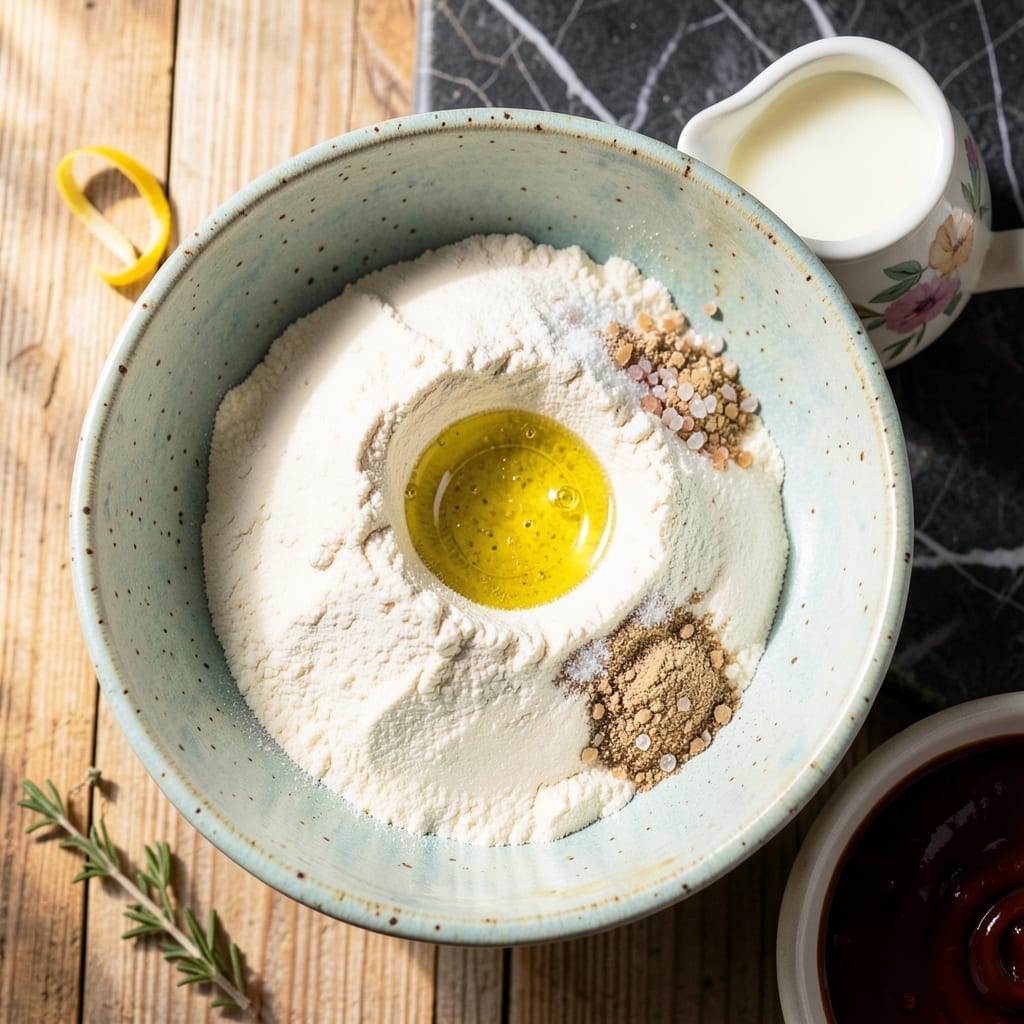
This oil-based pie crust delivers flaky, tender results without a single stick of butter. The secret lies in using cold oil and milk to create layers that rival traditional pastry.
I developed this method after years of struggling with finicky butter crusts. The oil stays solid during mixing, creating that coveted flaky texture, while milk adds richness and helps bind the dough.
What emerges from the oven is a golden, perfectly crisp crust that holds its shape. It works for sweet and savory pies alike, with a texture that’s both sturdy and delicate.
No fancy techniques required—just mix, roll, and bake. The dough comes together in minutes and rests briefly before use.
Ingredients for Pie Crust Recipe Using Oil and Milk
Simple ingredients create a flaky, golden crust without butter in sight.
| Ingredient | Amount | Notes |
|---|---|---|
| All-Purpose Flour 🌾 | 2 ½ cups | Sifted for best texture |
| Vegetable Oil 🫒 | ¾ cup | Cold, light-colored preferred |
| Whole Milk 🥛 | ¼ cup | Cold for flakiness |
| Salt 🧂 | 1 tsp | Fine grain for even distribution |
| Granulated Sugar 🍚 | 1 tbsp | Optional for sweet pies |
| Baking Powder ✨ | ½ tsp | For slight lift |
| Ice Water 💧 | 2 tbsp | As needed for consistency |
The oil is critical here—use a neutral, light-colored vegetable oil like canola or sunflower. Avoid olive oil (its flavor can overpower the crust). Cold oil is non-negotiable for creating flaky layers. I recommend Crisco or any store-brand vegetable oil. The milk should also be ice cold to prevent the oil from melting prematurely.
No milk? Cold water works in a pinch (use 3 tbsp instead of 1/4 cup), but the richness will be missing. For a slightly sweeter crust, increase the sugar to 2 tbsp. If you’re out of baking powder, omit it—the crust will be denser but still flaky. Almond milk can replace cow’s milk, though it may alter the flavor slightly.
The dough keeps 2-3 days wrapped tightly in the fridge. For longer storage, freeze the rolled dough for up to 3 months. Let it thaw in the fridge overnight before using. Baked crusts hold at room temperature for 1 day.
Why You’ll Love This Recipe
- No Rolling Needed: I love that this crust comes together in minutes—just mix, press, and bake. No chilled butter or finicky dough to wrestle with.
- Buttery Without Butter: The oil and milk combo gives it a tender, flaky texture that tastes richer than you’d expect. Honestly, it fools even my die-hard butter-crust fans.
- Endless Possibilities: Sweet or savory, this crust handles it all—from apple pie to quiche. I’ll be real: it’s my shortcut for last-minute potlucks.
- Pantry Staples: All-purpose flour, oil, milk—things I always have on hand. Between us, it’s saved me more than once when I forgot to plan dessert.
Step-by-Step Instructions for Pie Crust Using Oil and Milk
This method ensures a flaky, tender crust with minimal effort and maximum reliability.
Step 1: Combine Dry Ingredients
In a large mixing bowl, whisk together the 2.5 cups All-Purpose Flour, 1 tsp Salt, 1 tbsp Granulated Sugar, and 0.5 tsp Baking Powder. Sifting the flour first helps achieve a lighter texture, but whisking thoroughly works just as well.
This step distributes the leavening and seasoning evenly, preventing pockets of salt or baking powder in your finished crust. The sugar adds a subtle sweetness that complements both sweet and savory fillings.
Step 2: Cut in the Oil
Pour the 0.75 cup Vegetable Oil into the dry ingredients. Using a fork or pastry cutter, work the oil into the flour mixture until it resembles coarse crumbs with some pea-sized pieces remaining.
Don’t overmix—you want visible fat streaks in the dough, as these create the flaky layers during baking. The oil should be cold to prevent it from absorbing too quickly into the flour, which would make the crust tough rather than tender.
Step 3: Add Liquids and Form the Dough
Make a well in the center of the mixture and add the 0.25 cup Whole Milk. Stir gently with a fork until the milk is mostly incorporated. The dough will still look shaggy at this point.
Add the 2 tbsp Ice Water, one tablespoon at a time, mixing just until the dough comes together. It should hold when pressed but not be sticky. If it feels too dry, add additional ice water by the teaspoon—this dough is more forgiving than butter-based crusts but still needs the right moisture balance.
Step 4: Shape and Chill the Dough
Turn the dough onto a lightly floured surface and gently knead it 3-4 times to bring it into a smooth ball. Divide into two equal portions and flatten each into a ½-inch thick disc.
Wrap each disc tightly in plastic wrap and refrigerate for at least 30 minutes. Chilling relaxes the gluten, making the dough easier to roll out, and allows the oil to solidify slightly, which improves flakiness. The dough can be refrigerated for up to 2 days or frozen for longer storage.
When ready to use, roll out the chilled dough on a floured surface to fit your pie dish. The crust will bake to a golden finish with a tender, layered texture that holds its shape beautifully.
Pro Tips For Making Pie Crust Recipe Using Oil And Milk
- Chill the Dough: After mixing, refrigerate the dough for at least 30 minutes—this relaxes the gluten and makes rolling much easier. I learned this the hard way after struggling with tough, springy crusts.
- Use Cold Ingredients: Keep your milk and oil straight from the fridge. Cold fat is crucial for that flaky texture, and warm ingredients will leave you with a dense, tough crust.
- Don’t Overmix: Stir just until the dough comes together. Overworking it develops gluten, and you’ll end up with a pie crust that’s more bread-like than tender.
- Roll Between Parchment: Skip the floured counter and roll the dough between two sheets of parchment—no sticking, easy transfer, and way less mess. Sounds simple, but it saves so much time and frustration.
Pro Cooking Tips for pie crust recipe using oil and milk
Chill Your Ingredients
Always use ice-cold oil and milk straight from the fridge. I keep my vegetable oil in the freezer for 10 minutes before starting. Cold fat prevents premature melting, which is crucial for creating those flaky layers. 💡
Don’t Overmix
Stop mixing as soon as the dough comes together—you want visible streaks of oil. Overworking develops gluten, making the crust tough. The dough should look shaggy, not smooth, when you turn it out.
Use a Light Touch
When rolling the dough, use gentle, even pressure. I roll from the center outward in short strokes, rotating the dough ¼ turn after each pass. This prevents sticking and ensures even thickness.
Prevent Shrinkage
After fitting the dough into the pie dish, trim edges to ½ inch overhang, then crimp. Chill the crust in the dish for 15 minutes before baking. This relaxes gluten and prevents shrinkage.
Blind Bake Properly
For single-crust pies, dock the dough with a fork, line with parchment, and fill with pie weights or dried beans. Bake at 375°F for 15 minutes, then remove weights and bake 5-10 minutes more until golden. ⚡
Check for Doneness
The crust is done when edges are light golden brown and the bottom appears dry. If the top browns too quickly, cover edges with aluminum foil. A perfectly baked crust should lift slightly from the pan.
Nutrition Facts
Frequently Asked Questions
Can I use a different type of oil?
Yes, but stick to neutral oils like canola or sunflower. Avoid olive oil as its strong flavor can overpower the crust. Cold oil is key for flakiness.
Why does the dough need to chill?
Chilling relaxes the gluten and solidifies the oil, which creates flaky layers. Rest for at least 30 minutes for best results.
Can I make this ahead?
The dough keeps in the fridge for 2-3 days or freezes for up to 3 months. Thaw overnight before rolling.
What if my crust shrinks while baking?
Chill the dough in the pie dish for 15 minutes before baking. This prevents shrinkage by relaxing the gluten.

- Potato Candy Recipe 1933: Vintage Peanut Butter Roll Delight - October 30, 2026
- Potato Chip Cookie Recipe With Pecans: Buttery Crunch Meets Nutty Richness - October 30, 2026
- Potato Patty Recipe No Egg: Crispy Edges Without the Binder - October 30, 2026