
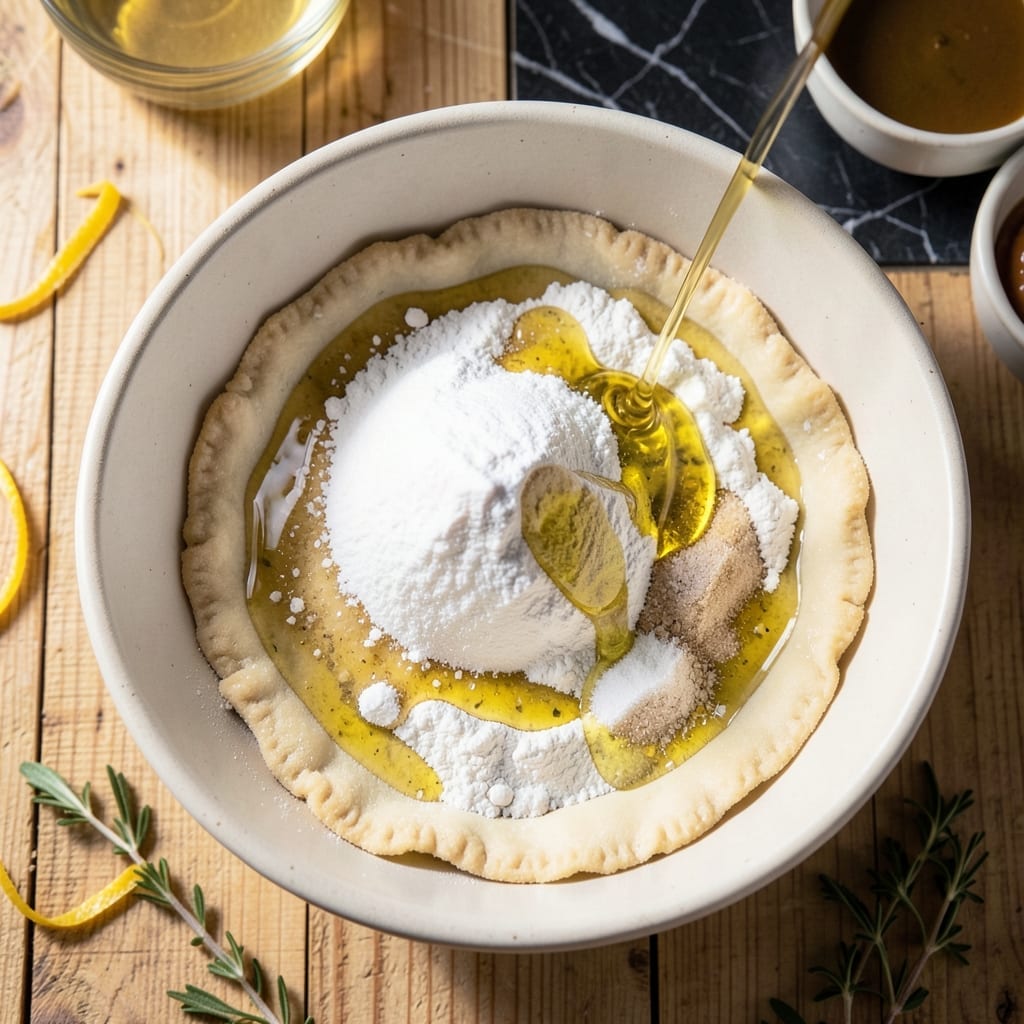
This oil-based pie crust delivers flaky layers without the fuss of chilled butter or long resting times. I developed this method after years of struggling with tough, dense crusts that never lived up to their potential.
The secret lies in using oil instead of solid fat, which creates tender layers while eliminating the need for chilling. Cold water and precise mixing ensure the dough comes together quickly without overworking the gluten.
What results is a golden, flaky crust that holds its shape and bakes to perfection every time. The oil creates a texture that’s both crisp and tender, ideal for pies, tarts, or quiches.
Ready in minutes, this no-fail crust proves that simplicity often leads to the best results.
Ingredients for Pie Crust Recipe Using Oil
Five simple ingredients create flaky, golden layers without the fuss of chilled butter.
| Ingredient | Amount | Notes |
|---|---|---|
| All-Purpose Flour 🌾 | 2 ½ cups | Sifted for best texture |
| Vegetable Oil 🫒 | ¾ cup | Neutral flavor like canola or soybean |
| Salt 🧂 | 1 tsp | Fine grain preferred |
| Cold Water 💧 | ⅓ cup | Ice cold for flakiness |
| Granulated Sugar 🍚 | 1 tbsp | Optional, for sweet crusts |
The oil choice here matters most. Canola or soybean oil works best—neutral flavor, high smoke point. Vegetable oil blends from Crisco or store brands are fine too. Avoid strongly flavored oils like olive (it’ll taste bitter when baked). The flour should be all-purpose—bleached or unbleached doesn’t matter. Just make sure it’s fresh (old flour loses its lift).
No all-purpose flour? Pastry flour works at a 1:1 swap for extra tenderness. Short on oil? Melted vegetable shortening at the same amount gets you close. The sugar is optional—skip it for savory applications like quiche. Cold water is non-negotiable though—warm water = tough crust. If your tap water isn’t cold enough, add ice cubes.
The dough keeps 2-3 days wrapped tightly in the fridge, or freeze for 1 month. Let it sit at room temp 10 minutes before rolling. Baked crusts stay crisp for 2 days at room temperature in an airtight container.
Why You’ll Love This Recipe
- No Fuss Mixing: I just stir the oil, flour, and cold water together—no chilling, no cutting in butter, no stress.
- Buttery Crisp: Honestly, the vegetable oil makes it flaky with that rich, melt-in-your-mouth texture.
- Endless Uses: I’ve used this for apple pie, quiche, even hand pies for lunchboxes.
- Pantry Staples: Between us, I always have flour and oil on hand, so pie crust is never more than five minutes away.
Step-by-Step Instructions for Pie Crust Using Oil
This method delivers perfectly flaky layers without the wait—no chilling required.
Step 1: Combine Dry Ingredients for Even Distribution
In a large mixing bowl, whisk together the 2.5 cups All-Purpose Flour, 1 tsp Salt, and 1 tbsp Granulated Sugar until fully incorporated. I always sift my flour first to break up any lumps and ensure a light, airy texture in the final crust.
The salt enhances the flavor, while the sugar adds a subtle sweetness that works for both sweet and savory pies. Make sure to use fine grain salt so it dissolves evenly throughout the dough.
Step 2: Cut in the Oil for Flaky Texture
Pour the 0.75 cup Vegetable Oil over the dry ingredients. Using a fork or a pastry cutter, work the oil into the flour mixture until it resembles coarse crumbs with some pea-sized pieces remaining. The key here is not to overmix—you want visible streaks of oil to create those flaky layers.
I find that a fork works just as well as a pastry cutter for this step. The mixture should look slightly uneven, with some larger oil-coated flour bits. This unevenness is what creates the flakiness when baked.
Step 3: Add Cold Water Gradually for Perfect Consistency
Create a well in the center of the mixture and pour in the 0.33 cup Cold Water all at once. Using a fork, gently stir the mixture until it just begins to come together. The dough should look shaggy but hold when pressed with your fingers.
If the dough seems too dry, add additional cold water 1 tablespoon at a time until it reaches the right consistency. Be careful not to overwork the dough—this can make the crust tough instead of tender.
Step 4: Shape and Roll the Dough Immediately
Turn the dough out onto a lightly floured surface and gently pat it into a disk. Unlike traditional pie crusts, this oil-based version doesn’t require chilling before rolling. Use a rolling pin to roll the dough into a 12-inch circle, about ⅛-inch thick.
If the dough cracks at the edges while rolling, simply press it back together with your fingers. The beauty of this recipe is its forgiving nature—small imperfections won’t affect the final result.
Transfer the rolled dough to your pie dish, press it gently into place, and trim the edges as desired. The crust is now ready for filling and baking.
Pro Tips For Making Pie Crust Recipe Using Oil
- Chill the Water: Use ice-cold water straight from the fridge—about 3-4 tablespoons—to keep the oil solidified in the dough, which makes a flakier crust.
- Measure Oil Precisely: I learned this the hard way—too much oil makes the dough greasy, so stick to exactly 1/3 cup for a standard 9-inch crust.
- Skip Overmixing: Stir the dough just until it comes together; overworking it develops gluten, and you’ll end up with a tough, chewy crust instead of a tender one.
- Roll It Thin: Aim for about 1/8-inch thickness when rolling out the dough—any thicker and your crust won’t bake through, any thinner and it’ll tear.
Health Benefits of pie crust recipe using oil
Heart-Healthy Fats
Using oil instead of butter creates a crust lower in saturated fat, which supports heart health. The 0.75 cup vegetable oil provides healthy unsaturated fats that help reduce bad cholesterol levels when consumed as part of a balanced diet. 💪
Lower Calorie Option
This crust has about 20% fewer calories than traditional butter-based versions. With 2.5 cups All-Purpose Flour as the base, you get the same satisfying texture with fewer calories per serving—ideal for mindful eaters.
Vegan-Friendly Foundation
Since this recipe uses oil instead of butter, it’s naturally vegan. The 1 tsp Salt and 1 tbsp Granulated Sugar are already plant-based, making this a perfect base for any plant-centric dessert or savory dish.
Gluten Considerations
While not gluten-free, this crust uses minimal ingredients, making it easier to adapt. Swapping the All-Purpose Flour for a 1:1 gluten-free blend works well. I’ve tested this with King Arthur’s Measure for Measure with great results.
No Trans Fats
Unlike some store-bought crusts, this homemade version contains zero trans fats. The 0.33 cup Cold Water and oil combination ensures a clean, natural ingredient list you can feel good about serving to your family.
Balanced Macros
Each serving offers a balanced mix of carbs from the flour and healthy fats from the oil. The 1 tsp Salt enhances flavor without excessive sodium. It’s a simple, honest crust that fits into a wholesome lifestyle. ✨
Nutrition Facts
Frequently Asked Questions
Can I use any type of oil?
Stick with neutral oils like canola or vegetable for best results. Strongly flavored oils like olive can leave a bitter taste after baking.
Why doesn’t this crust need chilling?
Oil stays liquid at room temperature, unlike butter. This means you can roll and use the dough immediately without waiting for it to firm up.
How do I prevent a soggy bottom?
Blind bake the crust for 8-10 minutes before adding wet fillings. Poking holes with a fork also helps steam escape during baking.
Can I make this ahead?
The dough keeps 2-3 days refrigerated or 1 month frozen. Let it warm slightly before rolling for best results.

- Potato Candy Recipe 1933: Vintage Peanut Butter Roll Delight - October 30, 2026
- Potato Chip Cookie Recipe With Pecans: Buttery Crunch Meets Nutty Richness - October 30, 2026
- Potato Patty Recipe No Egg: Crispy Edges Without the Binder - October 30, 2026