
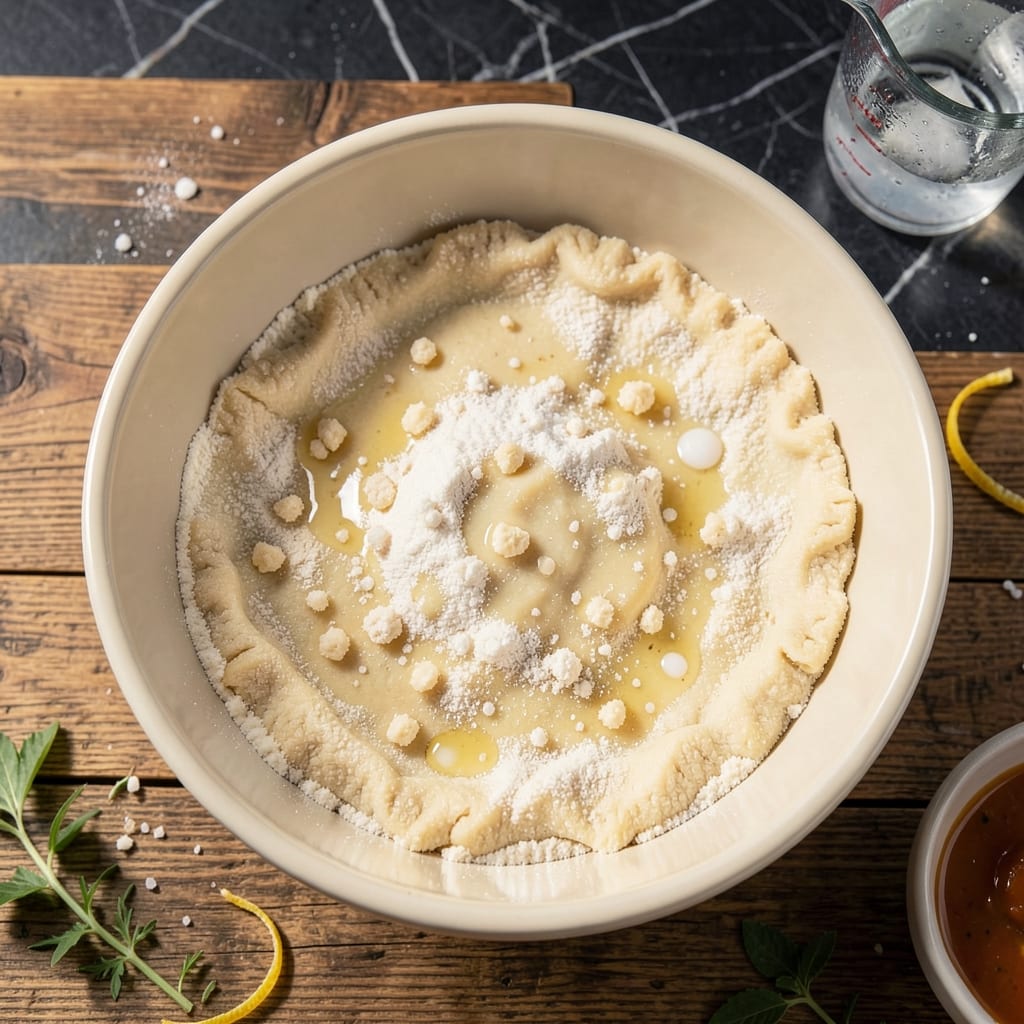
Achieving perfect pie crust requires precision, and this vegetable shortening version delivers consistent results every time. The key lies in keeping ingredients ice-cold throughout the entire process.
I developed this method after years of testing different fats and techniques. Vegetable shortening creates unmatched flakiness because it doesn’t melt as quickly as butter, allowing for distinct layers to form during baking.
The result is a golden crust that holds its shape, with a tender, melt-in-your-mouth texture that complements any filling. This technique works for sweet and savory pies alike.
Master this foundation, and you’ll elevate every pie that follows. Here’s how to begin.
Ingredients for Pie Crust Recipe Vegetable Shortening
Precise ingredients for a golden, flaky crust that holds its shape beautifully every time.
| Ingredient | Amount | Notes |
|---|---|---|
| All-Purpose Flour 🌾 | 2 ½ cups | Sifted for even texture |
| Vegetable Shortening 🧈 | ¾ cup | Cold, solid form required |
| Ice Water 💧 | ⅓ cup | Plus 1 tbsp as needed |
| Salt 🧂 | 1 tsp | Fine sea salt preferred |
| Granulated Sugar 🍚 | 1 tbsp | Optional, for sweet crusts |
| White Vinegar 🍋 | 1 tsp | Enhances flakiness texture |
| Unsalted Butter 🧈 | 2 tbsp | Chilled and cubed |
The vegetable shortening is non-negotiable for that signature flakiness—it has a higher melting point than butter, which creates those distinct layers. Crisco is the gold standard here, but any 100% vegetable shortening works. Keep it ice-cold (literally, I stash mine in the freezer for 15 minutes before starting). The flour should be all-purpose, unbleached if possible. King Arthur is my go-to brand for consistent protein content.
No vegetable shortening? Lard is the closest substitute (and honestly makes an even flakier crust). For a butter-only version, use 1 cup chilled butter instead but expect slightly less definition in the layers. The vinegar might seem odd, but it tenderizes the gluten—apple cider vinegar works too. Skip the sugar for savory pies. And that ice water? Don’t even think about using warm—it’ll ruin the texture.
The dough keeps in the fridge for 2-3 days or can be frozen for up to 3 months. Wrap it tightly in plastic—oxygen is the enemy of freshness. For best results, let chilled dough sit at room temperature for 10 minutes before rolling. Always work on a lightly floured surface to prevent sticking. (Pro tip: a marble pastry board stays colder than wood.)
Why You’ll Love This Recipe
- Five-Minute Mix: I cut the shortening into the flour in minutes—no chilling, no fuss.
- Buttery Crisp: The shortening makes it flakier than my grandma’s, with just a hint of sugar to balance the salt.
- Endless Possibilities: Sweet or savory, quiche or apple, this crust handles it all without a single tweak.
- Pantry Staples: Flour, shortening, water—things I always have, so pie night can happen anytime.
Step-by-Step Instructions for Pie Crust with Vegetable Shortening
This method guarantees a flaky, tender crust with golden layers you can see and taste.
Step 1: Combine Dry Ingredients for Even Distribution
In a large mixing bowl, whisk together the 2.5 cups All-Purpose Flour, 1 tsp Salt, and 1 tbsp Granulated Sugar until fully incorporated. The sugar is optional but adds a subtle sweetness that complements fruit pies beautifully.
Whisking for 30-45 seconds ensures the salt and sugar are evenly dispersed throughout the flour. This prevents pockets of overly salty or sweet spots in your finished crust. The fine sea salt dissolves more readily than coarse varieties.
Step 2: Cut in the Cold Fats for Flaky Layers
Add the 0.75 cup Vegetable Shortening and 2 tbsp Unsalted Butter (both chilled and cubed) to the flour mixture. Using a pastry cutter or your fingers, work the fats into the flour until the mixture resembles coarse crumbs with pea-sized pieces of shortening and butter visible.
This step creates the flaky layers characteristic of perfect pie crust. The solid fats coat the flour particles, preventing gluten development during mixing. Stop when you see distinct fat pieces—overworking will produce a mealy, tough crust rather than a flaky one.
Step 3: Bind with Liquid for Optimal Texture
Create a well in the center of the mixture and add the 0.33 cup Ice Water and 1 tsp White Vinegar. The vinegar tenderizes the dough by inhibiting gluten formation, while the ice water keeps the fats solid during mixing.
Using a fork, gently toss the mixture until it just begins to come together. You should see moist clumps with some dry flour remaining. Add up to 1 tbsp additional Ice Water if needed to achieve this consistency. The dough will look shaggy—that’s exactly right.
Step 4: Rest and Chill for Perfect Handling
Turn the dough onto a lightly floured surface and gently press it into a cohesive mass. Divide into two equal portions and shape each into a 1-inch thick disc. Wrap tightly in plastic wrap, pressing the wrap directly against the dough to prevent air pockets.
Refrigerate for at least 1 hour, or preferably 2 hours. This resting period allows the flour to fully hydrate and the gluten to relax, making the dough easier to roll out. It also gives the fats time to rechill after handling, preserving those precious flaky layers.
Step 5: Roll and Fit for Baking
On a lightly floured surface, roll one disc of dough into a 12-inch circle about ⅛-inch thick. Rotate the dough 45 degrees after each roll to maintain an even thickness and prevent sticking. Use a light touch—overworking will toughen the crust.
Transfer the rolled dough to your pie plate, ease it into the corners without stretching, and trim the edges to leave a ½-inch overhang. For a pre-baked shell, dock the bottom with a fork and blind bake at 375°F for 15-20 minutes until light golden brown.
Pro Tips For Making Pie Crust Recipe Vegetable Shortening
- Chill Your Shortening: Pop the vegetable shortening in the freezer for 15-20 minutes before mixing—I learned this the hard way after my first three crusts came out greasy instead of flaky.
- Use Ice-Cold Water: Fill a glass with water and ice cubes, then measure from that. Sounds weird, but it works: warm water makes the dough tough, and nobody wants a chewy pie crust.
- Don’t Overwork Dough: Mix just until the flour is incorporated—after burning through a few batches, I finally figured out that overmixing develops gluten, and gluten means a dense, bread-like crust.
- Rest Before Rolling: Give the dough a solid 30 minutes in the fridge before rolling. My grandmother swore by this, and she was right: it relaxes the gluten and makes rolling out so much easier.
Perfect Pairings for This pie crust recipe vegetable shortening
Fruit Fillings
This flaky crust pairs beautifully with tart apple pie filling—I love the contrast of sweet-tart fruit against the buttery layers. Use 6-7 cups thinly sliced Granny Smith apples for the best texture. A sprinkle of cinnamon in the filling complements the crust perfectly. 🍏
Creamy Options
For a decadent treat, try a rich chocolate silk pie or lemon curd filling. The neutral flavor of vegetable shortening lets the filling shine. I always add 1 tsp vanilla extract to my chocolate filling for depth.
Savory Pies
Don’t limit this crust to desserts—it works wonderfully for chicken pot pie or quiche Lorraine. The sturdiness holds up to hearty fillings. For quiche, pre-bake the shell at 375°F for 15 minutes to prevent sogginess.
Beverage Pairings
A slice of pie calls for the perfect drink. I recommend vanilla chai tea with apple pie or cold milk for chocolate. For savory pies, a crisp Sauvignon Blanc cuts through the richness beautifully. ☕
Ice Cream Toppings
Serve warm pie with vanilla bean ice cream for a classic combo. The flaky crust stays crisp against the creamy ice cream. Add a drizzle of caramel sauce for extra indulgence.
Garnish Ideas
Finish with whipped cream and a dusting of powdered sugar for simple elegance. For fruit pies, a scoop of lemon zest adds bright color and fresh flavor that makes every bite sing. ✨
Nutrition Facts
Frequently Asked Questions
Why use vegetable shortening instead of butter?
Shortening has a higher melting point than butter, creating more distinct flaky layers. It also produces a more tender crust that holds its shape better during baking. Butter adds flavor but can make the crust slightly tougher.
Can I make this dough ahead of time?
Yes! Wrap the dough tightly and refrigerate for up to 3 days or freeze for 3 months. Thaw frozen dough overnight in the fridge before rolling. Always let chilled dough sit at room temperature for 10 minutes before rolling.
What if my crust becomes tough?
This usually happens from overworking the dough or using warm ingredients. Keep everything ice-cold and handle the dough as little as possible. If it’s already tough, try adding 1 tsp more vinegar next time to inhibit gluten formation.
How do I prevent a soggy bottom crust?
For fruit pies, sprinkle 1 tbsp cornstarch on the unbaked crust before adding filling. For custard pies, pre-bake the shell at 375°F for 15 minutes. Always use a hot oven and bake on the lower rack.

- Potato Candy Recipe 1933: Vintage Peanut Butter Roll Delight - October 30, 2026
- Potato Chip Cookie Recipe With Pecans: Buttery Crunch Meets Nutty Richness - October 30, 2026
- Potato Patty Recipe No Egg: Crispy Edges Without the Binder - October 30, 2026