
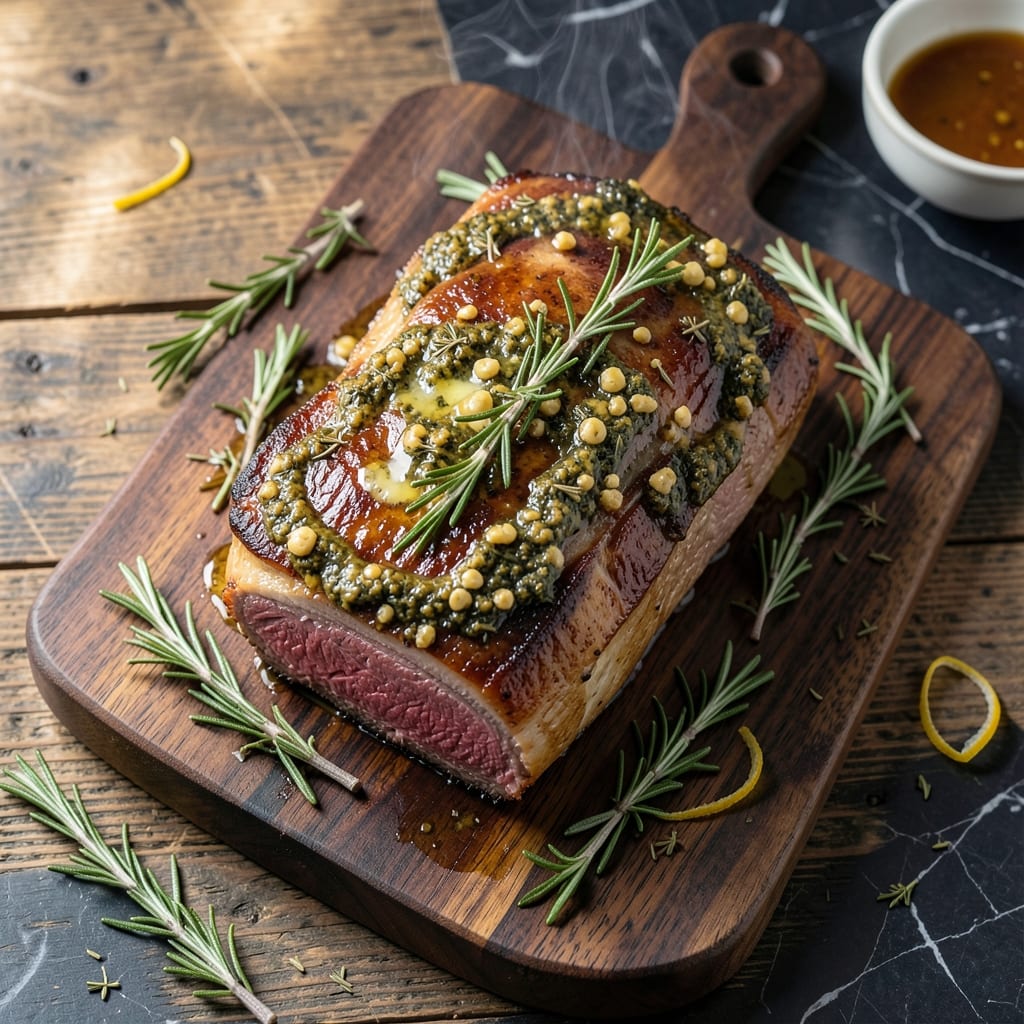
Achieving a perfect prime rib means mastering the balance between a herb-crusted exterior and an evenly pink center.
This method relies on a simple but precise technique: high-heat searing followed by slow roasting. The herb crust forms a flavorful seal, locking in juices while the meat cooks evenly throughout.
You’ll find the key is patience—resting the roast after cooking ensures every slice stays tender and perfectly juicy. No shortcuts, just proven results.
Serve this as the centerpiece of a holiday meal or special dinner. The process is straightforward, but the outcome feels like a celebration.
Ingredients for Perfect Prime Rib Roast Recipe Oven
Prime rib requires quality beef and fresh herbs for that herb-crusted exterior and tender center.
| Ingredient | Amount | Notes |
|---|---|---|
| Prime Rib Roast 🥩 | 5 lb | Bone-in, well-marbled preferred |
| Kosher Salt 🧂 | 2 tbsp | Diamond Crystal recommended |
| Black Peppercorns 🌶️ | 2 tbsp | Freshly cracked for texture |
| Fresh Rosemary 🌿 | ¼ cup | Finely chopped, stems discarded |
| Fresh Thyme 🍃 | ¼ cup | Finely chopped, stems discarded |
| Fresh Garlic Cloves 🧄 | 6 cloves | Minced to fine paste |
| Dijon Mustard 🟡 | ¼ cup | Whole-grain preferred for texture |
| Extra-Virgin Olive Oil 🫒 | ¼ cup | High-quality for crust adherence |
| Unsalted Butter 🧈 | 4 tbsp | Softened for herb mixture |
| Red Wine 🍷 | 1 cup | Dry variety for au jus |
| Beef Stock 🥩 | 2 cups | Low-sodium preferred |
| All-Purpose Flour 🌾 | 2 tbsp | For thickening au jus |
The prime rib itself demands attention. Costco or a trusted butcher are ideal sources for a well-marbled, bone-in roast—this ensures even cooking and maximum flavor. Look for USDA Prime or Choice grading; the fat cap should be thick and white. The herbs must be fresh; Whole Foods or farmers markets typically carry the most vibrant sprigs. Avoid pre-ground pepper—freshly cracked makes a noticeable difference in the crust.
No fresh rosemary or thyme? Dried herbs at one-third the amount will work, though the flavor won’t be as bright. Out of red wine? Beef broth with a splash of balsamic vinegar mimics the depth. For a non-alcoholic option, extra beef stock with a teaspoon of soy sauce adds umami. If using salted butter, reduce the kosher salt by half the quantity to avoid over-seasoning.
Rest the roast at room temperature for 1 hour before cooking for even doneness. Leftovers? Slice and store in au jus for up to 5 days in the fridge, or freeze for 3 months. The herb crust keeps its integrity best when reheated gently in a low oven.
Why You’ll Love This Recipe
- Set and Forget: I rub the roast with salt, pepper, rosemary, and thyme, pop it in the oven, and let the heat do all the work—no babysitting required.
- Herb-Crusted Bliss: The crust from the fresh rosemary and thyme with the rich beef? Honestly, it’s the part I look forward to most.
- Holiday Hero: This is my go-to for Christmas dinner, but it’s just as good for a Sunday supper with family.
- Next-Day Magic: The leftovers make the best sandwiches—thinly sliced prime rib with a little horseradish on crusty bread is my secret lunch.
Step-by-Step Instructions for Herb-Crusted Prime Rib Roast
Master these techniques for a flawless roast with a crusty exterior and perfectly pink center every time.
Step 1: Prepare the Herb Paste and Season the Roast
Combine the 0.25 cup fresh rosemary, 0.25 cup fresh thyme, 6 cloves fresh garlic cloves, 0.25 cup Dijon mustard, 0.25 cup extra-virgin olive oil, and 4 tbsp unsalted butter in a bowl. Mix until it forms a thick, aromatic paste. The consistency should cling to the meat without sliding off.
Pat the 5 lb prime rib roast dry with paper towels—this is critical for a good sear. Rub the herb paste evenly over the entire surface, pressing it into the meat. Then season generously with the 2 tbsp kosher salt and freshly cracked 2 tbsp black peppercorns. Let it sit at room temperature for 1 hour to allow the flavors to penetrate.
Step 2: Sear and Begin Roasting
Preheat your oven to 450°F. Place the roast bone-side down in a roasting pan. This high-heat sear creates a deep, flavorful crust. Roast for 20 minutes at this temperature until the surface is deeply browned and a rich crust has formed.
After the initial sear, reduce the oven temperature to 325°F. This lower temperature ensures even cooking without over-browning the exterior. The contrast between the high-heat sear and slow roast is what delivers both the crust and the tender interior.
Step 3: Roast to Perfect Doneness
Continue roasting at 325°F until the internal temperature reaches 120-125°F for medium-rare. Use a meat thermometer inserted into the thickest part of the roast, avoiding the bone. This typically takes 1.5 to 2 hours for a 5 lb prime rib roast, but rely on the thermometer, not the clock.
The roast is done when it reaches your desired temperature—120°F for rare, 125°F for medium-rare. The temperature will rise an additional 5-10°F during resting, so remove it from the oven just before it hits your target.
Step 4: Rest and Prepare the Au Jus
Transfer the roast to a cutting board and tent loosely with foil. Let it rest for 20-30 minutes—this allows the juices to redistribute, ensuring every slice is moist and flavorful. Do not skip this step; resting is just as important as the cooking itself.
While the roast rests, place the roasting pan on the stovetop over medium heat. Add the 1 cup red wine and deglaze, scraping up all the browned bits. Simmer for 2-3 minutes, then whisk in the 2 tbsp all-purpose flour to thicken. Add the 2 cups beef stock and simmer for another 5 minutes until reduced slightly. Strain and serve alongside the roast.
Pro Tips For Making Perfect Prime Rib Roast Recipe Oven
- Dry the Roast: Pat the prime rib completely dry with paper towels before seasoning. I learned this the hard way—wet meat steams instead of searing, and you’ll lose that beautiful crust.
- Salt Overnight: Rub the roast with kosher salt at least 12 hours ahead. Sounds weird, but it works: the salt penetrates deep, seasons evenly, and helps form that perfect crust.
- Start Hot, Finish Low: Sear the roast at 450°F for 20 minutes, then drop the temperature to 250°F. This guarantees a deep brown exterior while keeping the inside tender and juicy.
- Rest Before Carving: Let the roast rest for 20-30 minutes under foil after cooking. I used to rush this part and wondered why my slices were dry—this gives the juices time to redistribute.
Dietary Considerations for This Recipe
Gluten-Free Adaptations
This recipe is naturally gluten-free if you skip the au jus thickening step. Instead of all-purpose flour, use cornstarch mixed with cold water as a slurry. I find 1 tbsp cornstarch + 2 tbsp water works perfectly for a smooth, glossy finish. 💡
Low-Carb and Keto-Friendly
The prime rib itself is ideal for low-carb diets, with zero carbs in the main dish. For the au jus, omit the flour entirely and reduce the wine by half to intensify flavors. The herb crust adds minimal carbs—just 2g per serving from the fresh herbs.
Dairy-Free Modifications
Replace the unsalted butter in the herb paste with additional extra-virgin olive oil. Use a 1:1 ratio—so 4 tbsp olive oil instead of butter. The crust will still cling beautifully, and the flavor remains rich and aromatic.
Nut Allergy Considerations
This dish is naturally nut-free, but always verify your Dijon mustard and beef stock brands for hidden nut derivatives. I prefer Maille Dijon and Swanson beef stock for their clean ingredient lists. Double-check labels to be safe.
Sodium Watchers
To reduce sodium, use low-sodium beef stock and cut the kosher salt by half. Boost flavor with additional fresh garlic and herbs—they add depth without extra salt. The meat’s natural richness will still shine through beautifully.
Pregnancy-Safe Adjustments
Ensure the prime rib reaches at least 145°F internal temperature to be safe for pregnant women. Use pasteurized beef stock and skip the red wine in the au jus, replacing it with additional stock and 1 tsp balsamic vinegar for acidity. 💪
Nutrition Facts
Frequently Asked Questions
How long should I rest the roast before slicing?
Let it rest for 20-30 minutes after removing from the oven. This allows juices to redistribute for moist, even slices. Skipping this step risks dry meat.
Can I use a boneless roast instead?
Yes, but bone-in adds flavor and helps cook more evenly. For boneless, reduce cooking time by about 15-20 minutes and use a thermometer to check doneness.
What if my roast browns too quickly?
Tent loosely with foil if the crust darkens before reaching temperature. Lower the oven to 300°F to finish cooking gently without burning.
Is a meat thermometer really necessary?
The only way to guarantee perfect doneness is to check internal temperature, aiming for 120-125°F for medium-rare. Guessing leads to overcooking.

- Potato Candy Recipe 1933: Vintage Peanut Butter Roll Delight - October 30, 2026
- Potato Chip Cookie Recipe With Pecans: Buttery Crunch Meets Nutty Richness - October 30, 2026
- Potato Patty Recipe No Egg: Crispy Edges Without the Binder - October 30, 2026