
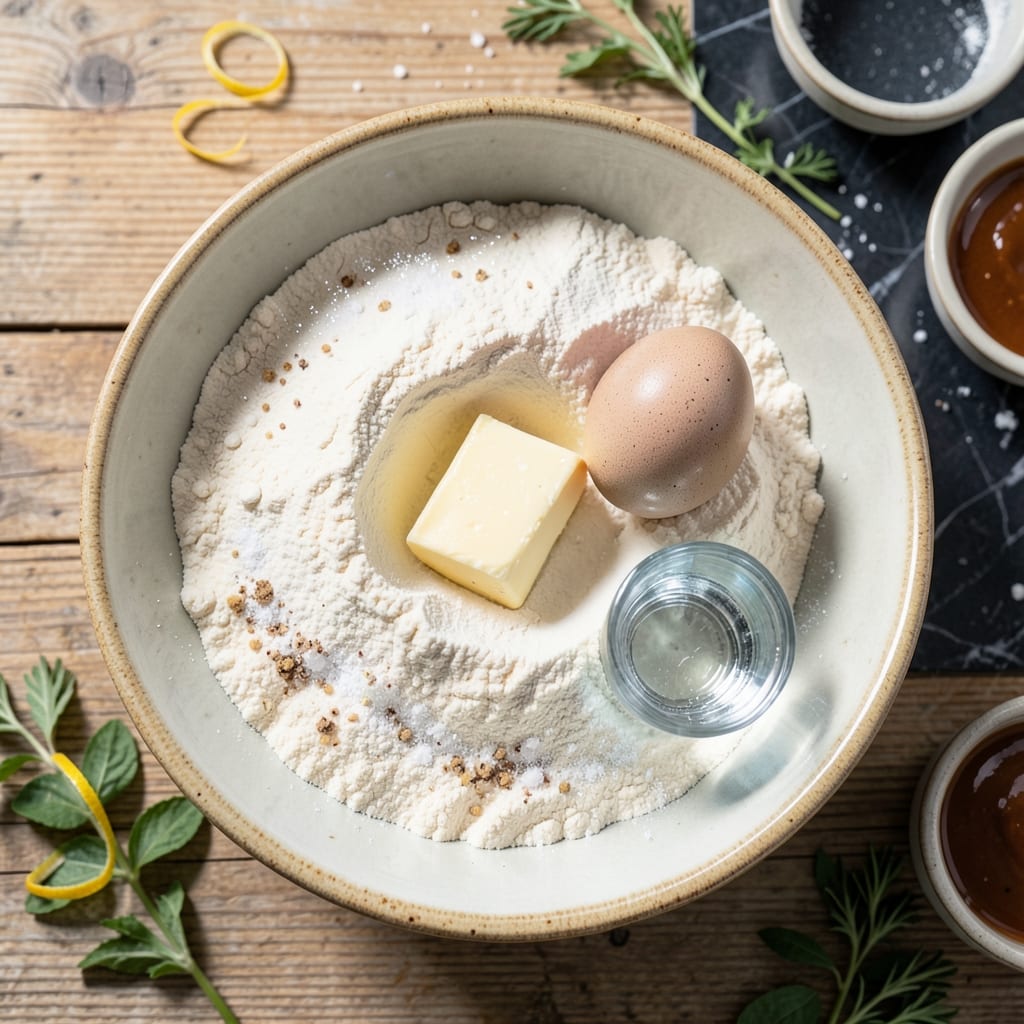
Mastering pie crust is simpler than you think with this proven method. The egg adds richness while butter creates those signature flaky layers everyone craves.
Cold ingredients are your secret weapon here. I keep my butter chilled and ice water on hand to prevent the dough from developing gluten, which would make it tough instead of tender.
The egg yolk enhances the crust’s golden color and adds a subtle depth of flavor. Combined with the butter’s fat content, this creates a texture that truly shatters with each bite.
This recipe delivers professional results every time. With just a few simple steps, you’ll have a pie crust that rivals any bakery’s.
Ingredients for Pie Crust Recipe with Egg and Butter
Cold butter and an egg yolk make this flaky, tender crust shine every time.
| Ingredient | Amount | Notes |
|---|---|---|
| All-Purpose Flour 🌾 | 2 ½ cups | Plus extra for dusting |
| Unsalted Butter 🧈 | 1 cup | Cold, cut into small cubes |
| Large Egg 🥚 | 1 whole | Cold, separated (yolk only) |
| Ice Water 💧 | ¼ cup | Plus more as needed |
| Granulated Sugar 🍚 | 1 tbsp | Optional for sweet crusts |
| Salt 🧂 | 1 tsp | Fine sea salt preferred |
| Apple Cider Vinegar 🍎 | 1 tsp | Or white vinegar |
| Vanilla Extract 🌿 | ½ tsp | For sweet pie crusts |
The butter needs to stay ice-cold—cut it into small cubes and chill them while you prep the rest. I use Land O’Lakes or Kerrygold for the best flavor. The flour? Standard all-purpose is perfect (I like King Arthur). Don’t overwork the dough once the butter is in—visible flakes mean you’re doing it right. That little splash of vinegar tenderizes the gluten, so don’t skip it.
No egg? An extra tablespoon of ice water works in a pinch. Need a sweeter crust? Add another tablespoon of sugar. Swap the vinegar for lemon juice if that’s what you’ve got. For a richer flavor, European-style butter (higher fat content) is worth the splurge. If you’re making a savory pie, omit the sugar and vanilla entirely.
The dough keeps in the fridge for 2-3 days or freezes for 3 months (wrap it tight in plastic). Let it warm up just slightly before rolling—cold is good, rock-hard is impossible to work with. Baked crusts? Store at room temp for 1 day or freeze for later.
Why You’ll Love This Recipe
- One-Bowl Wonder: I mix everything right in the same bowl—no extra dishes, just flour, cold butter, and that one egg binding it all together beautifully.
- Buttery Richness: The egg adds a subtle depth while the butter gives it that flaky, melt-in-your-mouth texture I crave in every bite.
- Endless Possibilities: Sweet or savory, this crust handles it all—from apple pie to quiche. Honestly, it’s my go-to for any filling I’m mood for.
- Budget-Friendly Staple: A handful of pantry basics and one egg is all it takes. I’ll be real: it’s cheaper than store-bought and twice as good.
Step-by-Step Instructions for Pie Crust With Egg and Butter
Here’s the method that guarantees those shatteringly flaky layers you’re after every time.
Step 1: Cut Cold Butter Into Flour
In a large bowl, whisk together the 2.5 cups all-purpose flour, 1 tsp salt, and 1 tbsp granulated sugar. The sugar is optional but adds subtle sweetness for dessert pies. Add the 1 cup unsalted butter (cold and cubed) to the flour mixture.
Using a pastry cutter or your fingers, work the butter into the flour until you have a mix of pea-sized crumbs and some larger, flat pieces. This uneven distribution is key—those larger butter pieces create the flaky layers. Stop when the mixture resembles coarse sand with visible butter chunks.
Step 2: Add Wet Ingredients and Mix Gently
Create a well in the center of the flour-butter mixture. Add the 1 whole large egg (yolk only), 0.25 cup ice water, 1 tsp apple cider vinegar, and 0.5 tsp vanilla extract. The vinegar tenderizes the gluten for a more delicate crust.
Using a fork, gently mix the ingredients just until the dough begins to come together. It will look shaggy and dry in spots—that’s perfect. Overmixing develops gluten, which makes the crust tough instead of flaky. If the dough seems too dry, add ice water 1 tsp at a time until it just holds together.
Step 3: Rest the Dough for Optimal Texture
Turn the dough out onto a lightly floured surface and divide it into two equal portions. Shape each into a disc about 1 inch thick, wrap tightly in plastic wrap, and refrigerate for at least 1 hour (or up to 2 days).
This resting period allows the gluten to relax and the butter to firm up, making the dough easier to roll out and preventing shrinkage during baking. You’ll notice the dough becomes smoother and more pliable after resting. Don’t skip this step—it’s what separates good crust from great.
Step 4: Roll Out and Shape the Crust
On a lightly floured surface, roll out one disc of dough to about ⅛-inch thickness. For a standard 9-inch pie plate, aim for a 12-inch circle. Rotate the dough frequently as you roll to prevent sticking and ensure even thickness.
Transfer the rolled dough to the pie plate by gently folding it in quarters, then unfolding it. Press the dough lightly into the bottom and sides of the plate. Trim the edges, leaving a ½-inch overhang. Fold the overhang under and crimp decoratively. For a pre-baked crust, chill the lined pie plate for 30 minutes before baking.
Repeat with the second disc for a double-crust pie or save for another use.
Pro Tips For Making Pie Crust Recipe With Egg And Butter
- Chill the Dough: After mixing, wrap the dough and refrigerate for at least 30 minutes—I learned this the hard way when my crust shrank in the pan because the butter softened too much.
- Use Ice-Cold Water: The colder the water, the flakier the crust. I keep a glass of ice water next to me and add it slowly, about 1 tablespoon at a time.
- Skip Overworking: Stop mixing as soon as the dough comes together. After burning three batches to tough, chewy crusts, I finally figured out that overworking develops gluten, which ruins the texture.
- Blind Bake Carefully: For a pre-baked crust, poke holes in the bottom with a fork and weigh it down with pie weights or dried beans to prevent puffing—yes, even if you’re impatient like me.
Creative Variations of These Flavors
Savory Herb Crust
For pot pies or quiches, add 1 tbsp fresh thyme and 1 tsp dried rosemary to the flour. Omit the sugar and vanilla, and add ½ tsp black pepper for a savory kick. The egg yolk binds beautifully while herbs infuse throughout. 🌿
Sweet Vanilla Version
Double the sugar to 2 tbsp and add 1 tsp cinnamon for apple or peach pies. I love this with Madagascar bourbon vanilla—it adds depth. Brush the crust with beaten egg before baking for extra shine.
Cheddar Cheese Twist
Mix in ½ cup shredded sharp cheddar (I use Cabot) with the flour. This works wonderfully for savory hand pies or chicken pot pie. The cheese melts into the layers, creating a rich, golden crust.
Whole Wheat Option
Replace 1 cup all-purpose flour with whole wheat pastry flour. Add 1 extra tbsp ice water since whole wheat absorbs more liquid. The result is nutty and slightly heartier while keeping flakiness.
Lemon Zest Brightness
Add 1 tbsp lemon zest to the flour for citrus pies or summer fruit fillings. The zest brightens the richness of the butter and egg. I use a microplane for fine, even pieces that distribute perfectly. ✨
Spiced Pumpkin Crust
For fall pies, add 1 tsp pumpkin pie spice and 1 tbsp brown sugar. This pairs especially well with sweet potato or pecan fillings. The spices complement the egg’s richness beautifully.
Nutrition Facts
Frequently Asked Questions
Why use egg in the crust?
The egg yolk adds richness and a golden color while helping bind the dough. It also creates a more tender texture compared to all-butter crusts.
Can I use margarine instead of butter?
Not recommended. Butter’s fat content and flavor are key for flakiness. Margarine has more water and less fat, which can make the crust tough or greasy.
What if my dough cracks when rolling?
Let it warm slightly at room temperature for 5-10 minutes. If it’s still cracking, press the edges together with your fingers and continue rolling.
How do I prevent a soggy bottom crust?
Pre-bake (blind bake) the crust for 10-15 minutes before adding filling. Also, sprinkle 1 tbsp flour or breadcrumbs in the pie plate first to absorb moisture.

- Potato Candy Recipe 1933: Vintage Peanut Butter Roll Delight - October 30, 2026
- Potato Chip Cookie Recipe With Pecans: Buttery Crunch Meets Nutty Richness - October 30, 2026
- Potato Patty Recipe No Egg: Crispy Edges Without the Binder - October 30, 2026