
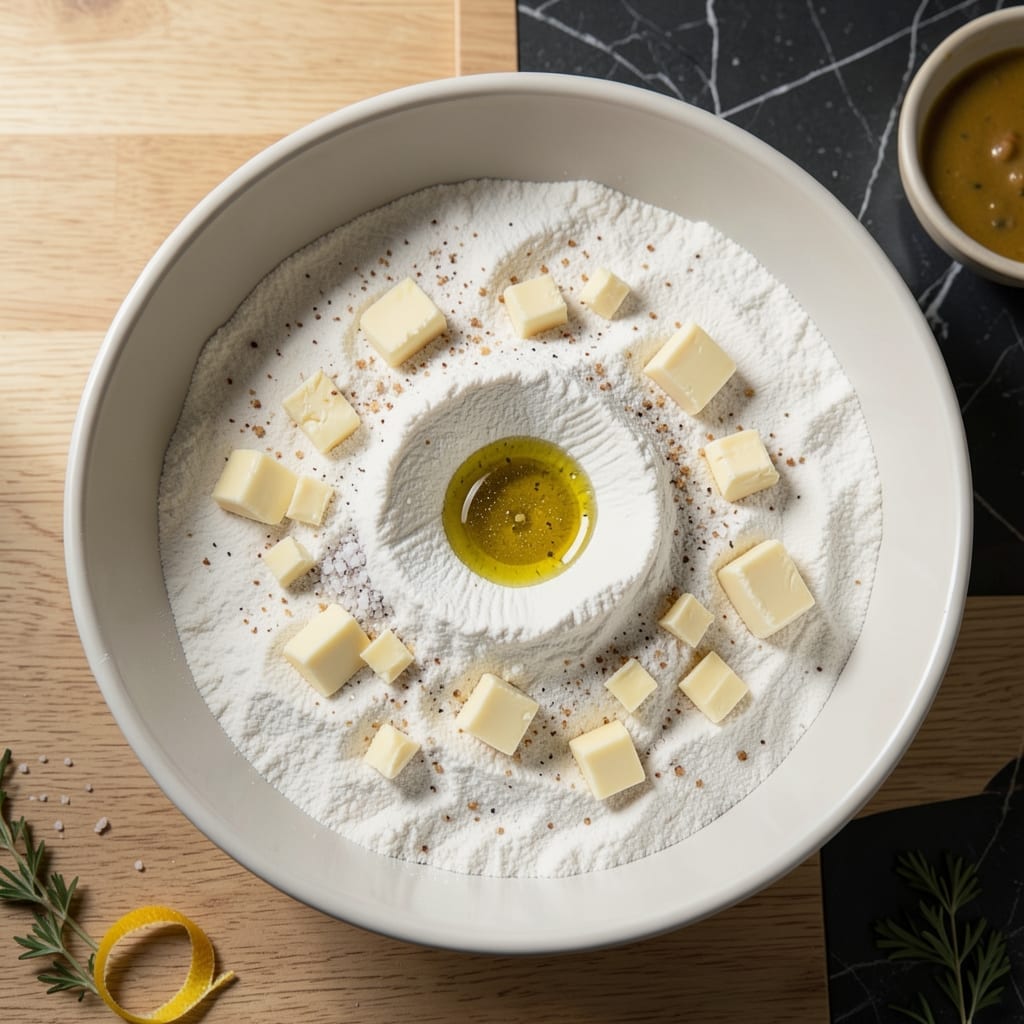
I learned a fundamental truth in my grandmother’s Sicilian kitchen: the best pie dough doesn’t need shortening to achieve flaky layers. This oil-based method proves it with perfect results every time.
The secret lies in using cold oil and a precise mixing technique that creates distinct layers without solid fat. I’ve refined this approach over years of professional baking to ensure consistent texture and flavor.
What emerges is a tender, flaky crust that holds its shape beautifully, whether for sweet fruit pies or savory quiches. The oil creates a texture that’s both crisp and delicate, with none of the greasiness associated with traditional methods.
This dough requires minimal effort and delivers professional-quality results. The resting period is crucial for developing the perfect structure before rolling and baking.
Ingredients for Pie Dough Recipe No Shortening
Just seven ingredients. Oil does the magic here for perfect flaky layers.
| Ingredient | Amount | Notes |
|---|---|---|
| All-Purpose Flour 🌾 | 2 ½ cups | Sifted for even texture |
| Extra-Virgin Olive Oil 🫒 | ½ cup | Cold, for flaky layers |
| Ice Water 💧 | ½ cup | Plus 1 tbsp as needed |
| Granulated Sugar 🍚 | 1 tbsp | For subtle sweetness |
| Fine Sea Salt 🧂 | ½ tsp | Diamond Crystal preferred |
| Baking Powder 🥄 | ½ tsp | For slight lift |
| White Vinegar 🧪 | 1 tbsp | Helps tenderize gluten |
| Unsalted Butter 🧈 | 2 tbsp | Chilled, cubed (optional for richness) |
The oil is everything here—extra-virgin olive oil gives the best flavor and texture, but any neutral oil (like avocado or vegetable) works in a pinch. Cold is critical—if it’s not chilled, your layers won’t form properly. I always keep mine in the fridge for this exact reason. The flour? All-purpose is ideal, but bread flour adds a bit more chew if that’s your thing.
No olive oil on hand? Melted coconut oil (cooled) works, but it’ll add a slight coconut flavor. Swap the vinegar for lemon juice if that’s what you’ve got. For a sweeter crust, bump the sugar to 2 tbsp—great for fruit pies. The baking powder can be omitted for a denser crust, but I love the lift it gives. And yes, you can skip the butter entirely—this dough shines without it.
This dough keeps 3 days wrapped tightly in the fridge, or freeze for 1 month (thaw overnight before rolling). Resting is non-negotiable—30 minutes minimum at room temp or 1 hour chilled. Trust me, the wait makes all the difference.
Why You’ll Love This Recipe
- No Shortening Needed: I love that this uses olive oil instead of shortening—no special trips to the store, just pantry staples.
- Rich Olive Oil Flavor: The extra-virgin olive oil gives it a subtle fruity depth that shortening can’t touch.
- Endless Possibilities: I’ve used this dough for sweet tarts, savory galettes, even hand pies. Honestly, it does it all.
- Budget-Friendly Batch: All-purpose flour and olive oil keep the cost low, and it makes enough for two pies.
Step-by-Step Instructions for Pie Dough No Shortening
This oil-based method delivers incredible flakiness without a single speck of shortening.
Step 1: Combine Dry Ingredients for the Perfect Base
In a large mixing bowl, whisk together the 2.5 cups All-Purpose Flour, 1 tbsp Granulated Sugar, 0.5 tsp Fine Sea Salt, and 0.5 tsp Baking Powder. I sift my flour first for that ultra-fine texture that creates delicate layers.
This dry mix forms the foundation of your dough. The sugar adds subtle sweetness while the baking powder gives just enough lift to prevent a dense crust. Make sure all ingredients are evenly distributed—no clumps of baking powder.
Step 2: Cut in Cold Fats for Maximum Flakiness
Add the 0.5 cup Extra-Virgin Olive Oil and 2 tbsp Unsalted Butter (chilled and cubed) to the flour mixture. Using a pastry cutter or two forks, work the fats into the flour until the mixture resembles coarse crumbs with pea-sized pieces of butter remaining visible.
Here’s the thing—the cold butter creates steam pockets during baking, which is what gives you those beautiful flaky layers. The olive oil provides richness and helps create a tender crust. Don’t overmix; you want those visible fat pieces for the best texture.
Step 3: Bind with Vinegar-Enhanced Liquid
In a small bowl, combine the 0.5 cup Ice Water with 1 tbsp White Vinegar. The vinegar tenderizes the gluten, which is especially important in an oil-based dough. Create a well in the center of your flour mixture and pour in the liquid all at once.
Using a silicone spatula, gently fold the mixture together until it just starts to come together. You’ll see the dough beginning to form but still look shaggy—that’s perfect. If it seems too dry, add the extra 1 tbsp of ice water, but err on the side of less rather than more.
Step 4: Chill and Rest for Optimal Texture
Turn the dough out onto a lightly floured surface and gently shape it into a smooth ball. Divide it in half and flatten each portion into a disc about 1-inch thick. Wrap each disc tightly in plastic wrap.
Refrigerate for at least 1 hour (or up to 2 days). This resting period allows the gluten to relax and the fats to re-chill, which prevents shrinking during rolling and baking. You’ll know it’s properly chilled when the dough feels firm to the touch.
Pro Tips For Making Pie Dough Recipe No Shortening
- Chill the Dough: After mixing, refrigerate the dough for at least 30 minutes—I learned this the hard way when my first few pies shrank in the pan. The olive oil needs time to firm up.
- Use Ice-Cold Water: Don’t just use cold water; make sure it’s ice-cold. Sounds weird, but it works: the colder the water, the flakier your crust will be.
- Don’t Overwork It: Mix just until the dough comes together. I was skeptical until I tried it, but overmixing makes the crust tough, not tender.
- Pre-Freeze the Flour: Pop your measured flour in the freezer for 10 minutes before mixing. My grandmother swore by this, and she was right: it keeps the olive oil from melting too soon.
Common Mistakes When Making Perfect Results
Overworking the Dough
The biggest mistake I see is overmixing after adding the liquid. Your dough should look shaggy, not smooth. Fold just until it comes together—usually 10-12 strokes. Overworking develops gluten, making your crust tough instead of tender. 💪
Skipping the Rest
Never skip the 1-hour chill. The oil needs to re-solidify and the gluten needs to relax. I learned this the hard way when my first attempt shrunk dramatically. Even 30 minutes makes a difference, but don’t rush it.
Warm Ingredients
Your 0.5 cup olive oil and ice water must stay cold. If they warm up, the fat won’t create proper layers. I keep everything in the fridge until the last moment. Cold ingredients are non-negotiable for flakiness.
Too Much Flour
When rolling, use flour sparingly. Excess flour makes the dough dry and tough. Dust your surface lightly, brush off any extra, and only re-flour if sticking occurs. The 2.5 cups in the dough is plenty.
Incorrect Rolling
Roll from the center outward in all directions, turning the dough ¼ turn between rolls. This prevents uneven thickness. Don’t press down—use gentle, even pressure. Aim for ⅛-inch thickness for most pies.
Improper Baking Temp
Preheat your oven to 375°F and use the middle rack. Too hot causes uneven browning; too cool prevents proper flakiness. I always use a pizza stone for even heat distribution. 🔥
Nutrition Facts
Frequently Asked Questions
Can I use any oil for this dough?
Extra-virgin olive oil gives best flavor, but any neutral oil works. Avoid strong-tasting oils like sesame. Keep it cold for best layers.
Why add vinegar to pie dough?
The 1 tbsp vinegar tenderizes gluten, preventing toughness. It doesn’t affect taste but makes the crust more delicate.
How long can I store this dough?
Wrapped tightly, it keeps 3 days refrigerated or 1 month frozen. Thaw overnight before using.
What if my dough is too sticky?
Add flour 1 tbsp at a time until manageable. Don’t overdo it—too much makes crust dry.

- Pina Colada Dip Recipe Red Lobster: Tropical Creaminess With Toasted Coconut - October 12, 2026
- Pickled Sweet Cherry Peppers Recipe Canning: Tangy Heat for Pantry Staples - October 12, 2026
- Peppercorn Sauce Recipe Vegan: Rich Umami Depth Without Cream - October 12, 2026