
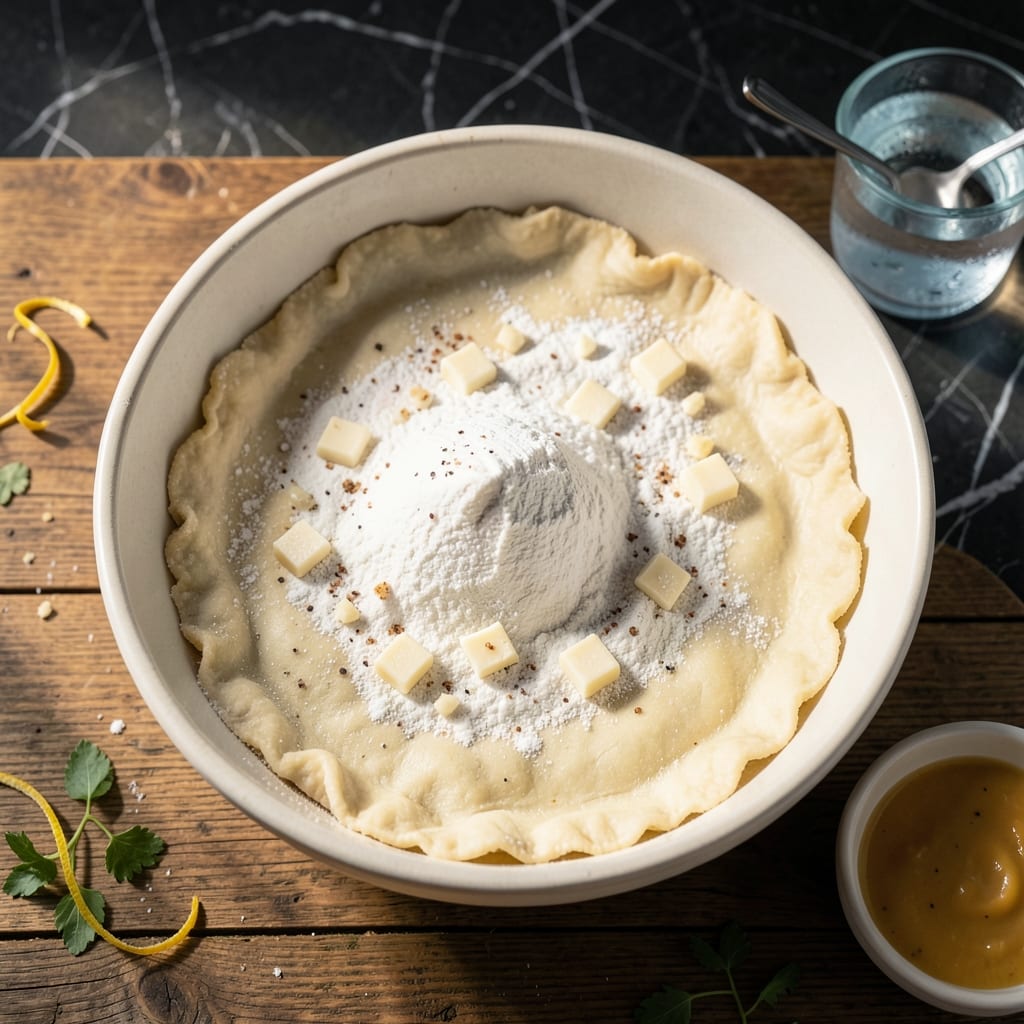
Creating a flawless pie crust with shortening delivers results that rival traditional butter versions. This method produces a crisp, golden crust with a tender flake that holds its shape beautifully.
The technique is straightforward yet precise. Shortening creates pockets that yield that coveted flaky texture, while maintaining structure better than butter for intricate designs. The dough comes together quickly with minimal handling.
After chilling, the pastry rolls out smoothly and bakes to a perfect golden finish. It works equally well for sweet fruit pies or savory pot pies, offering consistent results every time.
This reliable method ensures your pies look as impressive as they taste, with a texture that professional bakers strive for.
Ingredients for Pie Pastry Recipe Shortening
Seven essentials for a flawless golden crust with tender flake every time.
| Ingredient | Amount | Notes |
|---|---|---|
| All-Purpose Flour 🌾 | 2 ½ cups | Sifted for even texture |
| Vegetable Shortening 🧈 | ¾ cup | Chilled, cut into cubes |
| Ice Water 💧 | ½ cup | Plus 1 tbsp as needed |
| Granulated Sugar 🍚 | 1 tsp | Optional, for sweet pies |
| Salt 🧂 | 1 tsp | Fine grain, kosher preferred |
| White Vinegar 🍶 | 1 tbsp | Or apple cider vinegar |
| Unsalted Butter 🧈 | ¼ cup | Chilled, optional for flavor |
The shortening is non-negotiable for structure—Crisco All-Vegetable Shortening is the gold standard for this method. All-purpose flour with a moderate protein content (around 10-12%) yields the ideal tenderness. King Arthur Flour is a reliable choice. Chill your ingredients thoroughly before beginning; the dough’s temperature directly impacts flakiness. For sweet applications, a touch of sugar enhances browning without compromising texture.
No shortening? Lard works as a direct substitute (though not vegetarian) or use chilled coconut oil for a dairy-free option. For a richer flavor, replace up to half the shortening with unsalted butter, but expect slightly less stability for intricate designs. Vinegar tenderizes the gluten—apple cider vinegar adds a subtle depth. Skip the sugar for savory pot pies; it’s purely for color and taste in fruit fillings.
The dough keeps 2-3 days refrigerated or 3 months frozen. Wrap tightly in plastic to prevent drying. For best results, rest the dough 30 minutes before rolling. This allows the gluten to relax, ensuring smooth handling and even baking. Always work on a lightly floured surface to prevent sticking.
Why You’ll Love This Recipe
- 5-Minute Mix: I just dump flour, shortening, and ice water in a bowl—no fancy tools, no waiting for butter to soften.
- Buttery Crisp: Honestly, the shortening makes the flakiest layers I’ve ever gotten, with just a hint of sweetness from the sugar.
- Freezer Hero: I roll out a double batch, bake one pie now, and freeze the rest for last-minute desserts.
Step-by-Step Instructions for Pie Pastry With Shortening
Master the art of flaky pastry with this precise method for consistent, professional results.
Step 1: Combine Dry Ingredients for Foundation
In a large mixing bowl, whisk together the 2.5 cups All-Purpose Flour, 1 tsp Granulated Sugar, and 1 tsp Salt until evenly distributed. This sifting step is crucial for eliminating lumps and ensuring uniform texture throughout your crust.
The sugar adds subtle sweetness that complements both fruit and savory fillings, while the salt enhances overall flavor. I always use fine-grain salt to ensure it dissolves completely into the dough. This dry mixture creates the structural base for your pastry.
Step 2: Cut in the Chilled Shortening
Add the 0.75 cup Vegetable Shortening (chilled and cut into cubes) to the flour mixture. Using a pastry cutter or two forks, work the shortening into the flour until the mixture resembles coarse crumbs with some pea-sized pieces remaining visible.
These visible fat pieces are essential—they create the flaky layers as they melt during baking. The shortening should remain cold throughout this process to prevent it from melting prematurely. If your kitchen is warm, work quickly and consider chilling the bowl briefly between steps.
Step 3: Incorporate Vinegar and Ice Water
Create a well in the center of your flour-shortening mixture. Add the 1 tbsp White Vinegar and 0.5 cup Ice Water all at once. Using a fork, gently stir the liquid into the dry ingredients until the dough just begins to come together.
The vinegar tenderizes the gluten, resulting in a more delicate crust, while the ice water prevents the shortening from melting. Stop mixing as soon as the dough starts to form—overworking will develop gluten and make your crust tough rather than tender.
Step 4: Add Optional Unsalted Butter for Flavor
If using, cut the 0.25 cup Unsalted Butter (chilled) into small cubes and gently fold into the dough with your hands or a bench scraper. This addition enhances the flavor profile while maintaining the flakiness provided by the shortening.
The butter should remain in distinct pieces, similar to the shortening. Distribute it evenly throughout the dough without overmixing. This combination gives you the best of both worlds: the flakiness of shortening with the rich flavor of butter.
Step 5: Chill and Rest the Dough
Divide the dough into two equal portions and shape each into a disk about 1 inch thick. Wrap tightly in plastic wrap and refrigerate for at least 1 hour or up to 2 days. This resting period allows the gluten to relax and the fat to rechill.
When ready to use, let the dough sit at room temperature for 10-15 minutes to soften slightly before rolling. The dough should be cold but pliable. If it cracks during rolling, let it warm slightly and patch any tears with your fingers.
Pro Tips For Making Pie Pastry Recipe Shortening
- Chill the Shortening: Cut the vegetable shortening into small cubes and refrigerate for 15 minutes before mixing—keeps it firm so it doesn’t melt into the flour, which is what creates those flaky layers.
- Use Ice-Cold Water: Measure your water, then add ice cubes to it for 2 minutes before using; the colder the water, the less it develops gluten in the flour, and your crust stays tender.
- Don’t Overwork It: Mix just until the dough comes together, even if it looks a little shaggy; overworking warms the shortening and makes the crust tough instead of light.
- Rest Before Rolling: Wrap the dough and let it rest in the fridge for at least 30 minutes—this relaxes the gluten and makes rolling out smooth and easy, without springing back.
Flavor Customization for pie pastry recipe shortening
Citrus Zest Brightness
Add 1 tbsp lemon or orange zest to your dry ingredients for a bright, citrusy note that cuts through rich fillings. This works beautifully with apple or berry pies. I learned this trick from my grandmother in Sicily—she always added zest to her fruit tarts. 🌟
Spiced Warmth
Mix in ½ tsp cinnamon or ¼ tsp nutmeg with the flour for warm, cozy depth. These spices pair especially well with pumpkin, sweet potato, or pecan fillings. Use Penzeys spices for the freshest flavor.
Herb-Infused Savory
For pot pies or quiches, incorporate 1 tsp dried thyme or rosemary into the dough. Fresh herbs work too—just use 1 tbsp finely chopped. I love how this elevates a simple chicken pot pie.
Cheese Lovers’ Crust
Fold in ½ cup finely grated Parmesan or sharp cheddar for a savory twist. This creates a delicious, crispy edge that’s perfect for savory pies. Use Parmigiano-Reggiano from your local Italian deli for authentic flavor.
Sweet Vanilla Touch
Add 1 tsp vanilla extract with the ice water for a subtle sweetness that enhances fruit fillings. This pairs especially well with peach or cherry pies. I always use Madagascar bourbon vanilla for the best results.
Chocolate-Dipped Edge
Brush the rolled-out crust with 1 beaten egg white, then sprinkle with 1 tbsp granulated sugar and 1 tsp cocoa powder before baking. This creates a beautiful, slightly sweet crust with a hint of chocolate. 💫
Nutrition Facts
Frequently Asked Questions
Why use shortening instead of butter?
Shortening has a higher melting point than butter, creating more distinct flaky layers. It also produces a more stable crust that holds its shape better, especially for decorative edges. The texture is consistently crisp and tender every time.
Can I substitute lard for shortening?
Yes, lard works beautifully as a 1-to-1 substitute. It creates an even flakier texture with a rich, slightly savory note. Just ensure it’s fresh and odor-free for best results.
How do I fix a tough crust?
Overworked dough is the usual culprit. Next time, mix just until combined and avoid excessive handling. Chilling the dough for 1 hour before rolling also helps relax the gluten for a more tender result.
What’s the best way to blind bake?
Prick the chilled crust all over with a fork, line with parchment, and fill with pie weights or dried beans. Bake at 375°F for 15 minutes, then remove weights and bake 5-10 minutes more until golden.

- Pina Colada Dip Recipe Red Lobster: Tropical Creaminess With Toasted Coconut - October 12, 2026
- Pickled Sweet Cherry Peppers Recipe Canning: Tangy Heat for Pantry Staples - October 12, 2026
- Peppercorn Sauce Recipe Vegan: Rich Umami Depth Without Cream - October 12, 2026