
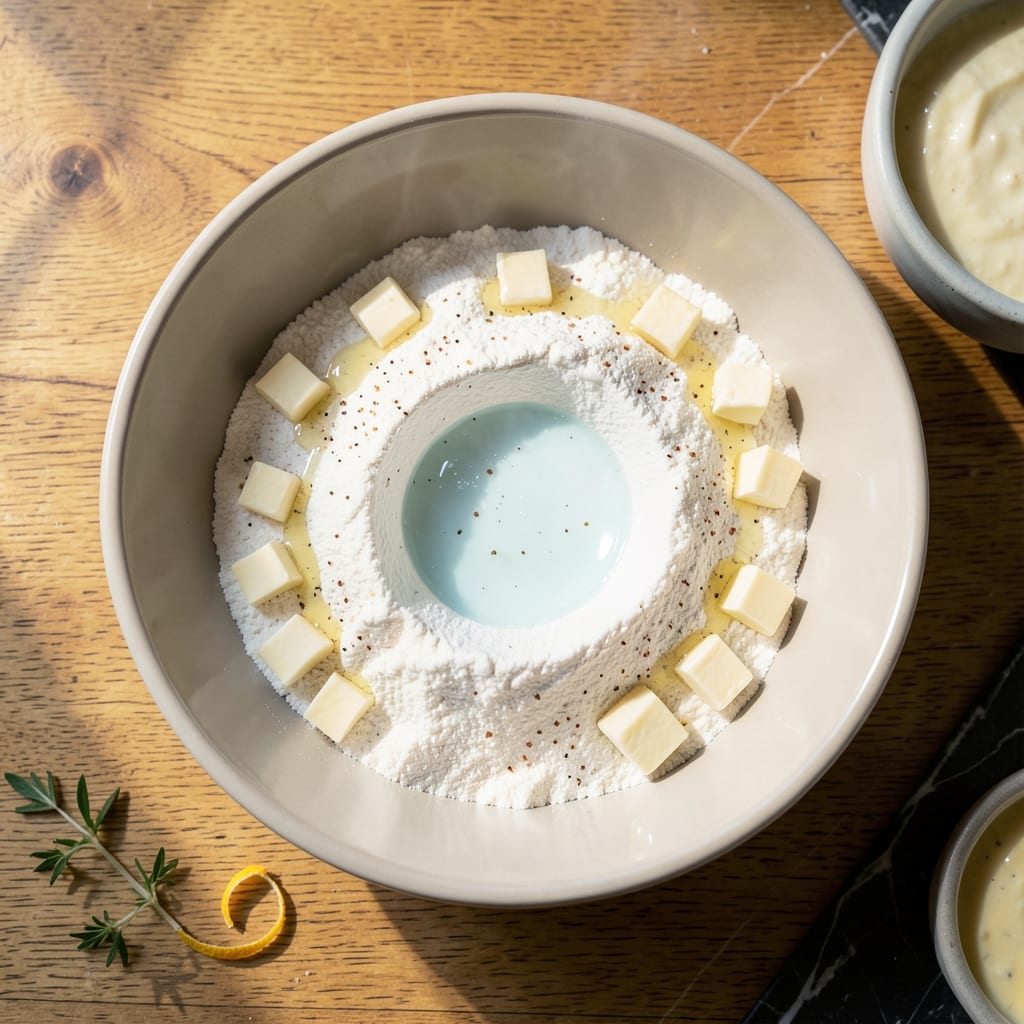
There’s an art to creating flaky pastry that shatters with every bite, and butter is the unsung hero. This recipe relies on cold butter and precise technique to build those coveted layers that separate beautifully in the oven.
By cutting butter into the flour until pea-sized, you create pockets that expand during baking, forming delicate layers. A rest in the fridge ensures the dough stays workable and prevents tough results.
What emerges is a golden crust so tender and flaky it melts on the tongue. The butter adds richness while maintaining structure, making it perfect for sweet or savory pies.
Master this foundation, and every pie becomes a showstopper. Here’s how to achieve it.
Ingredients for Pie Pastry Recipe with Butter
Cold butter, flour, and a little patience create this golden, flaky foundation for any pie.
| Ingredient | Amount | Notes |
|---|---|---|
| All-Purpose Flour 🌾 | 2 ½ cups | Sifted for best texture |
| Unsalted Butter 🧈 | 1 cup | Cold, cut into small cubes |
| Ice Water 💧 | ½ cup | Plus 1 tbsp as needed |
| Salt 🧂 | 1 tsp | Fine sea salt preferred |
| Granulated Sugar 🍚 | 1 tbsp | Optional for sweet pies |
| White Vinegar 💧 | 1 tsp | Helps tenderize gluten |
| Large Egg Yolk 🥚 | 1 whole | Optional for richer dough |
The butter is non-negotiable here. Use high-fat European-style for extra flakiness, or standard unsalted if that’s what you have. Plugrá or Kerrygold are excellent choices available at most supermarkets. Keep it ice-cold—warm butter means flat, tough crust. The flour should be all-purpose; avoid bread flour (too much protein) or cake flour (not enough structure).
No unsalted butter? Rinse salted butter under cold water to remove excess salt, then pat dry. Short on all-purpose flour? Pastry flour at a 1:1 ratio works well. The vinegar can be swapped for lemon juice in a pinch. For a richer crust, add the egg yolk—it adds tenderness and color without changing the texture significantly.
This dough can be made 2 days ahead and refrigerated, or frozen for 3 months. Wrap tightly in plastic to prevent drying. Let it rest in the fridge for at least 1 hour before rolling for best results—this relaxes the gluten and keeps the layers distinct.
Why You’ll Love This Recipe
- I’ll be real: I always double the batch. It freezes beautifully, so I can pull out a ready-to-roll crust anytime.
- 5-Ingredient Magic: Honestly, flour, butter, water, salt, sugar—that’s it. No fancy ingredients, just pantry staples.
- Buttery Perfection: That rich, flaky crunch from cold butter layered in the dough? It’s the reason I make pie crust from scratch.
- Endless Possibilities: Sweet fruit pies, savory quiches—this pastry works for both. I’ve even used it for hand pies on busy weeknights.
Step-by-Step Instructions for Pie Pastry With Butter
Master these steps and you’ll achieve that coveted flaky texture that makes pie crust legendary.
Step 1: Combine Dry Ingredients and Cut in Butter
In a large bowl, whisk together the 2.5 cups All-Purpose Flour, 1 tsp Salt, and 1 tbsp Granulated Sugar until evenly distributed. This ensures the salt and sugar disperse properly throughout the dough.
Add the 1 cup Unsalted Butter, cut into small cubes directly from the refrigerator. Using a pastry cutter or your fingers, work the butter into the flour mixture until the largest pieces are no bigger than peas. You should see visible butter chunks—this creates the flaky layers. The mixture should resemble coarse crumbs with pea-sized butter pieces throughout.
Step 2: Add Liquid Ingredients Gradually
Create a well in the center of the flour-butter mixture. Add the 1 tsp White Vinegar and 1 whole Large Egg Yolk (if using) to the well. The vinegar tenderizes the gluten, while the yolk adds richness to the dough.
Pour in 0.5 cup Ice Water gradually, 1 tablespoon at a time, mixing gently with a fork until the dough just begins to come together. You may not need all the water—stop when the dough holds together when pressed but isn’t sticky. If it’s still crumbly, add the reserved 1 tbsp Ice Water as needed. Handle the dough as little as possible to maintain those flaky layers.
Step 3: Form and Chill the Dough
Turn the dough out onto a lightly floured surface and gently press it into a cohesive ball. The dough should hold together but still have visible butter streaks—this is the secret to flakiness. Divide the dough in half if making a double-crust pie, or leave whole for a single crust.
Shape each portion into a 1-inch thick disc, wrap tightly in plastic wrap, and refrigerate for at least 1 hour (or up to 2 days). Chilling relaxes the gluten and firms up the butter, preventing the dough from shrinking during baking and ensuring distinct layers. This step is non-negotiable for perfect results.
Step 4: Roll and Shape the Crust
On a lightly floured surface, roll out one disc of dough to a 12-inch circle, about ⅛-inch thick. Start from the center and roll outward, turning the dough occasionally to prevent sticking. If the dough cracks, press it back together—don’t overwork it.
Transfer the rolled dough to a pie dish, pressing it gently into the bottom and sides. Trim the edges, leaving a slight overhang for crimping later. For a pre-baked crust, prick the bottom all over with a fork to prevent air bubbles, then chill for another 30 minutes before baking at 375°F for 15-20 minutes until lightly golden.
Pro Tips For Making Pie Pastry Recipe With Butter
- Chill the Butter: Cut your unsalted butter into small cubes and refrigerate for 10 minutes before mixing—I learned this the hard way after my first three pies turned out tough from melted butter.
- Use Ice Water: Measure your water then add ice cubes to it for 2-3 minutes before using. Sounds weird, but it works: the colder the water, the flakier the crust.
- Don’t Overwork: Mix just until the dough comes together, even if it looks shaggy. After burning three batches, I finally figured out that overmixing develops gluten, making the crust chewy instead of tender.
- Rest the Dough: Give it a solid 30 minutes in the fridge before rolling—my grandmother swore by this, and she was right: it relaxes the gluten and makes rolling easier.
Pro Cooking Tips for Great pie pastry recipe with butter
Butter Temperature Control
Keep your butter ice-cold throughout the process—I even freeze my butter cubes for 10 minutes before starting. Warm butter melts into the flour, creating a dense crust instead of flaky layers. Use a pastry cutter or pulse in a food processor for 5-6 one-second pulses to maintain cold temperatures. 🌡️
Minimal Handling
Overworking the dough develops gluten, which makes your crust tough. Once the water is added, handle just until it comes together. I use a fork to mix initially, then my hands only to press the dough into a ball. Visible butter streaks are good—they create those beautiful layers.
Chilling is Key
Don’t skip the 1-hour chill—this is when the magic happens. The butter re-firms and the gluten relaxes. For extra insurance against shrinking, I chill my dough discs between two plates to keep them perfectly flat. This prevents the edges from drying out in the fridge.
Rolling Technique
Roll from the center outward, not back and forth. Turn the dough 45 degrees after each roll to maintain an even circle. If it sticks, add a light dusting of flour, but brush off the excess. I aim for ⅛-inch thickness—use rulers on your counter as a guide.
Blind Baking
For pre-baked crusts, dock the bottom thoroughly with a fork, then line with parchment and fill with pie weights or dried beans. Bake at 375°F for 15 minutes, then remove weights and bake 5-10 minutes more until golden. This prevents soggy bottoms. 🔥
Repairing Cracks
If your dough tears while rolling, don’t panic. Press the edges together gently—no need to re-roll. For stubborn cracks, use a bit of cold water on your fingers to “glue” the pieces. The butter will still create flaky layers even with minor repairs.
Nutrition Facts
Frequently Asked Questions
Why is cold butter important?
Cold butter creates flaky layers by melting slowly during baking. If warm, it blends into the flour, resulting in a dense texture instead of the desired shatter. Always keep it ice-cold until ready to use.
Can I use salted butter?
Yes, but reduce added salt in the recipe. Rinse salted butter under cold water to remove excess salt, then pat dry before using. This maintains balance in flavor.
How thin should I roll the dough?
Aim for ⅛-inch thickness for even baking. Use rulers as a guide and roll from the center outward, turning the dough 45 degrees after each roll.
Can I freeze the dough for later?
Wrap tightly in plastic and freeze for up to 3 months. Thaw overnight in the fridge before rolling for best results.

- Potato Candy Recipe 1933: Vintage Peanut Butter Roll Delight - October 30, 2026
- Potato Chip Cookie Recipe With Pecans: Buttery Crunch Meets Nutty Richness - October 30, 2026
- Potato Patty Recipe No Egg: Crispy Edges Without the Binder - October 30, 2026