
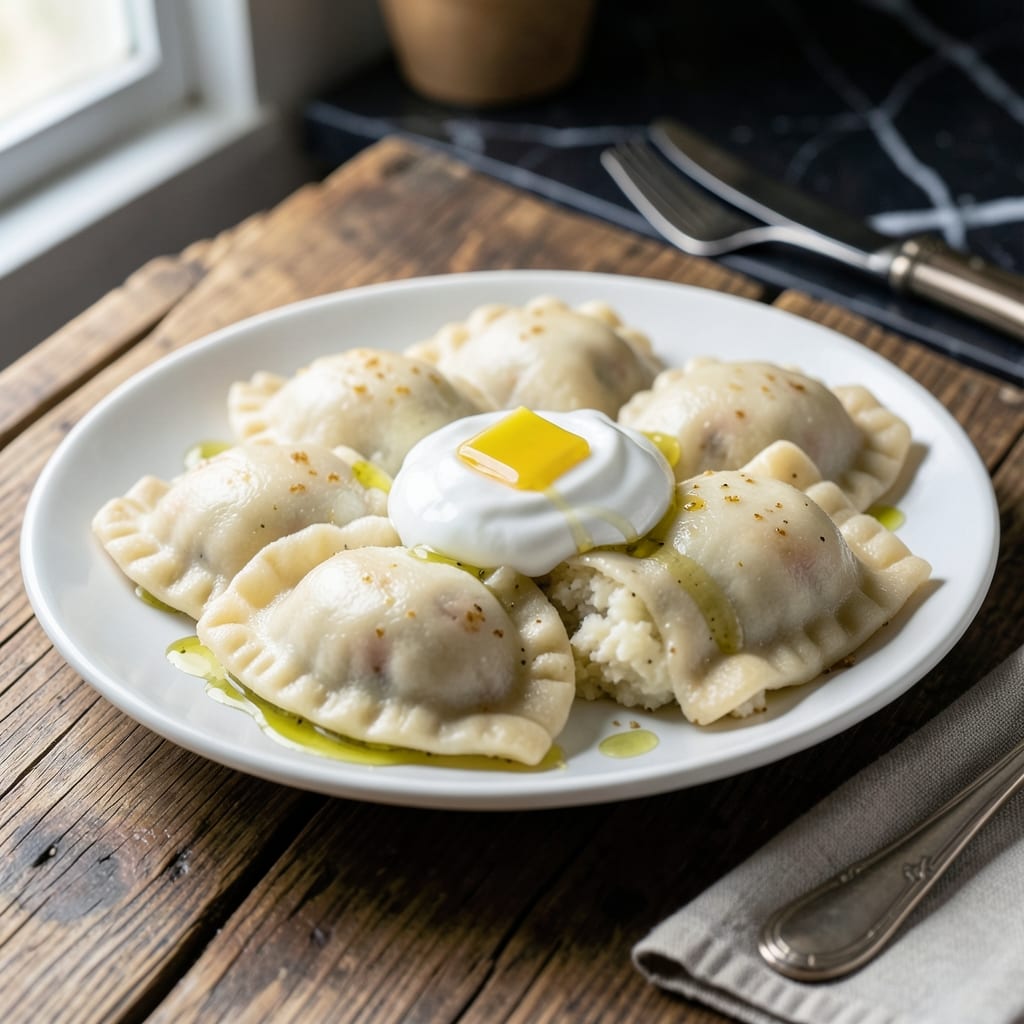
This mashed potato pierogi dough delivers the perfect balance of tenderness and elasticity that makes all the difference in your finished pockets. The potatoes create a lighter texture while keeping the dough sturdy enough to hold any filling.
I developed this ratio after testing countless variations to achieve dough that rolls out smoothly and seals tightly without cracking. The key is using cooled mashed potatoes and working the dough just until it comes together—overmixing makes it tough.
You’ll create a canvas for traditional fillings like cheese and potato, sauerkraut and mushroom, or sweet fruit compotes. The dough holds up beautifully to both boiling and pan-frying, giving you options for texture.
Let the dough rest before shaping to relax the gluten. This ensures your pierogi stay soft and pillowy, never chewy.
Ingredients for Pierogi Dough Recipe with Mashed Potatoes
Simple ingredients, but the cooled mashed potatoes make this dough uniquely tender and sturdy.
| Ingredient | Amount | Notes |
|---|---|---|
| Russet Potatoes 🥔 | 2 whole | Peeled, boiled, mashed, and cooled |
| All-Purpose Flour 🌾 | 3 cups | Plus extra for dusting |
| Unsalted Butter 🧈 | 4 tbsp | Melted and cooled |
| Sour Cream 🥛 | ½ cup | Full-fat for best texture |
| Large Egg 🥚 | 1 whole | Room temperature |
| Salt 🧂 | 1 tsp | Fine sea salt preferred |
| Water 💧 | ¼ cup | As needed for consistency |
| Neutral Oil 🫒 | 1 tbsp | For greasing bowl |
The potatoes are everything here. Use Russet—their high starch content gives that perfect, pillowy texture. Boil them whole (skin on for less water absorption), then rice or mash them while hot so they cool smoothly. I grab mine from the bulk bin at Whole Foods, but any grocery store will do. Let them cool completely before mixing—hot potatoes make gummy dough.
No sour cream? Plain Greek yogurt works at a one-to-one ratio. Want it dairy-free? Vegan yogurt or mashed avocado can substitute, but the texture changes slightly. The flour amount is flexible—start with 3 cups and add more if the dough sticks. King Arthur all-purpose is my go-to for consistency. Skip the egg for a vegan version, but add a splash more water.
The dough rests for 30 minutes at room temp (or overnight in the fridge). Wrap it tightly in plastic—it dries out fast. Cooked pierogi freeze beautifully for 3 months (boil from frozen, no thawing needed). Uncooked dough? Shape, freeze on a tray, then bag for up to 2 months.
Why You’ll Love This Recipe
- One Bowl Wonder: I mix the mashed russets, flour, and egg right in the same pot I boiled them in—no extra dishes, no fuss.
- Buttery Richness: The sour cream and butter make the dough so tender it practically melts, with that perfect slight tang.
- Freezer Friendly: I double the batch, freeze half, and pull out a dozen whenever I need a quick meal. Honestly, it’s my lazy-day lifesaver.
- Pocket Change Dinner: Russets and basic pantry staples keep this cheap, but it tastes like a restaurant splurge. Between us, my kids think it’s fancy.
Step-by-Step Instructions for Pierogi Dough With Mashed Potatoes
This method guarantees a smooth, elastic dough that rolls out beautifully for perfect pockets.
Step 1: Prepare the Mashed Potato Base
Start by ensuring the 2 whole Russet Potatoes are peeled, boiled until fork-tender, and mashed completely smooth while still warm. I press them through a ricer for the silkiest texture—lumps will create uneven dough. Let the mashed potatoes cool to room temperature; hot potatoes would melt the 4 tbsp Unsalted Butter when combined.
Once cooled, mix in the melted and cooled 4 tbsp Unsalted Butter and the 0.5 cup Sour Cream until fully incorporated. The mixture should look like very thick mashed potatoes. This fat-enriched base is what gives the dough its signature tenderness and subtle tang.
Step 2: Incorporate the Dry and Wet Ingredients
In a large mixing bowl, whisk together the 3 cups All-Purpose Flour and 1 tsp Salt. Make a well in the center and add the 1 whole Large Egg and the mashed potato mixture. Begin mixing with a wooden spoon until a shaggy dough forms—it will look rough at this stage, and that’s normal.
If the dough seems dry or cracks when pressed, add the 0.25 cup Water gradually, 1 tablespoon at a time, until the dough comes together but isn’t sticky. You may not need all the water; the potatoes’ moisture content varies. The dough should feel soft and slightly tacky but not cling to your fingers.
Step 3: Knead to Develop the Gluten
Turn the dough out onto a lightly floured surface. Dust your hands with flour and knead gently for 8-10 minutes. Unlike bread dough, pierogi dough should be handled lightly—overworking it makes the dumplings tough. Press the dough with the heel of your hand, fold it over, and turn it a quarter turn between each knead.
You’ll know it’s ready when the surface is smooth and the dough springs back slowly when pressed with a finger. If it sticks, resist the urge to add too much flour; just dust the surface sparingly. The dough should remain soft and pliable.
Step 4: Rest the Dough for Optimal Texture
Shape the dough into a ball, place it in a clean bowl, and drizzle with the 1 tbsp Neutral Oil. Turn the dough to coat it lightly—this prevents a skin from forming as it rests. Cover the bowl with a clean kitchen towel or plastic wrap.
Let the dough rest at room temperature for 30 minutes. This relaxation period allows the gluten to unwind, making the dough much easier to roll out thinly without snapping back. After resting, the dough should feel even smoother and more elastic.
Pro Tips For Making Pierogi Dough Recipe With Mashed Potatoes
- Cool the Potatoes: I learned this the hard way—mashing hot russets makes the dough gummy. Spread them on a tray for 10 minutes to release excess moisture before mixing.
- Use Room-Temp Ingredients: Cold butter or eggs will seize the dough. Pull them out 30 minutes ahead, especially the sour cream—it blends smoother when not fridge-cold.
- Skip Overworking: Knead just until the dough comes together, about 2-3 minutes. Any longer and the pierogi turn tough, not tender.
- Add Flour Gradually: Start with 1 cup less than the recipe calls for, then add more as needed. Too much flour upfront makes the dough dry and cracked when rolling.
Pro Cooking Tips for This Dish
Temperature Control
Always use cooled mashed potatoes—hot ones melt the butter and create a gummy texture. I spread my mashed potatoes on a baking sheet to cool quickly. Room temperature is ideal for mixing.
Flour Flexibility
Start with 3 cups flour but keep extra nearby. The potatoes’ moisture varies, so add flour 1 tbsp at a time if the dough sticks. King Arthur all-purpose gives me the most consistent results. 💡
Kneading Technique
Work the dough just until smooth—8-10 minutes max. Over-kneading develops too much gluten, making pierogi tough. Press, fold, turn: that’s the rhythm.
Resting Matters
Never skip the 30-minute rest. Cover the bowl tightly—I use plastic wrap pressed directly on the dough. This prevents drying and lets the gluten relax for easy rolling.
Rolling Tips
Dust your surface lightly but keep the dough soft. Roll to ⅛-inch thickness for perfect pockets. If it resists, let it rest 5 more minutes. My French rolling pin gives even pressure.
Sealing Success
Use a 3-inch cutter for uniform pierogi. Press edges firmly with your thumb, then crimp with a fork. A dab of water helps seal stubborn edges. 🔥
Nutrition Facts
Frequently Asked Questions
Can I use instant mashed potatoes?
No, instant potatoes lack the starch and moisture needed. Fresh Russet potatoes boiled and mashed work best for texture.
Why does my dough crack when rolling?
It likely needs more rest or moisture. Let it rest 30 minutes covered, or add 1 tbsp water at a time until smooth.
How thin should I roll the dough?
Aim for ⅛-inch thickness. Too thin tears; too thick makes dense pierogi. Use a rolling pin for even results.
Can I make this dough ahead?
Yes! Wrap tightly and refrigerate up to 2 days or freeze for 2 months. Thaw overnight before using.

- Potato Candy Recipe 1933: Vintage Peanut Butter Roll Delight - October 30, 2026
- Potato Chip Cookie Recipe With Pecans: Buttery Crunch Meets Nutty Richness - October 30, 2026
- Potato Patty Recipe No Egg: Crispy Edges Without the Binder - October 30, 2026