
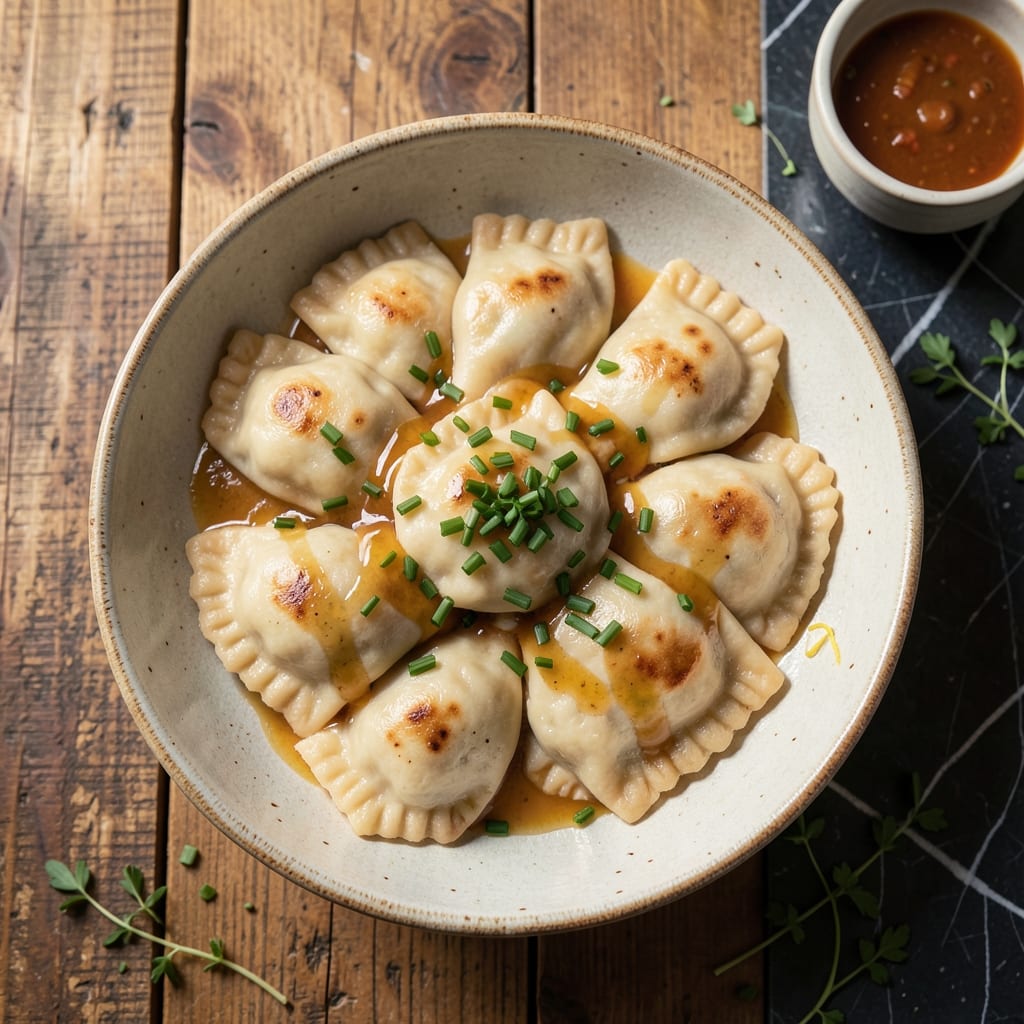
This egg-free pierogi dough delivers the same tender, traditional texture you expect from Polish dumplings. The secret lies in a simple combination of flour, water, and a touch of oil to create a pliable dough that holds its shape beautifully.
What makes this version special is its versatility. Whether you prefer classic potato and cheese or vegan fillings like mushrooms and sauerkraut, this traditional dough accommodates them all without compromising authenticity.
The cooking process is straightforward: boil until they float, then pan-fry for a crispy finish if desired. The result is vegan-friendly dumplings with that signature soft bite and satisfying chew.
Perfect for family gatherings or meal prep, these pierogi taste just as good frozen and reheated as they do fresh.
Ingredients for Pierogi Recipe Without Egg
Flour, warm water, oil, and a few filling essentials make this dough work perfectly.
| Ingredient | Amount | Notes |
|---|---|---|
| All-Purpose Flour 🌾 | 3 cups | Plus extra for dusting surface |
| Warm Water 💧 | ¾ cup | Approximately 110°F for best texture |
| Vegetable Oil 🫒 | 2 tbsp | Neutral flavor, plus extra for bowl |
| Fine Sea Salt 🧂 | 1 tsp | For dough seasoning |
| Russet Potatoes 🥔 | 2 whole | Medium-sized, peeled and boiled |
| Vegan Butter 🧈 | 4 tbsp | Melted for potato filling |
| Yellow Onion 🧅 | ½ whole | Finely diced for filling |
| Fresh Chives 🌿 | 2 tbsp | Finely chopped for garnish |
| Sauerkraut 🥬 | 1 cup | Drained and finely chopped |
| White Mushrooms 🍄 | 8 oz | Finely chopped for filling |
| Black Pepper 🌶️ | ½ tsp | Freshly ground for seasoning |
| Nutritional Yeast 🧀 | 2 tbsp | For cheesy flavor in filling |
The flour is the foundation here. King Arthur all-purpose is my go-to for consistent results—high enough protein to hold shape but not so much that the dough gets tough. Warm water activates the gluten just right (not hot, just warm to the touch). For the oil, avocado oil or melted coconut oil work too if you want a neutral taste. The dough should be soft but not sticky—add flour a tablespoon at a time if needed.
No egg replacer needed here—the oil and water do the trick. Swap Russet potatoes for Yukon Gold if you want a creamier filling (they have less moisture). Can’t find vegan butter? Refined coconut oil works in the filling. For the sauerkraut, rinsing it first removes excess salt. If mushrooms aren’t your thing, sautéed cabbage or leeks make a great alternative filling.
The dough keeps in the fridge for up to 2 days (wrapped tightly), but it’s best used fresh. Cooked pierogi freeze beautifully—lay them flat on a tray first to prevent sticking, then transfer to a bag. They’ll keep in the freezer for 3 months. Reheat straight from frozen by boiling for an extra minute or two.
Why You’ll Love This Recipe
- No Egg Needed: I love that I can make these with just flour, water, oil, and salt—no last-minute egg runs.
- Buttery Potato Magic: The russet potatoes inside are so creamy they taste indulgent, even without dairy or eggs.
- Freezer Friendly: Honestly, I double the batch and freeze half for lazy dinners later.
- Pocket Change Meal: A bag of potatoes and flour feeds my family of four for under five bucks.
Step-by-Step Instructions for Pierogi Without Egg
This method delivers authentic flavor with a tender, egg-free dough every time.
Step 1: Prepare the Dough
In a large bowl, combine the 3 cups All-Purpose Flour and 1 tsp Fine Sea Salt. Make a well in the center and add the 0.75 cup Warm Water and 2 tbsp Vegetable Oil. Stir with a wooden spoon until a shaggy dough forms.
Turn the dough onto a lightly floured surface and knead for 8-10 minutes until smooth and elastic. The dough should feel slightly tacky but not stick to your hands. If it’s too sticky, add a little more flour, one tablespoon at a time.
Place the dough in a lightly oiled bowl, cover with a damp towel, and let it rest for 30 minutes. This resting period relaxes the gluten, making the dough easier to roll out thinly.
Step 2: Make the Potato and Sauerkraut Filling
Boil the 2 whole Russet Potatoes until tender, then drain and mash until smooth. In a skillet, melt the 4 tbsp Vegan Butter over medium heat and sauté the 0.5 whole Yellow Onion until translucent, about 5 minutes.
Add the finely chopped 8 oz White Mushrooms and 1 cup Sauerkraut to the skillet. Cook for another 5-7 minutes until the mushrooms release their moisture and it evaporates. Stir in the mashed potatoes, 2 tbsp Nutritional Yeast, and 0.5 tsp Black Pepper. Mix well and let the filling cool completely.
Step 3: Assemble the Pierogi
Roll out the rested dough on a floured surface to about ⅛-inch thickness. Use a 3-inch round cutter to cut out circles. Place a spoonful of the cooled filling in the center of each circle, being careful not to overfill.
Fold the dough over the filling to create a half-moon shape. Press the edges firmly to seal, then crimp with a fork or your fingers for a decorative finish. Keep the assembled pierogi covered with a damp towel to prevent drying out.
Step 4: Cook the Pierogi
Bring a large pot of salted water to a boil. Gently drop in the pierogi, stirring gently to prevent sticking. Cook for 3-4 minutes or until they float to the surface. Remove with a slotted spoon.
For extra flavor, melt a little extra vegan butter in a skillet and sauté the cooked pierogi for 2-3 minutes until lightly golden. Garnish with the 2 tbsp Fresh Chives before serving.
Pro Tips For Making Pierogi Recipe Without Egg
- Knead More Than You Think: Work the dough for at least 8-10 minutes until it’s smooth and elastic—I learned this the hard way when my first batch cracked while boiling because the gluten wasn’t developed enough.
- Use Starchy Potatoes: Russets are non-negotiable here; their high starch content keeps the filling thick and prevents soggy pierogi, unlike waxy potatoes that turn gluey.
- Cover While Resting: After rolling out the dough, let it rest under a damp towel for 15 minutes—this keeps it from drying out and makes it easier to stretch without tearing.
- Boil in Salted Water: Add about 1 tablespoon of salt per quart of water, like pasta water; it seasons the dough and prevents the pierogi from tasting bland, even if the filling is perfect.
Regional Styles of This Recipe
Polish Classic
Traditional Polish pierogi typically use egg, but in rural areas where eggs were scarce, dough was made with just flour, water, and a touch of oil. This version stays true to that rustic approach. I love how it maintains authenticity while being vegan-friendly. 💛
Ukrainian Varenyky
Ukrainian varenyky are similar to pierogi but often larger. Their eggless dough uses warm water and a splash of sunflower oil. I’ve found that adding 1 tsp vinegar to the dough makes it more elastic, which is a common trick in Ukrainian kitchens.
Russian Pelmeni
Russian pelmeni dough is thinner and often egg-free, relying on ice-cold water for a firm texture. For this recipe, I chill the water and flour before mixing to mimic that technique. The filling is usually meat, but mushroom and sauerkraut works beautifully for a plant-based twist.
Silesian Style
In Silesia, pierogi dough sometimes includes a bit of mashed potato for extra tenderness. I mix ½ cup mashed potato into the flour before adding water and oil. This creates a softer, more forgiving dough that’s easier to roll thin.
Galician Variations
Galician pierogi often feature a slightly sweeter dough. I add 1 tsp sugar to the flour mix for a subtle sweetness that pairs well with savory fillings. The dough stays soft even after boiling, making it perfect for freezing and reheating.
Nutrition Facts
Frequently Asked Questions
Why skip eggs in the dough?
Eggs aren’t essential for pierogi dough—flour, water, and oil create a tender texture that holds up just as well. This makes the recipe vegan-friendly while keeping the traditional taste.
Can I use whole wheat flour?
Yes, but replace only 50% of the all-purpose flour with whole wheat. The dough may be denser, so add a bit more water if needed. Keep it thin for best results.
How do I prevent pierogi from bursting?
Seal edges tightly and avoid overfilling. Boil in gently simmering water—not a rolling boil. Crowding the pot can also cause bursting.
Can I bake instead of boil?
Baking works but yields a different texture. Brush with oil and bake at 375°F for 20-25 minutes. They won’t be as soft as boiled, but still delicious.

- Potato Candy Recipe 1933: Vintage Peanut Butter Roll Delight - October 30, 2026
- Potato Chip Cookie Recipe With Pecans: Buttery Crunch Meets Nutty Richness - October 30, 2026
- Potato Patty Recipe No Egg: Crispy Edges Without the Binder - October 30, 2026