
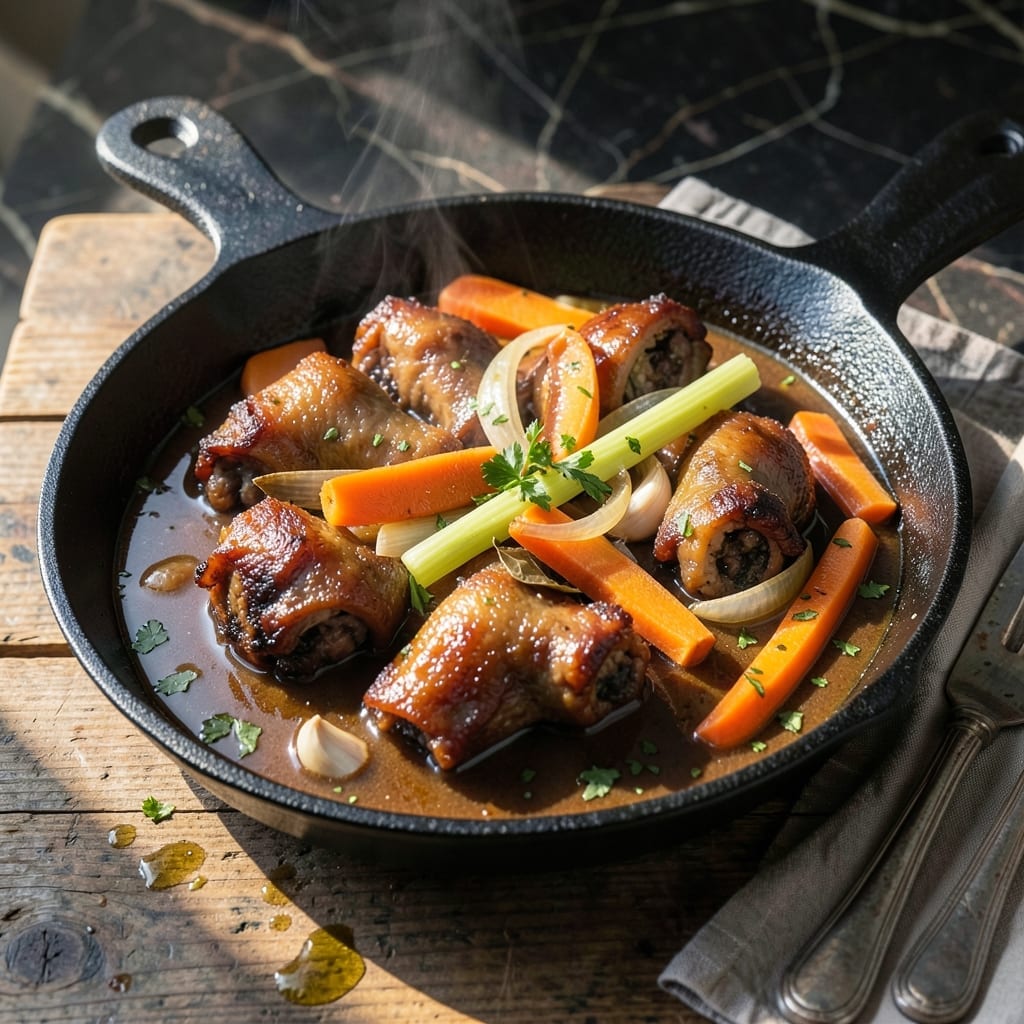
This southern-style pig feet recipe transforms tough cuts into a tender, collagen-rich delicacy through slow simmering. The traditional method ensures every bite is packed with deep, savory flavor.
With simple ingredients and patient cooking, you’ll achieve a dish that’s both comforting and nourishing. The process honors time-tested techniques for authentic results at home.
Ingredients for Pig Feet Recipe Southern Style
Transform tough cuts into a collagen-rich delight with these carefully selected ingredients for authentic southern flavor.
| Ingredient | Amount | Notes |
|---|---|---|
| Pig Feet 🐷 | 2 lb | Split and cleaned thoroughly |
| Yellow Onion 🧅 | 1 whole | Peeled and quartered |
| Garlic Cloves 🧄 | 6 cloves | Smashed for robust flavor |
| Carrots 🥕 | 2 whole | Peeled and cut into chunks |
| Celery Stalks 🥬 | 2 whole | Cut into large pieces |
| Bay Leaves 🍃 | 2 pieces | Dried, whole leaves |
| Apple Cider Vinegar 🍏 | ½ cup | For acidity and tenderness |
| Kosher Salt 🧂 | 2 tbsp | Adjust to taste during cooking |
| Black Peppercorns 🌶️ | 1 tbsp | Whole, for depth of flavor |
| Dried Thyme 🌿 | 1 tsp | Crushed for better infusion |
| Dried Red Pepper Flakes 🌶️ | ½ tsp | Adjust for heat preference |
| Water 💧 | 8 cups | Enough to fully submerge pig feet |
Sourcing quality pig feet is essential for this dish. Local butchers or specialty meat markets often carry them fresh, which yields superior texture. Look for feet that are clean, with intact skin and minimal odor (a subtle meaty smell is normal). If fresh isn’t available, frozen pig feet work well—just thaw them completely in the refrigerator overnight before cooking.
Substitutions are limited due to the unique nature of pig feet, but you can adjust the aromatics. No apple cider vinegar? White vinegar or lemon juice at the same quantity works fine. For a milder flavor, reduce the red pepper flakes or omit entirely. If you can’t find whole peppercorns, pre-ground black pepper at half the amount is acceptable, though whole delivers better depth.
The cooked pig feet keep well in the refrigerator for up to 4 days in their broth, and the flavor actually deepens over time. For longer storage, freeze for up to 3 months. Always reheat gently to preserve the tender texture you worked so hard to achieve.
Why You’ll Love This Recipe
- Set It & Forget It: I toss everything in one pot and let it simmer—no babysitting required.
- Rich & Smoky: The pig feet soak up the garlic and onion flavor until every bite is fall-off-the-bone tender.
- Feeds a Crowd: I make a big batch for Sunday dinner, and it’s just as good reheated the next day.
- Budget Stretcher: Honestly, pig feet are cheap, but the meaty, collagen-rich result tastes like a million bucks.
Step-by-Step Instructions for Pig Feet Southern Style
This method transforms the pig feet into tender, fall-off-the-bone perfection with rich broth.
Step 1: Prepare and Blanch the Pig Feet
Begin by thoroughly rinsing the 2 lb Pig Feet under cold water to remove any bone fragments or debris. In a large stockpot, combine the pig feet with the 8 cups Water and bring to a rolling boil over high heat.
Boil vigorously for 10-12 minutes to remove impurities. You’ll notice a grayish foam forming on the surface—this is normal. Skim off the foam with a fine-mesh strainer for a cleaner final broth. Drain and rinse the pig feet again under cold water to eliminate any remaining scum.
Step 2: Build the Aromatic Base
Return the pig feet to the cleaned stockpot. Add the 1 whole Yellow Onion, 6 cloves Garlic Cloves, 2 whole Carrots, 2 whole Celery Stalks, 2 pieces Bay Leaves, 2 tbsp Kosher Salt, 1 tbsp Black Peppercorns, 1 tsp Dried Thyme, and 0.5 tsp Dried Red Pepper Flakes.
These aromatics infuse the broth with depth. The crushed thyme and peppercorns release their flavors more effectively during the long simmer. Pour in the 0.5 cup Apple Cider Vinegar—this tenderizes the collagen-rich meat and balances the richness of the pork.
Step 3: Simmer Until Tender
Add enough fresh water to cover the pig feet by 2 inches. Bring the pot to a boil over high heat, then reduce to a gentle simmer. Partially cover the pot with a lid to allow steam to escape while maintaining a consistent temperature.
Simmer for 3 to 4 hours, occasionally skimming off any foam that rises to the surface. The pig feet are done when the meat easily pulls away from the bone with a fork and the skin has a jelly-like consistency. Avoid boiling vigorously, as this can make the meat tough rather than tender.
Step 4: Finish and Serve
Once the pig feet are tender, remove them from the broth with a slotted spoon and transfer to a serving dish. If you prefer a more concentrated sauce, simmer the broth for an additional 20-30 minutes to reduce it slightly.
Serve the pig feet hot with a ladle of the rich broth spooned over the top. The broth should be deeply flavorful, with a balance of savory, slightly tangy, and subtly spicy notes from the vinegar and red pepper flakes. Enjoy as is, or shred the meat for use in soups or stews.
Pro Tips For Making Pig Feet Recipe Southern Style
- Parboil First: Always parboil the pig feet for 10-15 minutes with a splash of vinegar to remove impurities and tighten the skin before slow cooking—I learned this the hard way after my first batch turned cloudy.
- Skim the Foam: As the pig feet simmer, skim off the gray foam that rises to the top; skipping this leaves your broth murky and bitter.
- Use Fresh Herbs: Toss in fresh thyme and bay leaves with the onion, garlic, and celery for a brighter flavor than dried herbs can deliver.
- Low and Slow: Keep the heat at a gentle simmer for 3-4 hours—any higher and the meat turns tough instead of fall-off-the-bone tender.
Storing and Reheating This Dish
Refrigerator Storage
Let your pig feet cool in their broth for no more than 2 hours before transferring to airtight containers. I use glass Mason jars for easy storage and reheating. Store at 40°F or below for up to 4 days. The collagen-rich broth will gel slightly, which is normal and delicious. ❄️
Freezer Storage
For longer storage, freeze pig feet in their broth for up to 3 months without quality loss. Use quart-sized freezer bags laid flat to save space. Leave 1 inch headspace for expansion and label with the date. Thaw overnight in the fridge before reheating.
Stovetop Reheating
Gently reheat on the stove over medium-low heat for 15-20 minutes. This method preserves the tender texture best. Add ¼ cup water or broth if the liquid looks too thick. Stir occasionally to prevent sticking to the pot.
Microwave Reheating
Place pig feet and broth in a microwave-safe bowl, cover with a damp paper towel, and heat on 70% power for 3-4 minutes. Stir and continue heating in 1-minute intervals until reaching 165°F. This works well for quick meals. 🔥
Slicing Before Storage
I often shred the meat off the bones before storing for easier use later. This makes it perfect for adding to soups, stews, or sandwiches. The shredded meat soaks up more of the flavorful broth during storage, enhancing its taste when reheated.
Frequently Asked Questions
Do I need to soak pig feet before cooking?
Yes, soaking for 1-2 hours in cold water helps remove impurities. This step ensures a cleaner broth and better flavor in your final dish.
Why does the broth turn gelatinous when cooled?
This is normal and desirable! The collagen in pig feet breaks down during cooking, creating a rich, jelly-like texture when chilled. It’s a sign of a well-made broth.
Can I use a pressure cooker instead of a stockpot?
Cook on high pressure for 60-75 minutes for similar results. This speeds up the process while maintaining tenderness.
How do I know when they’re done?
The meat should pull away from the bone easily with a fork. The skin will be soft and jelly-like, not tough or rubbery.
Nutrition Facts

- BBQ Sausage Recipe Oven: Smoky Depth Without the Grill - September 28, 2026
- BBQ Chicken Bowl Recipe Rice: Smoky Sweetness Over Fluffy Grains - September 28, 2026
- Beef Cutlet Recipe Ideas: Crispy Breaded Patties With Bold Seasonings - September 28, 2026