
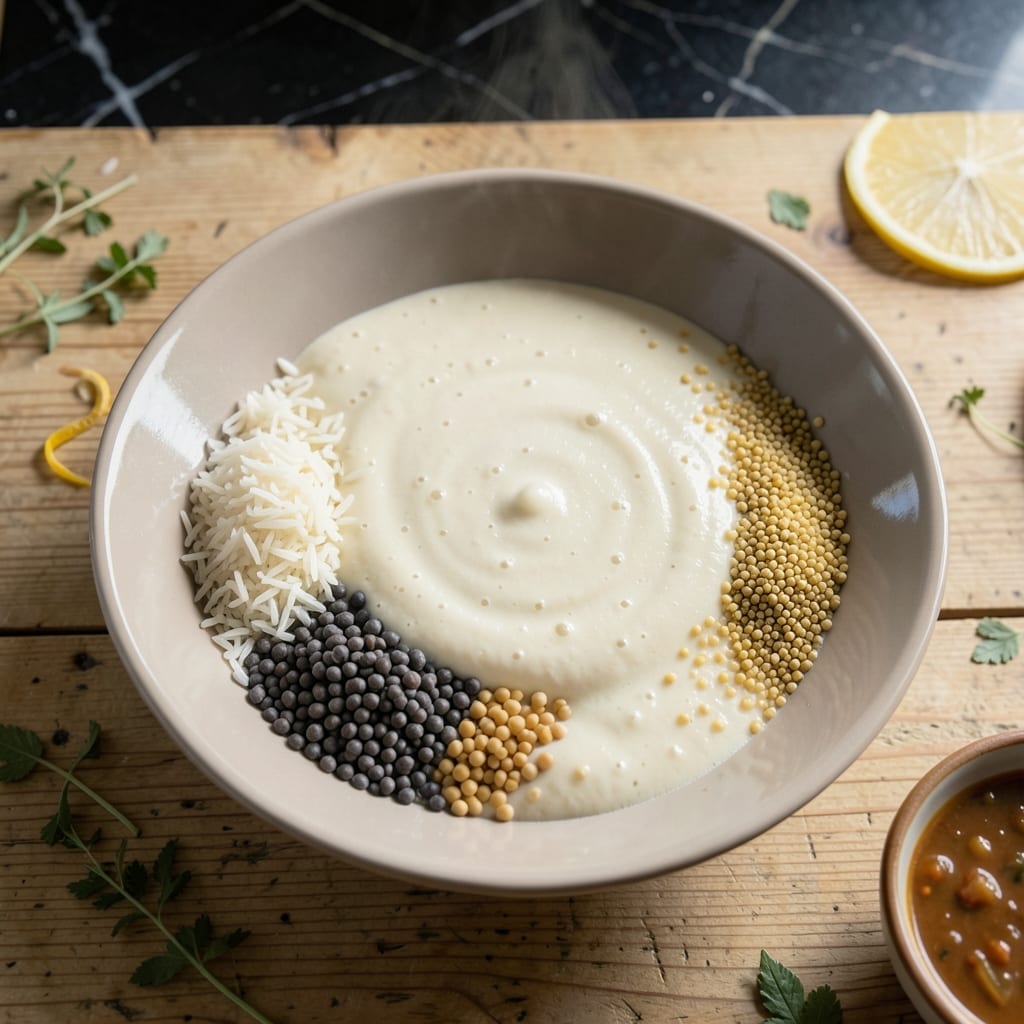
Achieving perfectly crispy dosas starts with mastering the batter preparation. This proven method delivers restaurant-quality results through precise soaking, grinding, and fermentation steps.
With a 24-hour fermentation period, the batter develops complex flavors and the ideal consistency for making thin, golden dosas that crisp beautifully on the griddle.
Ingredients for Recipe for Making Dosa Batter
Mastering the fermentation process begins with these carefully selected components for authentic texture and flavor development.
| Ingredient | Amount | Notes |
|---|---|---|
| Parboiled Rice 🌾 | 2 cups | Long grain, rinsed thoroughly |
| Urad Dal 🌱 | ¾ cup | Split black gram, whole |
| Chana Dal 🌱 | 2 tbsp | Split chickpea lentils |
| Fenugreek Seeds 🌿 | ½ tsp | Methi seeds, essential for fermentation |
| Water 💧 | 6 cups | For soaking, room temperature |
| Salt 🧂 | 1 ½ tsp | Added after fermentation |
| Cooked White Rice 🌾 | ½ cup | Optional for extra crispiness |
| Cumin Seeds 🌿 | 1 tsp | Optional for flavor variation |
| Asafoetida 🌿 | ¼ tsp | Hing, optional for aroma |
| Coconut Water 🥥 | ½ cup | Optional for fermentation boost |
The foundation lies in the urad dal and parboiled rice ratio—Indian grocery stores like Patel Brothers or Bharat Bazaar carry the right varieties. Avoid pre-packaged mixes; whole lentils and rice provide superior texture. Fenugreek seeds are non-negotiable—they kickstart fermentation. Look for fresh, plump urad dal (not yellow or dusty) and rice with intact grains. Soaking time is critical, so plan for at least 6 hours.
No urad dal? Split mung beans work in a pinch (texture differs slightly). Parboiled rice can be swapped for raw rice, but expect a denser dosa. For gluten-free needs, quinoa or millet can replace up to 25% of the rice. Fenugreek seeds can be omitted, but add 1 tsp more chana dal to compensate. The salt quantity is flexible—adjust to taste after fermentation.
Store soaked ingredients in the fridge if soaking exceeds 6 hours. Fermented batter keeps for 3-4 days refrigerated in an airtight container. For longer storage, freeze in portions for up to 1 month (thaw overnight before use). The batter should have a tangy aroma and slight effervescence when ready.
Why You’ll Love This Recipe
- Soak & Forget: I toss the rice and dals in water with fenugreek seeds before bed and wake up to perfectly fermented batter.
- Crispy Perfection: The urad dal gives that golden, lace-like crunch while the parboiled rice keeps it light.
- Weekend Brunch Hero: I make a big batch Saturday morning and we’re set for dosas, utthapams, or even idlis all week.
- Pantry Staples Only: Between us, these four ingredients are always in my cupboard and cost pennies compared to takeout.
Step-by-Step Instructions for Making Dosa Batter
Master the soaking, grinding, and fermenting process for perfectly crisp, tangy dosas every time.
Step 1: Soak the Grains and Lentils Properly
In a large bowl, combine the 2 cups Parboiled Rice, 0.75 cup Urad Dal, 2 tbsp Chana Dal, and 0.5 tsp Fenugreek Seeds. Add the 6 cups Water and stir gently to ensure all grains are submerged. Cover with a clean cloth and let soak for 6-8 hours at room temperature.
The water should become slightly cloudy as the grains absorb moisture. The rice and lentils will expand to nearly double their size and become soft enough to crush between your fingers. This hydration step is critical for proper fermentation and smooth batter texture.
Step 2: Grind to a Smooth, Airy Batter
Drain the soaked grains completely, reserving the soaking water. Transfer the Urad Dal and Fenugreek Seeds to a wet grinder first, adding 0.5 cup Coconut Water if using. Grind until smooth and fluffy—this may take 20-25 minutes with occasional scraping of the sides.
Next, grind the Parboiled Rice and Chana Dal separately until fine, using reserved soaking water as needed to achieve a pancake-batter consistency. Combine both mixtures in a large container, add the 0.5 cup Cooked White Rice if using, and whisk vigorously to incorporate air. The batter should be thick but pourable.
Step 3: Ferment for Optimal Tang and Texture
Cover the container loosely with a clean cloth and place in a warm, draft-free spot. For best results, I place mine in an unlit oven with the light turned on. Allow to ferment for 12-24 hours depending on your climate—the batter should rise by at least 50% and develop a slightly sour aroma.
You’ll notice small bubbles forming on the surface and throughout the batter. The texture will become lighter and slightly frothy. In cooler climates, you may need the full 24 hours, while warmer kitchens may achieve proper fermentation in 12-15 hours. Don’t disturb it during this process.
Step 4: Season and Adjust Consistency
After fermentation, add the 1.5 tsp Salt to the batter. If using flavor variations, stir in the 1 tsp Cumin Seeds and 0.25 tsp Asafoetida at this stage. Gently fold everything together with a long spoon or your clean hands to distribute evenly without deflating the batter.
The batter should now have a tangy smell and a slightly effervescent quality. If it seems too thick, add a little water—1-2 tablespoons at a time—until it reaches the consistency of thick cream. It should coat the back of a spoon but still drip slowly. This adjusted batter is now ready for cooking.
Pro Tips For Making Recipe For Making Dosa Batter
- Soak Overnight: I learned this the hard way—both the rice and dals need a full 8-12 hours in water, or your batter won’t ferment properly and the dosas will turn out dense.
- Use Warm Water: Sounds weird, but it works: soaking the urad dal and fenugreek seeds in warm water cuts the prep time and kickstarts fermentation faster.
- Grind Separately: Grind the urad dal first until fluffy, then the rice—mixing them too early gives you a gummy batter that won’t spread thin on the griddle.
- Ferment in Warmth: After mixing, leave the batter in a warm spot, like inside your oven with the light on, for 6-8 hours—this guarantees a light, airy texture.
Pro Cooking Tips for This Dish
Grinder Selection Matters
Use a wet grinder for authentic texture—my Ultra Grind+ Gold handles the job perfectly. A high-speed blender works in a pinch but may heat the batter, affecting fermentation. Never fill beyond ⅔ capacity to allow movement.
Perfect Grinding Technique
Grind urad dal first until smooth and fluffy before adding rice. This ensures even consistency. Add water gradually—about ¼ cup at a time—to prevent a runny batter. The ideal texture should feel light, almost airy. 💡
Fermentation Environment
Place your batter in a warm, dark spot—I use my unlit oven with the light on. In cooler climates, a heating pad on low under the container speeds up fermentation. Avoid direct sunlight or drafts, which can create uneven fermentation.
Climate Adjustments
In humid weather, fermentation may take 12-15 hours. For colder months, extend to 24 hours. I check for a tangy aroma and visible bubbles. If it’s not rising, move to a warmer location or add 1 tbsp sugar to activate the yeast.
Consistency Check
Before cooking, the batter should coat a spoon but still drip. If too thick, thin with 2-3 tbsp water. If too thin, let it sit for 30 minutes to thicken naturally. This step ensures perfect dosa texture.
Pro Storage Tip
Store fermented batter in the fridge for up to 3 days in an airtight container. For longer storage, freeze in portions for up to 1 month. Thaw overnight in the fridge before using. 🔥
Frequently Asked Questions
Why does my batter not rise during fermentation?
Check your fenugreek seeds—they’re essential for fermentation. Ensure your kitchen is warm enough (75-85°F). If it’s too cold, place the container in an unlit oven with the light on for gentle warmth.
Can I use a regular blender instead of a wet grinder?
Yes, but blend in small batches to prevent overheating. Add water gradually for a smooth consistency. The texture might be slightly different but still workable.
How do I know when the batter is properly fermented?
Look for a rise of at least 50% in volume, a tangy aroma, and small bubbles throughout. In cooler climates, this may take the full 24 hours.
What if my batter smells too sour?
This happens with over-fermentation. Use it immediately or refrigerate to slow further souring. For future batches, reduce fermentation time to 12-15 hours.
Nutrition Facts

- BBQ Sausage Recipe Oven: Smoky Depth Without the Grill - September 28, 2026
- BBQ Chicken Bowl Recipe Rice: Smoky Sweetness Over Fluffy Grains - September 28, 2026
- Beef Cutlet Recipe Ideas: Crispy Breaded Patties With Bold Seasonings - September 28, 2026