
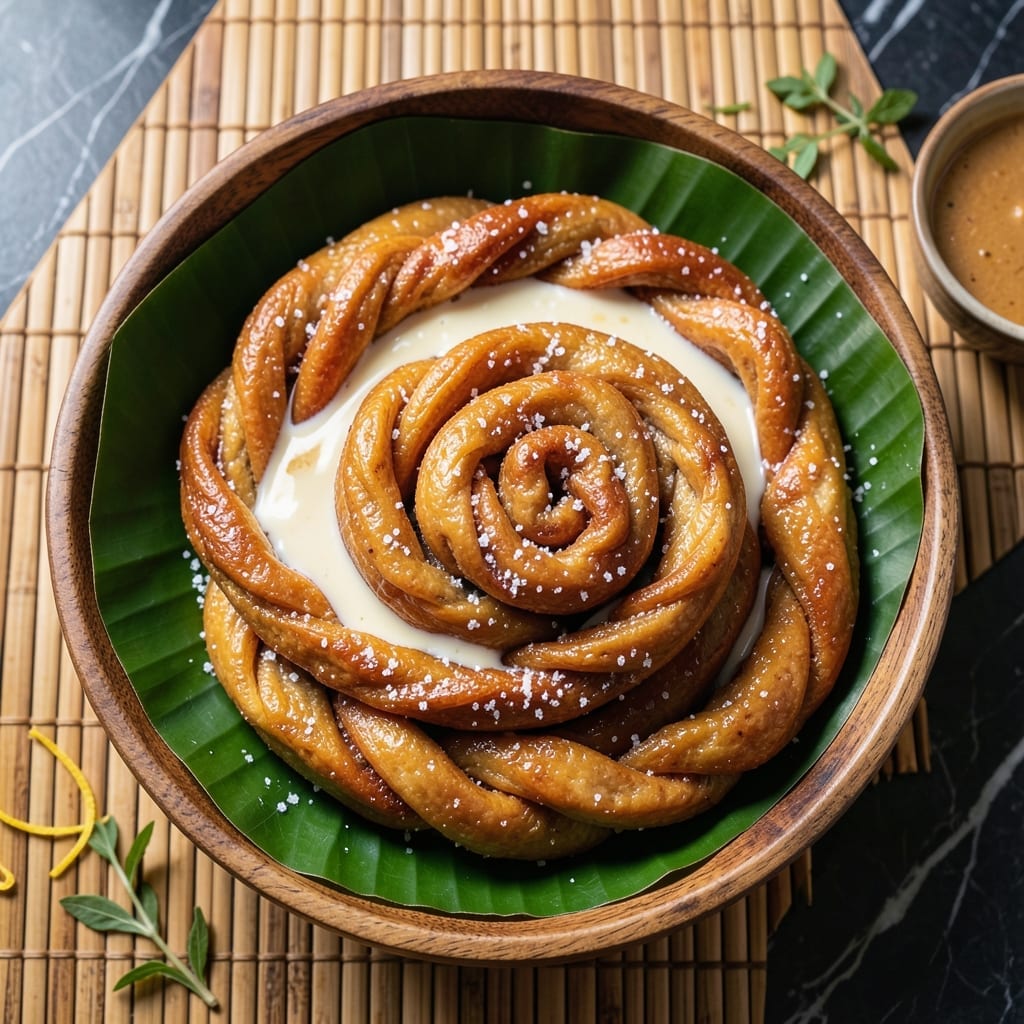
This traditional Filipino treat delivers a perfect balance of textures that will delight your senses. The rice flour base creates a uniquely tender interior.
What makes this dish special is the twisting technique that forms those signature crisp edges while keeping the centers soft. It’s a simple process that yields impressive results every time.
You’ll achieve golden, twisted pastries with a satisfying crunch on the outside and a delicate, fluffy bite within. The subtle sweetness makes them ideal for any occasion.
Serve warm for the best experience, and watch them disappear quickly from the table.
Ingredients for Pilipit Recipe Rice Flour
Simple ingredients create these golden twisted pastries with crisp edges and fluffy centers.
| Ingredient | Amount | Notes |
|---|---|---|
| Rice Flour 🌾 | 2 cups | Glutinous or sweet variety |
| All-Purpose Flour 🌾 | ½ cup | For structure and binding |
| Coconut Milk 🥥 | ¾ cup | Full-fat for richness |
| Sugar 🍚 | ½ cup | Granulated for sweetness |
| Coconut Oil 🫒 | ¼ cup | Melted for frying crispness |
| Water 💧 | ¼ cup | Adjust as needed for dough |
| Salt 🧂 | ¼ tsp | Sea salt preferred |
| Vanilla Extract 🌿 | 1 tsp | Pure for best flavor |
| Baking Powder 🧂 | ½ tsp | For slight lift |
| Sesame Seeds 🌰 | 2 tbsp | Toasted for garnish |
| Vegetable Oil 🫒 | 2 cups | For deep frying |
The rice flour is key here—look for glutinous or sweet rice flour at Asian markets or the international aisle. I usually grab mine from H Mart or Seafood City. The coconut milk needs to be full-fat for that rich, tender texture (the light kind just doesn’t cut it). If you’re in a pinch, coconut cream thinned with water works as a backup, but the flavor might be a bit stronger.
No rice flour? Tapioca starch at a 1:1 ratio gets you close, though the texture won’t be identical. For the coconut milk, almond or oat milk with a splash of coconut extract can work, but you’ll lose some authenticity. The sesame seeds can be swapped for crushed peanuts if that’s what you’ve got. And if you’re avoiding deep frying, air-frying at 375°F gets them crispy too.
The dough can rest in the fridge for up to 24 hours if you want to prep ahead. Once fried, they’re best eaten fresh but keep well in an airtight container for 2-3 days. Reheat in a toaster oven to bring back the crunch.
Why You’ll Love This Recipe
- One Bowl Wonder: I just dump rice flour, all-purpose flour, coconut milk, and sugar in a bowl—no fancy steps, no fuss.
- Coconut Heaven: The combo of coconut milk and oil gives it this rich, tropical sweetness that’s honestly hard to resist.
- Feeds a Crowd: Between us, I make a double batch for fiestas and it disappears faster than I can say ” seconds, anyone?”
- Budget Keeper: Rice flour and coconut oil are pantry staples for me, so this costs pennies and still tastes like a treat.
Step-by-Step Instructions for Pilipit with Rice Flour
Here’s the method I use for getting those signature twists just right every time.
Step 1: Mix the Dry Ingredients
In a large bowl, whisk together the 2 cups Rice Flour, 0.5 cup All-Purpose Flour, 0.5 cup Sugar, 0.5 tsp Baking Powder, and 0.25 tsp Salt until fully combined. I like to start with the dry ingredients to ensure even distribution of the leavening agent.
This step prevents clumping later when you add the wet ingredients. The rice flour gives these pilipit their characteristic chewy texture, while the all-purpose flour provides just enough structure to hold the twists.
Step 2: Combine Wet Ingredients and Form Dough
In a separate bowl, mix the 0.75 cup Coconut Milk, 0.25 cup Coconut Oil, 0.25 cup Water, and 1 tsp Vanilla Extract. The coconut oil should be in liquid form, so warm it gently if needed.
Pour the wet mixture into the dry ingredients and stir with a wooden spoon until a shaggy dough forms. Then, turn it out onto a lightly floured surface and knead for 5-7 minutes until smooth and elastic. The dough should be soft but not sticky—add a touch more rice flour if needed.
Step 3: Shape and Twist the Pilipit
Divide the dough into 4 equal portions (since this makes 4 servings). Roll each portion into a ½-inch thick rope, about 12 inches long. The thickness is important here—too thin and they’ll overcook, too thick and they won’t crisp properly.
Cut each rope into 3-inch pieces. Then, take each piece and twist it into that classic pilipit shape. I find it easiest to roll the piece between my palms first to smooth it out, then twist. Press the ends gently to seal them so they don’t unravel during frying.
Step 4: Fry to Golden Perfection
Heat the 2 cups Vegetable Oil in a deep pot to 350°F. To test if it’s ready, drop in a small piece of dough—it should sizzle and rise to the surface immediately. Fry the pilipit in batches to avoid overcrowding, which would lower the oil temperature.
Fry for 3-4 minutes on each side until they’re golden brown and crisp. Use a slotted spoon to turn them occasionally for even browning. They’ll puff up slightly as they cook—that’s the magic of the rice flour working with the baking powder.
Step 5: Drain and Garnish
Transfer the fried pilipit to a paper towel-lined plate to drain excess oil. While they’re still hot, sprinkle with the 2 tbsp Sesame Seeds, pressing them lightly so they stick to the surface.
The sesame seeds add a nutty crunch that contrasts beautifully with the pillowy centers. Serve warm for the best texture—the outside stays crisp while the inside remains tender and slightly chewy. These are best enjoyed fresh, though they’ll keep in an airtight container for a day or two.
Pro Tips For Making Pilipit Recipe Rice Flour
- Knead It Longer: I learned this the hard way—work the rice flour and coconut milk dough for at least 8-10 minutes until it’s smooth and elastic. Under-kneaded dough cracks when you shape the pilipit.
- Heat the Coconut Oil: Melt the coconut oil just until warm (not smoking) before mixing it in. Cold oil seizes the dough, while hot oil cooks the flour prematurely—both ruin the texture.
- Skip the Cold Coconut Milk: Sounds weird, but it works: use room-temperature coconut milk. Straight-from-the-can milk makes the dough stiff and hard to roll, and the pilipit turn out dense.
- Roll Evenly Thin: Aim for ¼-inch thickness when shaping—any thicker and the center stays gummy. I use a ruler the first few times until my hands remember the feel.
Regional Styles of pilipit recipe rice flour
Luzon Tradition
In Central Luzon, this recipe often includes pandasal (salted egg) in the dough for extra richness. I tried it once with duck eggs from a local farm and the flavor depth was incredible. The saltiness balances the sweetness perfectly. 💛
Visayas Variation
The Visayan version tends to be sweeter, sometimes adding muscovado sugar for a deeper caramel note. I’ve seen vendors in Cebu shape them into smaller, bite-sized twists. These are often sold at fiestas and family gatherings.
Mindanao Twist
In Mindanao, they incorporate grated coconut into the dough itself, not just as topping. This adds a wonderful texture contrast. I learned this version from a neighbor who grew up in Davao. The coconut makes them slightly denser but incredibly aromatic.
Urban Manila Style
Modern Manila bakeries often add ust (purple yam) to the dough for a vibrant purple hue. The yam’s natural sweetness reduces the need for extra sugar. I first tried this at a trendy café in Makati—it’s visually stunning and delicious.
Pampanga Special
Pampanga’s version sometimes includes queso de bola (Edam cheese) grated into the dough. The cheese melts beautifully during frying, creating little pockets of gooey goodness. I use Magnolia brand for authentic flavor.
Bicolano Approach
Bicolano cooks often use coconut vinegar in the dough for a subtle tang. This pairs wonderfully with the coconut milk base. I add about 1 tbsp to the wet ingredients for this regional touch. The vinegar also helps tenderize the rice flour. ✨
Nutrition Facts
Frequently Asked Questions
Can I use regular flour instead of rice flour?
You can substitute with tapioca starch at a 1:1 ratio, but the texture won’t be identical. Regular flour alone will make them denser.
Why did my pilipit unravel while frying?
This happens if the ends aren’t sealed properly. Press the twisted ends gently together before frying to prevent this.
How do I store leftover pilipit?
Keep in an airtight container for 2-3 days. Reheat in a toaster oven at 350°F for 3-4 minutes to restore crispness.

- Potato Candy Recipe 1933: Vintage Peanut Butter Roll Delight - October 30, 2026
- Potato Chip Cookie Recipe With Pecans: Buttery Crunch Meets Nutty Richness - October 30, 2026
- Potato Patty Recipe No Egg: Crispy Edges Without the Binder - October 30, 2026