
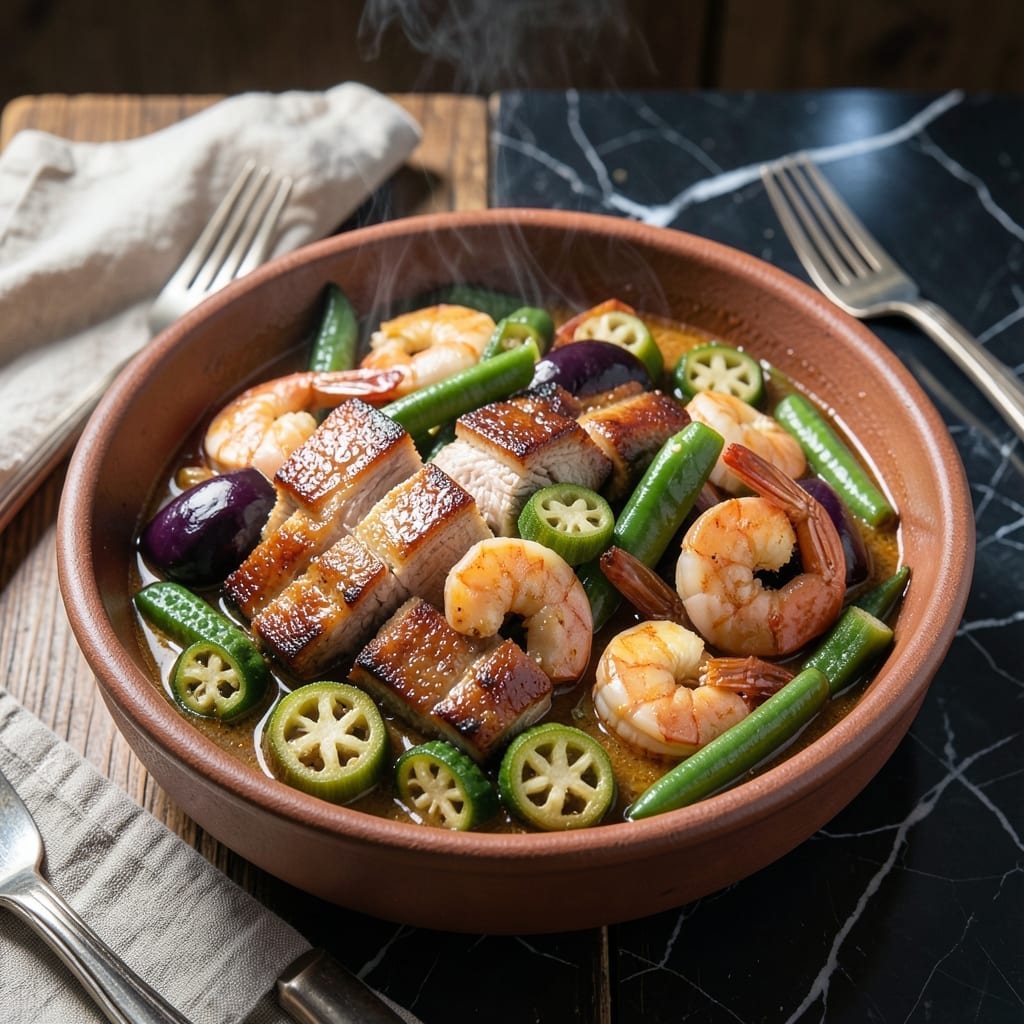
This Filipino vegetable stew brings my grandmother’s handwritten recipes to life with a seafood twist. The combination of pork and shrimp with bitter melon, eggplant, and okra creates a dish that’s both hearty and balanced.
I’ve simplified her intuitive methods into precise steps anyone can follow. The key is layering flavors as you cook—starting with garlic and onions, then building with each vegetable and protein. It takes less than an hour but tastes like it simmered all day.
The result is a rich, savory stew where every ingredient keeps its distinct texture. The pork becomes tender, the shrimp adds sweetness, and the vegetables absorb the flavorful broth without turning mushy.
Serve this with steamed rice to soak up every last drop of the sauce.
Ingredients for Pinakbet Recipe with Pork and Shrimp
Fresh veggies, tender pork, and plump shrimp make this stew unforgettable.
| Ingredient | Amount | Notes |
|---|---|---|
| Pork Belly 🥓 | 1 lb | Cut into bite-sized pieces |
| Large Shrimp 🍤 | ¾ lb | Peeled and deveined |
| Bitter Melon 🥒 | 1 whole | Sliced into rounds |
| Eggplant 🍆 | 1 whole | Cut into 1-inch pieces |
| Okra 🌿 | 8 pieces | Trimmed, whole |
| Long Green Beans 🌱 | ½ lb | Trimmed, cut into 2-inch pieces |
| Garlic Cloves 🧄 | 6 cloves | Minced |
| Yellow Onion 🧅 | 1 whole | Thinly sliced |
| Tomatoes 🍅 | 2 whole | Quartered |
| Fish Sauce 🐟 | 2 tbsp | Or bagoong isda for authenticity |
| Shrimp Paste 🍤 | 1 tbsp | Optional for extra umami |
| Vegetable Oil 🫒 | 2 tbsp | For sautéing |
| Water 💧 | 1 cup | For simmering |
| Salt 🧂 | 1 tsp | Adjust to taste |
| Black Pepper 🌶️ | ½ tsp | Freshly ground |
The pork belly is key here—look for pieces with good fat marbling at your local Asian market or Whole Foods. Bitter melon can be polarizing, but soaking the slices in salted water for 10 minutes helps mellow the bitterness. Eggplant and okra should be firm and free of blemishes. If you can’t find fresh shrimp paste, bagoong isda at Filipino stores is your best bet.
No pork belly? Pork shoulder works too (just cube it small). Skip the shrimp and add extra veggies like squash or string beans. Fish sauce can be swapped for soy sauce at half the amount, but the flavor will be different. Fresh shrimp is ideal, but frozen works in a pinch—just thaw it first. The tomatoes can be canned if fresh ones aren’t in season.
This stew tastes even better the next day. Store leftovers in an airtight container in the fridge for up to 3 days. Reheat gently to avoid breaking up the shrimp. Freezes well for up to 1 month (without the okra, as it can get slimy).
Why You’ll Love This Recipe
- One Pot Meal: I love that everything cooks together—pork belly, shrimp, and veggies all in one pan.
- Umami Bomb: The pork fat soaks into the bitter melon and eggplant, making every bite ridiculously rich.
- Weeknight Hero: Honestly, it’s my go-to when I need something hearty but don’t want to fuss.
- Stretches Far: Leftovers taste even better the next day, and it feeds my whole family without breaking the bank.
Step-by-Step Instructions for Pinakbet With Pork And Shrimp
This traditional method brings out the best flavors in every vegetable and protein.
Step 1: Sauté Aromatics and Pork Belly
Heat the 2 tbsp vegetable oil in a large pot over medium heat. Add the minced garlic cloves and thinly sliced yellow onion, sautéing for 2-3 minutes until fragrant and the onion softens.
Add the 1 lb pork belly cut into bite-sized pieces and cook for 5-7 minutes until the edges start to brown. This renders out some fat and builds a flavorful base. Stir occasionally to prevent sticking and ensure even browning.
Step 2: Add Vegetables and Shrimp Paste
Stir in the 1 tbsp shrimp paste and cook for 1 minute to release its aroma. Then add the quartered tomatoes, cooking for another 2 minutes until they begin to soften.
Add the eggplant cut into 1-inch pieces, 0.5 lb long green beans cut into 2-inch pieces, and 1 whole bitter melon sliced into rounds. Stir to combine with the pork and aromatics, then cook for 3-4 minutes to start the cooking process.
Step 3: Pour in Liquid and Simmer
Add the 1 cup water, 2 tbsp fish sauce, 1 tsp salt, and 0.5 tsp black pepper. Stir well to distribute the seasonings evenly throughout the pot.
Bring the mixture to a gentle boil, then reduce the heat to low. Cover and let it simmer for 10-12 minutes until the vegetables begin to soften.
Step 4: Add Delicate Ingredients and Finish Cooking
Add the 8 pieces okra and 0.75 lb large shrimp, peeled and deveined. Gently stir to incorporate without breaking the shrimp. Cook uncovered for 5-7 minutes until the shrimp turn pink and opaque and the okra is tender but still bright green.
Taste and adjust seasoning if needed. The shrimp should be cooked through, and the vegetables should retain some texture but be tender enough to eat comfortably.
Step 5: Rest and Serve
Remove the pot from heat and let the pinakbet rest for 5 minutes to allow the flavors to meld together. This short resting period lets the shrimp finish cooking gently in the residual heat.
Serve hot in bowls, making sure each serving gets a good mix of pork, shrimp, and all the vegetables. The dish should have a rich, savory broth with tender proteins and vegetables that have absorbed all the delicious flavors.
Pro Tips For Making Pinakbet Recipe With Pork And Shrimp
- Parboil the Pork: I learned this the hard way—boiling the pork belly for 5-7 minutes first removes excess fat and scum, so your pinakbet stays clean and rich, not greasy.
- Salt the Bitter Melon: Sounds weird, but it works: sprinkle salt on sliced bitter melon, let it sit for 10 minutes, then rinse—cuts the bitterness without losing texture.
- Shrimp Last: After burning three batches, I finally figured out shrimp only need 2-3 minutes in the pot, so add them at the very end to keep them tender and juicy.
- Use Bacon Fat: My grandmother swore by this, and she was right: render a few strips of bacon first, then cook the pork in that fat for deeper, smokier flavor.
Dietary Considerations for This Dish
Gluten-Free Naturally
This dish is inherently gluten-free since it relies on fresh vegetables, pork, and shrimp without any wheat-based ingredients. Just double-check your fish sauce and shrimp paste labels—some brands add wheat as a thickener. I always use Red Boat fish sauce for peace of mind. 💡
Dairy-Free by Design
There’s no dairy in traditional pinakbet, making this perfect for lactose-intolerant friends. The richness comes from pork belly fat and natural vegetable flavors. If you’re serving with rice, just ensure your grains are cooked in water, not butter or milk.
Nut Allergy Safe
This recipe contains no nuts or nut products. However, if you’re adding garnishes, skip common Filipino toppings like crushed peanuts. I once accidentally used peanut oil—now I stick with pure vegetable oil to be safe.
Seafood Allergies
For shellfish allergies, simply omit the shrimp and increase pork to 1.5 lbs. The dish will still be delicious with extra eggplant or bitter melon. Always clean your prep area thoroughly to avoid cross-contamination.
Low-Carb Option
While traditionally served with rice, you can enjoy this as a low-carb meal by skipping the rice and adding extra vegetables like zucchini or cauliflower. The pork and shrimp provide plenty of protein to keep you satisfied. 🌱
Vegetarian Adaptation
Replace pork and shrimp with tofu or tempeh for a plant-based version. Use soy sauce instead of fish sauce and add mushrooms for umami. My grandmother would be proud of this modern twist on her classic.
Nutrition Facts
Frequently Asked Questions
Can I use a different cut of pork?
Yes! Pork shoulder works well if you can’t find belly. Just cut it into bite-sized pieces and cook a few minutes longer to tenderize. The fat content will be slightly lower, but the flavor remains rich.
How do I reduce the bitterness of bitter melon?
Soak sliced bitter melon in salted water for 10 minutes before cooking. This draws out excess bitterness while keeping the texture. Rinse well after soaking to remove excess salt.
Can I make this ahead of time?
The flavors deepen overnight. Store in an airtight container for up to 3 days in the fridge. Reheat gently on the stove, adding a splash of water if needed.
What if my shrimp overcooks?
Add shrimp during the last 5 minutes only. If they curl into tight C-shapes, they’re done. To fix overcooked shrimp, remove them immediately and add fresh ones to finish cooking.

- Potato Candy Recipe 1933: Vintage Peanut Butter Roll Delight - October 30, 2026
- Potato Chip Cookie Recipe With Pecans: Buttery Crunch Meets Nutty Richness - October 30, 2026
- Potato Patty Recipe No Egg: Crispy Edges Without the Binder - October 30, 2026