
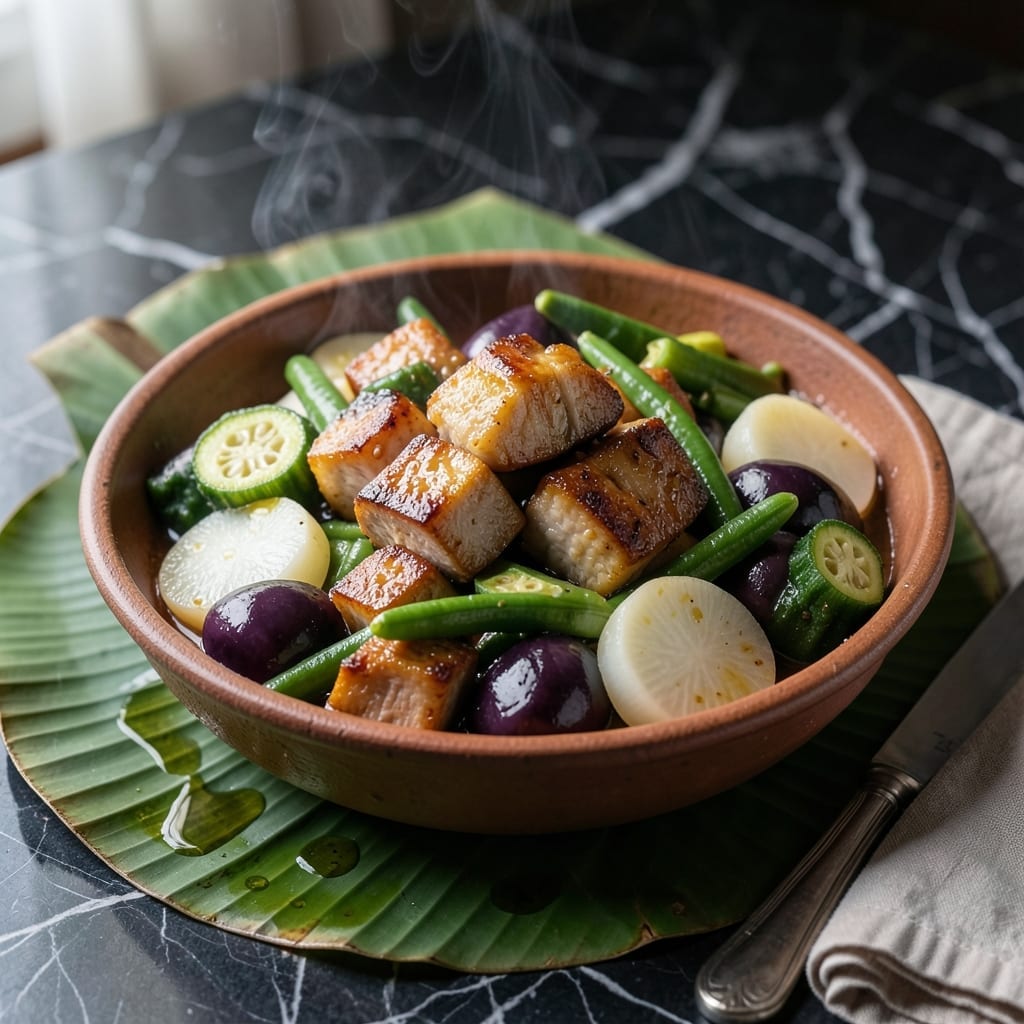
This traditional Filipino stew captures the rich, savory depth of Pinakbet with tender pork and vibrant vegetables. A dish I first tasted at a Portland farmers market, it quickly became a family favorite.
What sets this version apart is the careful layering of flavors—salted pork, bitter melon, and eggplant come together in perfect harmony. The traditional method ensures every ingredient shines without overpowering the others.
The result is a hearty, comforting stew that’s both nourishing and deeply satisfying. The pork becomes fork-tender, while the vegetables retain their distinct textures and flavors.
Serve with steamed rice to soak up every bit of the flavorful sauce. This is a dish that honors its roots while fitting seamlessly into any home kitchen.
Ingredients for Pinakbet Recipe with Pork Panlasang Pinoy
Pork belly, bitter melon, and eggplant create this rich, traditional stew with vibrant vegetables.
| Ingredient | Amount | Notes |
|---|---|---|
| Pork Belly 🥩 | 1 lb | Cut into 1-inch cubes |
| Bitter Melon 🥒 | 2 whole | Sliced into rings, seeds removed |
| Eggplant 🍆 | 1 whole | Sliced into rounds |
| Daikon Radish 🥬 | 1 whole | Peeled and sliced |
| Okra 🌿 | 6 pieces | Trimmed, whole |
| String Beans 🌱 | 1 cup | Trimmed, cut into 2-inch pieces |
| Tomatoes 🍅 | 2 whole | Sliced into wedges |
| Onion 🧅 | 1 whole | Sliced thinly |
| Garlic Cloves 🧄 | 4 cloves | Minced finely |
| Shrimp Paste 🦐 | 2 tbsp | Filipino bagoong preferred |
| Fish Sauce 🐟 | 2 tbsp | Patis or Thai tiparos |
| Salt 🧂 | 1 tsp | Adjust to taste |
| Black Pepper 🌶️ | ½ tsp | Freshly ground |
| Water 💧 | 1 cup | For simmering stew |
The pork belly is key here—look for well-marbled cuts at an Asian market or Whole Foods. Bitter melon can be hard to find, but H-Mart or local Filipino grocers usually carry it. If you see pre-sliced bitter melon, grab it (saves time). Daikon radish should be firm with smooth skin. I always pick mine up at the Portland farmers market when it’s in season (worth the extra trip).
No pork belly? Pork shoulder works in a pinch—just simmer it longer. Can’t find bitter melon? Zucchini at half the quantity gets you close. Shrimp paste is non-negotiable for authenticity, but anchovy paste at one-third the amount can sub if desperate. String beans can be swapped for green beans. Fresh okra is ideal, but frozen works too (no need to thaw).
This tastes even better the next day once flavors meld. Keeps in the fridge for 4-5 days, freezes for 3 months (portion before freezing). Reheat gently to keep veggies from turning mushy. Always serve with steamed rice—it’s the only way to soak up that sauce.
Why You’ll Love This Recipe
- One Pot Wonder: I just dump everything—Pork Belly, Bitter Melon, Eggplant—into one pan and let it simmer. No complicated steps, no fuss.
- Umami Bomb: The Pork Belly soaks up the shrimp paste and veggie flavors, making every bite ridiculously rich and satisfying.
- Feeds the Clan: Honestly, it’s my go-to for family dinners—everyone gets their fill, even the picky ones who avoid Okra at first.
- Budget Stretch: A little Pork Belly goes a long way, and the veggies are cheap. I’ll be real: it’s a full meal that won’t break the bank.
Step-by-Step Instructions for Traditional Filipino Pinakbet With Pork
This method stays true to tradition while ensuring every bite bursts with authentic flavor.
Step 1: Render and Brown the Pork Belly
Heat a large pot or deep skillet over medium heat. Add the 1 lb Pork Belly cubes and cook for 5-7 minutes, stirring occasionally, until the fat begins to render and the meat turns light golden brown.
This step builds the flavor foundation for the dish. The rendered pork fat will later coat all the vegetables, giving them that characteristic richness. Don’t rush it—you want the pork to develop color while the fat melts into liquid gold.
Step 2: Sauté Aromatics Until Fragrant
Add the sliced thinly Onion and minced finely Garlic Cloves to the pot with the pork and its fat. Cook for 2-3 minutes until the onions soften and the garlic releases its aroma—you’ll smell it when it’s ready.
Next, stir in the 2 tbsp Shrimp Paste and cook for another 1 minute. The shrimp paste should sizzle and slightly darken, which means it’s starting to bloom with flavor. This is the soul of pinakbet, so don’t skip or skimp on this step.
Step 3: Build the Vegetable Layers
Start with the longer-cooking vegetables first. Add the peeled and sliced Daikon Radish and sliced into rounds Eggplant to the pot. Stir to coat them in the pork fat and aromatics, then cook for 3 minutes to soften slightly.
Now add the sliced into rings, seeds removed Bitter Melon, sliced into wedges Tomatoes, 1 cup String Beans, and 6 pieces Okra. These cook faster, so they go in later. Pour in the 1 cup Water, then season with 1 tsp Salt and 0.5 tsp Black Pepper.
Step 4: Simmer to Perfection
Bring the mixture to a gentle simmer, then reduce the heat to medium-low. Cover and let it cook for 15-20 minutes, stirring occasionally. The vegetables should be tender but still retain some structure—especially the bitter melon, which should soften but not turn mushy.
Uncover and stir in the 2 tbsp Fish Sauce. Simmer for an additional 5 minutes to let the flavors meld together. The liquid should reduce slightly, creating a light but flavorful sauce that clings to the vegetables and pork.
Taste and adjust the seasoning with more salt or fish sauce if needed. The final dish should have a balanced savory depth with a hint of bitterness from the melon.
Step 5: Rest and Serve
Remove the pot from heat and let it rest for 5 minutes. This allows the flavors to settle and the pork to reabsorb some of the juices, making every bite juicier.
Serve hot with steamed rice, family-style. The pork should be tender and flavorful, while the vegetables retain their distinct textures and the sauce ties everything together. The bitter melon’s unique taste should be present but harmonized with the savory, umami-rich base.
Pro Tips For Making Pinakbet Recipe With Pork Panlasang Pinoy
- Sear Pork First: I learned this the hard way—browning the pork belly in batches over medium-high heat before simmering adds depth and keeps it from turning gray in the stew.
- Salt the Ampalaya: After burning a few batches, I finally figured out that soaking sliced bitter melon in salted water for 10 minutes cuts the bitterness without losing its texture.
- Add Eggplant Last: Sounds weird, but it works: Toss in the eggplant during the last 5-7 minutes of cooking to prevent it from turning to mush in the pinakbet.
- Use Pork Fat: My grandmother swore by this, and she was right: Render some of the pork belly fat first—about 2 tablespoons—to sauté the aromatics for richer flavor.
Regional Styles of This Recipe
Ilocos Region Style
In the Ilocos region, they often use more bitter melon than other versions, sometimes even doubling the amount. The bagoong isam (fermented shrimp paste) is a must here, and they prefer it extra salty. I love how the intense bitterness balances the rich pork. 💛
Pampanga Style
Pampanga’s version adds sliced squash to the vegetable mix, giving the stew a sweeter note. They also include long green chilies for a subtle heat. The pork is often cut into smaller pieces for more surface area to absorb the flavors.
The dish simmers longer here—about 25-30 minutes—to let the squash break down slightly and thicken the sauce naturally.
Bicolano Variation
Bicolano cuisine is known for its coconut milk, and their pinakbet is no exception. They stir in 1 cup coconut milk at the end for a creamy finish. The gata (coconut milk) mellows the bitterness beautifully.
Tagalog Region
In the Tagalog region, they often add calabaza (Filipino squash) and yard-long beans for extra texture. The shrimp paste is usually bagoong alamang, which has a slightly sweeter profile than the Ilocos version.
Modern Portland Twist
Here in Portland, I sometimes add 1 tsp smoked paprika for a subtle depth. Local farmers market okra and eggplant work wonderfully. The pork belly from local butchers gives it that extra richness. 🌟
Nutrition Facts
Frequently Asked Questions
Can I use a different cut of pork?
Yes, pork shoulder works well, though it needs 30-40 minutes of simmering to become tender. Pork belly is preferred for its fatty richness, but shoulder offers a leaner option without sacrificing flavor.
How do I reduce the bitterness of the melon?
Soak sliced bitter melon in salted water for 10-15 minutes, then rinse. This removes some bitterness while keeping its signature taste. Alternatively, blanch the slices for 1-2 minutes before adding.
What if I can’t find bagoong?
Substitute with 1 tablespoon anchovy paste or 1 teaspoon fish sauce per tablespoon of shrimp paste. While not identical, these provide a similar umami depth. Avoid skipping it entirely for authentic flavor.
Can I make this dish vegetarian?
Replace pork with tofu or mushrooms and use soy sauce instead of fish sauce. The vegetables remain the star, and the dish will still be hearty. Adjust cooking time to 10-12 minutes to avoid overcooking.

- Potato Candy Recipe 1933: Vintage Peanut Butter Roll Delight - October 30, 2026
- Potato Chip Cookie Recipe With Pecans: Buttery Crunch Meets Nutty Richness - October 30, 2026
- Potato Patty Recipe No Egg: Crispy Edges Without the Binder - October 30, 2026