
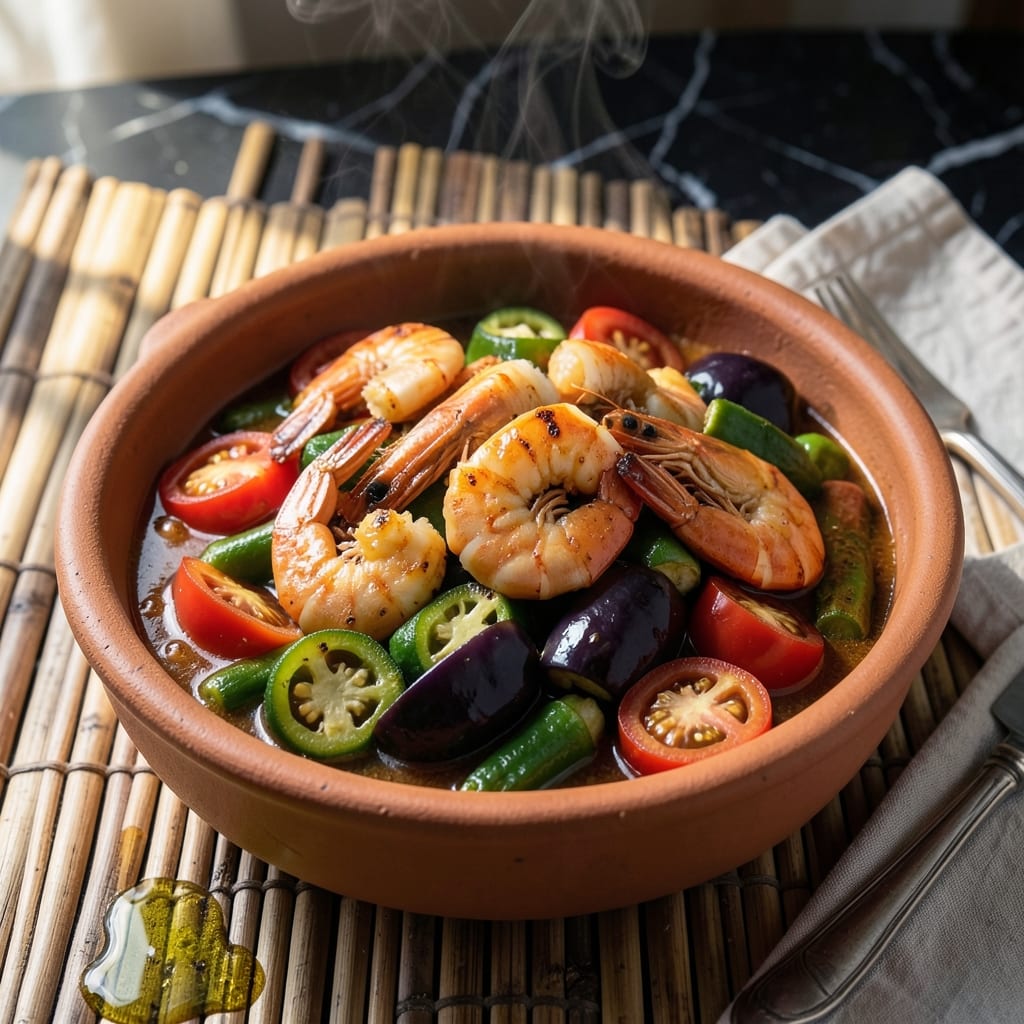
This Filipino classic gets a seafood upgrade with plump shrimp absorbing the rich, savory flavors of the traditional vegetable stew. The dish showcases the vibrant colors and textures of eggplant, bitter melon, and okra.
I’ve perfected the balance of bagoong (shrimp paste) with fresh vegetables to create a dish that’s both bold and comforting. The shrimp add a delicate sweetness that complements the earthy vegetables beautifully.
Cooking in a clay pot deepens the flavors, but a heavy-bottomed pot works just as well at home. The key is layering ingredients properly so each retains its texture while soaking up the flavorful broth.
Serve this with steamed rice to soak up every last bit of the fragrant sauce. The combination of land and sea makes it a standout main course.
Ingredients for Pinakbet Recipe with Shrimp
Pantry staples meet fresh produce and seafood for this vibrant, traditional dish.
| Ingredient | Amount | Notes |
|---|---|---|
| Large Shrimp 🍤 | 1 ½ lb | Peeled, deveined, tails on or off |
| Bagoong 🦐 | 2 tbsp | Filipino shrimp paste, fermented |
| Eggplant 🍆 | 1 whole | Japanese or Chinese variety, sliced |
| Bitter Melon 🥒 | 1 whole | Sliced thin, seeds removed |
| Okra 🌿 | 8 pieces | Fresh, trimmed ends removed |
| Tomatoes 🍅 | 2 whole | Medium, quartered |
| Red Onion 🧅 | 1 whole | Medium, thinly sliced |
| Garlic Cloves 🧄 | 6 cloves | Minced finely |
| Long Green Chili 🌶️ | 2 pieces | Optional, slit lengthwise |
| Olive Oil 🫒 | 2 tbsp | For sautéing aromatics |
| Water 💧 | 1 ½ cups | Or light vegetable broth |
| Fish Sauce 🐟 | 1 tbsp | For umami depth |
| Salt 🧂 | 1 tsp | Adjust to taste |
| Black Pepper 🌶️ | ½ tsp | Freshly ground preferred |
The shrimp quality is non-negotiable here. Wild-caught or sustainably farmed shrimp from Whole Foods or a trusted seafood market ensures the best flavor and texture. The bagoong is equally critical—look for Barrio Fiesta or Mama Sita brands at Asian grocery stores like Seafood City or 99 Ranch for authentic Filipino fermented shrimp paste. Fresh bitter melon should have a firm texture and bright green skin.
No bitter melon? Zucchini or green papaya can substitute, though the flavor profile will differ. Bagoong alamang (tiny shrimp paste) works if you can’t find regular bagoong. For a milder taste, reduce the bagoong to 1 tablespoon. The eggplant can be the larger Italian variety if Japanese isn’t available. Frozen okra works in a pinch (thaw first).
Store shrimp in the coldest part of the fridge—use within 1-2 days. Bagoong keeps indefinitely in the fridge once opened. The vegetables are best used fresh but can be prepped 1 day ahead if stored in airtight containers. Leftovers taste even better the next day.
Why You’ll Love This Recipe
- One Pot Wonder: I just toss everything in—shrimp, eggplant, bitter melon, okra—and let the bagoong work its magic.
- Umami Bomb: The shrimp soaks up that salty, funky bagoong flavor while the veggies balance it out.
- Feeds a Crowd: Honestly, it’s my go-to for family dinners or when friends drop by unannounced.
- Budget Stretcher: A pound of shrimp and a few veggies go a long way, and leftovers taste even better the next day.
Step-by-Step Instructions for Pinakbet With Shrimp
Here’s the authentic method for balancing bold flavors and perfect texture in this traditional dish.
Step 1: Sauté Aromatics and Shrimp Paste
Heat the 2 tbsp olive oil in a large pot over medium heat. Add the thinly sliced red onion and sauté for 3-4 minutes until translucent and fragrant. This builds the flavor foundation.
Stir in the minced 6 cloves garlic cloves and cook for 30 seconds until just golden—don’t let it burn. Add the 2 tbsp bagoong and cook for another 1-2 minutes, stirring constantly, until the shrimp paste releases its deep umami aroma.
Step 2: Build the Vegetable Base
Add the quartered 2 whole tomatoes to the pot and cook for 2-3 minutes until they begin to soften and break down. This creates a rich, tangy base for the stew.
Stir in the sliced 1 whole bitter melon and cook for 2 minutes. The bitter melon should start to soften slightly but retain its shape. This vegetable’s distinctive flavor is essential to authentic pinakbet, so resist the urge to skip it.
Step 3: Layer Remaining Vegetables and Liquid
Add the sliced 1 whole eggplant, 8 pieces okra, and slit 2 pieces long green chili to the pot. Gently stir to combine with the aromatics. The eggplant should begin to absorb the flavors immediately.
Pour in the 1.5 cups water and bring to a gentle simmer. Add the 1 tbsp fish sauce, 1 tsp salt, and 0.5 tsp black pepper. Let the mixture simmer uncovered for 5 minutes to allow the vegetables to partially cook.
Step 4: Add Shrimp and Finish Cooking
Gently fold in the 1.5 lb large shrimp and cook for 4-5 minutes until they turn pink and opaque. Avoid over-stirring to prevent breaking the shrimp. The shrimp should be just cooked through—overcooking will make them tough.
Taste and adjust seasoning if needed. The vegetables should be tender but not mushy, and the broth should have a balanced salty-sour flavor from the bagoong and tomatoes. Remove from heat and let rest for 2-3 minutes before serving to allow flavors to meld.
Pro Tips For Making Pinakbet Recipe With Shrimp
- Sear Shrimp Last: Cook the shrimp separately at the end to prevent them from turning rubbery—add them to the vegetables just 3-4 minutes before serving.
- Salt the Bitter Melon: Sprinkle sliced bitter melon with salt and let sit for 10 minutes, then rinse to reduce bitterness without losing texture.
- Use Fresh Bagoong: Older fermented shrimp paste can taste harsh; fresh bagoong has a smoother, more balanced flavor that blends better with the vegetables.
- Layer by Density: Start with eggplant since it takes longest to soften, then add okra and bitter melon, so everything finishes cooking at the same time.
Pro Cooking Tips for This Recipe
Bagoong Balance
I always bloom the 2 tbsp bagoong in hot oil for 1-2 minutes before adding other ingredients. This mellows its intense saltiness while deepening its umami. Use Barrio Fiesta brand for consistent quality. 💡
Vegetable Layering
Add vegetables in stages based on cooking time. Start with bitter melon first since it needs the most time, then eggplant, and finally okra last. This prevents mushiness while ensuring each retains its texture.
Shrimp Timing
Add the 1.5 lb shrimp only in the final 4-5 minutes of cooking. Overcooking makes them rubbery. Look for the shrimp to turn opaque and curl into a C-shape. Remove from heat immediately after.
Clay Pot Advantage
If using a clay pot, soak it in water for 30 minutes before cooking to prevent cracking. The porous material absorbs flavors beautifully, enhancing the dish’s depth. A heavy Dutch oven works as a great alternative.
Broth Adjustment
Taste before adding 1.5 cups water—some bagoong brands are saltier. If needed, start with 1 cup and add more later. The broth should taste bold but not overwhelmingly salty.
Resting Period
Let the dish rest for 5 minutes off heat before serving. This allows the shrimp to finish cooking gently and the vegetables to absorb more flavor. The okra will release its natural thickening properties. 🔥
Nutrition Facts
Frequently Asked Questions
Can I use frozen shrimp?
Yes, thaw frozen shrimp overnight in the fridge before using. Pat them completely dry to avoid watering down the dish, and ensure they’re fully defrosted to cook evenly in the 4-5 minutes.
What if I can’t find bagoong?
Substitute with 1 tbsp fish sauce plus 1 tsp soy sauce for a similar umami kick. While not identical, it’ll still deliver a salty depth. Authentic bagoong is worth seeking at Asian markets though!
How do I reduce the bitterness?
Salt the sliced bitter melon and let sit for 10 minutes before rinsing. This draws out excess bitterness while keeping its signature flavor. You can also use less or swap in green papaya.
Can I make this ahead?
The flavors deepen overnight. Store in an airtight container for up to 2 days—reheat gently to avoid overcooking the shrimp.

- Potato Candy Recipe 1933: Vintage Peanut Butter Roll Delight - October 30, 2026
- Potato Chip Cookie Recipe With Pecans: Buttery Crunch Meets Nutty Richness - October 30, 2026
- Potato Patty Recipe No Egg: Crispy Edges Without the Binder - October 30, 2026