
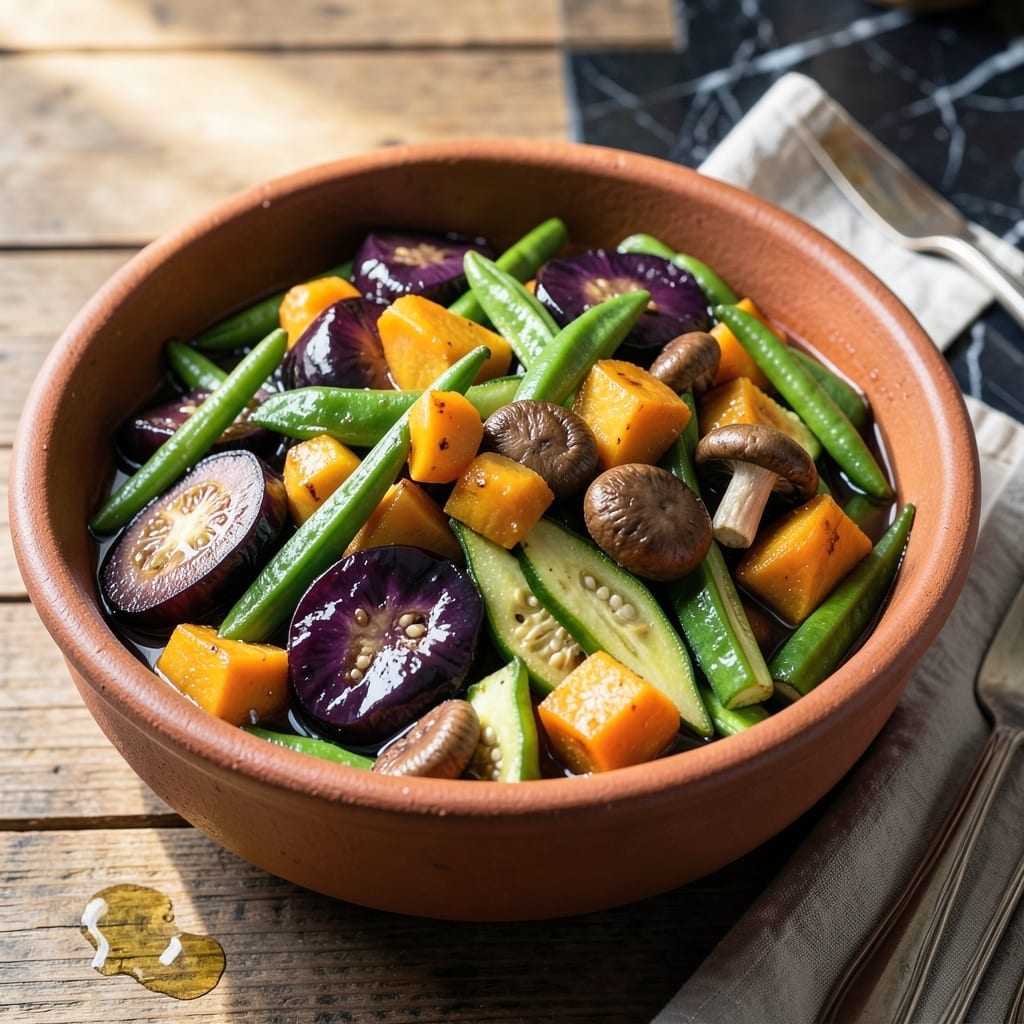
This vegetarian pinakbet delivers all the traditional Filipino flavors without bagoong, proving you don’t need shrimp paste for an authentic taste. The dish relies on a rich tomato base and carefully balanced seasoning to create depth.
I’ve perfected this version to keep the soul of pinakbet intact while making it accessible to plant-based eaters. Eggplant, bitter melon, and squash soak up the savory sauce, delivering the same comforting experience.
The key is layering umami through mushrooms and miso paste, which mimic the salty depth of bagoong. Every bite offers the familiar hearty, slightly tangy profile that defines this beloved stew.
Serve with steamed rice for a complete, satisfying meal that stays true to its roots while welcoming everyone to the table.
Ingredients for Pinakbet Recipe Without Bagoong
Fresh vegetables and pantry staples create this classic Filipino stew without bagoong.
| Ingredient | Amount | Notes |
|---|---|---|
| Eggplant 🍆 | 1 whole | Large, cut into chunks |
| Bitter Melon 🥒 | 1 whole | Medium, sliced thin |
| Calabasa Squash 🎃 | 1 whole | Small, cubed |
| Long Green Beans 🌱 | 8 oz | Trimmed, cut into 2-inch pieces |
| Okra 🌿 | 4 pieces | Fresh, ends trimmed |
| Shiitake Mushrooms 🍄 | 8 oz | Fresh, sliced for umami |
| Tomatoes 🍅 | 3 whole | Medium, diced for base |
| Yellow Onion 🧅 | 1 whole | Large, thinly sliced |
| Garlic Cloves 🧄 | 6 cloves | Minced for depth |
| White Miso Paste 🥣 | 2 tbsp | For umami, bagoong substitute |
| Vegetable Broth 💧 | 2 cups | Low-sodium preferred |
| Soy Sauce 🫙 | 2 tbsp | Tamari for gluten-free |
| Olive Oil 🫒 | 2 tbsp | For sautéing vegetables |
| Salt 🧂 | ½ tsp | Adjust to taste |
| Black Pepper 🌶️ | ½ tsp | Freshly ground preferred |
The eggplant and bitter melon are non-negotiable for authenticity—Asian markets have the best selection. Look for firm, unblemished produce with vibrant color. Shiitake mushrooms are key for umami depth; fresh is ideal, but rehydrated dried works too. White miso paste (found at Whole Foods or Trader Joe’s) replaces bagoong beautifully, so don’t skip it.
No bitter melon? Zucchini or green papaya can sub, but the flavor shifts. Button mushrooms work if shiitake are unavailable. Red miso paste adds more intensity at one-third less. For extra tang, a splash of calamansi juice (or lime) brightens everything up. The soy sauce can be coconut aminos for soy-free versions.
Prep all veggies before cooking—this moves fast. Leftovers keep 3-4 days in the fridge, but the flavors deepen overnight. Freezes well for 2 months (thaw before reheating). Serve with steamed rice to soak up that rich sauce.
Why You’ll Love This Recipe
- I’ll be real: five veggies for the price of one takeout meal, and it’s just as filling.
- One Pan Meal: I just toss the eggplant, bitter melon, squash, and green beans in one pan—no fancy techniques, no extra dishes.
- Naturally Rich: Honestly, the calabasa and okra soak up the garlic and tomato flavors so well, you won’t miss the bagoong.
- Feeds the Family: Between us, this stretches easily for leftovers or a big dinner with rice and grilled fish.
Step-by-Step Instructions for Pinakbet Without Bagoong
This method brings out the best in every vegetable while building deep, savory flavor.
Step 1: Prepare and Sauté the Aromatic Base
Heat the 2 tbsp Olive Oil in a large pot over medium heat. Add the thinly sliced Yellow Onion and sauté for 3-4 minutes until translucent and just beginning to soften at the edges. This builds the foundation of flavor for your stew.
Add the 6 cloves Garlic Cloves and cook for 30 seconds until fragrant. Be careful not to let it brown—you want the aromatic oils to infuse the oil without becoming bitter. Stir in the 2 tbsp White Miso Paste and cook for 1 minute to deepen its umami richness.
Step 2: Build the Vegetable Foundation
Increase heat to medium-high and add the diced Tomatoes. Cook for 2-3 minutes until they begin to break down and release their juices. This creates a natural acidity that balances the dish.
Add the sliced Shiitake Mushrooms and cook for another 3-4 minutes until they soften and start to brown slightly. The mushrooms will absorb the miso and tomato flavors while adding their own earthy depth. Pour in the 2 cups Vegetable Broth and 2 tbsp Soy Sauce.
Step 3: Incorporate the Hearty Vegetables
Add the cubed Calabasa Squash and 2-inch pieces of Long Green Beans. These need more time to cook through, so they go in first. Bring the mixture to a gentle simmer, then reduce heat to medium-low.
Cover and cook for 8-10 minutes, stirring occasionally, until the squash begins to soften. This step allows the flavors to meld while ensuring the vegetables cook evenly. The squash should be tender but still hold its shape when pierced with a fork.
Step 4: Add Delicate Vegetables and Finish
Stir in the chunks of Eggplant, sliced Bitter Melon, and Okra. These cook more quickly and can become mushy if added too early. Season with the 0.5 tsp Salt and 0.5 tsp Black Pepper.
Cover and simmer for another 5-7 minutes until all vegetables are tender but still vibrant. The bitter melon should soften slightly but retain some texture, and the eggplant should absorb the savory broth. Taste and adjust seasoning if needed—remember that the miso and soy sauce already add saltiness.
Step 5: Rest and Serve
Remove from heat and let the pinakbet sit covered for 5 minutes. This allows the flavors to fully meld together. The vegetables will continue to soften slightly as they rest in the hot broth.
Serve warm in shallow bowls to showcase the colorful medley of vegetables. The stew should have a rich, savory broth with vegetables that are tender yet retain their distinct textures. Each bite should deliver the complex harmony of bitter, sweet, and umami flavors characteristic of this dish.
Pro Tips For Making Pinakbet Recipe Without Bagoong
- Salt the Bitter Melon: I learned this the hard way—soak sliced bitter melon in salted water for 10 minutes to cut the bitterness before cooking.
- Sauté Aromatics First: Start with onions, garlic, and tomatoes in hot oil until fragrant—about 3 minutes—to build the base flavor without bagoong.
- Skip Overcrowding: Cook vegetables in batches if needed; dumping everything at once steams them instead of sautéing, and you’ll end up with mushy pinakbet.
- Use Tomato Paste: Sounds weird, but it works: a tablespoon of tomato paste stirred in at the beginning adds depth and replaces the umami you’re missing without bagoong.
Make-Ahead Tips for pinakbet recipe without bagoong
Prep Ahead Strategy
Chop all your vegetables the night before and store them separately in airtight containers in the fridge. This saves so much time on cooking day. The eggplant and bitter melon can be prepped 8-12 hours ahead without losing quality. 💡
Partial Cooking
You can sauté the onions, garlic, and mushrooms the day before, then refrigerate this base. When ready to cook, just reheat this mixture and continue with the tomatoes and broth. This cuts your active cooking time nearly in half.
Full Make-Ahead
This dish actually improves overnight. After cooking, let it cool completely, then store in the fridge for up to 3 days. The flavors deepen as the vegetables continue to absorb the savory broth.
Freezing Instructions
Portion cooled pinakbet into freezer-safe containers, leaving 1-inch headspace. It freezes well for up to 2 months. I recommend using wide-mouth mason jars for easy reheating.
Reheating Tips
Thaw overnight in the fridge, then reheat on the stovetop over medium-low heat with a splash of water or broth. Microwave works in a pinch—cover and heat in 1-minute intervals, stirring between each. ❄️
Day-Of Assembly
If prepping all components ahead, combine everything in your pot and simmer for 5-7 minutes to marry the flavors. This works especially well if you’ve stored the vegetable base and delicate veggies separately.
Nutrition Facts
Frequently Asked Questions
What can replace bagoong for umami flavor?
White miso paste works best, adding deep umami without fish. Soy sauce or mushrooms also boost savory notes beautifully.
Can I skip bitter melon if I dislike its taste?
Yes! Try zucchini or green papaya for milder flavor. The dish stays hearty, though the signature bitterness will be less pronounced.
How do I prevent eggplant from turning mushy?
Add it last, as it cooks quickly. Simmer just 5-7 minutes until tender but still holding shape.
What’s the best way to reduce bitterness in bitter melon?
Salt the slices and let sit 10 minutes before cooking. Rinse and pat dry to mellow the flavor significantly.

- Potato Candy Recipe 1933: Vintage Peanut Butter Roll Delight - October 30, 2026
- Potato Chip Cookie Recipe With Pecans: Buttery Crunch Meets Nutty Richness - October 30, 2026
- Potato Patty Recipe No Egg: Crispy Edges Without the Binder - October 30, 2026