
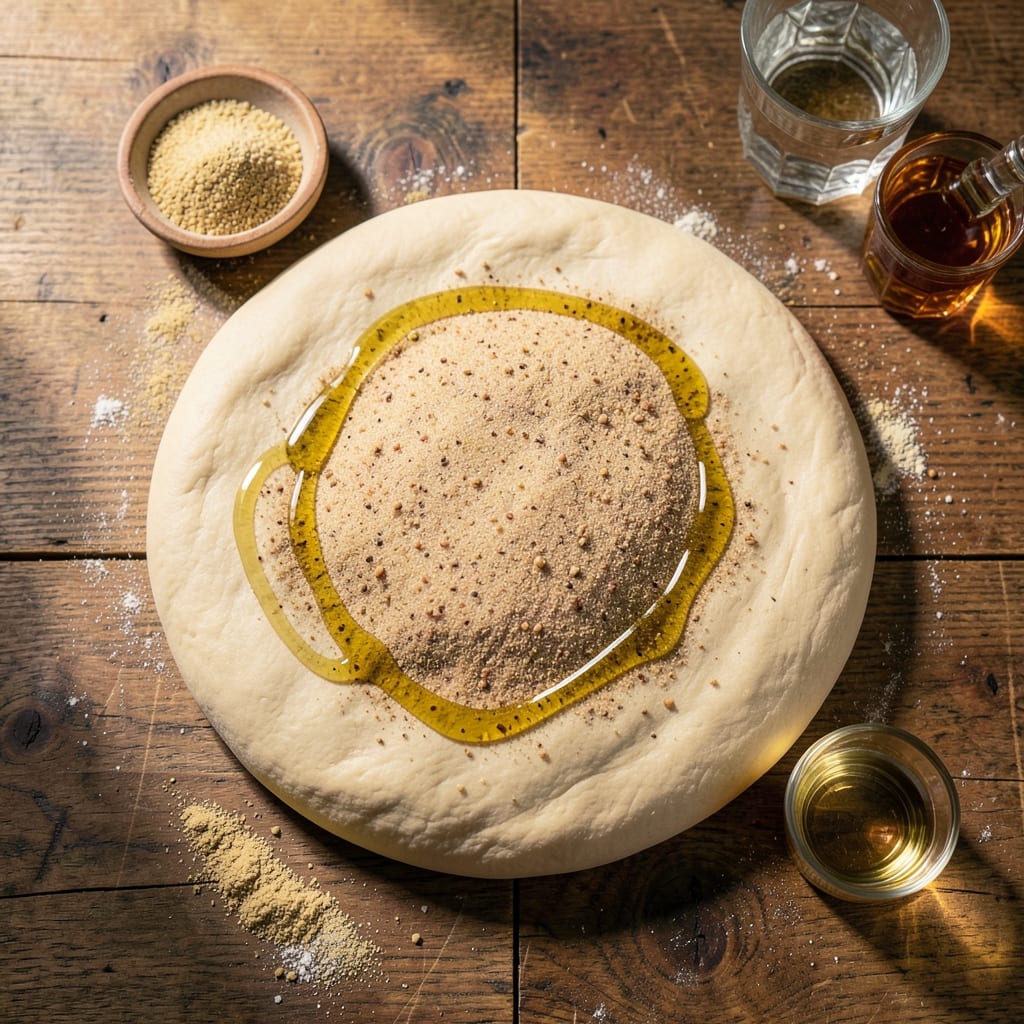
This pizza dough recipe combines whole wheat and white flour for a crust with nutty depth and perfect texture. Standing on a step stool in my grandmother’s kitchen in Sicily, I learned that balance is everything in cooking.
The whole wheat adds earthy flavor while white flour ensures a light, chewy crumb. This proven technique delivers professional results every time, with a crisp exterior and tender interior.
After kneading, the dough rests to develop flavor and rise properly. The combination creates a crust that’s hearty yet delicate, exactly what you’re looking for in a homemade pizza base.
With precise mixing and resting times, you’ll achieve a balanced dough ready for your favorite toppings. Cooking should be as enjoyable as eating, and this recipe makes it simple.
Ingredients for Pizza Dough Recipe with Whole Wheat and White Flour
Whole wheat and white flour join forces for a crust that’s hearty, chewy, and full of nutty depth.
| Ingredient | Amount | Notes |
|---|---|---|
| Whole Wheat Flour 🌾 | 1 ½ cups | Fine grind preferred for texture |
| All-Purpose White Flour 🌾 | 1 ½ cups | Plus extra for dusting surface |
| Active Dry Yeast 🍞 | 1 package | 2 1/4 tsp equivalent |
| Warm Water 💧 | 1 ¼ cups | 110°F to activate yeast |
| Extra-Virgin Olive Oil 🫒 | 2 tbsp | High quality for flavor depth |
| Honey 🍯 | 1 tbsp | Helps yeast activation and browning |
| Kosher Salt 🧂 | 1 ½ tsp | Diamond Crystal preferred for consistency |
| Sugar 🍚 | 1 tsp | Granulated white sugar for yeast |
| Cornmeal 🌽 | ¼ cup | For dusting baking surface |
| Garlic Powder 🧄 | 1 tsp | Optional for flavored crust |
| Dried Oregano 🌿 | 1 tsp | Optional for Italian seasoning |
The flours are non-negotiable here. King Arthur or Bob’s Red Mill whole wheat have the right protein content—avoid stone-ground if it’s too coarse, as it’ll make the dough dense. White flour should be all-purpose, not bread flour (too much gluten). Yeast freshness matters: check the expiration date. Fleet Farm or Costco sell it in bulk, which is great if you bake often. Warm water needs to be just right—too hot kills yeast, too cold won’t activate it.
No honey? Maple syrup or agave work the same. Out of whole wheat? Bread flour at half the amount plus white flour keeps the structure. Olive oil can be swapped for avocado oil in a pinch, but it lacks that fruity depth. For a quicker rise, place the bowl in a slightly warm oven (turned off, light on). The cornmeal prevents sticking—polenta works too if that’s what you’ve got.
Dough keeps in the fridge for 3 days (it’ll develop more flavor) or freezes for 3 months. Thaw overnight in the fridge before using. Leftovers? Roll into breadsticks or flatbread. Always bring dough to room temp before shaping—cold dough tears easily.
Why You’ll Love This Recipe
- No-Fuss Mixing: Honestly, it’s just flour, yeast, water, and olive oil—no fancy gadgets, no waiting all day for the dough to rise.
- Nutty Depth: The whole wheat adds this warm, toasty flavor that pairs perfectly with the lightness of white flour.
- Endless Toppings: I’ve used this base for everything from classic margherita to breakfast pizza with eggs and spinach.
- Budget Stretch: A batch costs pennies and makes enough for two large pizzas, so I always freeze half for next week.
Step-by-Step Instructions for Pizza Dough With Whole Wheat and White Flour
Here’s the method I use to create a perfectly balanced, flavorful crust every time.
Step 1: Activate the Yeast and Mix Wet Ingredients
In a large bowl, combine the 1.25 cups Warm Water, 1 tbsp Honey, and 1 tsp Sugar. Stir until the honey dissolves completely. The sugar and honey feed the yeast, while the warm water at 110°F provides the ideal temperature for activation.
Sprinkle the 1 package Active Dry Yeast over the water mixture and let it sit for 5-10 minutes until it becomes foamy and bubbly. This confirms the yeast is alive and active. Then stir in the 2 tbsp Extra-Virgin Olive Oil until fully incorporated.
Step 2: Combine Dry Ingredients and Form the Dough
In a separate bowl, whisk together the 1.5 cups Whole Wheat Flour, 1.5 cups All-Purpose White Flour, 1.5 tsp Kosher Salt, 1 tsp Garlic Powder, and 1 tsp Dried Oregano. The whole wheat adds a nutty depth, while the white flour keeps the texture light and manageable.
Gradually add the dry mixture to the wet ingredients, stirring with a wooden spoon until a shaggy dough forms. It will look rough at first, but that’s normal. Don’t worry if it’s slightly sticky—this will be fixed in the next step.
Step 3: Knead the Dough Until Smooth and Elastic
Turn the dough out onto a lightly floured surface—use some of the extra all-purpose flour for dusting. Knead for 8-10 minutes by hand, pushing the dough away with the heel of your hand and folding it back over itself repeatedly. The dough is ready when it’s smooth, elastic, and only slightly tacky.
If the dough feels too sticky, add a little more flour, 1 tablespoon at a time. Be patient—proper kneading develops the gluten, which gives the crust its chewy texture. You’ll notice the dough becomes more cooperative as you work it.
Step 4: Let the Dough Rise Until Doubled
Lightly oil a clean bowl with a bit of the Extra-Virgin Olive Oil and place the dough inside, turning to coat it evenly. Cover the bowl with a damp kitchen towel or plastic wrap and let it rise in a warm, draft-free place for 1 to 1.5 hours, or until doubled in size.
For best results, I like to let it rise in an oven that’s been preheated to 100°F and then turned off. The dough should spring back slowly when poked with a finger—if it springs back quickly, it needs more time.
Step 5: Shape and Prepare for Baking
Punch down the risen dough to release the air, then divide it into 4 equal portions for individual pizzas. Roll each portion on a surface dusted with the 0.25 cup Cornmeal to prevent sticking. The cornmeal adds texture and helps create a crispy bottom crust.
Shape the dough into rounds, stretching or rolling to your desired thickness. Let the shaped dough rest for 10-15 minutes before adding toppings and baking. This final rest relaxes the gluten, making it easier to achieve a perfectly even crust.
Pro Tips For Making Pizza Dough Recipe With Whole Wheat And White Flour
- Proof the Yeast: Always activate your yeast in warm water (around 110°F) with a pinch of sugar first—I learned this the hard way after a few flat, sad doughs.
- Balance the Flours: Use a 50/50 split of whole wheat and all-purpose flour for a lighter texture; whole wheat alone makes the dough too dense and heavy.
- Skip the Rush: Let the dough rise for at least 1.5 hours, or until doubled in size—resist the urge to speed it up, or your crust will be tough.
- Oil the Bowl: Coat the rising bowl with about 1 tablespoon of olive oil before adding the dough; it prevents sticking and makes cleanup way easier.
Regional Styles of This Recipe
Sicilian Tradition
In Sicily, we often use semolina flour for pizza dough, but whole wheat works beautifully too. The key is a long, slow rise—sometimes overnight—to develop deep flavor. My grandmother always let her dough rest in a cool cellar, which gave it that signature Sicilian texture. 🗺️
Neapolitan Influence
Naples is the birthplace of modern pizza, and their approach favors a thinner crust. For this style, reduce the whole wheat to 1 cup and add ½ tsp more white flour. The result is a crisp base with a slightly chewy edge, perfect for classic Margherita toppings.
Roman Adaptation
Roman pizza often uses less yeast for a denser, more bread-like texture. Try cutting the yeast in half and extending the rise time to 2-3 hours. This creates a heartier crust that holds up to bold toppings like potato slices or zucchini blossoms.
New York Style
For that classic NYC foldable slice, increase the white flour to 2 cups while keeping the whole wheat at 1 cup. This creates a stretchy, foldable dough that’s sturdy enough for heavy toppings. I learned this trick from a pizzeria owner in Brooklyn during my visits to East Coast Italian communities.
Add 1 tbsp vital wheat gluten for extra chew if you like. 💛
California Fusion
Out west, we embrace whole grains fully. Try replacing ½ cup white flour with spelt or kamut flour for extra nuttiness. This version pairs perfectly with fresh, local produce like heirloom tomatoes and arugula from the farmers market.
Nutrition Facts
Frequently Asked Questions
Can I use only whole wheat flour?
Not recommended. Whole wheat alone makes a dense, heavy crust. The combo of 1.5 cups whole wheat and 1.5 cups white flour balances nutrition and texture perfectly.
Why does my dough not rise?
Check your yeast freshness and water temperature. Water should be 110°F—too hot kills yeast, too cold won’t activate it. Also ensure your bowl is in a warm, draft-free spot for 1-1.5 hours.
Can I make this ahead?
Prepare the dough and refrigerate for up to 3 days before using. The flavors deepen over time. Alternatively, freeze for up to 3 months and thaw overnight in the fridge.
How thin should I roll the dough?
For a classic crust, aim for ¼-inch thickness. Use cornmeal to prevent sticking. Let it rest 10-15 minutes after shaping for easier stretching and a more even bake.

- Potato Candy Recipe 1933: Vintage Peanut Butter Roll Delight - October 30, 2026
- Potato Chip Cookie Recipe With Pecans: Buttery Crunch Meets Nutty Richness - October 30, 2026
- Potato Patty Recipe No Egg: Crispy Edges Without the Binder - October 30, 2026