
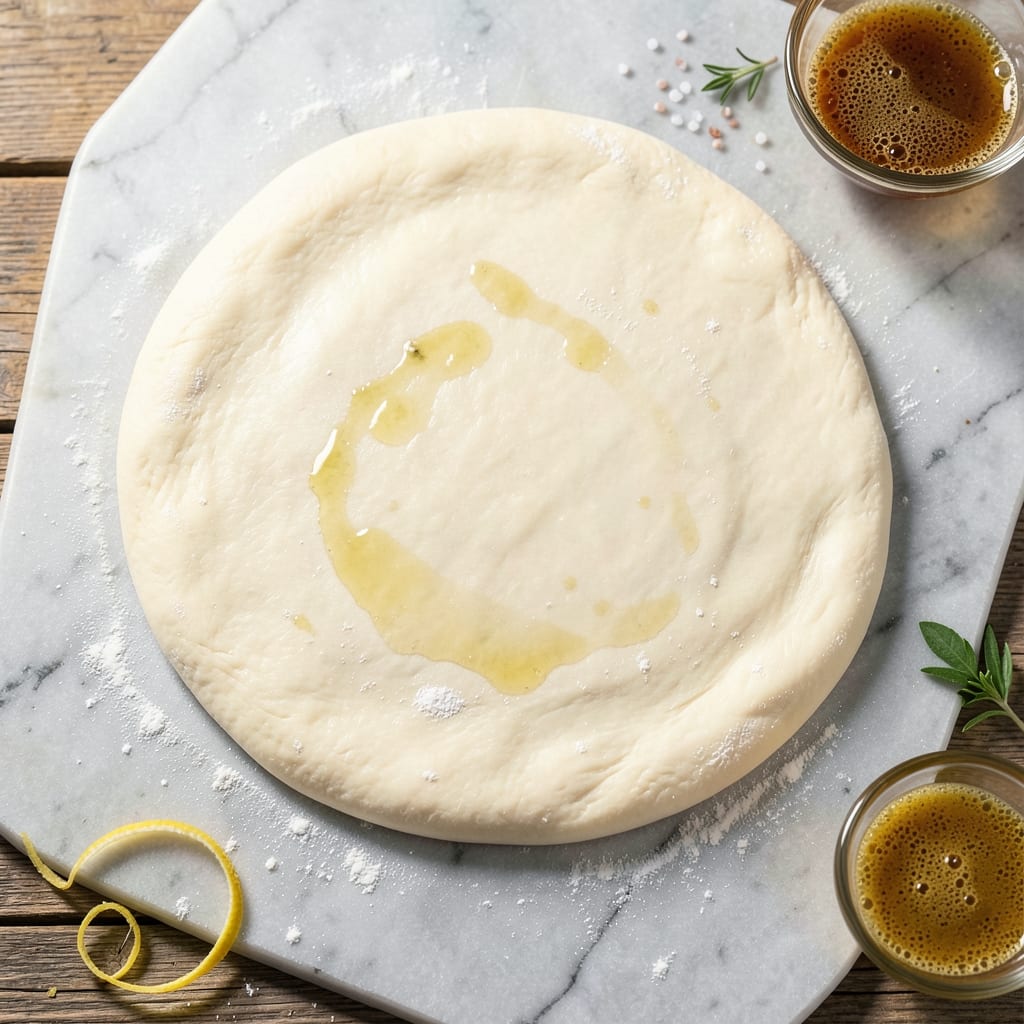
Standing in my grandmother’s Sicilian kitchen, I learned that great pizza dough needs time. This recipe builds flavor through a slow, overnight rise in the refrigerator.
Refrigerating the dough develops complexity that same-day recipes can’t match. The cold fermentation allows the yeast to work gradually, creating a more nuanced taste and better texture.
You’ll end up with a crust that’s crispy outside, chewy inside, and packed with depth. The longer rise also makes the dough easier to handle and shape.
This method delivers professional-quality results with minimal effort. Let the refrigerator do the work for you.
Ingredients for Pizza Dough Recipe Refrigerate
Eight simple ingredients create this flavor-packed dough with minimal effort.
| Ingredient | Amount | Notes |
|---|---|---|
| Bread Flour 🌾 | 3 ½ cups | High protein for chewy texture |
| Active Dry Yeast 🍃 | 1 tsp | Or instant yeast same amount |
| Warm Water 💧 | 1 ¼ cups | 110°F, not hotter |
| Olive Oil 🫒 | 2 tbsp | Extra-virgin for flavor |
| Sea Salt 🧂 | 1 ½ tsp | Fine grain for even distribution |
| Granulated Sugar 🍚 | 1 tsp | Feeds the yeast |
| All-Purpose Flour 🌾 | ½ cup | For dusting work surface |
| Cornmeal 🌽 | ¼ cup | For dusting pizza peel |
The flour is key here. King Arthur Bread Flour is my go-to for its consistent high protein—12-14% is what you want. Most grocery stores carry it, or grab it online. Yeast can be active dry or instant (same amount), but check the expiration date—old yeast is a silent killer of good dough. I always keep a jar in the fridge to extend its life.
No bread flour? All-purpose works in a pinch (add 1 extra tbsp per cup for structure). Short on time? Use 1 tsp instant yeast and skip the sugar. The olive oil can be any extra-virgin—California Olive Ranch is a solid supermarket pick. For the water, use filtered if your tap has a strong taste (dough picks up everything).
Dough balls keep in the fridge for 3 days (flavor improves daily). Freeze for 1 month in airtight bags. Bring to room temp before shaping—cold dough tears. That overnight rise? Non-negotiable for the best texture.
Why You’ll Love This Recipe
- Overnight Magic: I mix this dough in 5 minutes before bed and wake up to perfectly risen pizza base—no last-minute rushing.
- Rich Olive Depth: The olive oil gives it that golden crust and subtle richness that store-bought just can’t match.
- Meal Prep Hero: I portion and refrigerate for up to 3 days, pulling out exactly what I need for fresh pizza any night.
- Budget Stretch: A pound of bread flour and a packet of yeast make 4 pizzas for the cost of one delivery.
Step-by-Step Instructions for Pizza Dough
Here’s my tested method for dough that develops deep flavor through a slow, cold rise.
Step 1: Activate the Yeast and Mix the Dough
In a small bowl, combine the 1.25 cups warm water, 1 tsp granulated sugar, and 1 tsp active dry yeast. Let it sit for 5-7 minutes until the mixture becomes foamy and bubbly—this confirms your yeast is active and ready to work.
In a large mixing bowl, whisk together the 3.5 cups bread flour and 1.5 tsp sea salt. Make a well in the center and pour in the yeast mixture and 2 tbsp olive oil. Use a wooden spoon to stir until a shaggy dough forms. The dough will look rough at this stage, but that’s normal.
Step 2: Knead Until Smooth and Elastic
Turn the dough out onto a surface dusted with 0.5 cup all-purpose flour. Knead for 8-10 minutes by hand, pushing the dough away with the heel of your hand and folding it back over itself. The dough is ready when it feels smooth and springs back when poked.
If the dough feels too sticky, add a bit more all-purpose flour, but avoid over-flouring—this can make the crust tough. You’ll notice the texture changes from sticky to silky as the gluten develops. This step builds the structure that gives your crust its chew.
Step 3: First Rise at Room Temperature
Lightly oil the mixing bowl and place the dough back inside, turning it to coat all sides with oil. Cover the bowl with a damp kitchen towel or plastic wrap. Let the dough rise in a warm, draft-free spot for 1-2 hours, or until it has doubled in size.
This initial rise kickstarts the fermentation process, giving the yeast a head start before the cold fermentation. The dough should look puffy and jiggle slightly when you gently shake the bowl. If your kitchen is cool, this might take closer to 2 hours.
Step 4: Cold Fermentation in the Refrigerator
Punch down the risen dough to release the air. Shape it into a smooth ball and place it back in the oiled bowl. Cover it again and transfer it to the refrigerator. Let it ferment for at least 8 hours, but 24-48 hours is ideal for maximum flavor development.
The cold, slow rise allows the yeast to work gradually, breaking down starches and proteins to create a more complex, slightly tangy flavor. You’ll notice the dough develops a richer aroma and a more relaxed texture, making it easier to stretch when you’re ready to use it.
Step 5: Shape and Prepare for Baking
Remove the dough from the refrigerator and let it sit at room temperature for 30-60 minutes. This takes the chill off and makes it easier to handle. Turn the dough out onto a surface dusted with 0.25 cup cornmeal to prevent sticking.
Divide the dough into 4 equal portions for individual pizzas, or use it as one large ball for a single pie. Shape each portion into a smooth ball, then use your hands or a rolling pin to stretch it to your desired thickness. The cornmeal adds a subtle crunch and helps the dough slide easily onto your pizza peel or baking sheet.
Pro Tips For Making Pizza Dough Recipe Refrigerate
- Chill the Dough: After kneading, refrigerate the dough for at least 24 hours—this slow fermentation develops deeper flavor and a crispier crust.
- Use Bread Flour: Skip all-purpose flour; bread flour’s higher protein content gives the dough that chewy, elastic texture you want.
- Check Water Temp: Warm water should feel like a baby’s bath, around 110°F—too hot kills the yeast, too cold slows activation.
- Oil the Bowl: Coat the rising bowl with olive oil before adding dough to prevent sticking and make cleanup a breeze.
Wine and Beer Pairings for This pizza dough recipe refrigerate
Italian Wine Pairings
For this dough, I love serving it with a crisp Italian white wine like Vermentino from Sardinia. Its bright acidity and citrus notes cut through the richness of the crust beautifully. A Pinot Grigio from Friuli also works wonderfully. 🍷
Red Wine Options
If you prefer reds, go for a light-bodied Chianti Classico or Sangiovese. These have enough acidity to complement the dough without overpowering it. I always recommend serving reds slightly chilled for pizza night.
Beer Pairings
For beer lovers, a crisp Italian lager like Peroni or Moretti is perfect. The effervescence cleanses your palate between bites. A Belgian-style witbier with citrus notes also pairs surprisingly well. 🍺
Non-Alcoholic Choices
Sparkling water with a squeeze of lemon or lime enhances the dough’s flavors. I also enjoy a blood orange soda from Italian specialty stores—it’s a nostalgic taste of Sicily for me.
Pro Tip
The longer fermentation of this dough means it has more depth, so pair it with beverages that have similar complexity. Avoid heavily oaked wines or very hoppy beers—they’ll fight with the dough’s subtle tang.
Nutrition Facts
Frequently Asked Questions
How long can I keep the dough in the fridge?
You can refrigerate pizza dough for up to 3 days for best flavor and texture. Beyond that, the yeast may over-ferment, creating an off taste or excessive sourness.
Does refrigerating dough improve the flavor?
Cold fermentation develops deeper, more complex flavors. The slow rise allows enzymes to break down starches, creating a slightly tangy, richer taste compared to same-day dough.
Can I use the dough straight from the fridge?
No, let it sit at room temperature for 30-60 minutes first. Cold dough is stiff and difficult to stretch. This rest period relaxes the gluten, making it easier to shape.
What if my dough doesn’t rise in the fridge?
Check your yeast expiration date first. If it’s fresh, ensure your fridge isn’t too cold (38-42°F is ideal). Older yeast or extreme cold can slow fermentation significantly.

- Potato Candy Recipe 1933: Vintage Peanut Butter Roll Delight - October 30, 2026
- Potato Chip Cookie Recipe With Pecans: Buttery Crunch Meets Nutty Richness - October 30, 2026
- Potato Patty Recipe No Egg: Crispy Edges Without the Binder - October 30, 2026