
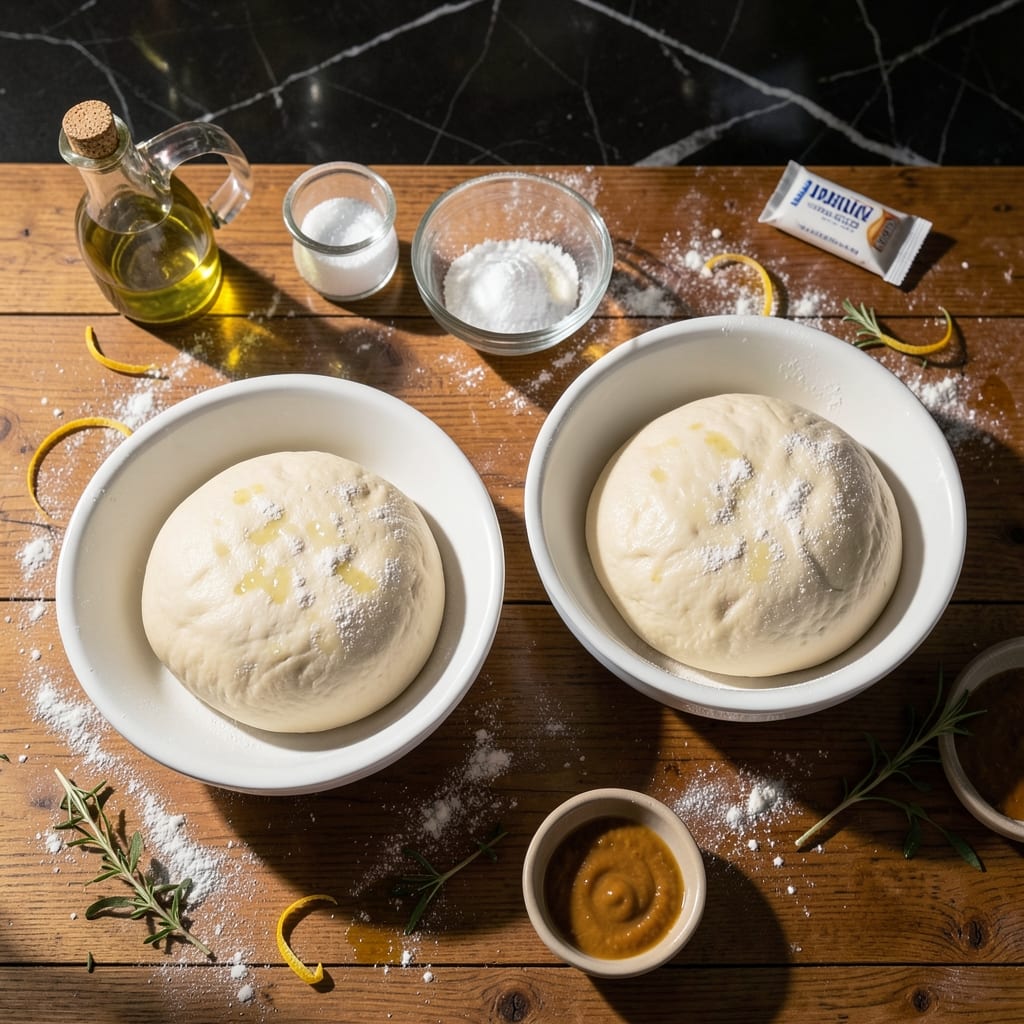
There’s nothing like the satisfaction of pulling a homemade pizza from the oven with a perfectly chewy crust and airy bite. This recipe yields exactly enough dough for two large pizzas, making it ideal for family dinners or casual gatherings.
Standing on a step stool in my grandmother’s kitchen in Sicily, I learned that great pizza dough requires patience and precision. The slow fermentation develops complex flavors and creates that signature texture we all crave.
With just a handful of simple ingredients and time, you’ll create a foundation that rivals any pizzeria. The dough comes together easily and rests while you prepare your toppings.
Let the process work for you—by the time you’re ready to shape and bake, you’ll have dough that stretches beautifully and bakes to golden perfection.
Ingredients for Pizza Dough Recipe for 2 Large Pizzas
Simple pantry staples transform into a foundation for two perfect pizzas.
| Ingredient | Amount | Notes |
|---|---|---|
| Bread Flour 🌾 | 3 ½ cups | High-protein for chewy texture |
| Warm Water 💧 | 1 ¼ cups | 110-115°F for yeast activation |
| Active Dry Yeast 🍞 | 1 package | 2 1/4 tsp equivalent |
| Extra-Virgin Olive Oil 🫒 | 2 tbsp | For elasticity and flavor |
| Fine Sea Salt 🧂 | 1 ½ tsp | Dissolved in water for even distribution |
| Granulated Sugar 🍚 | 1 tsp | Feeds the yeast for rise |
| Semolina Flour 🌾 | ¼ cup | For dusting and crispness |
| All-Purpose Flour 🌾 | ½ cup | For work surface dusting |
The flour is critical here. King Arthur Bread Flour is my go-to—its 12.7% protein content guarantees that chewy bite. Find it at Whole Foods or most grocery stores in the baking aisle. Yeast freshness matters too: check the expiration date and store unopened packets in the freezer to extend shelf life. For the olive oil, California Olive Ranch or Filippo Berio are reliable supermarket brands.
No bread flour? All-purpose flour plus 1 tbsp vital wheat gluten per cup gets you close to the same texture. Out of semolina? Cornmeal works in a pinch for dusting. Sugar can be swapped for honey at equal amounts (this remains vegetarian). The water temperature is non-negotiable—too hot kills the yeast, too cold delays rise. Use an instant-read thermometer if you’re unsure.
Dough can rest in the fridge for up to 48 hours—the longer it ferments, the better the flavor. Freeze shaped dough balls for up to 3 months (thaw overnight in the fridge). Bring dough to room temperature before shaping for easiest handling.
Why You’ll Love This Recipe
- 5-Minute Mix: I can have the dough ready before the oven preheats—just flour, water, yeast, olive oil, and salt, no fancy steps.
- Crispy Chewy Magic: The bread flour gives it that perfect texture, with just enough olive oil to make every bite rich.
- Date Night or Leftovers: I’ve used this for romantic dinners and then turned the extras into garlic knots the next day.
- Pantry Stretch: Five basic ingredients I always have on hand, and it makes enough for two pizzas without breaking the bank.
Step-by-Step Instructions for Pizza Dough for 2 Large Pizzas
Here’s the method I’ve perfected for that ideal balance of chew and airy lift.
Step 1: Activate the Yeast for Maximum Rise
In a small bowl, combine the 1.25 cups Warm Water (which should feel like warm bathwater), the 1 package Active Dry Yeast, and the 1 tsp Granulated Sugar. Let this sit for 5-7 minutes until the mixture becomes foamy and cloudy—this visual confirmation means your yeast is alive and active.
I always check my water temperature with a thermometer to ensure it’s between 110-115°F. Too hot and you’ll kill the yeast; too cool and it won’t activate properly. The sugar gives the yeast an immediate food source to get the fermentation started quickly.
Step 2: Mix and Knead the Dough to Develop Gluten
In a large mixing bowl, combine the 3.5 cups Bread Flour and the 1.5 tsp Fine Sea Salt. Make a well in the center and pour in the yeast mixture and the 2 tbsp Extra-Virgin Olive Oil. Using a wooden spoon, mix until the dough starts to come together—it will look shaggy at first.
Turn the dough out onto a surface dusted with 0.5 cup All-Purpose Flour and knead for 8-10 minutes until smooth and elastic. You’ll know the gluten has developed properly when the dough springs back slowly when pressed with your finger. The high-protein bread flour is what gives this dough its signature chew.
Step 3: First Rise for Flavor Development
Lightly oil a clean bowl with a bit of the Extra-Virgin Olive Oil and place your dough inside, turning to coat all sides. Cover with a damp towel or plastic wrap and let rise in a warm, draft-free spot for 1-2 hours or until doubled in size.
I like to turn my oven on to its lowest setting for 2 minutes, then turn it off and place the bowl inside—this creates the perfect warm environment. The dough should be puffy and when you press it gently with your finger, the indentation should remain. This first rise develops the complex flavors we associate with great pizza dough.
Step 4: Divide, Shape, and Second Rise
Punch down the risen dough to release the air, then turn it out onto a surface dusted with 0.25 cup Semolina Flour. Divide the dough into 2 equal portions (about 22-24 oz each) and shape each into a smooth ball.
Place the dough balls on a baking sheet dusted with more semolina flour, cover lightly, and let rest for 30 minutes. This second rise isn’t about volume—it’s about relaxing the gluten so the dough stretches easily without springing back. The semolina flour prevents sticking and adds a nice texture to the crust’s underside.
Step 5: Shape and Prepare for Baking
After the second rise, shape each dough ball into a 12-14 inch round on a surface dusted with semolina flour. Work from the center out, pressing gently with your fingertips to create the crust edge. Don’t use a rolling pin—this compresses the air bubbles we worked so hard to create.
The dough should be thin enough to see light through when stretched, but not so thin it tears. If it resists stretching, let it rest for 5 minutes and try again. Your dough is now ready for toppings and baking to crisp, chewy perfection.
Pro Tips For Making Pizza Dough Recipe For 2 Large Pizzas
- Test Your Yeast: Always bloom your active dry yeast in the warm water with a pinch of sugar first—I learned this the hard way after wasting a batch on dead yeast.
- Use Bread Flour: Skip all-purpose flour; the higher protein in bread flour gives that chewy, stretchy texture you actually want in pizza dough.
- Don’t Rush the Rise: Let the dough double in size, even if it takes 2 hours—rushing it with heat just makes the flavor suffer.
- Oil the Bowl: Coat your rising bowl with about 1 tablespoon of that extra-virgin olive oil so the dough doesn’t stick and tears when you try to shape it.
Perfect Pairings for This Recipe
Classic Italian Pairings
Nothing complements this dough better than a simple Margherita pizza with San Marzano tomatoes, fresh mozzarella, and basil. I always use Di Napoli tomatoes from the Italian deli—their sweetness balances the chewy crust perfectly. 🌟
Wine Selections
A crisp Pinot Grigio from Friuli-Venezia Giulia cuts through the richness beautifully. For red lovers, a light Chianti Classico with cherry notes pairs wonderfully without overpowering the dough’s subtle flavors.
Beer Options
An Italian Peroni or Moretti lager offers a clean, refreshing contrast. For craft lovers, try a Belgian witbier like Hoegaarden—its citrus and spice notes complement the crust’s airy texture wonderfully. 🍺
Side Dish Ideas
A simple arugula salad with lemon vinaigrette adds a peppery bite that cleanses the palate. I toss 4 cups baby arugula with 2 tbsp olive oil and 1 tbsp lemon juice for the perfect balance.
Antipasto Start
Begin your meal with a traditional antipasto platter featuring prosciutto, olives, and marinated artichokes. These bold flavors prime your palate for the pizza’s subtle notes. My Nonna always served this at our Sunday family dinners.
Nutrition Facts
Frequently Asked Questions
What if my dough doesn’t rise?
Check your yeast expiration date first. If it’s fresh, ensure water was 110-115°F. Too hot kills yeast, too cold delays activation. Try again in a warmer spot.
Can I use all-purpose flour instead?
Yes, but add 1 tbsp vital wheat gluten per cup to match bread flour’s protein. The texture won’t be as chewy, but still delicious. The higher protein creates that signature bite.
How long can dough rest in the fridge?
Up to 48 hours for best flavor development. Let it come to room temperature before shaping for easiest handling. The cold slows fermentation, enhancing taste.
Why does my crust get tough?
Over-kneading or too much flour during shaping can cause this. Knead just until smooth and use minimal flour when stretching. The gluten needs to relax for that perfect chew.

- Potato Candy Recipe 1933: Vintage Peanut Butter Roll Delight - October 30, 2026
- Potato Chip Cookie Recipe With Pecans: Buttery Crunch Meets Nutty Richness - October 30, 2026
- Potato Patty Recipe No Egg: Crispy Edges Without the Binder - October 30, 2026