
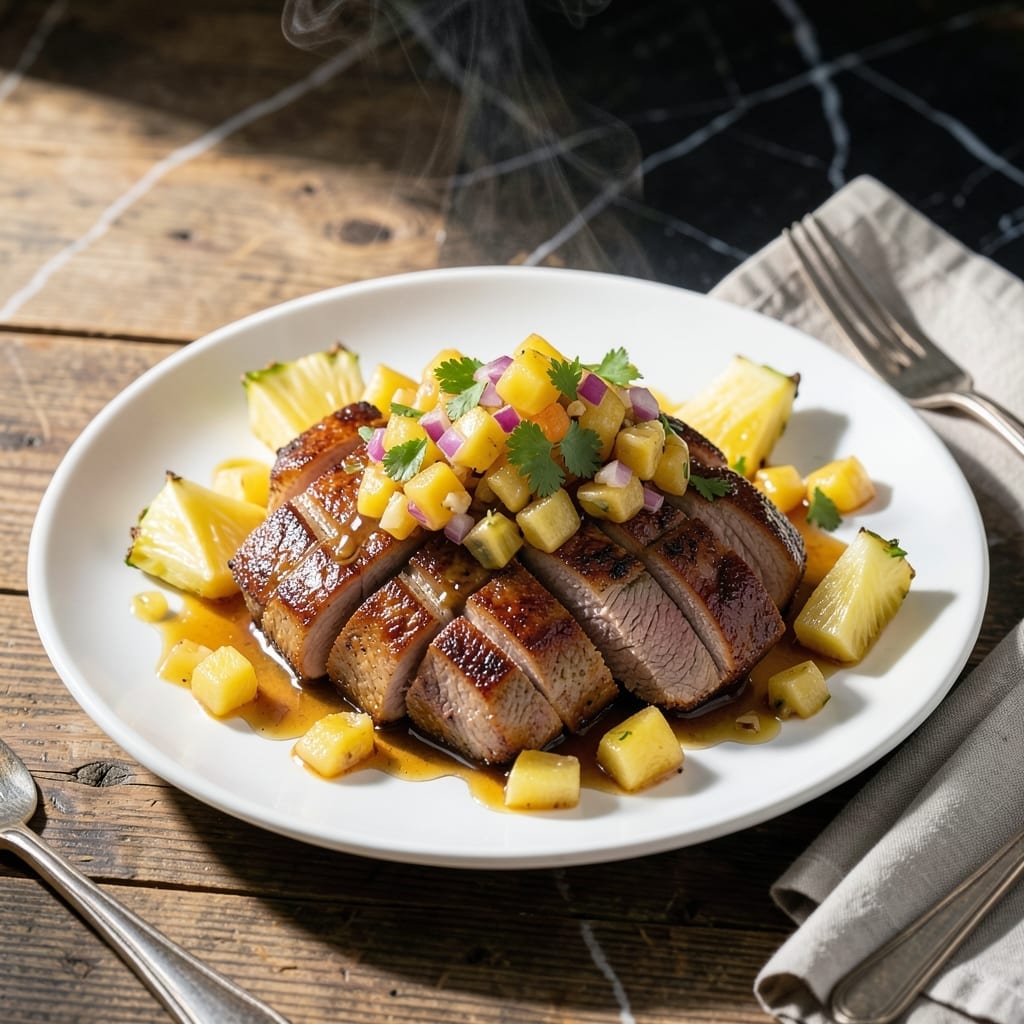
This pineapple chutney transforms pork into a restaurant-quality dish with minimal effort. The sweet and tangy glaze balances rich, savory cuts beautifully while adding vibrant color to the plate.
I developed this recipe after realizing how often sweet and savory pairings elevate simple proteins. The chutney cooks in 20 minutes while the pork roasts, making it efficient for weeknight dinners or Sunday suppers.
You’ll achieve tender pork with a glossy, caramelized exterior that soaks up every bit of the chutney’s bright, complex flavors. The combination of spice, sweetness, and acidity creates a sauce that’s both bold and balanced.
Serve with roasted vegetables or over mashed potatoes for a complete, impressive meal. The chutney also keeps well, making it perfect for meal prep.
Ingredients for Pineapple Chutney Recipe for Pork
Pantry staples meet fresh pineapple and pork for a balanced, restaurant-worthy meal.
| Ingredient | Amount | Notes |
|---|---|---|
| Pork Tenderloin 🥩 | 1 ½ lb | Trimmed of excess fat |
| Fresh Pineapple 🍍 | 2 cups | Diced into small pieces |
| Red Onion 🧅 | 1 whole | Finely diced for even cooking |
| Garlic Cloves 🧄 | 3 cloves | Minced for maximum flavor |
| Fresh Ginger 🌿 | 1 tbsp | Peeled and grated finely |
| Apple Cider Vinegar 🍏 | ¼ cup | For tangy acidity balance |
| Light Brown Sugar 🍚 | ¼ cup | Packed for sweetness depth |
| Ground Cinnamon 🌶️ | ¼ tsp | Warm spice undertone |
| Ground Cumin 🌿 | ¼ tsp | Earthy complexity addition |
| Red Pepper Flakes 🔥 | ¼ tsp | Adjust for heat preference |
| Olive Oil 🫒 | 2 tbsp | Divided for cooking and finishing |
| Salt 🧂 | 1 tsp | Kosher or sea salt preferred |
| Black Pepper 🌶️ | ½ tsp | Freshly ground for best flavor |
| Fresh Cilantro 🌿 | ¼ cup | Chopped for garnish |
The pork tenderloin is the star here—look for firm, pink flesh without dark spots at Whole Foods or your local butcher. Fresh pineapple matters more than you’d think; pre-cut works in a pinch (but drain it well). Ginger and garlic should be fresh—those jars just don’t have the same punch. I grab mine from Trader Joe’s when I’m in a hurry, but any grocery store works.
No fresh pineapple? Canned in juice (not syrup) is your backup—just drain and pat dry. Swap apple cider vinegar for white wine vinegar if that’s what you’ve got. Brown sugar can be coconut sugar or maple syrup, but the texture will be slightly different. Skip the cinnamon if it’s not your thing, but the cumin adds depth you won’t want to lose.
The chutney keeps for about 1 week in the fridge—perfect for meal prep. Pork leftovers? 3-4 days max, but they reheat beautifully. I always make extra chutney—it’s just as good on chicken or even stirred into rice (worth the extra minute).
Why You’ll Love This Recipe
- One Pan Wonder: I toss the pork and chutney ingredients together in a single skillet—minimal cleanup, maximum flavor.
- Sweet & Tangy Kick: The fresh pineapple and ginger create this bright, zesty contrast that cuts through the richness of the pork tenderloin.
- Weeknight Hero: Honestly, it’s my go-to for busy evenings when I need something impressive without the fuss.
- Stretches Further: Leftovers taste even better the next day, and the chutney works on sandwiches or rice bowls.
Instructions
Here’s the method I use to create that perfect balance of sweet, tangy, and savory every time.
Step 1: Sear the Pork Tenderloin to Golden Perfection
Pat the 1.5 lb Pork Tenderloin dry with paper towels—this ensures a good sear. Season generously with 1 tsp Salt and 0.5 tsp Black Pepper, pressing the seasoning into the meat so it adheres. Heat 1 tbsp Olive Oil in a large skillet over medium-high heat until it shimmers.
Add the pork and sear for 3-4 minutes per side until the surface is deep golden brown and releases easily from the pan. This creates a flavorful crust while keeping the inside juicy. Transfer the pork to a plate and tent with foil to keep warm.
Step 2: Sauté the Aromatics for the Chutney Base
In the same skillet, add the remaining 1 tbsp Olive Oil over medium heat. Add the 1 whole Red Onion, finely diced, and cook for 4-5 minutes until soft and translucent. Stir in the 3 cloves Garlic Cloves and 1 tbsp Fresh Ginger, cooking for 30 seconds until fragrant.
This step builds the flavor foundation. The onion should turn slightly golden at the edges, and the garlic and ginger should release their aromas without burning. Keep the heat moderate to prevent bitterness.
Step 3: Build the Sweet-Tangy Chutney
Add the 2 cups Fresh Pineapple, 0.25 cup Apple Cider Vinegar, 0.25 cup Light Brown Sugar, 0.25 tsp Ground Cinnamon, 0.25 tsp Ground Cumin, and 0.25 tsp Red Pepper Flakes to the skillet. Stir well to combine.
Simmer for 10-12 minutes over medium-low heat, stirring occasionally, until the pineapple softens and the mixture thickens slightly. The chutney should coat the back of a spoon but still have visible pineapple pieces. Taste and adjust sweetness or acidity if needed.
Step 4: Glaze and Finish the Pork
Return the seared pork to the skillet with the chutney. Spoon the mixture over the pork, coating it evenly. Reduce the heat to low and let it simmer for 5-7 minutes, turning the pork occasionally to ensure it’s fully glazed.
The pork should reach an internal temperature of 145°F while soaking up all the bold chutney flavors. Once done, transfer the pork to a cutting board and let it rest for 5 minutes to allow the juices to redistribute.
Step 5: Slice and Garnish for Serving
Slice the pork into ½-inch thick medallions and arrange on a platter. Spoon any remaining chutney from the skillet over the top. Garnish with the 0.25 cup Fresh Cilantro, chopped, for a bright, fresh finish.
Serve immediately while the pork is still warm and the chutney glistens. The contrast of the tender pork with the vibrant, chunky chutney makes every bite unforgettable.
Pro Tips For Making Pineapple Chutney Recipe For Pork
- Caramelize the Pineapple: Cook the pineapple over medium-high heat until it turns golden brown—about 8-10 minutes. I learned this the hard way: undercooked pineapple stays watery and won’t develop that deep, sweet-tart flavor the chutney needs.
- Rest the Pork: Let the pork tenderloin rest for 10 minutes after cooking, tented with foil. Sounds weird, but it keeps the juices inside the meat instead of all over your cutting board.
- Fine Dice the Onion: Chop the red onion into small, even pieces—about ¼-inch or smaller. After burning three batches, I finally figured out that uneven chunks cook unevenly and throw off the chutney’s texture.
- Toast the Spices: If adding whole spices like mustard seeds, toast them in a dry pan for 30 seconds before mixing into the chutney. My grandmother swore by this, and she was right: it wakes up their flavor without overpowering the pork.
Common Mistakes When Making This Dish
Overcooking the Pork
Pork tenderloin cooks quickly and can turn dry in seconds. Use a meat thermometer—pull it at exactly 145°F internal temp. Remember, it continues cooking off heat while resting. I learned this the hard way with a tough, overdone cut. 🌡️
Skipping the Sear
Always sear the pork first for that golden crust. Skipping this step means missing out on the Maillard reaction flavors. Heat 1 tbsp olive oil until shimmering, then sear 3-4 minutes per side on medium-high heat.
Burning the Aromatics
Garlic and ginger burn easily. Cook them for only 30 seconds after the onions soften. Keep the heat at medium—you want fragrant, not bitter. Stir constantly to prevent hot spots.
Chutney Too Thin
If your chutney is watery, simmer it longer. It should coat the back of a spoon after 10-12 minutes. If it thickens too much, add 1-2 tbsp water to loosen. The pineapple will release liquid as it cooks.
Uneven Pineapple Pieces
Cut pineapple into consistent ¼-inch dice for even cooking. Large chunks stay raw while small ones turn mushy. I use my Wüsthof chef’s knife for precision. This ensures every bite has perfect texture.
Skipping the Rest
Let the pork rest for 5 minutes after cooking. This allows juices to redistribute, keeping each slice moist. Slice too soon and all those flavorful juices will end up on the cutting board. 💡
Nutrition Facts
Frequently Asked Questions
Can I use canned pineapple instead of fresh?
Yes, but drain it well and pat dry first. Canned works in a pinch, though fresh has better texture. Choose pineapple packed in juice, not syrup, to avoid excess sweetness.
How do I know when the pork is done?
Use a meat thermometer—pull it at 145°F internal temperature. The pork will continue cooking while resting, so remove it just before it reaches temp. Rest for 5 minutes before slicing.
Can I make the chutney ahead of time?
It keeps well in the fridge for about 1 week. The flavors actually deepen over time. Reheat gently before serving to restore its glossy texture.
What can I serve with this dish?
Pair with roasted vegetables or mashed potatoes to soak up the sauce. The chutney also works well over rice or with grilled chicken for leftovers.

- Potato Candy Recipe 1933: Vintage Peanut Butter Roll Delight - October 30, 2026
- Potato Chip Cookie Recipe With Pecans: Buttery Crunch Meets Nutty Richness - October 30, 2026
- Potato Patty Recipe No Egg: Crispy Edges Without the Binder - October 30, 2026