
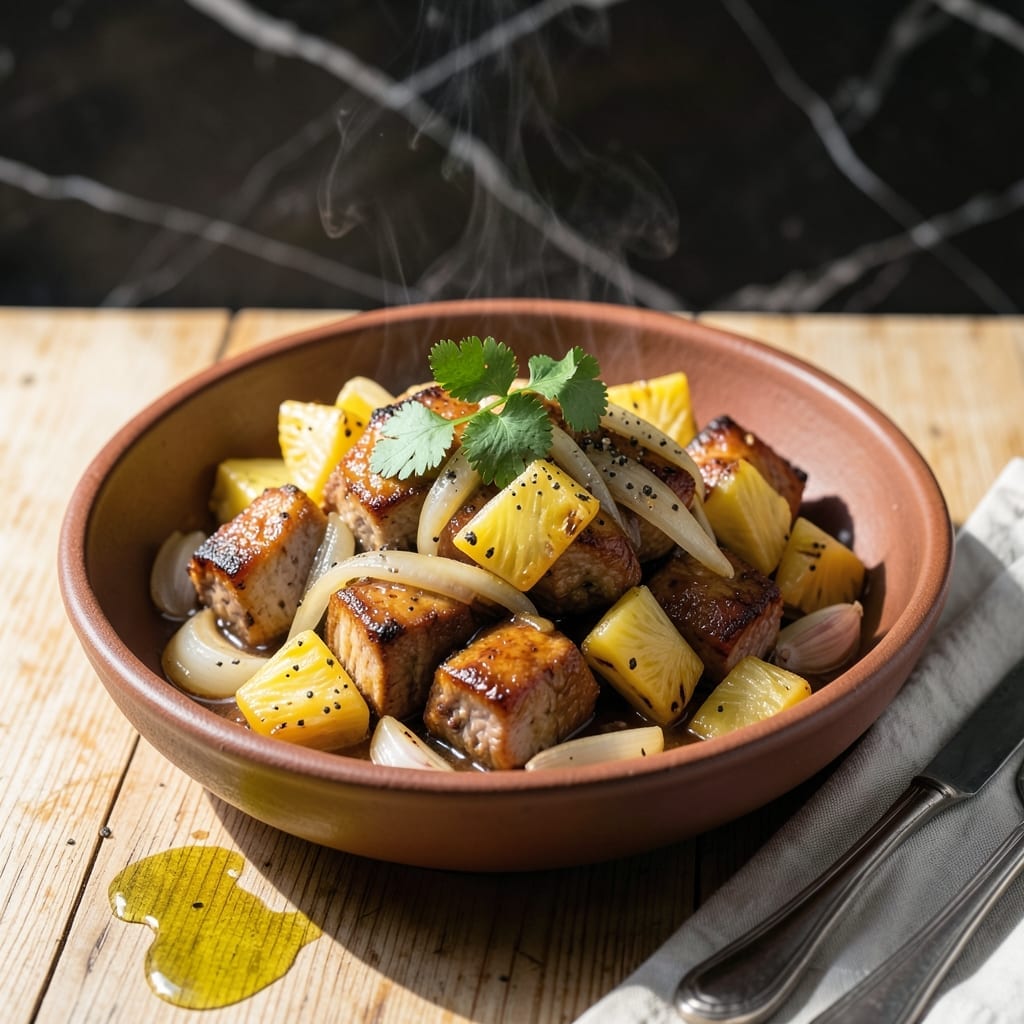
This Filipino pineapple pork dish is my go-to when I want something both sweet and savory. The combination of tender pork, tangy pineapple, and that signature rich sauce hits all the right notes.
I learned this from a neighbor who swore by using fresh pineapple chunks for the best texture. The pork soaks up all the flavors as it simmers, creating meat that’s fork-tender and packed with taste.
What you’ll love most is how the sauce thickens into this glossy, finger-licking glaze that coats every piece. It’s the kind of dish that makes you want to go back for seconds before you’ve even finished your first plate.
Perfect over steamed rice, this meal brings a taste of the Philippines to your dinner table without any fuss. Here’s how to make it.
Ingredients for Pineapple Pork Recipe Panlasang Pinoy
Simple ingredients for a dish that feels like home. Sweet, tangy, and totally satisfying.
| Ingredient | Amount | Notes |
|---|---|---|
| Pork Shoulder 🥩 | 1 ½ lb | Cut into 1-inch cubes |
| Fresh Pineapple 🍍 | 2 cups | Cut into chunks, juice reserved |
| Soy Sauce 🫒 | ½ cup | Low-sodium preferred |
| Brown Sugar 🧈 | ¼ cup | Packed, for sweetness |
| White Vinegar 💧 | 2 tbsp | For tangy balance |
| Garlic Cloves 🧄 | 4 cloves | Minced finely |
| Onion 🧅 | 1 whole | Medium, sliced thin |
| Tomato Sauce 🍅 | ½ cup | Smooth variety |
| Bay Leaves 🌿 | 2 pieces | Dried, for aroma |
| Black Peppercorns 🌶️ | 1 tsp | Freshly cracked |
| Vegetable Oil 🫒 | 2 tbsp | For sautéing |
| Bell Pepper 🌶️ | 1 whole | Red or green, diced |
| Green Peas 🥬 | ½ cup | Fresh or frozen |
| Water 💧 | ½ cup | For simmering |
The pork is key here. Pork shoulder stays tender after long simmering—avoid lean cuts like tenderloin (they dry out). Most grocery stores carry it pre-cut, but ask the butcher to cube it for you if you want to save time. Fresh pineapple (not canned) gives the best texture and bright flavor. Look for ones that smell sweet at the base.
No fresh pineapple? Canned chunks in juice work in a pinch—drain and reserve the juice for the sauce. Swap soy sauce for coconut aminos if you need gluten-free. Out of brown sugar? White sugar plus a teaspoon of molasses mimics the taste. The bell pepper can be any color—green is traditional, but red adds sweetness.
This tastes even better the next day once the flavors meld. Keeps in the fridge for 4-5 days or freeze for 3 months. Always serve over steamed rice—it soaks up that glossy sauce perfectly.
Why You’ll Love This Recipe
- One Pan Magic: I toss everything in a single pan—pork, pineapple, and the sauce—and let it simmer while I set the table.
- Sweet-Tangy Perfection: The brown sugar caramelizes with the vinegar and soy, while the fresh pineapple adds that bright, juicy pop.
- Feeds the Gang: I make a big batch for Sunday lunch, and it’s just as good reheated the next day.
- Budget Hero: Pork shoulder is cheap, pineapple’s in season, and this dish feels fancy without the price tag.
Step-by-Step Instructions for Pineapple Pork Panlasang Pinoy
This method delivers the perfect balance of sweet and savory with minimal effort.
Step 1: Sauté the Aromatics
Heat the 2 tbsp vegetable oil in a large pot over medium heat. Add the 1 whole onion and cook for 2-3 minutes until it starts to soften and turn translucent. You’ll notice a sweet aroma filling your kitchen—that’s your signal to add the 4 cloves garlic cloves.
Stir constantly for 30 seconds until the garlic turns light golden brown. Be careful not to let it burn, as this will add a bitter taste to your dish. Now add the 1 whole bell pepper and cook for another 2 minutes until it begins to soften.
Step 2: Brown the Pork and Build the Base
Increase the heat to medium-high and add the 1.5 lb pork shoulder cubes. Sear them for 5-6 minutes, stirring occasionally, until the edges are lightly browned. This step locks in the juices and adds depth to the flavor.
Once the pork is browned, pour in the 0.5 cup soy sauce, 2 tbsp white vinegar, and 0.5 cup tomato sauce. Stir well to coat the pork evenly. Let it simmer for 2 minutes to allow the flavors to meld together.
Step 3: Add Sweetness and Simmer
Sprinkle the 0.25 cup brown sugar evenly over the pork. Stir to dissolve the sugar completely—this ensures every bite has that signature sweetness. Add the 2 pieces bay leaves, 1 tsp black peppercorns, 2 cups fresh pineapple, and 0.5 cup green peas.
Pour in the 0.5 cup water and stir again. Bring the mixture to a gentle boil, then reduce the heat to low. Cover and let it simmer for 45-50 minutes, stirring occasionally, until the pork is fork-tender.
Step 4: Finish and Serve
Once the pork is tender, remove the lid and let it cook uncovered for another 5-10 minutes. This helps thicken the sauce slightly. Taste and adjust the seasoning if needed, though the combo of soy sauce, pineapple, and sugar usually hits the perfect balance.
Discard the bay leaves before serving. The pork should be falling apart, and the sauce should have a glossy, slightly thick consistency. Serve hot over steamed rice to soak up all that delicious sauce.
Pro Tips For Making Pineapple Pork Recipe Panlasang Pinoy
- Sear the Pork First: Brown the pork shoulder in batches over medium-high heat until deeply caramelized—this builds flavor before braising and prevents a watery sauce. I learned this the hard way after skipping it once and ending up with pale, bland meat.
- Use Ripe Pineapple: Pick a fresh pineapple that smells sweet at the base and yields slightly to pressure. Underripe pineapple stays tough and sour, even after cooking.
- Balance the Sauce: Taste before serving and adjust with a splash of vinegar for tang or a pinch of sugar to counter too much salt from the soy sauce. Sounds obvious, but I’ve ruined a batch by assuming the ratios were perfect.
- Simmer Low and Slow: Once everything’s in the pot, keep it at a gentle simmer—bubbling too hard makes the pork dry out. About 45 minutes to an hour usually does it for tender, fall-apart pieces.
Troubleshooting Perfect Results
Sauce Too Thin
If your sauce isn’t thickening, remove the lid and simmer uncovered on medium-low heat for 5-10 minutes. The excess liquid will evaporate. I often mash a few pineapple chunks to help thicken it naturally. 💡
Pork Still Tough
When the pork isn’t fork-tender after 45 minutes, check your heat level. It should be a gentle simmer, not a boil. Add ¼ cup more water and cook covered for another 15-20 minutes. Pork shoulder needs time to break down.
Overly Sweet Flavor
Balance is key with this dish. If it’s too sweet, add 1 tbsp vinegar or 1 tbsp soy sauce to cut through the sugar. Stir well and taste before adding more. The acidity brightens all the flavors.
Sauce Too Salty
A pinch of brown sugar or extra pineapple chunks can counterbalance excess salt. Add ¼ cup water to dilute if needed. Remember, the sauce reduces as it cooks, so it will intensify in flavor.
Taste frequently during the last 10 minutes of cooking. 🔥
Burnt Garlic
If your garlic burned during sautéing, start fresh. Burnt garlic adds bitterness that ruins the dish. Next time, lower the heat to medium and stir constantly. I use a wooden spoon to keep it moving.
Nutrition Facts
Frequently Asked Questions
Can I use canned pineapple instead of fresh?
Yes, canned pineapple works well. Use chunks in juice (not syrup) and reserve the juice for the sauce. Drain thoroughly to prevent an overly watery dish.
What cut of pork works best?
Pork shoulder is ideal for its fat content, which keeps the meat tender during long simmering. Avoid lean cuts like tenderloin, as they can become dry and tough.
How can I make this dish gluten-free?
Simply swap regular soy sauce for coconut aminos or a gluten-free soy sauce alternative. The rest of the ingredients are naturally gluten-free.
Can I prepare this in a slow cooker?
Brown the pork first, then transfer everything to a slow cooker. Cook on low for 6-7 hours or high for 3-4 hours until the pork is fork-tender.

- Potato Candy Recipe 1933: Vintage Peanut Butter Roll Delight - October 30, 2026
- Potato Chip Cookie Recipe With Pecans: Buttery Crunch Meets Nutty Richness - October 30, 2026
- Potato Patty Recipe No Egg: Crispy Edges Without the Binder - October 30, 2026