
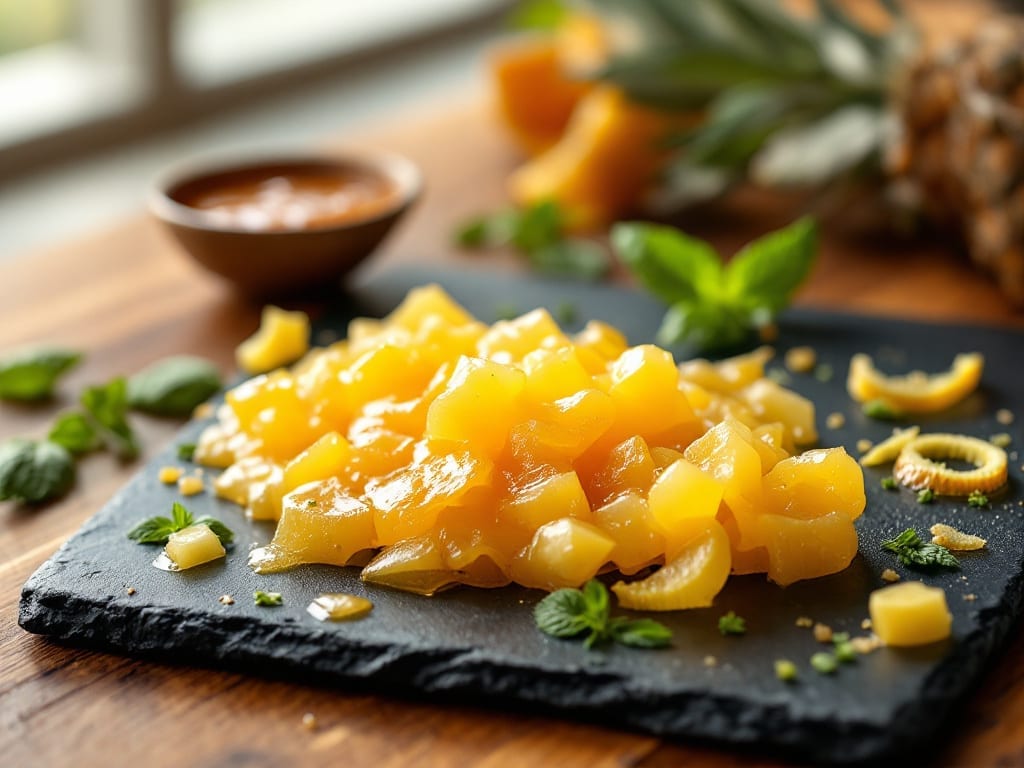
This pineapple jam recipe delivers vibrant tropical sweetness without refined sugar, using natural fruit pectin to create a thick, spreadable texture that rivals store-bought versions. The key lies in balancing ripe pineapple with just enough honey or maple syrup to enhance flavor without overpowering the fruit’s bright acidity.
I developed this method after years of experimenting with sugar-free preserves, and it never fails to impress—even with the most discerning fruit lovers.
The process is straightforward: fresh pineapple is simmered with lemon juice and spices until it breaks down into a luscious, fragrant puree. Natural pectin from the fruit itself ensures proper set without artificial additives, while a quick sterilization step guarantees safe, long-term storage.
What you’ll end up with is a jam that’s perfectly balanced—sweet enough to satisfy cravings but bright enough to cut through rich pastries or creamy yogurt.
This recipe transforms simple ingredients into something extraordinary with minimal effort. The pineapple’s natural sweetness shines through, creating a jam that’s ideal for toast, cheese boards, or even as a glaze for grilled meats.
No added sugar means you can enjoy it guilt-free, while the tropical aroma makes every bite feel like a vacation. Let’s get started on your homemade pineapple jam today.
For those who prefer a deeper flavor profile, consider adding a pinch of cinnamon or ginger during the cooking process. The jam also freezes beautifully, making it perfect for gifting or meal prep.
Whether you’re spreading it on morning toast or drizzling it over vanilla ice cream, this recipe delivers restaurant-quality results at home.
Ingredients for pineapple jam
Six core ingredients create this bright, naturally sweet pineapple jam.
| Ingredient | Amount | Notes |
|---|---|---|
| Fresh Pineapple 🍍 | 4 cups | Cubed, ripe and vibrant |
| Raw Honey 🍯 | ½ cup | Local or wildflower preferred |
| Lemon Juice 🍋 | ¼ cup | Freshly squeezed, no pulp |
| Natural Pectin Powder 🍎 | 1 tbsp | Low-methoxyl type preferred |
| Ground Cinnamon 🌿 | ½ tsp | Optional for depth |
| Fresh Ginger 🌿 | 1 tsp | Grated, optional for zing |
| Sea Salt 🧂 | ¼ tsp | Diamond Crystal preferred |
| Vanilla Bean 🌸 | 1 whole | Split and scraped, optional |
| Filtered Water 💧 | ¼ cup | For thinning if needed |
The pineapple is non-negotiable—ripe, yellow-fleshed varieties like Gold or Smooth Cayenne work best. Trader Joe’s or Costco often carry pre-cut fresh pineapple, but whole fruit lets you control ripeness. Look for vibrant color and no browning. Honey should be raw and local if possible—Manuka or wildflower adds subtle floral notes. The pectin is the secret weapon here; Ball or Pomona’s brands are reliable. For ginger, organic is best—it’s more potent and less likely to be treated with preservatives.
No honey? Maple syrup works 1:1, but it adds a deeper caramel note. Skip the vanilla? Almond extract at 1/4 tsp mimics the warmth. The cinnamon is optional but adds cozy depth—Ceylon cinnamon is milder than cassia. For extra tang, add another tablespoon of lemon juice. If your pineapple is very juicy, you might not need the water, but it’s handy for thinning if the jam sets too thick. Pre-made pectin can be swapped for homemade apple or citrus peels (simmered down), but results vary wildly.
This jam keeps 3-4 weeks in the fridge once opened—store in a clean, sterilized jar. For longer storage, freeze in ice cube trays or small jars (up to 6 months). The flavor actually improves over time, deepening as the fruit mellows. Portion into small jars for gifting—mason jars with ribbon make it feel extra special. Reheat gently in a saucepan or microwave with a splash of water to restore spreadability.
Why You’ll Love This Recipe
- No-Cook Magic: I swear, this jam takes zero effort beyond chopping fruit—just simmer, stir, and let the pectin do the work. The honey thickens it beautifully, so you’re not stuck with a runny mess like some store-bought jars.
- Sweet & Tangy Balance: That bright lemon juice cuts through the pineapple’s sweetness while the cinnamon adds warmth—it’s like a tropical hug in every spoonful. Honestly, I’ve never met a jam that hits this flavor trifecta so cleanly.
- Gift-Worthy in Minutes: Between us, this is the jam I make when friends ask for homemade gifts. Jar it up, slap a ribbon on it, and boom—you’ve got a pantry staple that costs pennies to produce but feels luxurious.
- Pantry Savior: A single batch lasts me months—spread on toast, stirred into yogurt, or drizzled over pancakes. And since it’s just fruit, honey, and a pinch of cinnamon, it’s way cheaper than buying fancy jams at the store.
Step-by-step instructions for pineapple jam
Here’s how to craft vibrant, naturally sweet pineapple jam with perfect set and tropical depth.
Prepare the Pineapple Base
In a medium saucepan, combine the 4 cups of fresh pineapple with the 0.25 cup of lemon juice. Bring to a gentle boil over medium heat, then reduce to a simmer. Let it cook uncovered for 10-12 minutes until the pineapple breaks down and releases its juices—you’ll see the mixture reduce by about one-third and develop a fragrant aroma.
Here’s the thing—don’t rush this step. The natural pectin in pineapple needs time to activate. Stir occasionally to prevent sticking, and watch for the texture to become syrupy rather than chunky. If the mixture looks too thick before the 10 minutes are up, add the 0.25 cup of filtered water to help maintain the right consistency for pectin incorporation later.
Build the Flavor Foundation
While the pineapple mixture simmers, scrape the seeds from the 1 whole vanilla bean and add them to the pot along with the scraped vanilla pod. Stir in the 1 tbsp of natural pectin powder, making sure it dissolves completely—this is critical for proper gel formation. Add the 0.5 cup of raw honey, 1 tsp of fresh ginger, and 0.5 tsp of ground cinnamon, mixing well to distribute the flavors evenly.
Let the mixture simmer for another 5-7 minutes until it thickens noticeably. You’ll know it’s ready when it coats the back of a spoon and leaves a distinct trail when you run your finger through it. This is where the magic happens—the honey’s natural sweetness balances the pineapple’s acidity while the ginger and cinnamon add warmth that will shine through in the final product.
Test and Adjust for Perfect Set
Remove the saucepan from heat and perform the classic jam test: place a small spoonful on a chilled plate and refrigerate for 2 minutes. When you run your finger through it, the jam should wrinkle slightly but not be completely firm—this indicates the perfect balance between spreadability and structure. If it’s too runny, return it to low heat and simmer for another 2-3 minutes, stirring constantly.
Here’s where precision matters: if the jam sets too quickly, you can thin it slightly with a teaspoon of the reserved filtered water to maintain that luscious, spreadable texture. The natural pectin in pineapple works best when the mixture isn’t overcooked, so resist the urge to push it further than necessary. The sea salt you’ll add next will enhance all the flavors without altering the texture.
Finish and Preserve
Return the jam to low heat and stir in the 0.25 tsp of sea salt, letting it dissolve completely. This final touch elevates the tropical flavors by cutting through the sweetness and adding complexity. Once fully incorporated, remove from heat immediately—overcooking at this stage can break down the pectin and ruin your perfect set.
Transfer the jam to sterilized jars while still warm, leaving about ½-inch headspace at the top. Seal with lids and let cool completely at room temperature before refrigerating. This jam will keep in the fridge for up to 3 weeks or can be processed in a water bath for long-term storage. The flavors will deepen as it sits, developing that perfect balance of sweet, tangy, and spiced notes that make this tropical spread truly special.
Pro Tips For Making Pineapple Jam
- COOK PINEAPPLE IN CHUNKS: Don’t puree the whole thing—cut fresh pineapple into 1-inch chunks before cooking. This keeps texture variation and prevents a gluey jam. (Yes, it’s extra work, but the result is way more interesting.)
- USE COLD HONEY: Stir in raw honey after the pineapple cools to 160°F—never hot. Cold honey blends smoother and keeps the jam from crystallizing. I learned this the hard way when my first batch turned grainy.
- WEIGH THE PECTIN: Measure pectin powder by weight (1 tsp = 3g), not volume. Spooning it straight from the box adds too much, and your jam will turn rubbery. A kitchen scale solves this forever.
- ACID TEST FIRST: Taste the lemon juice before adding all of it—pineapple varies in acidity. If it’s tart enough, skip half the lemon. Over-acidizing makes the jam cloudy and dull. (I’ve done this; it’s a bummer.)
Pro cooking tips for this dish
Pectin Activation Secrets
Pineapple contains natural pectin, but you’ll need to coax it out properly. Start by simmering the fruit with lemon juice for 10-12 minutes—this breaks down the fruit’s structure while preserving its natural pectin.
I’ve found that using ripe Gold pineapple (not overripe) works best, as it has higher pectin content. If your jam isn’t setting properly, add 1 tsp Pomona’s Universal Pectin per cup of jam and simmer for another 5 minutes. 🍎
Heat Control Matters
Jam-making is all about temperature precision. Simmer over medium-low heat to avoid scorching—pineapple burns easily. Use a candy thermometer to monitor: the mixture should reach 220-225°F for proper gel formation.
If you don’t have one, watch for the “sheet stage” (when it reaches 220°F, a drop of jam will sheet off a spoon). Overheating destroys pectin, so remove from heat immediately once you hit this point.
Acid Balance is Key
The lemon juice isn’t just for flavor—it’s essential for pectin activation. If your pineapple is particularly tart, reduce the lemon to 2 tbsp instead of ¼ cup. For sweeter pineapple, add 1 extra tbsp lemon juice to help the pectin gel properly.
I’ve learned this the hard way: skipping the acid can result in jam that’s too runny or never sets at all. 🍋
Sterilization Shortcuts
Clean jars aren’t enough—you need proper sterilization. Boil your jars and lids in water for 10 minutes before filling. For extra safety, I microwave jars with a damp paper towel inside for 2 minutes*.
This kills bacteria and ensures your jam stays fresh for months. Don’t skip this step, even if you’re refrigerating the jam—it’s about preventing spoilage, not just canning.
Flavor Layering Tricks
For deeper flavor, infuse the honey before adding it to the jam. Heat ¼ cup honey with 1 cinnamon stick for 5 minutes, then strain before mixing into the pineapple.
For a tropical twist, add ½ tsp toasted coconut flakes during the final 2 minutes of cooking. These small additions elevate your jam from good to extraordinary without altering the texture.
Storage Hacks
Refrigerated jam lasts 3-4 weeks, but for longer storage, freeze in ice cube trays—perfect for portion control. To reheat, microwave in 10-second bursts, stirring between each, until smooth. Never microwave directly in the jar—transfer to a microwave-safe bowl first to prevent cracking.
For gifting, use amber glass jars to protect the jam from light, which can degrade flavor over time. ✨
Nutrition facts
Frequently asked questions about pineapple jam
Can I use canned pineapple instead of fresh?
Fresh pineapple is ideal because it contains natural pectin that helps the jam set properly. Canned pineapple works in a pinch, but drain it well and add 1 extra tbsp lemon juice to compensate for the lack of natural acidity. For best results, use fresh pineapple—it yields a brighter, more vibrant jam with better texture.
Why did my pineapple jam turn out too runny?
Runny jam usually means the pectin didn’t activate properly. This can happen if you didn’t simmer long enough, skipped the lemon juice, or overcooked the mixture. Try adding 1 tsp Pomona’s Universal Pectin per cup of jam and simmering for another 5 minutes next time. Also, make sure your pineapple was ripe but not overripe.
How do I know when the pineapple jam is done?
The classic test is the “wrinkle test”: spoon a small amount onto a chilled plate and refrigerate for 2 minutes. When you run your finger through it, it should wrinkle slightly but not be completely firm. Another method is the “sheet stage”—when the jam reaches 220°F, a drop will sheet off a spoon. Remove it from heat immediately after this point.
Can I make this pineapple jam without honey?
Use maple syrup as a 1:1 substitute, though it adds a deeper caramel note. For a sugar-free option, try monk fruit sweetener (reduce by half) or date syrup for a rich, earthy flavor. Just remember that different sweeteners may slightly alter the texture and sweetness balance.
How long does homemade pineapple jam last?
In the fridge, it keeps for 3-4 weeks once opened. For longer storage, freeze in ice cube trays (up to 6 months) or process in a water bath for canning. Store in amber glass jars to protect from light, which can degrade flavor over time. Always use sterilized jars to prevent spoilage.

- Mary Berry’s Boiled Fruit Cake Recipe: Moist Center and Spiced Crust Magic - November 5, 2026
- Atlantic Salmon Recipe: Honey-Dill Pan-Seared With Crispy Skin - November 5, 2026
- Blaze Pizza Copycat Dough Recipe: Chewy, Airy Crust That Mimics the Original - November 5, 2026