
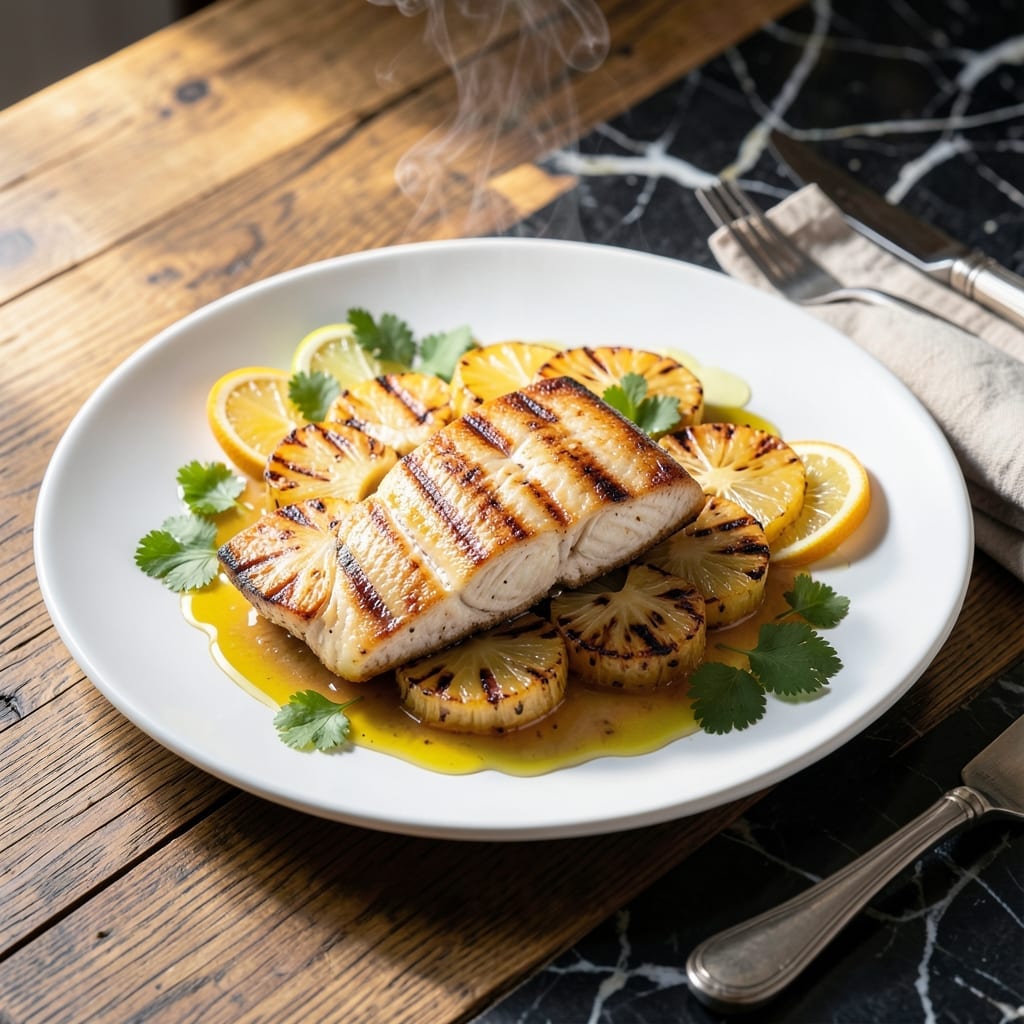
This baked mahi mahi delivers flaky, tender fish topped with a bright tropical glaze that balances sweet and tangy notes perfectly. The baking method locks in moisture while creating a caramelized finish.
I developed this recipe to highlight mahi mahi’s natural mild flavor without overpowering it. The pineapple citrus glaze enhances the fish’s sweetness while adding a vibrant, restaurant-quality presentation.
You’ll achieve perfectly cooked fillets with a glossy, slightly sticky glaze that pairs beautifully with the fish’s natural texture. The baking process ensures even cooking and a flaky result every time.
Serve alongside rice or roasted vegetables for a complete meal. Here’s how to make this dish.
Ingredients for Pineapple Mahi Mahi Recipe Baked
Bright citrus and pineapple elevate this flaky mahi mahi with minimal effort.
| Ingredient | Amount | Notes |
|---|---|---|
| Mahi Mahi Fillets 🐟 | 1 ½ lb | Skinless, about 1-inch thick |
| Pineapple Juice 🍍 | ½ cup | 100% pure, no added sugar |
| Fresh Lime Juice 🍈 | 2 tbsp | About 1 large lime |
| Fresh Orange Juice 🍊 | 2 tbsp | Navel or Valencia preferred |
| Honey 🍯 | 2 tbsp | Clover or wildflower variety |
| Soy Sauce 🫒 | 1 tbsp | Low-sodium preferred |
| Minced Garlic 🧄 | 2 cloves | Freshly minced for best flavor |
| Fresh Ginger 🌿 | 1 tsp | Peeled and grated |
| Cornstarch 🌾 | 1 tsp | For thickening the glaze |
| Olive Oil 🫒 | 1 tbsp | For greasing baking dish |
| Salt 🧂 | ½ tsp | Kosher or sea salt |
| Black Pepper 🌶️ | ¼ tsp | Freshly ground preferred |
| Red Pepper Flakes 🔥 | ¼ tsp | Optional for heat |
| Fresh Cilantro 🌿 | 2 tbsp | Chopped, for garnish |
The mahi mahi fillets are the foundation. Wild-caught from a reputable fishmonger or Whole Foods ensures optimal freshness and texture. Look for fillets that are uniform in thickness (about 1-inch) for even cooking. The pineapple juice should be 100% pure without added sugars—brands like Dole or Native Forest are reliable. Fresh citrus juices are non-negotiable; bottled lacks the vibrant acidity needed to balance the glaze.
No pineapple juice? Mango or passionfruit nectar works as a substitute, though the flavor profile shifts slightly. Swap honey for maple syrup or agave if avoiding bee products. Soy sauce can be replaced with tamari for gluten-free or coconut aminos for a milder taste. Fresh ginger is ideal, but ground ginger at one-quarter the amount can be used in a pinch. The cornstarch ensures the glaze clings; omit only if a thinner consistency is acceptable.
Prepare the glaze up to 2 days ahead—store it in the fridge. Mahi mahi is best cooked the same day as purchase, but can be refrigerated for up to 24 hours if necessary. Leftovers keep for 3 days in the fridge, though the fish texture is optimal when fresh. Reheat gently to preserve moisture.
Why You’ll Love This Recipe
- I’ll be real: the flavors taste even better the next day, so I always make extra.
- One Pan Wonder: I toss everything on a sheet pan and let the oven do the work—no flipping, no fuss.
- Tropical Pop: The pineapple juice with lime and honey creates this bright, sweet-tangy glaze that makes the mahi mahi sing.
- Weeknight MVP: Honestly, it’s my go-to for busy evenings when I need something healthy and fast.
Step-by-Step Instructions for Baked Pineapple Mahi Mahi
Master this technique for perfectly flaky fish with a glossy citrus glaze every time.
Step 1: Prepare the Mahi Mahi Fillets
Pat the 1.5 lb Mahi Mahi Fillets completely dry with paper towels to ensure even browning. Season both sides generously with 0.5 tsp Salt and 0.25 tsp Black Pepper, pressing the seasoning into the flesh so it adheres well.
Place the fillets on a plate and let them sit at room temperature for 10 minutes while you prepare the glaze. This step prevents the fish from seizing up when it hits the hot oven, ensuring it cooks evenly throughout.
Step 2: Create the Tropical Citrus Glaze
In a small saucepan, combine 0.5 cup Pineapple Juice, 2 tbsp Fresh Lime Juice, 2 tbsp Fresh Orange Juice, 2 tbsp Honey, 1 tbsp Soy Sauce, 2 cloves Minced Garlic, and 1 tsp Fresh Ginger. Bring to a gentle simmer over medium heat.
In a small bowl, whisk 1 tsp Cornstarch with 1 tablespoon of cold water to create a slurry. Stir this into the simmering liquid and cook for 2-3 minutes until the glaze thickens enough to coat the back of a spoon. Remove from heat and set aside.
Step 3: Bake the Mahi Mahi to Flaky Perfection
Preheat your oven to 400°F. Lightly grease a baking dish with 1 tbsp Olive Oil, then arrange the seasoned mahi mahi fillets in a single layer. Pour the prepared glaze evenly over the fillets, ensuring they’re fully coated.
Bake for 12-15 minutes until the fish is opaque and flakes easily with a fork. The glaze should bubble and caramelize slightly at the edges. For extra color, broil for the final 1-2 minutes, watching closely to prevent burning.
Step 4: Garnish and Serve Immediately
Sprinkle 0.25 tsp Red Pepper Flakes over the fillets for a subtle kick, if desired. Garnish with 2 tbsp Fresh Cilantro, dividing it evenly across the dish. The cilantro adds a bright, fresh contrast to the rich, sweet-tangy glaze.
Serve immediately while the glaze is still glossy and the fish retains its moisture. The mahi mahi should break apart effortlessly with a fork, revealing tender, flaky layers that soak up the vibrant tropical flavors of the glaze.
Pro Tips For Making Pineapple Mahi Mahi Recipe Baked
- Preheat the Pan: Get your baking dish hot in the oven for 5 minutes before adding the mahi mahi—this prevents the fish from sticking and helps the glaze caramelize better.
- Pat Dry the Fillets: Blot the mahi mahi with a paper towel before baking; excess moisture makes the glaze slide right off instead of clinging to the fish.
- Don’t Overcook It: Pull the fish out when it’s just opaque and flakes easily—about 12-15 minutes at 375°F—because it’ll keep cooking while resting.
- Reduce the Juices: Simmer the pineapple, lime, and orange juices with honey for 3-4 minutes first to thicken the glaze, so it coats the fish instead of pooling underneath.
Storing and Reheating This pineapple mahi mahi recipe baked
Refrigerator Storage
Let your mahi mahi cool completely, then transfer to an airtight container within 2 hours of cooking. Store in the fridge at 40°F or below for up to 3 days. The flavors meld beautifully overnight, making leftovers even more delicious. ❄️
Freezer Storage
For longer storage, freeze in a single layer first, then transfer to a freezer-safe bag with parchment between fillets. This prevents sticking and preserves the glaze. It keeps well for up to 2 months without texture loss. Always label with the date.
Stovetop Reheating
Gently reheat in a skillet over medium-low heat with 1 tbsp water or broth to prevent drying. Cover and warm for 4-5 minutes, flipping once. This method keeps the fish moist and the glaze glossy.
Microwave Reheating
Place fillets on a microwave-safe plate, cover with a damp paper towel, and heat on 50% power for 1-2 minutes. Check and continue in 30-second bursts until warmed through. The glaze may thin slightly but will re-thicken as it cools.
Oven Reheating
Preheat to 300°F, place fillets in a baking dish with 2 tbsp pineapple juice, and cover with foil. Heat for 10-12 minutes until internal temp reaches 145°F. This method best preserves the original texture.
Serving Leftovers
Reheated mahi mahi works great in tacos or over a cold salad. Add fresh cilantro and lime wedges to brighten the dish. I often serve mine with a side of rice to soak up any extra glaze. 💡
Nutrition Facts
Frequently Asked Questions
What’s the best oven temperature for baking?
400°F works perfectly for this dish. It ensures the glaze caramelizes while the fish cooks through evenly in 12-15 minutes.
Can I use fresh pineapple instead of juice?
Yes! Blend 1 cup fresh pineapple chunks and strain to get 0.5 cup juice. The flavor will be even brighter and more natural.
How do I know when the fish is done?
The mahi mahi is ready when it turns opaque and flakes easily with a fork. The internal temperature should reach 145°F.
Can I make the glaze ahead of time?
Prepare the glaze up to 2 days in advance and store it in the fridge. Reheat gently before using.

- Potato Candy Recipe 1933: Vintage Peanut Butter Roll Delight - October 30, 2026
- Potato Chip Cookie Recipe With Pecans: Buttery Crunch Meets Nutty Richness - October 30, 2026
- Potato Patty Recipe No Egg: Crispy Edges Without the Binder - October 30, 2026