
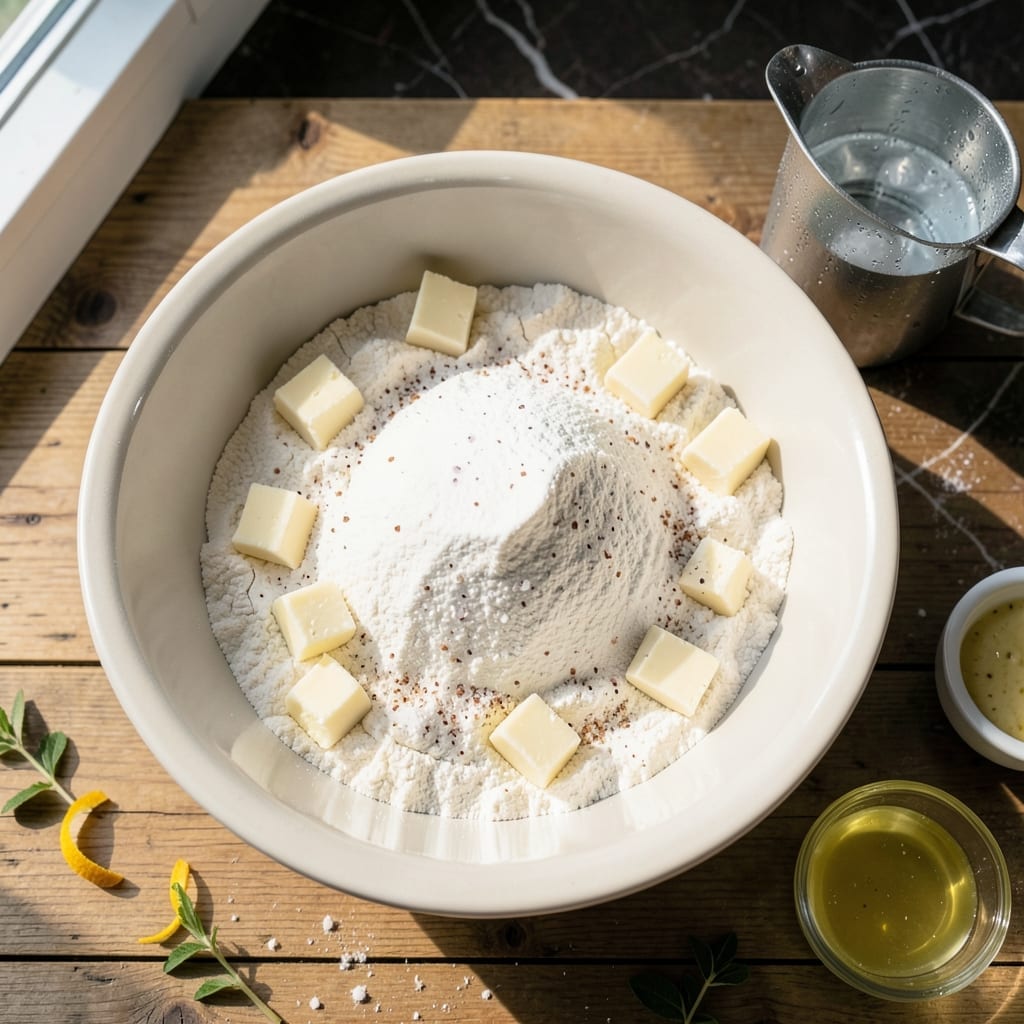
There’s a reason professional bakers swear by vinegar in pie dough—it’s the secret to achieving flaky, tender layers every time.
This recipe uses a small amount of vinegar to inhibit gluten formation, resulting in a crust that’s crisp yet delicate. The process is straightforward: mix, rest, and roll.
With just a few simple ingredients and a 30-minute chill, you’ll create a dough that bakes into golden, layered perfection.
The vinegar doesn’t add flavor—it simply ensures the texture you’ve always wanted in a pie crust.
Ingredients for Pie Dough Recipe with Vinegar
A handful of pantry staples plus vinegar unlocks the flakiest crust you have ever baked.
| Ingredient | Amount | Notes |
|---|---|---|
| All-Purpose Flour 🌾 | 2 ½ cups | Sifted for even texture |
| Unsalted Butter 🧈 | 1 cup | Cold, cut into cubes |
| White Vinegar 💧 | 1 tbsp | Inhibits gluten formation |
| Ice Water ❄️ | ½ cup | Plus extra as needed |
| Granulated Sugar 🍚 | 1 tsp | Balances acidity |
| Fine Sea Salt 🧂 | 1 tsp | Enhances flavor layers |
| Baking Powder 🧂 | ¼ tsp | Optional for extra flakiness |
The butter must stay cold—use European-style for higher fat content. King Arthur Flour is ideal for its consistent protein level, which ensures reliable results. Vinegar choice matters less (white, apple cider, or even lemon juice work), but stick to neutral options to avoid altering the flavor profile. Organic canola oil can replace butter in a pinch, though texture will differ slightly.
No vinegar? Lemon juice at the same ratio achieves similar results. Substitute coconut oil for butter (1:1) if avoiding dairy, but chill it solid first. For a richer flavor, swap 1 tbsp of water for heavy cream—this adds tenderness. The sugar can be omitted, but it helps balance the acidity from the vinegar.
Dough keeps wrapped in plastic for 3 days in the fridge or 1 month frozen. Thaw overnight in the fridge before rolling. For best layers, chill the dough 30 minutes minimum—this relaxes the gluten and firms the fat.
Why You’ll Love This Recipe
- I’ll be real: this dough keeps in the fridge for days, so I can prep ahead and bake whenever.
- One-Bowl Wonder: I mix everything right in the same bowl—no extra dishes, just flour, butter, vinegar, and ice water coming together fast.
- Buttery & Flaky: That cold butter and splash of vinegar create layers so tender they practically melt.
- Holiday or Tuesday: Honestly, I use this for Thanksgiving pies and impromptu hand pies when the craving hits.
Step-by-Step Instructions for Pie Dough With Vinegar
Here’s the method for achieving perfectly flaky layers with this unique technique.
Step 1: Combine Dry Ingredients for Even Distribution
In a large mixing bowl, whisk together the 2.5 cups all-purpose flour, 1 teaspoon granulated sugar, 1 teaspoon fine sea salt, and 0.25 teaspoon baking powder until fully combined. This aerates the flour and prevents clumping.
I always sift my flour first, as mentioned in the ingredients, to eliminate any lumps and ensure a uniform texture. The sugar and salt enhance the flavor, while the baking powder adds an extra lift for maximum flakiness. This dry mixture creates the foundation for your perfect crust.
Step 2: Cut in Cold Butter Until Pea-Sized
Add the 1 cup cold unsalted butter, cut into cubes, to the dry ingredients. Using a pastry cutter or your fingertips, work the butter into the flour until the mixture resembles coarse crumbs with pea-sized butter pieces visible throughout.
The key here is keeping the butter cold—this creates those flaky layers we’re after. I prefer using my fingers for this step, as it gives me better control over the texture. You’ll know it’s ready when the butter pieces are coated in flour and the mixture looks shaggy but holds together when pressed.
Step 3: Add Vinegar and Ice Water Gradually
Create a well in the center of the flour-butter mixture. Add the 1 tablespoon white vinegar and 0.5 cup ice water gradually, 1 tablespoon at a time, mixing gently with a fork after each addition. The vinegar tenderizes the gluten, resulting in a more forgiving dough.
Stop adding water as soon as the dough begins to come together. It should look slightly shaggy but hold its shape when pressed. If it’s too dry, add ice water 1 teaspoon at a time until it reaches the right consistency. Overworking the dough at this stage develops gluten, making your crust tough instead of flaky.
Step 4: Chill the Dough for Optimal Texture
Divide the dough into two equal portions and shape each into a disk about 1 inch thick. Wrap them tightly in plastic wrap and refrigerate for at least 1 hour, or up to 2 days for maximum flakiness.
Chilling relaxes the gluten and allows the butter to firm up, which is crucial for creating those beautiful layers. I’ve found that resting the dough overnight produces the best results. When ready to use, let it sit at room temperature for 10-15 minutes to make rolling easier without warming the butter too much.
Step 5: Roll and Shape for Your Pie
On a lightly floured surface, roll one disk of dough into a 12-inch circle, about ⅛ inch thick. Transfer it to your pie dish, pressing gently into the bottom and up the sides. Trim any excess dough, leaving a ½-inch overhang.
The dough should be cool to the touch but pliable. If it starts to soften or stick, return it to the refrigerator for 10 minutes before continuing. For a double-crust pie, roll out the second disk for the top crust, then proceed with your filling and baking as directed in your specific pie recipe.
Pro Tips For Making Pie Dough Recipe With Vinegar
- Chill the Butter: Cut your butter into small cubes and freeze for 10-15 minutes before mixing—I learned this the hard way after my first few pies turned out tough from melted butter.
- Use Ice-Cold Water: Fill a glass with ice and water, then measure from that—sounds fussy, but it keeps the dough from developing gluten and turning chewy.
- Don’t Overwork It: Stop mixing as soon as the dough comes together, even if it looks shaggy—after over-handling my early attempts, I realized the vinegar helps tenderize, but only if you resist the urge to knead.
- Add Vinegar Last: Mix the vinegar into the ice water first, then drizzle it in at the end—this prevents the acid from curdling the butter and ensures even distribution without extra effort.
Health Benefits of This Dish
Gluten Management
The 1 tbsp white vinegar in this recipe is the game-changer for texture. It inhibits gluten development, preventing a tough crust and ensuring those coveted flaky layers we all love. This is why professional bakers rely on this trick. 💪
Fat and Flavor Balance
With 1 cup cold butter, this dough delivers rich flavor and perfect layers. The 1 tsp sugar balances the vinegar’s acidity without sweetening the crust, while the 1 tsp salt enhances the overall taste.
Hydration Control
Using ½ cup ice water keeps the dough hydrated while maintaining a crisp texture. The cold temperature prevents the butter from melting prematurely, which is key for flakiness.
Minimal Ingredients, Maximum Nutrition
This dough avoids artificial additives, relying on simple, wholesome ingredients. The vinegar even adds a touch of acetic acid, which some studies suggest may support digestion.
Dietary Flexibility
Naturally vegetarian, this recipe can easily be adapted to vegan by swapping in cold coconut oil for butter. The vinegar’s role remains unchanged, ensuring the same tender result.
Portion Control
Dividing the dough into two 1-inch-thick disks makes it easier to manage and roll out. Each portion is just the right size for a standard 9-inch pie dish, with minimal waste. 🥗
Nutrition Facts
Frequently Asked Questions
Why does vinegar make pie dough flakier?
Vinegar tenderizes the gluten by inhibiting its formation. This creates a more delicate, flaky texture instead of a tough crust. Just 1 tablespoon is enough to make a noticeable difference.
Can I substitute apple cider vinegar?
Yes, apple cider vinegar works just as well. The flavor difference is minimal since the amount used is small. Stick to white vinegar for a completely neutral taste.
How long should I chill the dough?
Chill for at least 1 hour, but overnight works best. This gives the gluten time to relax and the butter to firm up, ensuring perfect layers.
What if my dough feels too dry?
Add ice water 1 teaspoon at a time until it holds together. Avoid overworking the dough, as this can develop gluten and make the crust tough.

- Potato Candy Recipe 1933: Vintage Peanut Butter Roll Delight - October 30, 2026
- Potato Chip Cookie Recipe With Pecans: Buttery Crunch Meets Nutty Richness - October 30, 2026
- Potato Patty Recipe No Egg: Crispy Edges Without the Binder - October 30, 2026