
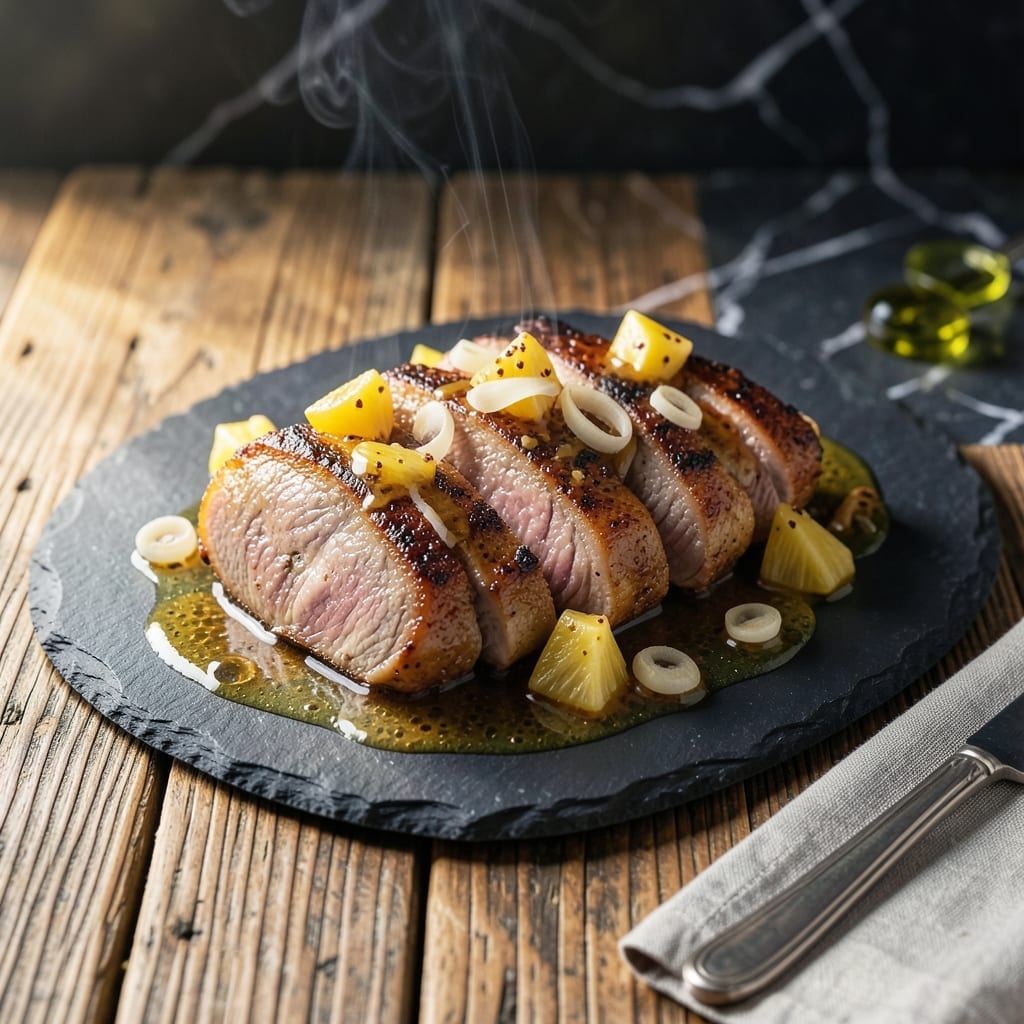
This pineapple sauce transforms ordinary pork into a tropical masterpiece with its perfect balance of sweet and tangy flavors. The secret lies in reducing fresh pineapple juice with complementary ingredients to create a glossy, concentrated glaze.
I developed this recipe to add restaurant-quality depth to home-cooked meals without complicated techniques. The sauce comes together in 15 minutes using simple pantry staples, making it ideal for busy weeknights or special occasions.
The result is a versatile condiment that coats pork beautifully, with bright citrus notes complementing the natural sweetness. Its smooth consistency works equally well as a marinade, basting sauce, or finishing glaze.
Store in an airtight container in the refrigerator for up to 1 week, where the flavors will continue to meld and intensify over time.
Ingredients for Pineapple Sauce Recipe for Pork
Nine simple ingredients create this glossy, sweet-tangy tropical glaze with ease.
| Ingredient | Amount | Notes |
|---|---|---|
| Fresh Pineapple Juice 🍍 | 2 cups | From about 1 whole pineapple |
| Brown Sugar 🍚 | ¼ cup | Light or dark variety |
| Rice Vinegar 💧 | 2 tbsp | For tangy acidity |
| Soy Sauce 🫒 | 2 tbsp | Low-sodium preferred |
| Fresh Ginger 🌿 | 1 tbsp | Peeled and grated |
| Garlic Cloves 🧄 | 2 cloves | Minced finely |
| Lime Juice 🍋 | 1 tbsp | Freshly squeezed |
| Cornstarch 🌾 | 1 tsp | For thickening glaze |
| Water 💧 | 1 tbsp | To dissolve cornstarch |
| Red Pepper Flakes 🌶️ | ¼ tsp | Optional for heat |
The pineapple juice is non-negotiable—fresh is ideal (canned works but lacks brightness). Look for ripe pineapples with sweet aroma at the base. Whole Foods and Trader Joe’s often have the best selection. The brown sugar balances the acidity; light brown keeps the color clean, while dark adds molasses depth. For the soy sauce, Kikkoman low-sodium is a reliable choice if you’re not using a premium brand.
No fresh ginger? Ground ginger at one-quarter the amount works, but fresh is superior. Swap rice vinegar for apple cider vinegar if needed—just avoid white vinegar (too harsh). For extra depth, add 1 tsp fish sauce (omit for vegetarian). The cornstarch slurry is key for that restaurant-quality sheen—don’t skip it. If you want a smoother texture, strain the sauce after cooking.
This sauce keeps beautifully in an airtight container for 1 week. The flavors deepen over time, so make it a day ahead if possible. Freezes for up to 3 months—portion into ice cube trays for easy single-serving use. Always bring to room temperature before reheating to maintain the glossy finish.
Why You’ll Love This Recipe
- One-Pot Wonder: I toss everything in a saucepan and let it simmer—no fancy techniques, just stir and serve.
- Sweet-Tangy Magic: The brown sugar and rice vinegar balance the pineapple juice so well it makes the pork irresistible.
- Weeknight Hero: I’ve served this with grilled pork, stir-fry, even as a glaze for meatballs—works every time.
- Budget Stretch: Fresh pineapple juice is affordable, and this sauce makes cheap cuts of pork taste restaurant-worthy.
Step-by-Step Instructions for Pineapple Sauce
This method ensures a perfectly balanced glaze with tropical brightness and rich depth.
Step 1: Create the Aromatic Base
Combine the 2 cups Fresh Pineapple Juice, 0.25 cup Brown Sugar, 2 tbsp Rice Vinegar, and 2 tbsp Soy Sauce in a medium saucepan. Place over medium-high heat and bring to a gentle boil, stirring occasionally to dissolve the sugar.
This foundation layer establishes the sweet-tangy profile that defines the sauce. The brown sugar adds caramel notes while the vinegar and soy sauce create a complex umami backbone. Watch for the first bubbles to appear around the edges of the pan.
Step 2: Infuse with Ginger and Garlic
Add the 1 tbsp Fresh Ginger and 2 cloves Garlic Cloves to the simmering liquid. Reduce heat to medium and let the mixture cook for 5-7 minutes, stirring frequently to prevent burning.
The ginger and garlic will mellow and infuse their pungent aromatics into the liquid. You’ll notice the raw sharpness of the garlic diminishing as it transforms into a sweeter, more rounded flavor. The sauce should begin to reduce slightly and take on a deeper color.
Step 3: Finish with Citrus and Heat
Stir in the 1 tbsp Lime Juice and 0.25 tsp Red Pepper Flakes. The lime juice brightens the sauce with its citrus acidity, while the red pepper flakes add a subtle warmth that complements the tropical notes.
Let the mixture simmer for an additional 2-3 minutes to allow the flavors to meld completely. Taste and adjust seasoning if needed, though the soy sauce and brown sugar should provide sufficient balance. The sauce should have reduced by about one-third at this point.
Step 4: Thicken to Glaze Consistency
In a small bowl, whisk together the 1 tsp Cornstarch and 1 tbsp Water to create a slurry. Slowly pour this mixture into the simmering sauce while stirring constantly to prevent lumps from forming.
Continue cooking for 1-2 minutes until the sauce thickens enough to coat the back of a spoon. The cornstarch slurry will transform the liquid into a glossy glaze that clings beautifully to pork. Remove from heat immediately once the desired consistency is reached to prevent over-thickening.
Pro Tips For Making Pineapple Sauce Recipe For Pork
- Reduce the Juice: Simmer the fresh pineapple juice first for 5-7 minutes to concentrate the flavor—I learned this the hard way after my first batch tasted watery.
- Grate the Ginger: Use a microplane for the fresh ginger instead of mincing it; the fine texture blends seamlessly into the sauce and avoids chewy bits.
- Balance the Sweet: Add the brown sugar gradually and taste as you go; pineapple sweetness varies, and I’ve ruined a sauce by dumping it all in at once.
- Finish with Vinegar: Stir in the rice vinegar at the very end—it keeps the bright, tangy kick alive instead of letting it cook off.
Essential Equipment for This Dish
Saucepan Selection
I always reach for my 3-quart stainless steel saucepan for this recipe—it provides enough surface area for proper reduction without being too large. Look for one with a heavy bottom to prevent hot spots that could burn your sauce. All-Clad makes excellent options if you’re investing in quality cookware.
Whisk Choice
A flat-bottomed silicone whisk is ideal for stirring the sauce as it reduces. It won’t scratch your pan and reaches into the corners effectively. I prefer the OXO Good Grips version for its comfortable handle and heat resistance up to 600°F. 💡
Measuring Tools
Accurate measurements matter for the perfect balance. Use a liquid measuring cup for the pineapple juice and dry measuring cups for the sugar. I keep a set of stainless steel measuring spoons from RSVP that nest together for easy storage.
Fine Mesh Strainer
If you want an ultra-smooth sauce, a fine mesh strainer is essential for removing any ginger fibers. The Cuisinox brand makes durable stainless steel versions that last forever. Simply pour the finished sauce through the strainer into a clean bowl.
Storage Containers
For storing leftovers, I use glass mason jars with airtight lids—they’re perfect for sauces and let you see the beautiful color. The 16-ounce size works well for this recipe. Avoid plastic containers as they can absorb odors over time.
Citrus Juicer
Fresh lime juice makes a noticeable difference. A simple handheld citrus juicer from Chef’n helps extract every last drop. I also use it for the pineapple juice when I’m making it fresh from whole fruit. It’s a small tool that gets used constantly in my kitchen. ✨
Nutrition Facts
Frequently Asked Questions
Can I use canned pineapple juice instead of fresh?
Yes, canned works in a pinch, but fresh delivers brighter, more complex flavor. Use 100% pineapple juice with no added sugar to avoid oversweetening your sauce.
How do I fix a sauce that’s too thin?
Mix 1/2 tsp cornstarch with 1 tbsp cold water, then stir into simmering sauce. Cook for 1-2 minutes until thickened to your desired consistency.
What’s the best way to store leftover sauce?
Transfer to an airtight container and refrigerate for up to 1 week. For longer storage, freeze in ice cube trays for up to 3 months.
Can I make this sauce ahead of time?
The flavors actually improve after 24 hours in the fridge. Just reheat gently over low heat, stirring occasionally to restore the glossy texture.

- Potato Candy Recipe 1933: Vintage Peanut Butter Roll Delight - October 30, 2026
- Potato Chip Cookie Recipe With Pecans: Buttery Crunch Meets Nutty Richness - October 30, 2026
- Potato Patty Recipe No Egg: Crispy Edges Without the Binder - October 30, 2026